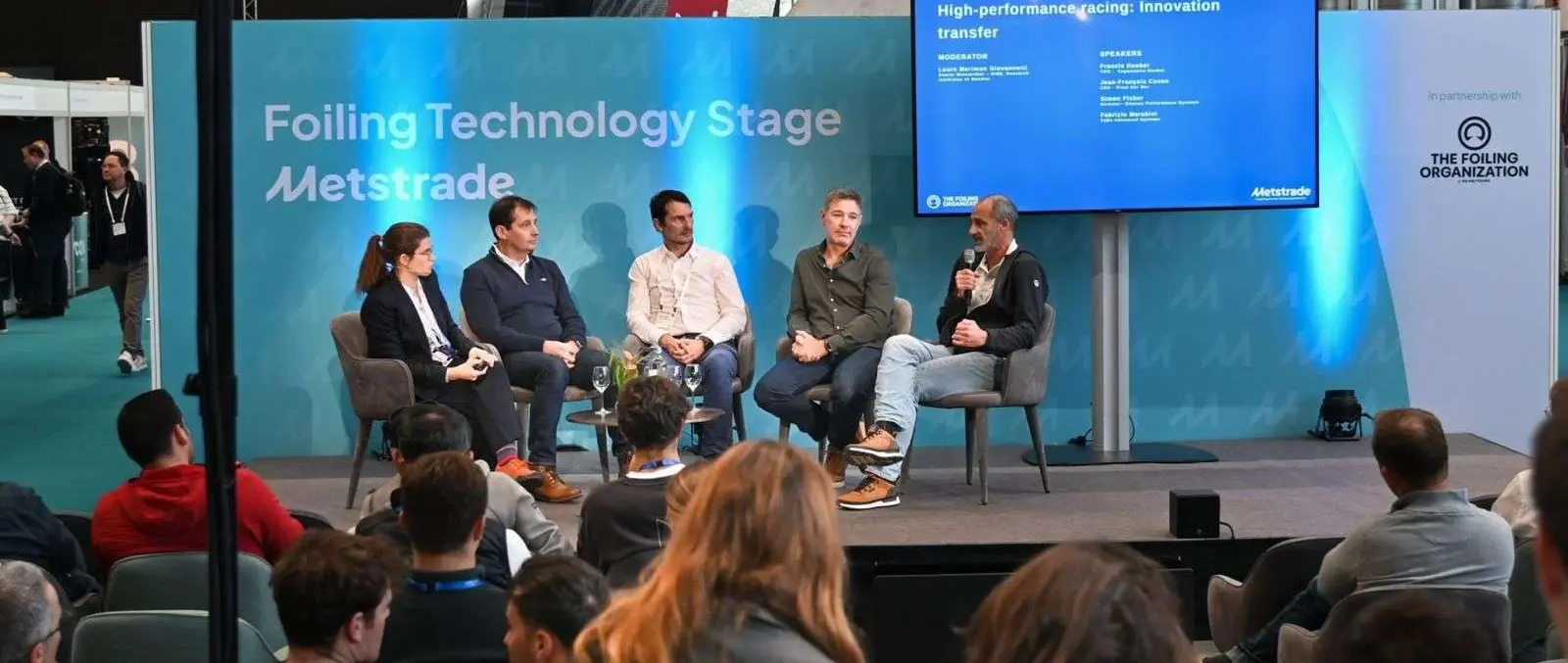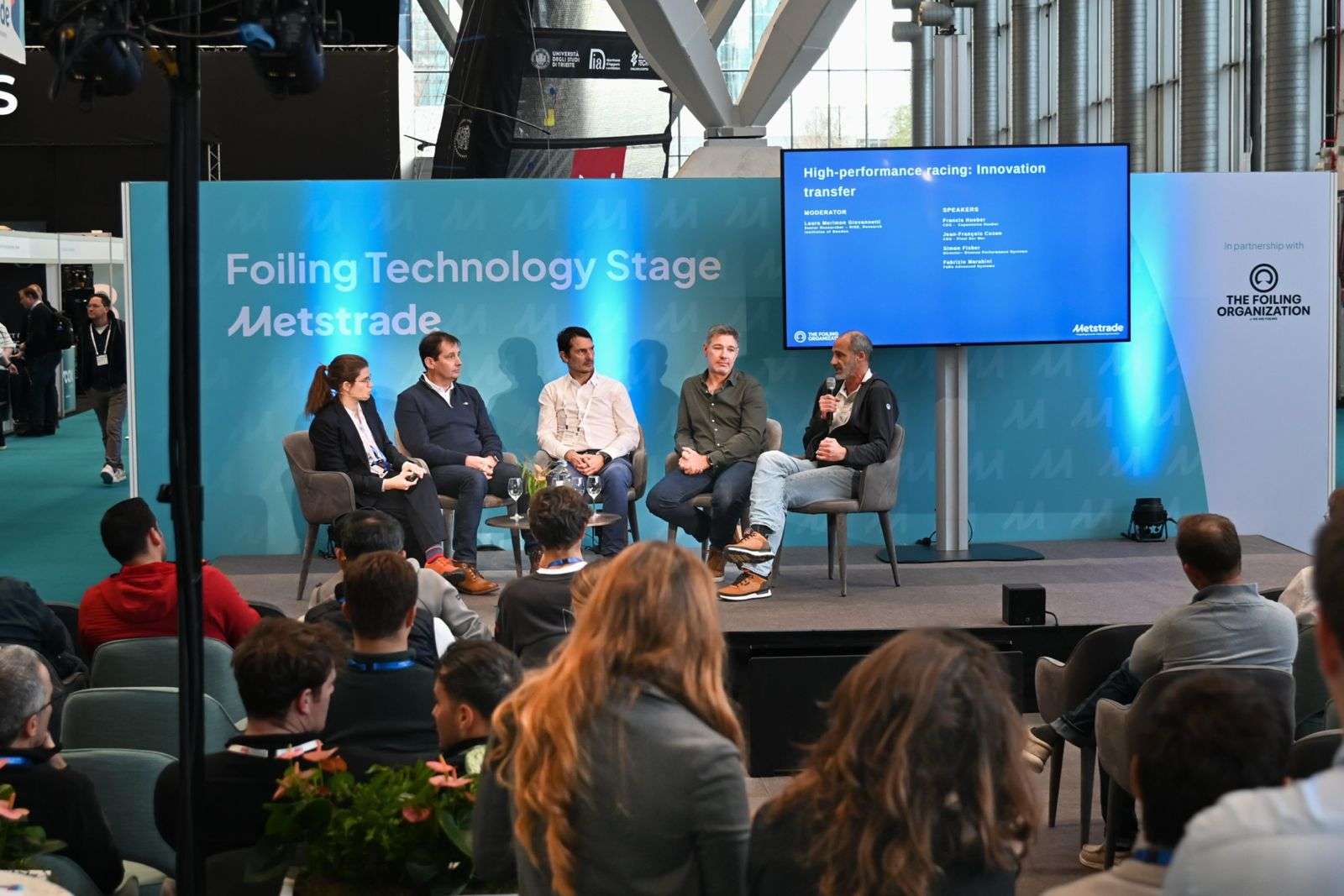
METSTRADE Foiling Technology Zone 2026 preview, official event media photograph

News

Foiling Technology Zone Draws 26 Exhibitors as METSTRADE Tackles Superyacht Certification

Nov. 13, 2026 Technology

METSTRADE Foiling Technology Zone 2026 preview, official event media photograph

The Foiling Technology Zone at METSTRADE will host 26 exhibitors and panels covering certification, insurance and racing-derived systems for superyachts.

A new emphasis on standards rather than speed alone The Foiling Technology Zone at METSTRADE 2026 will bring together 26 exhibitors in Hall 10 at RAI Amsterdam, with a programme addressing the engineering, certification and commercial adoption of foil-assisted vessels. The 12 November announcement sets out a shift in emphasis: designers and manufacturers want to move the knowledge developed in competitive sailing into wider marine applications, including superyachts, but technology alone is not enough. The fourth edition of the zone runs with METSTRADE from 17 to 19 November, preceded by a specialist meeting about regulation and insurance on 16 November. For the superyacht sector, the question is no longer simply whether a foil can create lift. It is how a complete vessel can be safely designed, certified, insured and maintained.

Twenty-six exhibitors create an engineering forum The exhibitor group includes design, manufacturing and research organisations such as CDK Technologies, MARIN, Sangiorgio Marine, Eligio Re Fraschini and Caponnetto Hueber. Their backgrounds vary, covering structural engineering, hydrodynamics and specialist construction. That variety is significant because a successful foil-assisted yacht involves much more than an elegant foil section. It must integrate hull structure, lifting surfaces, control hardware, sensors, propulsion and an operating philosophy suitable for the vessel's intended use. The announced zone offers an opportunity for suppliers to compare these interfaces rather than demonstrate isolated components. However, attendance by a manufacturer does not establish that every exhibited idea has been tested on a 40- or 60-metre yacht.

The initiative emerged from competitive sailing The Foiling Technology Zone was developed by The Foiling Organization, led by president Luca Rizzotti, together with the METSTRADE organisers. Its origins can be traced to discussions in 2022, and it first appeared at the exhibition in 2023. The central idea was to connect expertise accumulated in top-level racing with companies that might develop it for other markets. America's Cup teams have worked extensively on advanced structures, control systems and methods of reducing drag, but transferring those technologies involves adapting them to new duty cycles and safety expectations. A racing machine may be optimised for a short course, whereas a superyacht must remain useful across varying loads, sea states and cruising programmes.

An 80-plus-person meeting will examine certification Before the exhibition formally opens, TFO has scheduled a members-only discussion on Monday 16 November involving more than 80 registered participants. The organisers expect designers, industry representatives, notified bodies and insurers to take part. The intention is to identify common approaches to assessing foil-assisted craft and, according to the November programme, work towards a usable certification process in 2027. That is a target rather than an approved international standard already in force. Yacht owners considering unusual propulsion or foil arrangements should be wary of treating the existence of an industry meeting as evidence that all regulatory obstacles have been solved. Actual approvals will depend on the vessel, applicable codes and the relevant authorities.

Insurability is a commercial as well as a technical issue A novel system may perform impressively in a demonstration yet still be difficult to insure if its failure modes or repair costs are poorly understood. Marine underwriters need information about operating limits, design assurance, service history and the consequences of damage. Foils are vulnerable to contact with debris or submerged objects, and their supporting mechanisms may be expensive or complex to repair. A vessel's intended routes also matter: a large high-speed craft operating from an established service base presents different risks from an expedition yacht travelling into remote areas. The organisers' decision to include insurance professionals acknowledges that the market cannot expand responsibly on engineering enthusiasm alone.

The first panel addresses business conditions and standards A Tuesday 17 November session at 12:30 will examine market prospects, standards and insurance. The listed speakers are Klaus Röder, consultant on recreational craft, Julian Jesson of North Shore Risk Limited, Eloy Rodriguez of Foilchemy, and Adam Greene, technical director of HPiVS. Their different roles may help clarify what builders need from a workable regulatory framework and what insurers require before taking on new risks. The session is not an authority issuing certificates during the show. It is a structured discussion among stakeholders about problems that currently complicate adoption. For owners, the value is in understanding the questions that should be answered before commissioning a design that depends on unproven mechanisms.

Wednesday turns to commercial-vessel technology transfer A second panel is scheduled for 18 November at 13:00, focusing on how knowledge from America's Cup programmes might transfer to commercial vessels. Tyson Lamond of American Magic Services is among the participants, alongside naval architect Ferdinand van West and Oliver Moore of Moore Brothers Company. The relevant technologies extend beyond the lifting foils themselves. They may include composite structures, simulation methods, control software and production techniques developed under demanding racing programmes. Commercial and large-yacht use can require longer service intervals, greater redundancy and different maintenance arrangements. An engineering approach successful in competition needs redesign and verification before becoming suitable for passengers, crew and extended voyages.

Superyachts receive a dedicated Thursday discussion The programme's third technical session, on Thursday 19 November at 14:45, specifically considers the application of America's Cup technology within the superyacht sector. Speakers include Mark Somerville of Persico Marine, Martin Bivoit of PURE Design & Engineering, Douglas M. Shickler of Van Oossanen Naval Architects, Francis Hueber of Caponnetto Hueber and insurer Julian Jesson. The presence of design, engineering and risk specialists is appropriate because the successful introduction of new technology depends on their coordination. This is not an announcement that a named large yacht has already been designed and approved by the participants. It offers a forum to discuss the opportunities and constraints that future projects may face.

Foils are not equally useful on every superyacht A foil can reduce part of a vessel's resistance by supporting some of its weight dynamically, but the benefit depends on speed, displacement, geometry and operating conditions. The energy required to lift a vessel, the drag created by the foil itself and the loads transferred into the hull all influence the outcome. For very large displacement superyachts, the trade-offs may differ markedly from those of fast passenger boats or racing catamarans. Owners should not infer that installing foils would automatically reduce fuel consumption by a fixed percentage. A credible proposal would need hydrodynamic modelling, structural calculations and evidence from appropriately scaled testing, followed by performance assessment under realistic conditions.

Control systems add an extra layer of complexity Many foil-assisted vessels rely on active control to manage ride height, pitch and stability. That creates a relationship between sensors, actuators and the vessel's navigation and propulsion systems. Reliable control logic must handle unexpected inputs and allow the crew to understand what the machinery is doing. A software failure or damaged sensor should not result in an uncontrolled condition. These issues can be particularly important for vessels carrying guests who are not trained to manage an experimental system. The METSTRADE discussions are therefore relevant to cybersecurity, human-machine interfaces and maintenance as well as the design of the foils themselves. The full safety case must consider the complete vessel.

Debris and shallow-water operation present real-world constraints A yacht operating in coastal waters can encounter floating debris, poorly charted obstacles and changes in water depth. Foils may create additional appendages below the hull, which must be accommodated in the passage plan and maintenance programme. Retractable mechanisms can add flexibility but introduce more moving parts and interfaces to seal and inspect. An owner evaluating a new arrangement should ask how the vessel behaves when the system is retracted, damaged or deliberately taken out of service. A vessel that can operate safely without its foils may offer different operational resilience from one that depends on them for particular speeds. No single solution will suit every planned cruising area.

Design, build and repair need common assumptions A foil structure may be manufactured by one specialist, fitted to a hull designed by another and controlled by software supplied by a third. For certification purposes, the responsibilities among those parties need to be clearly documented. Load cases and inspection criteria should be consistent from initial design through construction and service. Without that clarity, a defect may create disputes about which company is responsible for repair or corrective work. Collaboration at a trade exhibition is useful when it leads to shared technical definitions and traceable documentation. It cannot substitute for a contract, detailed specifications or an appropriate independent examination of the final vessel.

The commercial argument must include lifetime maintenance For an owner, a claimed speed or efficiency improvement should be compared with purchase cost, maintenance, operational limitations and the expected life of the system. High-performance structures may require specialist repair techniques, particularly if carbon composites are involved. Crews may need additional training to interpret the system's controls and detect signs of wear. A yacht operating far from established boatbuilding centres should consider access to replacement components and the feasibility of temporary repairs. The true operational benefit may depend on how frequently the system is used under conditions where it provides a measurable advantage. The METSTRADE programme does not establish financial returns for any individual technology.

The 2027 certification ambition is the next test TFO's aim of developing an operational certification process during 2027 gives the sector a practical target. The ambition will require cooperation among designers, regulators and insurers, and no single association can impose an international rule by itself. Details such as craft category, permitted operating conditions and the responsibilities of certifying bodies will need careful agreement. For the superyacht industry, progress may initially involve particular designs rather than a universal solution. A consistent assessment framework could make it easier for owners and builders to understand the risks of innovation, but it should preserve the ability to examine unusual systems on their own merits.

Why this announcement matters to the superyacht market The story is not a new yacht launch or a completed advance in foil performance. The development is a 26-exhibitor engineering zone and a defined programme that places certification, insurance and superyacht applications at the centre of discussion. That is a useful sign of maturity for an emerging market. Novel marine technologies become commercially meaningful when builders can demonstrate their behaviour, regulators can evaluate them and operators can maintain them safely. If the METSTRADE meetings produce a credible path towards common assessment criteria, their influence may reach well beyond the competitive sailing projects that first helped popularise the technology.

**Reporting basis:** The Foiling Organization and METSTRADE 2026 programme, documented in the 12 November PressMare report. Official press photograph depicts the exhibition programme, not a certified superyacht installation. Speakers and future certification dates are announced intentions, not completed events.

Primary source: The Foiling Organization METSTRADE 2026 programme, reported by PressMare on 12 November.

Photo: Foiling Technology Zone METSTRADE 2026 programme image distributed by PressMare, 12 November; illustrative of event, not evidence of completed certification. Official source image.

Photo licence and source

Photo: Foiling Technology Zone METSTRADE 2026 programme image distributed by PressMare, 12 November; illustrative of event, not evidence of completed certification.

Continue reading

All news

Superyacht Guide

Explore the superyacht world

Continue into the wider Superyacht Guide.

Business opportunities · Superyacht Guide

Reach the superyacht industry audience

Companies serving the superyacht market can discuss clearly identified advertising, sponsorship and business-profile opportunities. Commercial activity remains separate from independent editorial coverage.