
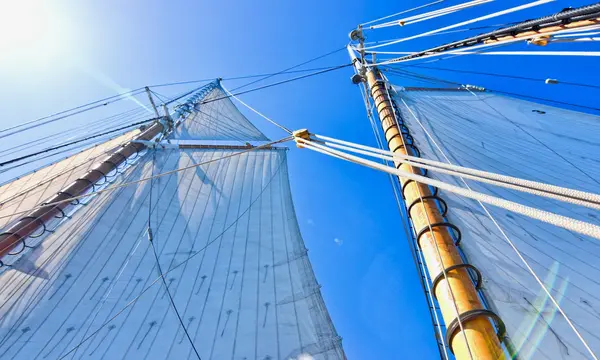
Amsterdam Yacht Service Completes Five-Week Wolfhound Schooner Refit
Amsterdam Yacht Service has disclosed a tightly sequenced exterior maintenance project on the 36.94-metre schooner Wolfhound. The brief combined a complete topsides respray with …
Gallipoli in southern Italy has moved its marina ambitions into a new inter-authority discussion, but the proposed €70 million investment is not the same as €9.2 million already secured for existing port works.
Gallipoli, on the Ionian side of Italy's Salento peninsula, is advancing a proposal for a new marina at Giudecca with an indicative cost of €70 million. Recent reporting describes an intended basin with more than 400 berths and the ability to serve some larger vessels. At the same time, the municipality has confirmed a separate €9.2 million allocation for improving existing port facilities. These are not interchangeable figures. The larger marina project depends on further institutional and funding decisions, whereas the smaller amount has been formally committed through a regional development programme for safety and upgrades.
The municipality's 16 October announcement confirmed the signing of the agreement that activates the €9.2 million programme. It described work to modernise and secure the commercial and cruise port area, San Giorgio basin and Canneto inlet. Mayor Flavio Fasano used that statement to underline the administration's ambition for the future marina on the Scirocco side of Giudecca. The distinction is important to yacht owners following southern Italian berth developments: improving existing basins does not automatically create a new 400-berth destination, and a proposed investment amount is not the same as a financed construction contract.
The prospective marina would introduce a substantial leisure-boating component to Gallipoli's waterfront, potentially adding berths in a region visited by yachts cruising between the Italian mainland, the Ionian islands and the wider central Mediterranean. Coverage published on 5 and 6 November describes plans for a protected basin on the Giudecca side and includes a new harbour master's office within the broader €70 million estimate. These are elements of a proposed scheme. There is no verified basis for saying that every berth would accommodate a superyacht, that construction has started or that an opening date has been fixed.
A large berth count can sound impressive but says little about the sizes of vessels a marina can practically handle. Marine access depends on channel depth, turning room, shelter, mooring layout, shore-power capacity and the rules of the port. Some projects include hundreds of small and medium berths with only a modest proportion suitable for large yachts. The current public information does not establish a detailed allocation by vessel length. Superyacht operators should therefore treat the potential larger-vessel accommodation as a planning intention and wait for verified technical drawings, approvals and updated navigation information.
A key part of the plan involves bringing Gallipoli's harbour into the jurisdiction of the Port System Authority of the Ionian Sea, based at Taranto. The municipal executive approved a proposed memorandum of understanding through Resolution 165 on 13 October 2026, according to recent port industry reporting. A related item was placed on the agenda of the municipal council meeting scheduled for 5 November. An item appearing on an agenda is not by itself proof of the council's final vote or the completion of subsequent legal procedures. It identifies an institutional step still requiring careful documentary follow-up.
The proposed arrangement reportedly seeks to give the mayor a role in the authority's management and steering of the marina development. Such governance decisions matter because port authorities can influence planning, maritime concessions and the coordination of public infrastructure. However, an agreement about jurisdiction is not a substitute for environmental authorisation, engineering approval or a confirmed financing allocation. The €70 million scheme is described as depending on access to national infrastructure funds tied to the proposed institutional change. Readers should avoid treating discussions about that change as a binding award of the full marina construction budget.
The smaller funding programme comes from the 2021–2027 Development and Cohesion Fund arrangements for the region. The municipality states that the agreement signed in Bari activates more than €9 million for port modernisation and safety. The specific locations include the existing commercial and cruise areas as well as San Giorgio and Canneto. These facilities serve a mix of local economic activities, and upgrades can be valuable regardless of whether the new marina at Giudecca eventually proceeds. Regional officials have separately confirmed the €9.2 million allocation within a wider coastal infrastructure programme.
For vessel operators, safety improvements to an established port can mean repaired structures, better organised service areas or other practical changes once works are completed and documented. The available announcement does not itemise a finished specification for each berth or give captains permission to use newly improved areas today. A construction or safety allocation is not the same thing as a certified improvement already in operation. Existing published harbour information and instructions from the competent authorities continue to govern movements. As with the larger project, the relevant reporting milestone will be an actual works contract, construction progress and eventual sign-off.
The proposed €70 million investment has been discussed with Italy's national infrastructure authorities, and local reporting describes political support for pursuing the funds. That does not establish that the money has entered the municipal accounts or that a government budget has completed every required approval. The accompanying estimate also includes an indicative €1.5 million for a harbour master's office. Those numbers should be reported as components of the proposal, not as invoices already paid. Changing the administrative perimeter of a port may be one required step, but it would not by itself build the basin or procure its equipment.
Large public waterfront projects frequently involve separate approvals for planning, coastal protection, utilities, dredging, transport access and ongoing management. Even when a headline amount is announced, the financing sequence can include national appropriations, local agreements and later tenders. A yacht business assessing commercial opportunity should distinguish statements of intent from funding orders and executed contracts. Superyacht Guide's approach is to report the steps currently documented: an ambition for a new marina, institutional discussion in October and November, and a separately confirmed programme to improve current harbour infrastructure. Anything beyond that remains subject to proof.
Gallipoli has a working coastal economy that includes fishing, commercial activities and local boating. A new leisure marina must be considered within that established environment rather than as a blank waterfront waiting only for expensive yachts. Land traffic, parking, public access, shore-side services and the protection of existing trades can influence both public support and the technical viability of a proposal. Coastal works may also raise legitimate environmental questions about currents, habitat and sediment movement. The present announcement does not resolve those matters, and an attractive architectural image cannot replace the assessments required by competent authorities.
For yacht visitors, the quality of a destination is partly determined by how well a marina integrates with its town. Shore provisioning, restaurants, transport, repair specialists and local character often matter as much as polished pontoons. Gallipoli has an established historic centre and waterfront, but the new project's eventual relationship with those assets has not been fully defined in a public operating plan. Authorities and developers will need to show how the scheme could improve access and services while respecting residents and existing harbour users. A berth investment that neglects these relationships can create difficulties long after the opening ceremony.
If a suitable large-yacht component is approved and built, Gallipoli could add another possible stop within southern Italy's yachting circuit. The region is attractive to travellers moving between the Adriatic, Ionian islands and Tyrrhenian routes, although exact passages depend on the chosen itinerary and conditions. A captain considering Gallipoli would still need to confirm pilotage requirements, maximum draught, available services and the suitability of the approach. The present proposal contains no verified table of berths for yachts over 24 metres, and it would be irresponsible to imply that the advertised 400-plus total means 400 superyacht spaces.
A larger marina may also create demand for specialist service companies, but that remains a prospective economic effect rather than a confirmed contract. Engineers, shore-power providers, waste contractors, security firms and hospitality businesses can all be part of a functioning destination. Their potential involvement depends on the final design, tender conditions and operational model. Owners should also distinguish a marina's proposed long-term commercial offering from the services available in the current harbour. Until the project moves further through approvals and construction, yacht movements and seasonal planning should rely on today's verified port capabilities.
For the €70 million proposal, the key questions are whether Gallipoli's port authority arrangements are formally agreed, whether financing is actually allocated and whether a detailed project passes the necessary assessments. The proposed council consideration on 5 November should be followed through published decisions rather than assumed to have passed in a particular form. For the separately funded €9.2 million works, the useful checkpoints are contractor appointments, completion of safety improvements and revised port operating information. These are different workstreams, with different risks and different implications for the yachting market.
Gallipoli's latest announcements show genuine effort to improve marine infrastructure and to pursue a substantial new leisure marina. They do not prove that the larger project has already been built or funded in full. Maintaining that distinction protects prospective investors, local businesses and yacht owners from overestimating future capacity. It also allows subsequent coverage to recognise real progress when documents, contracts and construction establish it. The strongest story is not a speculative promise of hundreds of superyacht berths, but the careful separation of secured public port works from an ambitious and still developing new marina plan.
Primary documentation: Comune di Gallipoli; supporting source: original material. This report is dated 7 November 2026. Proposed projects, funding, access and event schedules may change. No projected capacity, spending or future action has been reported as an accomplished fact.
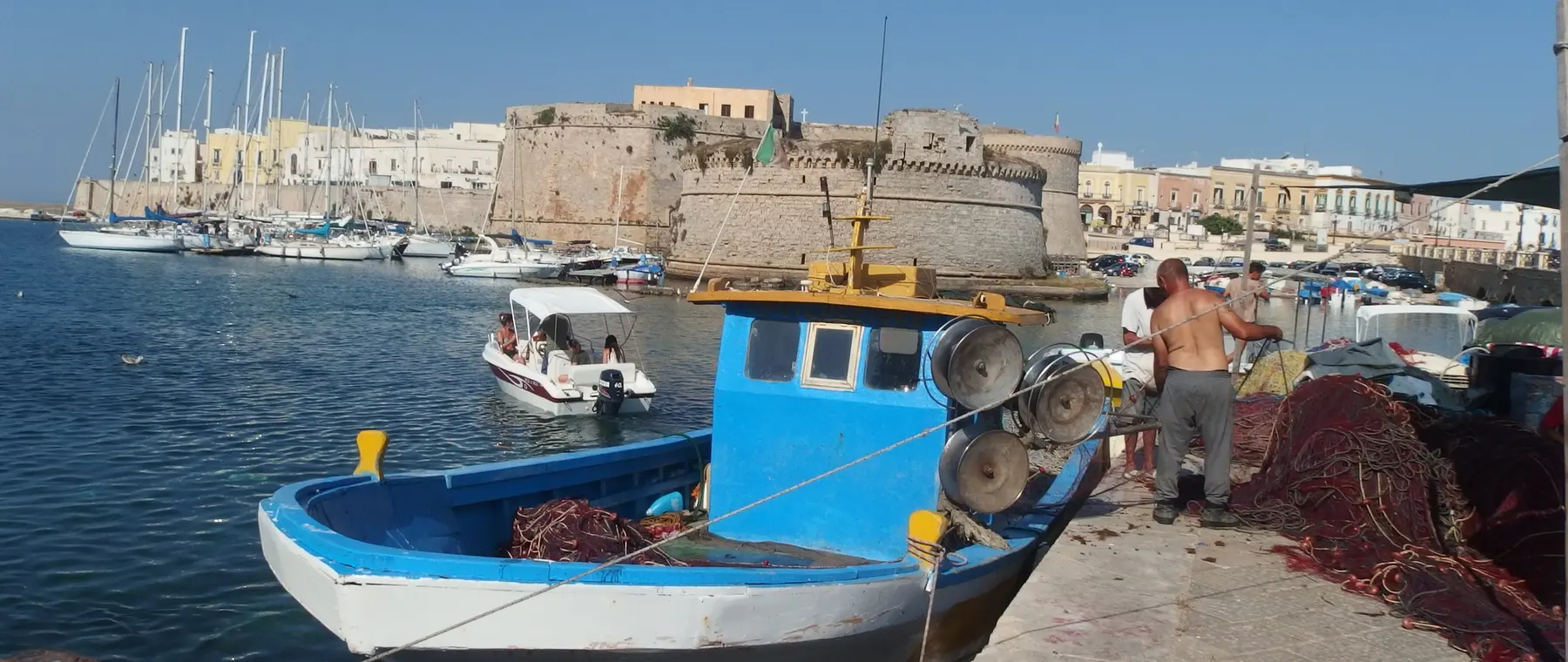
Editorial photograph: File:Gallipoli, harbour (2).jpg — Gallipoli harbour, Apulia — Palickap / Wikimedia Commons, CC BY-SA 4.0; cropped and resized; illustrative existing harbour, not the proposed new marina. Adapted by resizing or cropping under the Creative Commons BY-SA 4.0 licence. This locality image does not depict the proposed new infrastructure, the 2026 event or the property in question.
Continue reading
Amsterdam Yacht Service has disclosed a tightly sequenced exterior maintenance project on the 36.94-metre schooner Wolfhound. The brief combined a complete topsides respray with …
Royal Hakvoort Shipyard has confirmed that the 38.25-metre motor yacht Soprano has returned for maintenance and what the builder describes as her ten-year Lloyd's …
Marina di Imperia confirms a formal European procurement for completion and operation of its Porto Maurizio marina, with €148.54 million in works and bids …
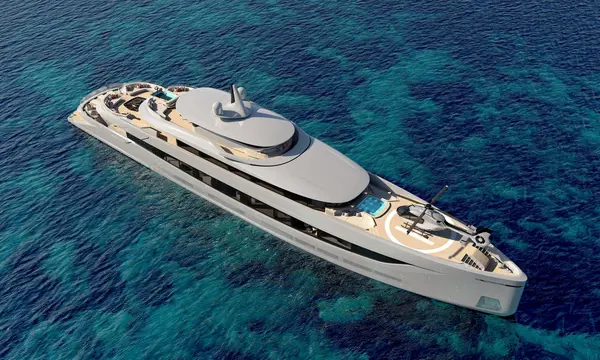
Fraser’s RMK Yachts listing describes the 70-metre LIVIA PLUS design concept, featuring 1,750GT of proposed volume, a two-deck owner suite and extensive customisation.
Superyacht Guide
Continue into the wider Superyacht Guide.
Business opportunities · Superyacht Guide
Companies serving the superyacht market can discuss clearly identified advertising, sponsorship and business-profile opportunities. Commercial activity remains separate from independent editorial coverage.