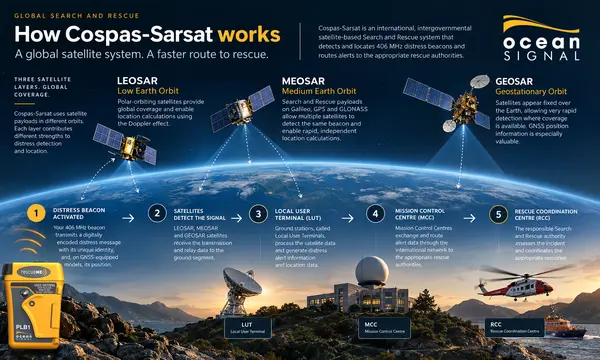
Ocean Signal Explains How 406MHz EPIRB Alerts Reach Rescue Authorities
Ocean Signal has published a current guide to the Cospas-Sarsat chain that carries 406MHz EPIRB distress alerts from a vessel to rescue coordination authorities.
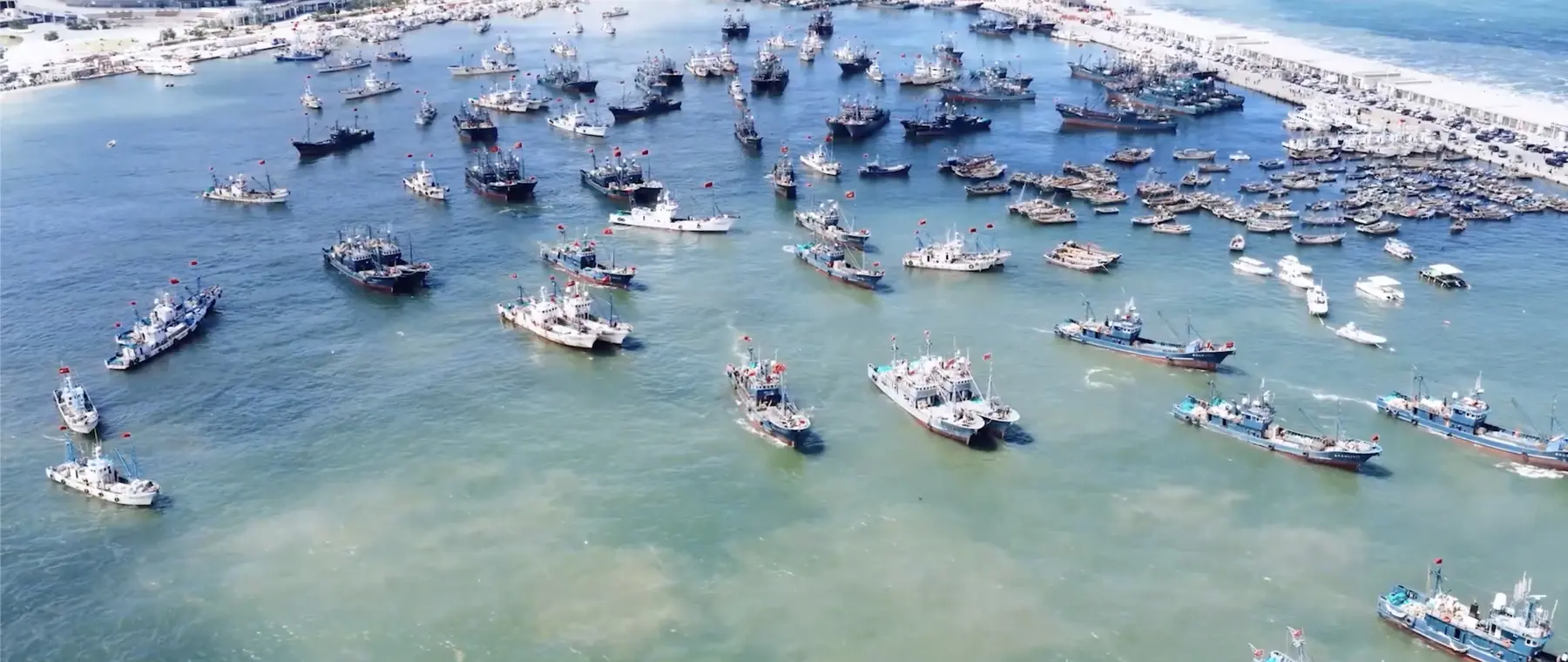
Image: Gard
Gard says half of 65 fishing-vessel collision claims occurred in Chinese waters, with speed, lookout and over-reliance on electronics among recurring risks.
Gard has published new collision-loss data showing that half of 65 claims involving fishing vessels occurred in Chinese waters. The insurer says the risk is particularly acute around the staged lifting of seasonal fishing bans, when large numbers of fishing boats return to sea and traffic density can increase sharply in coastal routes.
The claims are not a superyacht-only dataset and should not be presented as one. They arise from Gard’s wider marine portfolio, but the bridge-management lessons are directly relevant to large yachts operating in busy fishing areas because the underlying issues involve lookout, safe speed, passage planning, radar and AIS use, and timely avoiding action.
Gard highlights the annual Chinese fishing ban that begins on 1 May across large areas of the Bohai Sea, Yellow Sea, East China Sea and the South China Sea north of 12 degrees north. The ban is lifted in stages, including 16 August, 1 September and 16 September depending on sea area and latitude, creating periods when fishing traffic can return quickly.
For a yacht bridge team, that means route planning should consider not only charts and traffic-separation systems but also seasonal activity that may alter the number and behaviour of small vessels encountered. A passage that appears routine at one time of year may require more bridge personnel, lower speed and wider margins when fishing grounds are heavily occupied.
Gard identifies recurring factors including high speed through fishing grounds, inadequate bridge watchkeeping, delayed avoiding action and communication difficulties. The insurer also warns that small wooden or fibreglass fishing vessels, gear and low-profile targets can be difficult to detect reliably, particularly when weather, clutter, target aspect or poor radar setup reduces detection quality.
Those factors matter to superyachts because speed can compress decision time dramatically in dense traffic. A yacht capable of fast cruising may have excellent sensors, but the value of those systems depends on watchkeepers using them alongside an effective visual lookout and being willing to reduce speed early when the traffic picture becomes uncertain.
Gard specifically warns against over-reliance on AIS and radar information. Fishing vessels may have AIS switched off, transmit inaccurate data or be poorly detected by radar, while large numbers of AIS targets can also create clutter on radar and ECDIS displays rather than simplifying the bridge team’s task.
The practical lesson is to combine all available means instead of treating one electronic source as conclusive. Visual lookout, radar and ARPA, AIS, ECDIS, VHF, light and sound signals, and early manoeuvring all contribute to the collision-avoidance picture, with each method having limitations that the others may help offset.
Gard recommends stronger voyage planning, additional bridge watchkeeping when necessary, safe speed with engines ready for manoeuvring, and early course changes to keep clear of clusters of fishing boats. It also stresses that when a collision is suspected, the vessel should render assistance, contact the relevant authorities and preserve evidence such as voyage-data records.
For yacht operations, the most useful takeaway is that dense fishing traffic deserves deliberate preparation rather than last-minute reaction. The claims show how ordinary navigation can become high-consequence very quickly when speed, incomplete information and late decisions combine in confined or heavily used waters.
Continue reading
Ocean Signal has published a current guide to the Cospas-Sarsat chain that carries 406MHz EPIRB distress alerts from a vessel to rescue coordination authorities.

Inmarsat Maritime has launched a safety-data platform combining three years of GMDSS distress information with 106,975 maritime safety broadcasts from 2025.

VPS has launched SampLogic 2.0 to modernise worldwide collection and tracking of marine fuel samples on their way from vessels and ports to laboratories.

Gard’s 2026 Crew Claims Report draws on about 3,000 P&I crew claims and finds elevated injury risk early in a crew member’s time on …
Superyacht Guide
Continue into the wider Superyacht Guide.