
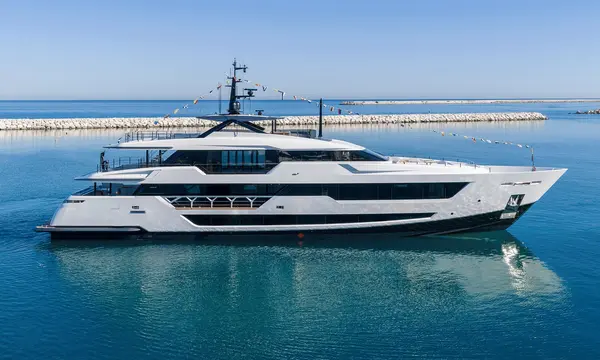
Custom Line Details Eleven Ancona Yacht Launches in Six Months
Ferretti Group reports that Custom Line launched eleven made-to-measure yachts between April and September 2026, including debut hulls of the Navetta 35 and Saetta …
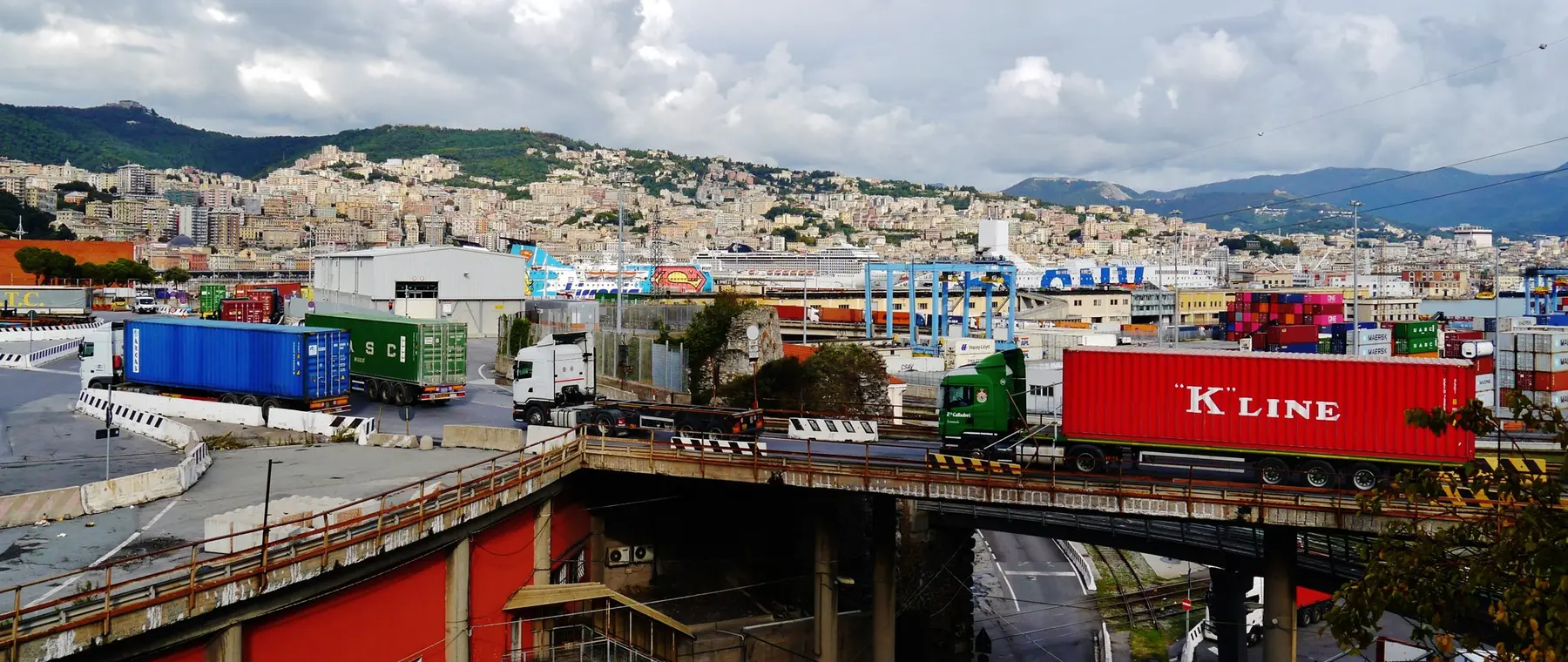
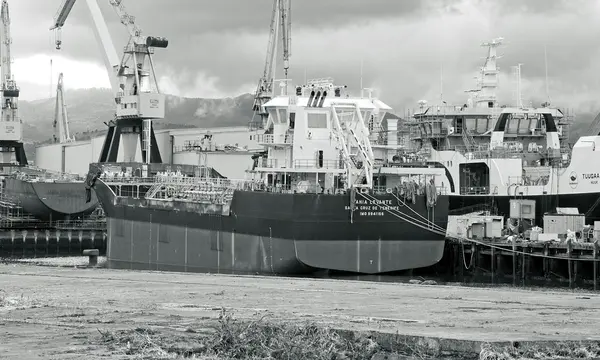
Port of Genoa, Italy — Zairon / Wikimedia Commons, CC BY-SA 4.0; 2020 archive view, resized
Genoa's port authority has completed 65 stakeholder hearings for a new port master plan that includes possible yacht facilities and additional refit space, but no final construction approval has been announced.
The Port System Authority of the Western Ligurian Sea announced on 5 November that the first consultation phase for revised port master plans serving Genoa and Savona-Vado had closed. The authority says it held 65 hearings involving more than 120 participants, with seven meetings involving citizen committees. For the superyacht sector, the news is that nautical activity, yacht construction and refit have a place in the future-port discussion. It does not mean a proposed new basin or dry dock is already funded, authorised or being built.
The authority's account identifies a consultation that began on 4 September and concluded on 3 November. It involved businesses, associations, unions, institutions and local representatives. The final meeting on 3 November included Confindustria Nautica, with debate turning to Genoa's eastern waterfront and its potential to accommodate a dedicated nautical basin and strengthen yacht-construction and refit activity. The proposals are still scenarios under review. An accurate industry update should preserve that provisional status because a future capacity claim can influence where yacht managers investigate berth and yard options.
Superyacht maintenance is not simply the activity of parking a vessel beside a workshop. Large projects need safe access to the hull, lifting or dry-docking arrangements, cranes, shore power, specialist contractors, fire controls, paint facilities and carefully planned waste handling. A facility that can berth a yacht may be unable to lift her, support her weight or accommodate a complex refit. Port plans must therefore distinguish between quays, conventional berths, engineering sites and the specific infrastructure that supports large-vessel work.
That distinction is especially important for a maritime city whose existing port serves competing economic functions. Genoa is a container and logistics gateway, a commercial repair centre and a base for yacht-related activities. Space can rarely be reallocated without affecting vehicle movements, noise, security or waterside access. A planning process that considers yachting alongside freight, energy and rail transport may produce a more workable long-term arrangement, but any practical improvement depends on detailed engineering and subsequent decisions.
The latest public account says that one scenario for Genoa Levante is the creation of a new dock or basin dedicated to nautical activity. It is accompanied by proposals to strengthen shipbuilding and yacht-refit operations. Earlier coverage of the evolving master-plan debate also described potential new dry docks for large-yacht work. These strands should not automatically be presented as a single approved project: the authority is examining several port functions and possible layouts, while detailed footprints and operational allocations remain the subject of planning.
For a captain, the crucial eventual questions would be straightforward. What is the permitted maximum length, beam and draught? Can a yacht enter under the weather conditions common in the relevant season? Are there hardstanding areas or docks capable of taking the vessel out of the water? Can service providers move between berth and workshops securely? None of these operational limits has been established by the end-of-consultation notice. They cannot responsibly be deduced from an attractive map or a headline about additional space.
The planning exercise covers both Genoa and Savona-Vado, not one uniform waterfront project. The two systems have different existing infrastructure, land constraints and relationships with nearby communities. The authority's purpose is to develop new plans that will guide multiple types of port activity over an extended period. A decision that supports a yacht facility in one area may interact with freight movements or energy infrastructure elsewhere. Separating the geographic proposals is essential if businesses are to understand where future opportunities might actually arise.
The consultation material describes the availability of working space, connections to road and rail and compatibility with surrounding neighbourhoods as recurring themes. These are not distractions from the superyacht agenda. Yard employees, specialist vehicles, delivered equipment and waste-management services all rely on access. Poor logistics can turn a nominally convenient refit berth into an expensive operational compromise. Equally, shipyards need permissions and environmental conditions that are sufficiently clear to support long-term investment in large specialist facilities.
The authority's recent discussions considered railway capacity, energy cargo and nautical operations together. The need to protect energy movements at Porto Petroli has featured prominently, alongside possible future locations for chemical deposits and the requirements of wider shipbuilding. The nautical sector cannot be assumed to take precedence over these essential operations. The planning task is to establish practical coexistence, evaluate trade-offs and identify where investments can serve their intended users without creating unsustainable conflict.
A superyacht refit project can involve naval architects, coating specialists, joiners, electricians, communications integrators, surveyors and crew-support providers. Many of these suppliers are based in or near the port and contribute to its industrial employment. Yet the benefit of expanding yacht activity cannot be quantified from a planning announcement alone. Job creation, investment cost, berth demand and contractor capacity require studies. The current consultation is an early information-gathering stage, not proof of an economic return.
The authority chose to hear from a wider group than the minimum required, according to its public statement, and it has opened a dedicated information website under the name Porti in Ascolto. The site is intended to explain the planning process, show possible development scenarios and make public consultation materials easier to understand. This transparency may assist yacht businesses looking at future infrastructure, provided they remember that the scenarios can change as technical studies and public decisions proceed.
Hearings are an important input but they do not substitute for formal design approval. A company expressing interest in a new quay is not the same as an operator signing a concession, and a municipal discussion is not a building permit. In the same way, proposals for a dry dock should not be converted into advertised available capacity before the dock exists and has accepted its operating limits. Precise language protects both readers and the port authority from confusing strategic possibilities with services available for booking today.
For an owner or manager organising a major refit during the 2026–27 winter, this announcement does not alter today's booking options. Yard selection should still be based on verified current lifting or docking capacity, the project's technical work list, availability, safety controls and contractual terms. A prospective facility that may become operational years later cannot replace an available slot. Existing Genoa operators remain relevant on their own published capabilities and should be contacted directly for vessel-specific suitability.
For businesses considering future expansion, however, the milestone is worth following. The next useful documents will be more precise spatial proposals, environmental assessments, infrastructure engineering details, investment commitments and decisions on operators or concessions. Those materials could eventually reveal whether the port intends to offer additional covered working space, large-yacht dry-docking, deeper berths or better contractor access. Until they appear, a responsible assessment should distinguish what stakeholders have requested from what public authorities have formally adopted.
The authority says the views collected during the first phase will enter the technical assessment of future planning scenarios. Further procedures and institutional reviews must follow before a final master plan can guide individual works. At the time of this report, there is no verified start date for the proposed nautical basin and no announced commissioning timetable for new superyacht dry docks arising from this consultation. Readers should treat any future capacity forecast as provisional unless it is supported by a specific official decision.
Genoa's importance to the superyacht refit industry makes the process worth monitoring even without a construction contract. The new step is a documented public consultation milestone, with yachting explicitly included among the port's priorities. It provides evidence of planning attention, not evidence of finished infrastructure. The accompanying photograph is a licensed archive view of the Port of Genoa taken in 2020, included for geographic context; it does not show a new dock under construction. Superyacht Guide will distinguish later approvals and physical works from this planning-stage announcement.
Primary source: Port System Authority's 5 November consultation update; detailed authority statement as reported by Economia del Mare. The projects described are proposals, not authorised works.
Lead image: the Port of Genoa in 2020, by Zairon / Wikimedia Commons, CC BY-SA 4.0. The image has been resized from the original and is an archive geographic view, not a picture of a proposed or recently constructed refit dock.
Port of Genoa, Italy — Zairon / Wikimedia Commons, CC BY-SA 4.0; 2020 archive view, resized
Continue reading
Ferretti Group reports that Custom Line launched eleven made-to-measure yachts between April and September 2026, including debut hulls of the Navetta 35 and Saetta …
The first 45.6-metre INACE ISY 150 Explora has reportedly been sold as VIVIERAE III for a planned 2029 delivery, with technical-diving equipment central to …
Lürssen confirms its Port Tarraco Service Centre has opened, creating a permanent Mediterranean technical base with workshop access and support for yachts beyond its …
Following the 2026 RefitX seminars at Fort Lauderdale, industry participants including Derecktor Shipyards and Safe Harbor have highlighted skilled-worker training and retention as crucial …
Superyacht Guide
Continue into the wider Superyacht Guide.
Business opportunities · Superyacht Guide
Companies serving the superyacht market can discuss clearly identified advertising, sponsorship and business-profile opportunities. Commercial activity remains separate from independent editorial coverage.