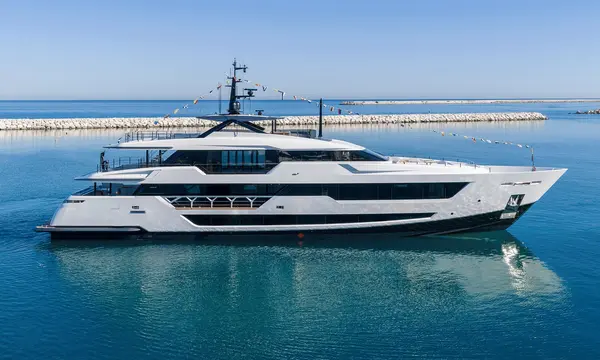
Custom Line Details Eleven Ancona Yacht Launches in Six Months
Ferretti Group reports that Custom Line launched eleven made-to-measure yachts between April and September 2026, including debut hulls of the Navetta 35 and Saetta …
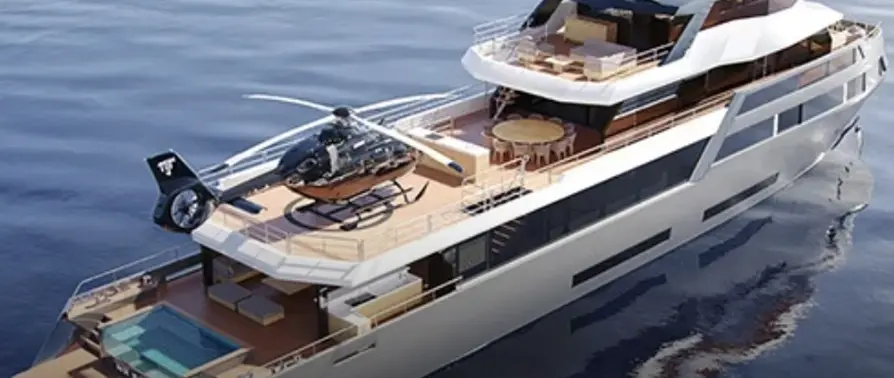
INACE Outlines Four-Project 32–47m Explorer Yacht Pipeline — source image
The first 45.6-metre INACE ISY 150 Explora has reportedly been sold as VIVIERAE III for a planned 2029 delivery, with technical-diving equipment central to the owner's specification.
The first 45.6-metre ISY 150 Explora from Brazilian builder INACE has reportedly been sold for construction as VIVIERAE III, with delivery planned for summer 2029. SuperYacht Times reported the agreement on 3 November and identified American long-distance yachtsman Bob Giles as the client. This is a contract for a named yacht that is under construction, not confirmation of a launch or a completed delivery. The distinction is especially important while concept renderings and future-build listings for the broader ISY 150 series remain in circulation. INACE's own published descriptions and its brokerage partner IYC provide a firm basis for assessing the proposed vessel's engineering approach, although the yard has not published a transaction price or the construction agreement itself.
The significance of the commission is clearer when placed alongside the voyages associated with the name. Giles previously owned a smaller Nordhavn called VIVIERAE, subsequently renamed VEGA, and has continued his long-distance cruising aboard the approximately 29-metre Nordhavn VIVIERAE II. The November report credits him with two circumnavigations aboard the latter. The new Brazilian build would be the third vessel in that line, but an increase in length alone does not explain the move. A nearly 46-metre steel explorer allows a very different allocation of storage, technical equipment, guest space and crew facilities for an owner already accustomed to living with the operational consequences of extended passages. The name therefore connects a specific cruising history with a new custom construction programme.
The most distinctive part of the reported design is an aft area dedicated to technical diving. Plans describe high-pressure cylinder-filling equipment, separate oxygen and helium storage and a hyperbaric recompression chamber. Those are substantial requirements that must be considered as part of the machinery, electrical, ventilation and operating arrangements of a vessel; they are not simply another set of leisure toys to store in a locker. The precise treatment of gas handling, equipment servicing and medical emergency procedures will ultimately depend on detailed engineering and applicable rules, none of which has yet been published in full. The useful conclusion from the released concept is that a specialist activity is shaping the yacht's architecture from the outset. It would be premature to call an illustrated space an operationally certified dive centre before delivery.
The same aft deck is expected to serve as tender stowage on passage. When the tender is deployed, it can provide additional open space for guests and their diving operations. That dual-use arrangement illustrates one of the harder compromises in expedition-yacht design. Aft decks are sought after for waterfront relaxation, but they must also accommodate tender movements, launch-and-recovery machinery, access paths and working zones. The project appears to place expedition activity ahead of the permanent beach-club arrangement familiar on many Mediterranean-oriented yachts. It is a practical design choice, though the released information does not establish the tender's exact dimensions, lifting capacity, sea-state limits for deployment or the final detail of the dive equipment. Those specifications remain to be verified as the build progresses.
INACE promotes its modern explorer portfolio around steel hulls and aluminium superstructures. In broad naval-architectural terms, the former is a familiar choice for robust displacement vessels, while an aluminium upper structure can help manage weight high above the waterline. Neither material alone guarantees seakeeping, efficiency or long-term maintenance outcomes: structure, stability calculations, protective coatings, machinery, maintenance and crew all matter. Hydro Tec is identified as responsible for the ISY 150's exterior design and naval architecture, with Carla Guilhem Design attached to the interiors of this first owner-specific unit. The combination brings an established yacht-design practice into a yard whose roots extend beyond luxury boatbuilding. It remains a future-build project, so its finished displacement, noise levels and passage performance should not be represented as measured results.
The ISY 150 is marketed at approximately 499 gross tonnes, an important description of enclosed volume rather than a statement that the yacht weighs 499 tonnes. Broker materials for the model indicate accommodation for ten guests across five cabins and approximately nine crew, subject to the final specification. That provides a sense of the onboard support needed for a prolonged programme: watchkeeping, engineering, galley service, maintenance and tender or diving operations may compete for the same people and stores. The gross tonnage figure also matters because many maritime regulatory requirements change with tonnage and operating arrangements, but it does not by itself establish the intended flag, certification or commercial status of VIVIERAE III. Those choices have not been confirmed publicly and should not be guessed from a brochure.
Long-range capability is central to the EXPLORA concept. The available marketing materials are not perfectly aligned on the headline figure: INACE has discussed roughly 5,000 nautical miles for the platform, while listings associated with IYC mention as much as 5,500 nautical miles at around ten knots. Both should be treated as design or marketing estimates for an unfinished yacht. A genuine owner passage plan will depend on the achieved fuel consumption, loading condition, available reserve, weather, currents, generators and comfort speeds. The numerical difference is not proof of a defect or a change to the vessel; it may reflect operating assumptions, iterations or different sales documents. Nor does a published maximum speed of about 14.5 knots imply that a long-range crossing should be planned at that speed.
The reported summer 2029 delivery places this order in a multi-year design, construction and commissioning cycle. That timetable includes more than hull fabrication. Interior detailing for a bespoke layout, machinery installation, electrical integration, classification work, dockside testing, sea trials, crew familiarisation and owner acceptance may each affect the actual date. SuperYacht Times describes a proposed first voyage towards Ascension Island, followed by an appearance at the 2029 Fort Lauderdale International Boat Show before another circumnavigation. These are forward-looking plans, not completed movements or guaranteed appointments. Their relevance is nevertheless substantial: a vessel intended to begin ocean passages soon after delivery has to be prepared for practical operation, rather than merely polished for a sales exhibition.
On VIVIERAE III the expensive space is reportedly being assigned to operational capability as much as to entertainment. A dive-compression area, gas storage and tender handling are unlikely to appear in conventional yacht comparisons centred on cinema rooms, formal dining and expansive beach clubs. That does not make one approach inherently superior. It shows how different owner programmes produce different answers to the same design problem. For someone whose plans include remote anchorages and sustained exploratory cruising, ready access to equipment, spares and capable crew can define the quality of the experience. Published renderings may communicate the arrangement, but the operational test will come when the yacht performs the activities for which it was commissioned.
INACE builds in Fortaleza on Brazil's northeast coast and describes extensive experience in commercial, naval and specialist vessels. Its public positioning stresses steel construction, transoceanic design and customisation; such claims should be read as the builder's stated approach rather than independent proof of the eventual performance of any individual yacht. The yacht builder is seeking an international customer base for a series of adventure-oriented projects. For buyers, a less familiar superyacht brand does not eliminate the normal need for specification review, construction oversight, classification and independent technical surveys. The yard's industrial history is a reason to examine the programme seriously, but it is no substitute for contractual deliverables and verified build progress.
In June 2026 IYC formally announced that it had become INACE's global representative, naming Monaco-based Pierre Vezilier and Fort Lauderdale-based Adam Levine as leading contacts for the collaboration. The announcement also described a four-project pipeline across approximately 32 to 47 metres, and divided the modern offering into AVENTURA, EXPLORA and DESIGNER families. This context matters because the newly reported VIVIERAE III order is not an isolated marketing drawing emerging without distribution arrangements. At the same time, an international sales partnership is not evidence that IYC personally concluded this precise contract unless the companies say so. Broker representation, shipyard construction, design work and ownership are separate roles that should not be conflated.
Public brokerage entries continue to advertise the ISY 150 EXPLORA as a new-build opportunity. Some show dates that belong to their listing systems or general production assumptions, not the delivery deadline of Giles's named yacht. Likewise, a brochure price for an available example would not establish the confidential consideration paid for a customised first vessel. The order reported in November is specific to a hull and proposed owner requirements; the model listing illustrates a design family that may also be offered to other customers. Treating the two as equivalent would risk reporting an invented sale price, build year or level of equipment. None of those details is necessary to understand the verifiable news.
Several features will need empirical confirmation. Transoceanic range requires an agreed loading and speed basis, then checks during trials and operation. The diver-support equipment needs detailed safety arrangements, consumable supplies and a maintenance system; a hyperbaric chamber is not evidence of medical personnel or treatment capability on its own. Tender handling requires tested equipment and trained crew, particularly away from sheltered marina conditions. Interior comfort is likewise related to acoustics, vibration and climate systems as well as attractive design. It is not yet possible to judge how all these demands will be balanced aboard the completed VIVIERAE III. A credible construction report should keep engineering intent and operational proof in separate categories.
The sale reported on 3 November gives the ISY 150 programme something more concrete than a proposal: an identifiable yacht, a prospective 2029 completion and a cruising programme with distinct technical requirements. It also provides a useful example of how the explorer market can be driven by owners who have already accumulated thousands of miles and know what is missing from their present vessels. There is no public basis here for estimating the contract value, declaring the vessel fully equipped or implying that she has been launched. The next meaningful checkpoints will be yard-confirmed build milestones, the final technical specification, launch, trials and acceptance. Until then, VIVIERAE III is best understood as a live, ambitious custom-build project shaped by the voyages it is meant to undertake.
The November 3 sale and owner details were reported by SuperYacht Times: first ISY 150 Explora VIVIERAE III contract report. IYC's official June 2026 announcement verifies the broker-builder relationship and development pipeline. INACE's own website describes the yard's construction approach and location. Design dimensions and sales parameters refer to the ISY 150 model, and may differ in the owner-specific final build. Neither the signed sales agreement nor an owner-approved final arrangement was available in the reviewed public material. The photograph accompanying this article is a previously sourced INACE concept image, not a photograph of the named yacht under construction.
Continue reading
Ferretti Group reports that Custom Line launched eleven made-to-measure yachts between April and September 2026, including debut hulls of the Navetta 35 and Saetta …
Lürssen confirms its Port Tarraco Service Centre has opened, creating a permanent Mediterranean technical base with workshop access and support for yachts beyond its …
Following the 2026 RefitX seminars at Fort Lauderdale, industry participants including Derecktor Shipyards and Safe Harbor have highlighted skilled-worker training and retention as crucial …
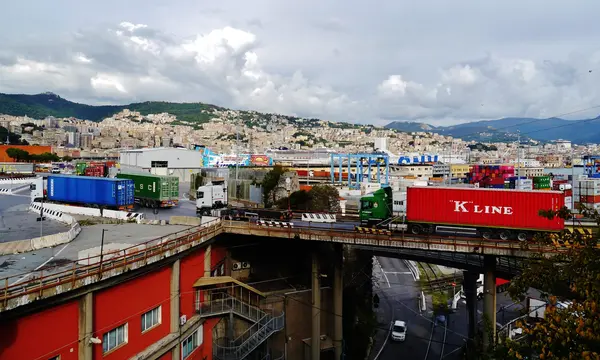
Genoa's port authority has completed 65 stakeholder hearings for a new port master plan that includes possible yacht facilities and additional refit space, but …
Superyacht Guide
Continue into the wider Superyacht Guide.
Business opportunities · Superyacht Guide
Companies serving the superyacht market can discuss clearly identified advertising, sponsorship and business-profile opportunities. Commercial activity remains separate from independent editorial coverage.