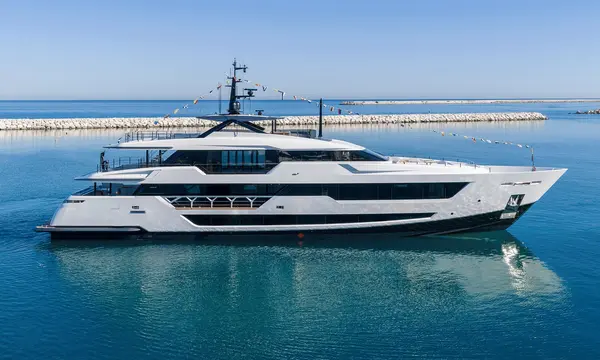
Custom Line Details Eleven Ancona Yacht Launches in Six Months
Ferretti Group reports that Custom Line launched eleven made-to-measure yachts between April and September 2026, including debut hulls of the Navetta 35 and Saetta …
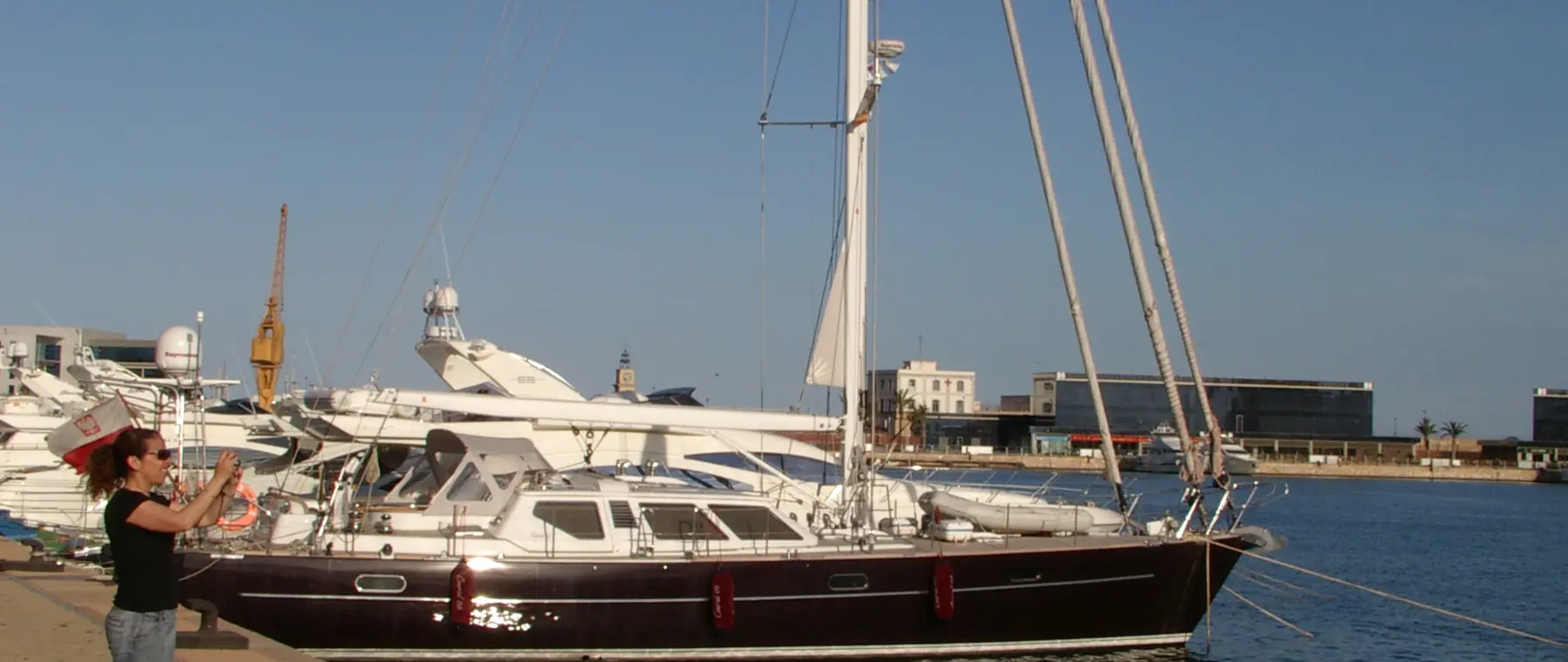
Port Tarraco Tarragona harbour 2004 — Aleksandras Gurejeva / Wikimedia Commons CC BY 3.0 (archival)
Lürssen confirms its Port Tarraco Service Centre has opened, creating a permanent Mediterranean technical base with workshop access and support for yachts beyond its own fleet.
Lürssen has opened its Mediterranean Service Centre at Port Tarraco in Tarragona, Spain, converting the service-base proposal it outlined during the 2026 Monaco Yacht Show into a working facility. The German builder confirmed the opening through its official company announcement in early November, describing a gathering attended by captains, chief engineers, partner businesses, Port Tarraco representatives and industry media. That is a different development from September's decision to select Tarragona: the centre is now available as a fixed point of contact for yacht operators.
The distinction matters because a geographic service promise is only useful when it has people, premises and an accessible route for equipment. Lürssen identifies the new site as a permanent Mediterranean base supporting its existing mobile service operation. It offers workshop space, meeting facilities and access to spare parts. The announcement does not quantify a new dry dock, travel lift, workforce complement or berth allocation, and the opening should not be confused with construction of another Lürssen new-build shipyard.
According to Lürssen, captains, chief engineers and crew can bring components to Tarragona and discuss repair, maintenance or upgrades directly with its technical personnel and suppliers. This allows a practical meeting around a particular system, rather than relying entirely on long-distance correspondence between the yacht, a manager, the builder and a subcontractor. The presence of a workshop provides a place for inspection and certain bench-level tasks, although the precise capacity of individual jobs has not been published.
One likely benefit is better coordination of diagnostic work. A chief engineer can take a problem description, equipment history, photographs, serial information and relevant service documents into a technical conversation. When an issue requires specialist expertise, a local base can help assemble the right parties. That is an operational inference, not a guarantee that every repair can be completed immediately or that every manufacturer will have replacement components in stock.
For owners and managers, the useful measure will be outcomes: whether the centre can reduce delays, clarify a repair specification, help obtain genuine parts and identify the point at which a job becomes more extensive than routine maintenance. Those measures will only become visible through actual projects, rather than a ribbon-cutting announcement.
Tarragona sits on the Spanish Mediterranean coast within reach of the Balearic cruising region and Barcelona's wider marine-services network. Lürssen says a substantial share of its mobile-service call-outs has historically concerned yachts operating around the Balearics. A base on this stretch of coast gives the company a permanent place to receive parts, hold meetings and coordinate suppliers while its specialists continue travelling to yachts elsewhere.
Port Tarraco is already associated with large-yacht berthing, making the location relevant to captains responsible for vessels whose dimensions narrow the range of suitable ports. The marina's published facilities and berth dimensions remain a separate matter from what Lürssen itself operates; berth availability, vessel eligibility, draft limitations and required port permissions should always be checked with the marina before planning an arrival.
A yacht need not necessarily relocate to Tarragona for every issue. The builder describes the centre as an addition to a mobile network, so service planning may still involve technicians travelling to a vessel's existing berth. The right choice will depend on the nature of the work, required machinery, crew availability and the practical cost of moving a large yacht. The opening adds another option, not a universal answer.
The company makes a point of saying that the centre is open beyond its own fleet. Noel Bandholtz, Lürssen's head of services, describes the operation as accessible to other yachts as well. That broad remit may be significant in the Mediterranean refit market: a mixed fleet uses many of the same navigation, hotel, electrical, propulsion and safety-system suppliers, even when the original builders differ.
Being open to other makes does not remove the need to check the technical authority for specific work. Warranty conditions, classification rules, original equipment manufacturer procedures and access to proprietary control systems can all influence who is qualified to perform a repair. Captains should confirm what the Tarragona team will handle directly, which tasks go to approved specialists and what documentation will be returned to the vessel.
The approach also matters commercially. A shipyard-affiliated service centre that accepts non-builder vessels can widen the pool of possible work, but Lürssen has not released a revenue forecast, capacity target or booked-project list for this operation. It would therefore be premature to infer that the centre is already operating at full capacity or has captured a particular share of the regional market.
Lürssen says partner companies can work with the centre to contribute their own refit and repair expertise. Meeting rooms can support conversations between the yacht's technical team, an owner's representative, service suppliers and surveyors. This collaboration model reflects the reality that a superyacht may combine systems supplied by numerous specialist firms, many of which maintain separate service schedules and parts channels.
Consider a hypothetical upgrade involving bridge electronics and associated electrical infrastructure. A builder's service adviser may help identify integration constraints, while the equipment maker assesses compatibility and a qualified installer proposes the practical sequence. A meeting at one location could clarify scope and responsibility before anyone removes functioning equipment aboard. The example illustrates the potential workflow; Lürssen has not announced this specific project as an undertaking at Tarragona.
The centre's value will depend partly on coordination discipline. Written scopes of work, identified contractors, work permits, safety responsibilities and test records remain important regardless of how conveniently the project team can meet. Owners should ensure that verbal advice is converted into an agreed specification before authorising substantial expenditure.
Some maintenance problems can be addressed by exchanging parts or sending a technician to a yacht. Others require controlled access, large lifting equipment, extensive scaffolding, coating facilities or a dry dock. The opening statement establishes a service centre with workshop and support facilities; it does not establish that every heavy refit operation will be undertaken at Port Tarraco itself.
That distinction is especially important for large yachts managing seasonal schedules. A short intervention during a Mediterranean stay can be attractive if it avoids a long diversion, but the vessel's flag, class and insurers may require specified inspections or approvals. Managers should also plan around crew workload and guest use, especially if the work could interrupt essential hotel services or safe manoeuvring.
The new facility may therefore work as a first point of technical assessment and an organiser of follow-on work, whether the eventual repair is carried out locally, at the yacht's berth or at a shipyard with more extensive infrastructure. Lürssen's broader refit capability should not be treated as proof of the equipment installed at the new Spanish location.
For a captain contemplating use of the centre, the first step is a precise service enquiry. Useful information would include the yacht's identity, builder and year, equipment involved, current symptoms, recent service history, photographs or data logs, the desired operating window and any immediate safety implications. A clear brief helps a service provider determine whether it needs to send a specialist, request additional diagnostic records or propose a scheduled appointment.
Owners' representatives should ask how labour, travel, parts, shipping, local taxes and third-party work will be quoted; what lead times apply; and whether any manufacturer approval is needed. The company has not published a universal price list or response-time guarantee in its opening announcement. No cost estimate should be presented as though it were an official Lürssen tariff.
After completion, a professional handover should identify the work performed, test results, replaced parts and any outstanding limitations. Such records can be valuable when a later captain or engineer needs to understand how a defect was diagnosed and resolved. They also provide a more reliable history for a prospective buyer than an unqualified statement that a yacht has been 'serviced'.
The Mediterranean contains a dense concentration of yacht builders, marinas, independent refit companies, equipment makers and fleet-management teams. Lürssen's new base enters that existing network, where the competitive question is not only who can undertake a large rebuild but who can organise smaller interventions without creating unnecessary disruption to a yacht's itinerary.
The firm has a separate established northern European shipbuilding and refit footprint, and the Tarragona centre does not replace those facilities. The immediate development is closer access to technical assistance in a region where yachts frequently change berths during the summer and prepare for maintenance between seasons. Its scale and future expansion remain matters for subsequent company reporting.
Superyacht Guide previously reported Lürssen's plan to establish a Tarragona presence when the builder discussed its 2026 delivery programme at Monaco. The latest announcement closes that particular gap between intention and implementation. For captains, the important news is straightforward: there is now a stated permanent address through which to coordinate technical support, with access extended to yachts built by other yards. The efficiency of individual projects will still depend on careful planning, verified capabilities and clear responsibility for the work.
Continue reading
Ferretti Group reports that Custom Line launched eleven made-to-measure yachts between April and September 2026, including debut hulls of the Navetta 35 and Saetta …
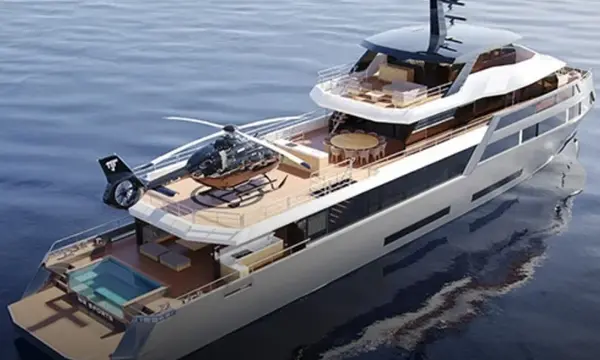
The first 45.6-metre INACE ISY 150 Explora has reportedly been sold as VIVIERAE III for a planned 2029 delivery, with technical-diving equipment central to …
Following the 2026 RefitX seminars at Fort Lauderdale, industry participants including Derecktor Shipyards and Safe Harbor have highlighted skilled-worker training and retention as crucial …
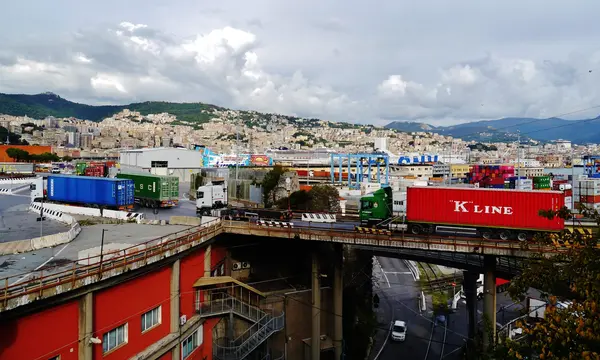
Genoa's port authority has completed 65 stakeholder hearings for a new port master plan that includes possible yacht facilities and additional refit space, but …
Superyacht Guide
Continue into the wider Superyacht Guide.
Business opportunities · Superyacht Guide
Companies serving the superyacht market can discuss clearly identified advertising, sponsorship and business-profile opportunities. Commercial activity remains separate from independent editorial coverage.