SeaKeepers Founders 2026 Draws 240 Guests and 30 Yacht Crews
SeaKeepers has published attendance and fleet participation figures for its completed Fort Lauderdale Founders gala, recognising conservation leaders and yacht crews who support marine …
Chinese builder Heysea Yachts has reported a contract for a 54.65-metre full-custom superyacht designed by the Netherlands-based studio Vripack, with delivery anticipated in 2029. The news was reported on 9 November 2026 and places the order firmly within the large-yacht sector rather than the builder's smaller catamaran and production ranges. Published preliminary particulars describe a 499-gross-ton vessel with a steel hull and aluminium superstructure, a four-deck layout and accommodation for up to twelve guests and ten crew. No vessel name or contract price has been made public in the material reviewed.
Chinese builder Heysea Yachts has reported a contract for a 54.65-metre full-custom superyacht designed by the Netherlands-based studio Vripack, with delivery anticipated in 2029. The news was reported on 9 November 2026 and places the order firmly within the large-yacht sector rather than the builder's smaller catamaran and production ranges. Published preliminary particulars describe a 499-gross-ton vessel with a steel hull and aluminium superstructure, a four-deck layout and accommodation for up to twelve guests and ten crew. No vessel name or contract price has been made public in the material reviewed.
The significant development is the announced order itself, not the unveiling of a completed yacht. A project in the contract stage still faces detailed design, classification, construction, commissioning and delivery milestones. Heysea is reported to have described the buyer as a European owner with substantial familiarity with superyachts who undertook a professional marine survey before selecting the yard. Such background helps explain the builder's commercial positioning, but it is not evidence of the owner's identity, the precise contract value or an unconditional delivery guarantee. Those facts would require separate statements from the parties involved.
Vripack has been credited with both exterior and interior design for the planned yacht. That is an important distinction from projects where a yard supplies an in-house platform or combines separate naval architecture and interior appointments. The partnership brings a recognised European large-yacht design name to a custom construction programme in China. It also raises practical questions about how the designer, naval architects, owner representatives, engineers and yard managers will coordinate decisions through each stage of the build. The published announcement does not, by itself, establish who is responsible for every engineering discipline.
Vripack's wider portfolio includes expedition-oriented designs and numerous collaborations with international builders. Its role on the Heysea vessel should nevertheless be understood on the basis of this particular commission, rather than extrapolated from unrelated vessels in the studio's portfolio. A design credit does not reveal the final technical specification, certification regime, contract structure or finished interior materials. As construction progresses, more precise disclosures may distinguish the exterior arrangement shown in concept imagery from what is ultimately engineered and approved for production. Until then, the 54.65-metre dimensions and proposed functions are the clearest public reference points.
The reported gross tonnage of 499 GT is a measurement of enclosed volume under maritime tonnage conventions, not a statement of the yacht's weight. It is a commercially meaningful design parameter because a project close to 500 GT often involves careful balancing of guest volume, crew accommodation, service spaces and engineering installations. Meeting the specified figure requires more than an attractive profile. Designers must accommodate structural depth, technical spaces, tankage, circulation routes and safety arrangements while maintaining the experience expected by the owner.
It would be incorrect to infer regulatory exemptions simply from the preliminary 499 GT figure. Applicable rules depend on the yacht's flag, use, voyage pattern, certification and other particulars; there is no public confirmation here of a specific classification notation or operating code. The figure is best read as a design target announced with the project, subject to later verification. The four-deck arrangement and the mix of guest and crew spaces show the density of decisions that need to fit within that envelope. Detailed drawings and approved tonnage calculations will ultimately provide the authoritative answer.
The planned yacht is reported to have a beam of 9.15 metres and a draft of 2.37 metres. The combination suggests an effort to provide substantial interior and deck space while retaining access to cruising grounds where deeper-draft displacement yachts may face restrictions. Such a reading is an interpretation of the stated dimensions, not an officially declared itinerary. The steel hull and aluminium superstructure follow a well-established construction approach for custom yachts of this size, although the published report does not disclose scantlings, structural optimisation methods or weight-distribution calculations.
With almost 55 metres of overall length, the project also brings requirements for berthing, pilotage, maintenance access and professional crew planning that go beyond those of a small recreational yacht. Port selection must consider berth length, available draft, local regulations, shore power and weather protection, not simply the brochure's stated cruising speed. An owner planning extended voyages will also need to consider fuel and stores logistics, spare-parts support and service networks. These operational questions form part of the project's eventual value even when they attract less public attention than the yacht's exterior silhouette.
Preliminary specifications describe twin engines rated at 800 horsepower each, a maximum speed of approximately 12.5 knots and a quoted range of 3,500 nautical miles at eight knots. Those figures offer a starting point for assessing the proposed cruising profile. They should not be treated as independent performance-test results or an assurance that every loading, sea-state and operating condition will deliver the advertised range. Fuel consumption, reserve policy, generator use, stabilisation equipment, hull cleanliness and weather can materially alter real-world endurance.
For an owner interested in multi-week cruising, the interaction between economy speed and hotel loads is particularly important. The yacht's electrical demand while at anchor may vary substantially according to climate control, galley operations, guest activities and installed technical systems. The figures publicly associated with this Heysea order do not provide a complete fuel-burn table, generator configuration or energy-management specification. It would therefore be speculative to assign a precise operational cost or environmental saving to the design. Proper comparisons with competing large yachts would need measured performance information at equivalent speeds and loads.
Published project details identify an aft swimming pool and a forward helideck among the proposed features. Both can strongly influence the overall arrangement. A swimming pool brings structural loading, water treatment, drainage and maintenance considerations in addition to its recreational appeal. A helideck requires a particularly careful examination of deck structure, clearances, operating procedures and relevant aviation requirements. Describing a forward helideck does not establish approval for every helicopter type or confirm any particular aviation operating certificate.
The use of upper decks for such amenities must also be balanced against crew routes, visibility from the bridge, rescue equipment, tender handling and the ability to keep working areas accessible when guests are aboard. The planned accommodation for ten crew is a reminder that this is a professionally operated superyacht with substantial support functions. Future specifications will be needed to clarify the arrangements between guest and service spaces, the tender inventory and the degree of automation. A striking outline may win attention at the order stage, but detailed engineering decides how reliably the vessel can be used.
Heysea has developed a portfolio spanning large custom motor yachts and multihulls and has been actively expanding its international sales presence. The 54.65-metre contract is notable for its scale and the reported European buyer, but one order cannot establish the overall size or profitability of China's superyacht export market. The builder also operates across different yacht types, so comparing headline sales without distinguishing small catamarans from full-custom displacement yachts would be misleading. This announced project belongs to the latter category and deserves to be assessed against similar steel-and-aluminium builds.
The choice of an international design partner may help the yard address owners accustomed to European styling and project oversight, while competition will still be shaped by engineering quality, delivery experience and after-sales performance. Building an individual yacht to a demanding specification carries risks that are not visible in an early sales announcement. Procurement, contract management, change control, classification surveys and sea trials remain ahead. The present story is best understood as a new large-yacht order and a significant design collaboration, rather than as proof of a finished product or a change in market rankings.
The announced delivery year is 2029, giving the project an extended period for the usual sequence of technical design, manufacturing and outfitting. The sources reviewed do not provide a confirmed keel-laying date, launch date, sea-trials schedule or final handover month. These milestones should be reported when corroborated by the yard, its design partners or another reliable party with direct knowledge. Likewise, neither the ultimate sale price nor any financial arrangements may responsibly be inferred from the yacht's length, tonnage or choice of designer.
For Superyacht Guide readers, the key facts are already substantial: Heysea reports a European-owned, Vripack-designed custom yacht of 54.65 metres with a steel hull, aluminium superstructure and a provisional 499 GT envelope, scheduled for completion in 2029. Its proposed cruising range and onboard facilities describe the ambition of the project while leaving detailed performance and regulatory questions open. Monitoring the vessel as an actual named build, rather than confusing it with a generic production model or an uncontracted concept, will be the proper test of how this announcement develops.
Reporting source: original announcement; corroborating source: additional first-party or industry material. Report dated 9 November 2026. Announcements and operating plans may change; editorial interpretations are distinguished from confirmed facts.
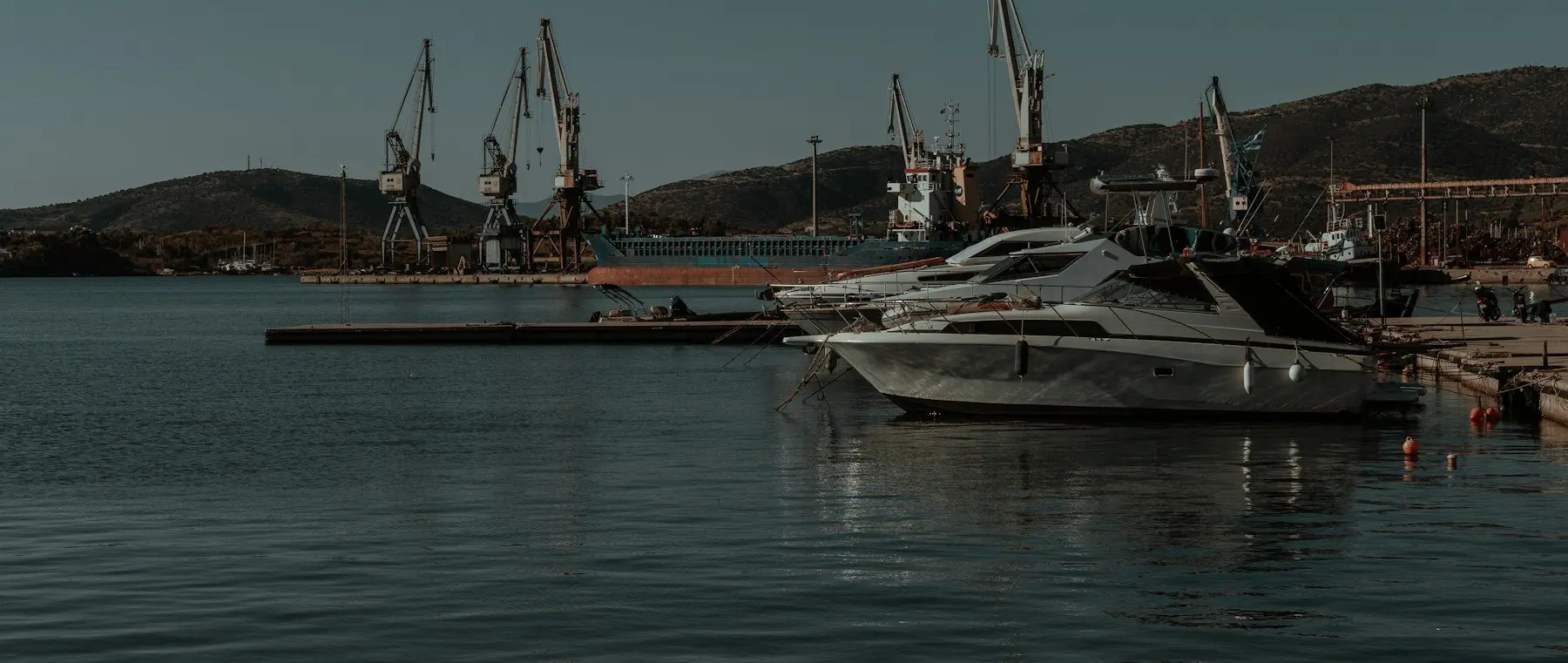
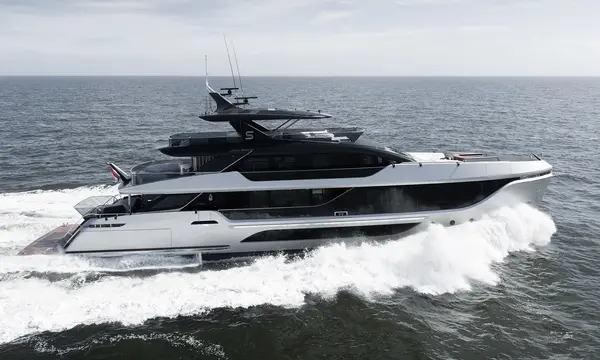
Editorial photograph: photographer and original image — Panagiotis Falcos / Unsplash License; October 2025 industrial harbour yacht view; illustrative only, not the planned Heysea vessel. Cropped and resized under the Unsplash License. Illustrative photograph only; it does not show the 2026 event or named product.
Continue reading
SeaKeepers has published attendance and fleet participation figures for its completed Fort Lauderdale Founders gala, recognising conservation leaders and yacht crews who support marine …
A new Northrop & Johnson crew advisory questions whether rotational employment suits every position, highlighting differences between senior and junior crew and between yacht …
STELLAMAR's 35-metre RJ 115 design shows how expedition-grade engineering and Italian interior architecture can share one coherent owner-focused superyacht.
An examination of Van der Valk's 39.92-metre Shine, delivered in 2026 with a bespoke aluminium hull, fast-displacement engineering and interiors by Cristiano Gatto Design.
Superyacht Guide
Continue into the wider Superyacht Guide.
Business opportunities · Superyacht Guide
Companies serving the superyacht market can discuss clearly identified advertising, sponsorship and business-profile opportunities. Commercial activity remains separate from independent editorial coverage.