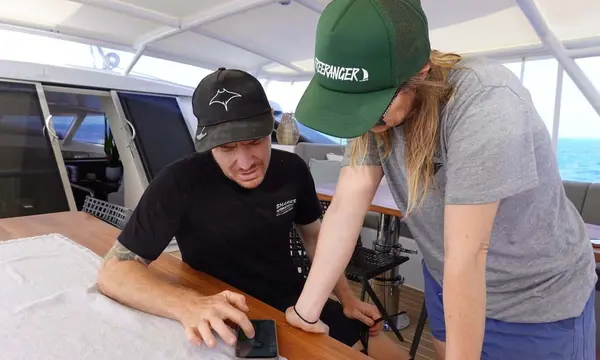
37m RADIANCE Supports First Joint Manta-Ray Survey in Fiji's Northern Lau Group
The 37m sailing yacht RADIANCE hosted the first joint manta-ray surveys by Fiji and New Zealand researchers in the northern Lau Group, documenting baseline …
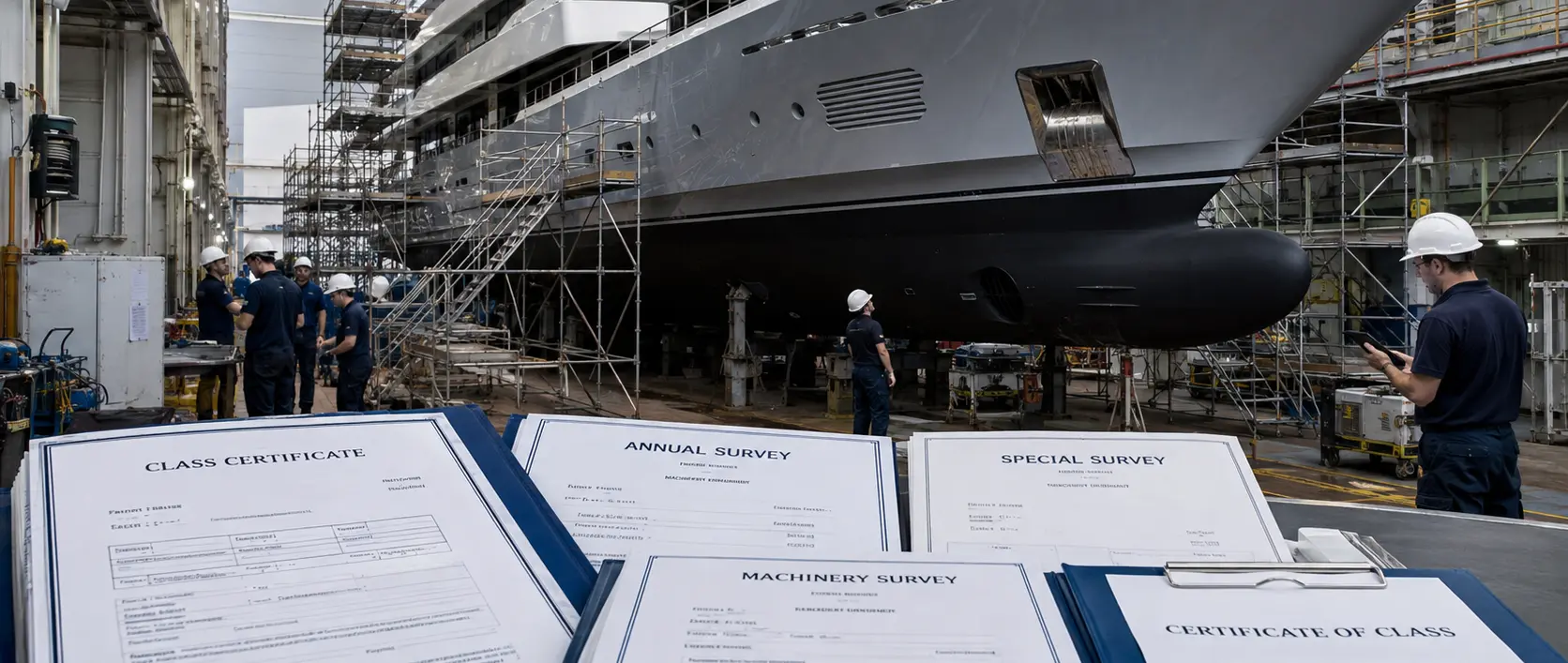
Keeping a superyacht in class can cost far more than survey fees, with dry-docking, access, repairs, testing and lost operational time driving the real bill.
For many owners, classification is one of the least visible parts of superyacht ownership. The yacht carries its class notation, certificates remain current and surveyors appear periodically, while most financial attention is directed towards crew, fuel, insurance, berthing and refit.
That changes quickly when a major survey approaches. Keeping a yacht in class is a continuing technical obligation, and the real cost is rarely limited to the classification society's invoice because inspections can trigger dry-docking, machinery work, testing, structural access, repairs and lost operational time.
On an ageing yacht, classification can become a major factor in deciding when to refit, when to sell and whether an apparently attractive brokerage purchase actually represents good value. The cost is not simply what the surveyor charges, but what the yacht must spend in order to remain demonstrably compliant.
A yacht described as being in class has been assessed against the rules of its classification society and remains subject to continuing surveys throughout its operational life. Classification covers aspects of the yacht's structure, machinery and engineering, with compliance established during construction and then maintained through periodic inspection.
For large yachts, those requirements can reach deep into the vessel. Hull structure, propulsion machinery, steering systems, electrical installations, watertight integrity and other safety-critical systems may all fall within the survey regime, depending on the yacht's notation and the rules of the relevant society.
Class should also be distinguished from statutory certification. Classification societies can act on behalf of flag administrations as recognised organisations and may conduct statutory inspections, but class status and regulatory certification remain separate concepts even when the same organisation is involved in both.
For some commercially operated large yachts, classification is not simply an owner's preference. Applicable flag-state rules can require vessels to maintain classification with a recognised organisation, making continuing compliance part of the yacht's legal and operational framework.
Classification does not involve one inspection followed by five years of inactivity. The normal survey cycle includes annual surveys, intermediate surveys and a major class-renewal or special survey at approximately five-year intervals, with additional requirements covering individual machinery items and specialist systems.
The financial effect is that class expenditure is rarely even from year to year. A relatively straightforward annual survey may require limited intervention on a well-maintained yacht, while a major renewal survey can coincide with dry-docking, machinery overhauls and extensive access to structure and tanks.
Preparation can begin well before the surveyor arrives. Tanks may need to be emptied, cleaned and made safe for entry, machinery prepared for inspection, records assembled and underwater equipment made accessible.
This creates a recognisable rhythm in the ownership cycle. A yacht approaching a five-year milestone can face a very different technical budget from one that has just completed its major survey programme, even when the two vessels are otherwise similar in age and condition.
The direct fee charged by the classification society can be one of the smaller expenses associated with maintaining class. The expensive part is often the work required to place the yacht in a condition where the survey can be completed and signed off.
Dry-docking alone can generate substantial costs through docking fees, lifting or haul-out, shore power, waste handling, scaffolding and yard labour. Crew and contractors may spend days preparing spaces and machinery before the surveyor begins the detailed inspection.
If a defect is discovered, the scope can expand immediately. A valve that fails a test, deterioration inside a tank, unexpected wear on a shaft component or a structural area requiring further examination can turn a planned survey into repair work, retesting and additional attendance.
The distinction between class expenditure and maintenance expenditure therefore becomes blurred. The owner is not simply paying for an inspection but for the yacht to remain in a technical condition capable of passing that inspection.
One of the less obvious expenses arises from access. Surveyors cannot assume that inaccessible structure or machinery remains satisfactory simply because the yacht has operated without an obvious problem.
Insulation may have to be removed, tanks opened, deck coverings lifted and machinery dismantled so that critical areas can be inspected. In some cases the components themselves prove to be entirely satisfactory, but the yacht still carries the labour cost of exposing them and restoring the surrounding finishes afterwards.
That restoration can be particularly expensive on a superyacht. High-quality joinery, stone, decorative panels and specialist finishes may sit directly above technical spaces, creating a situation where accessing a comparatively ordinary structural or mechanical item becomes a major interior task.
Experienced managers try to anticipate these requirements and combine them with planned maintenance or refit work. Careful coordination reduces duplication, but it cannot remove the fundamental cost of making the yacht accessible to the surveyor.
Major survey periods frequently coincide with manufacturer service intervals for engines, generators, steering systems, stabilisers and other machinery. This can make a class year appear dramatically more expensive than a normal operating year even when nothing has technically gone wrong.
The advantage is that combining machinery overhauls with class inspections can reduce repeated dismantling and yard visits. The disadvantage is that several high-value maintenance programmes can become due at the same time, producing a substantial concentration of expenditure.
Shafts, bearings, rudders and propulsion components can require particular attention because inspection may depend on the yacht being out of the water. If an issue is identified once the vessel is already docked, the owner may have little choice but to extend the yard period.
This is why long-term maintenance planning matters. Owners who budget only from average annual operating costs can be caught out when class-related work and major machinery intervals converge.
A refit does not necessarily preserve the yacht's existing classification arrangements unchanged. Structural modifications, machinery alterations and changes to major onboard systems can require drawings, engineering calculations and technical information to be submitted for approval.
Moving equipment, installing heavier tenders, changing cranes or creating new shell openings can affect structural strength, stability or watertight integrity. What appears to be a relatively straightforward owner-requested modification may therefore involve engineering and class approval before fabrication can proceed.
The same applies to large architectural changes. Enlarging windows, adding pools, altering deck arrangements or creating new beach-club openings can introduce technical questions that need to be resolved before the yard begins cutting structure.
The cheapest time to identify these consequences is during the design stage. Discovering them after fabrication has begun can result in revised calculations, new drawings and physical alterations to work the owner has already paid to complete.
A yacht does not need to suffer a major technical failure for classification work to become expensive. Time spent in a yard is itself a cost, particularly when it interferes with owner use, charter commitments or seasonal positioning.
Survey dates therefore become part of operational planning. Managers generally try to combine class surveys, statutory inspections, manufacturer servicing and preventive maintenance into the same technical period because repeated yard visits can be even more disruptive.
Unexpected findings are what make the programme difficult to predict. A yacht expected to leave the yard after a routine survey may remain alongside while replacement parts are sourced, specialists travel to the vessel and repaired equipment is presented for further inspection.
The resulting disruption can affect crew rotations, berth reservations, charter bookings and owner itineraries. For a commercially active yacht, the lost revenue from unavailable charter weeks can become part of the effective cost of maintaining class.
When a survey identifies an item requiring attention, the classification society can impose conditions that must be cleared within a specified period. Those requirements form part of the yacht's continuing class status and cannot safely be treated as optional maintenance suggestions.
A small defect can therefore become significantly more expensive if it is repeatedly postponed. Delayed maintenance may allow deterioration to progress until a later survey requires a larger repair or a more intrusive investigation.
If required surveys or conditions remain outstanding, class can ultimately be suspended or withdrawn. The precise consequences depend on the yacht, flag, class society and operating status, but the effects can extend into insurance, financing and commercial operation.
Restoring class after suspension can require completion of outstanding work and additional survey attendance. Maintaining the survey programme consistently is therefore normally simpler and less expensive than allowing the technical position to deteriorate.
Classification history should form part of any serious pre-purchase investigation. Two yachts with similar dimensions, age and asking price can present very different near-term ownership costs depending on where each sits in its class cycle.
A vessel that has recently completed a major special survey, dry-docking and associated machinery work may offer several years of comparatively predictable planning. Another yacht approaching the same milestone may look competitively priced while carrying significant expenditure immediately after purchase.
This does not mean that a recently surveyed yacht is automatically in better overall condition. Class surveys are not a substitute for a comprehensive pre-purchase survey, but the timing and outcome of major class work still provide valuable information about the technical obligations a buyer will inherit.
The same issue matters to sellers. A yacht approaching an expensive survey period may be less attractive to a buyer who knows that substantial technical expenditure is imminent, while recently completed class work can remove some uncertainty from negotiations.
There is no universal annual figure for the cost of keeping a superyacht in class. The amount depends on the yacht's size, age, construction, machinery, class society, notation, operating profile, condition and position within the survey cycle.
The more useful approach is to treat classification as a rolling technical programme. Survey windows should be visible years in advance, machinery maintenance should be coordinated with them, technical documentation should remain organised and contingency should be available for defects that cannot be known until equipment is opened.
For owners, the central lesson is that the survey invoice is rarely the true measure of the cost of classification. Dry-docking, preparation, access, repairs, testing, specialist attendance, design approval and lost operational time can collectively exceed the direct class fees by a substantial margin.
Keeping a yacht in class is therefore less like renewing a certificate and more like maintaining an independently verified technical standard throughout the vessel's life. Properly planned, it becomes part of the normal rhythm of ownership; left until the survey deadline, it can become one of the most expensive surprises on board.
Continue reading
The 37m sailing yacht RADIANCE hosted the first joint manta-ray surveys by Fiji and New Zealand researchers in the northern Lau Group, documenting baseline …

Bilgin Yachts has received the YachtBuyer Hall of Fame trophy for the 49.95-metre CAMILA after the review programme awarded her an overall five-star rating.
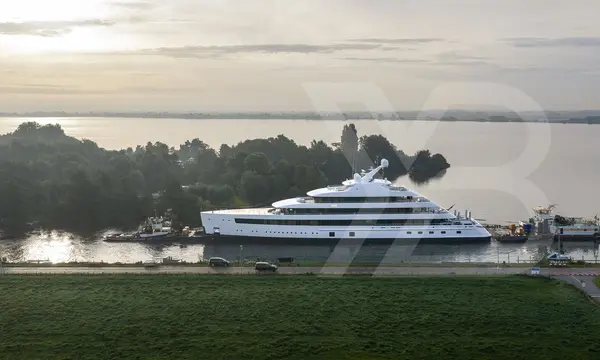
The 80-metre Feadship Love, formerly Project 716, has been spotted heading toward Rotterdam as the yacht prepares for sea trials.
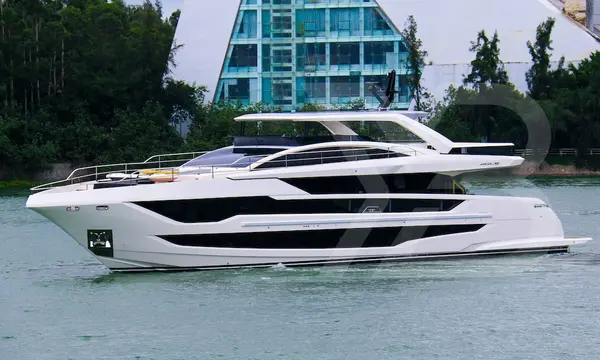
The first Pearl 100 Hybrid has completed initial sea trials ahead of its world debut at the 2026 Fort Lauderdale International Boat Show.
Superyacht Guide
Continue into the wider Superyacht Guide.
Business opportunities · Superyacht Guide
Companies serving the superyacht market can discuss clearly identified advertising, sponsorship and business-profile opportunities. Commercial activity remains separate from independent editorial coverage.