
25m Horizon WISHES GRANTED Sold in Seattle
By Superyacht Guide Newsroom · Edited by Superyacht Guide Newsroom
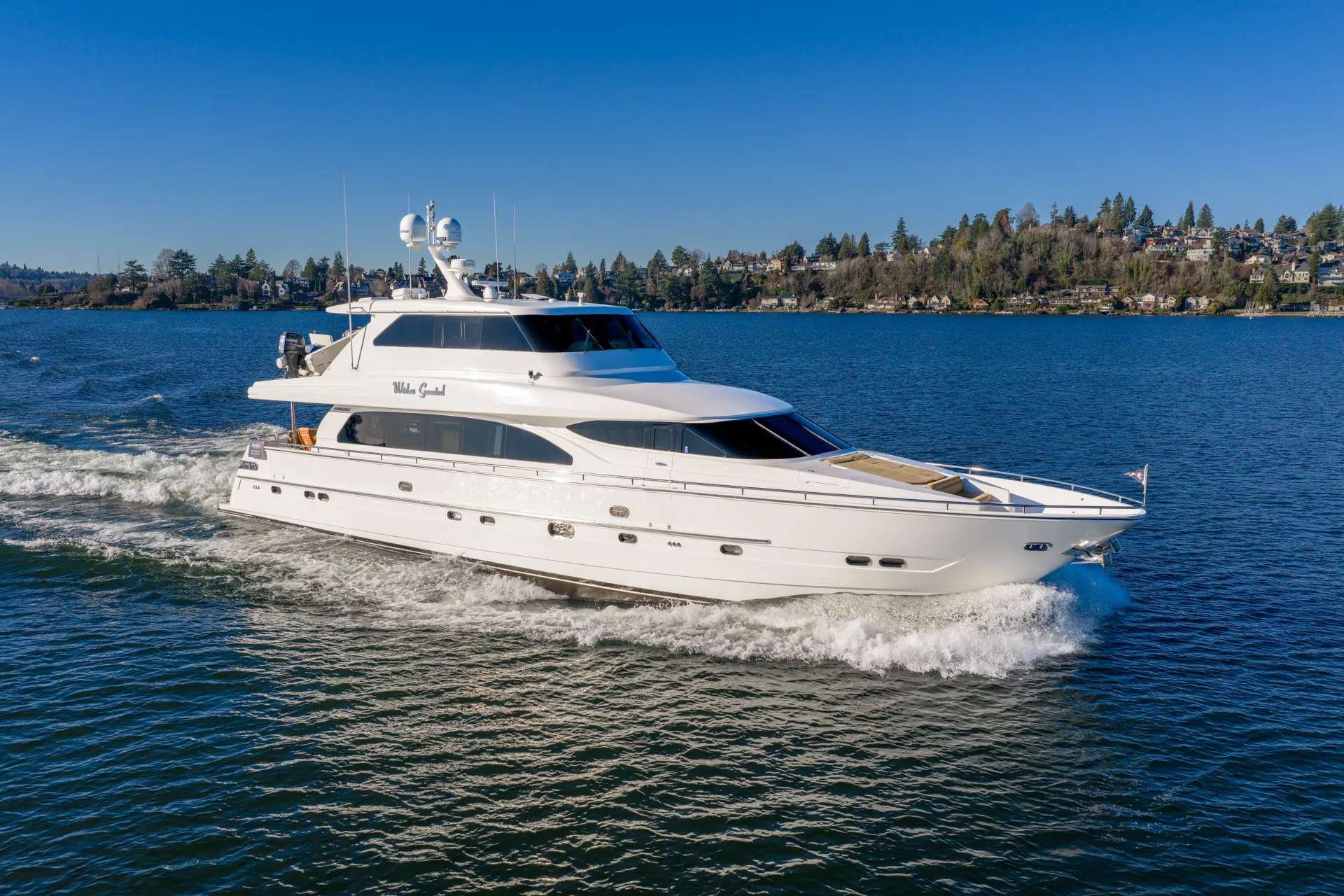
WISHES GRANTED — Denison sale announcement photograph
Denison confirms an in-house sale of a custom 2005 Horizon 82 in Seattle, whose enlarged saloon and skylounge distinguish it from the standard model.
Denison Yachting reported on 13 November 2026 that the 82-foot Horizon WISHES GRANTED has been sold in Seattle. Nick Pillon represented both parties in an in-house transaction. The motor yacht was launched in 2005 after being commissioned with changes to the standard Horizon 82 design. Its last advertised asking price was US$1.39 million; the broker did not identify the consideration ultimately paid.
At approximately 25 metres overall, WISHES GRANTED belongs to a class of yachts in which a relatively small variation in principal dimensions can make a significant difference to daily life aboard. The sale is particularly interesting because of the adjustments requested by the original owner, rather than any claim that the vessel represents the newest design in the market. It illustrates how modifications commissioned at construction may remain distinguishing characteristics of a yacht long after the first owner's departure.
Denison identifies a 27-inch extension to the saloon and skylounge and a ten-inch increase in overall height compared with the standard model. The modifications were incorporated in the custom order. They should therefore not be confused with an undocumented structural intervention performed by a later owner. The additional length and height were intended to produce more generous enclosed accommodation than that of a conventional Horizon 82.
An extra section of saloon length can have a surprisingly practical effect. It may allow the dining and seating areas to be arranged with more space between them, accommodate longer items of furniture or provide clearer routes past the occupants. In an elevated lounge, a relatively small change in internal space may influence the room's seating capacity and the ease with which people move around when the yacht is underway. The actual benefit can be assessed through the arrangement drawings and by walking through the rooms with a representative number of occupants.
The changes also demonstrate why a model designation is not a substitute for the individual specification. A purchaser comparing two Horizon 82s must establish which dimensions and details are shared and where the yachts differ. Original build documentation, subsequent drawings and records of inspections are especially useful when identifying the precise construction of a customised vessel.
The brokerage announcement describes the decoration as high-gloss ribbon-cut American cherry with burled maple details and natural stone surfaces. This approach differs noticeably from the lighter and more restrained interiors common on many contemporary motor yachts. For an owner who values the character of traditional yacht cabinetry, the extensive woodwork may be an attraction in its own right, rather than an element necessarily requiring modernisation.
There are practical advantages to evaluating such an interior with a specialist familiar with veneered panels and marine joinery. A mark in a lacquered surface may require a different repair from a defect in the underlying veneer. Discolouration near a window may be associated with ultraviolet exposure, while changes close to a plumbing installation might warrant investigation for moisture. An extensive interior renovation can be costly, especially if the project seeks to match existing timber grain and finishes accurately.
An owner who wishes to preserve the original style should establish the condition of the doors, drawers, furniture anchoring and access panels. A well-preserved interior does not have to be left precisely as delivered: lighting, fabrics and selected equipment can often be considered independently of the main joinery. The interesting question is which aspects of the original craftsmanship are worth retaining and which alterations would make the vessel more comfortable for its next programme.
WISHES GRANTED accommodates six guests in three staterooms, with separate crew accommodation in two cabins aft. That establishes a different balance between guest numbers and shared spaces from yachts of similar overall length that prioritise four or more cabins. A small group may benefit from having fewer demands on communal facilities, although a family seeking several additional private rooms would find the arrangement less suitable.
On a yacht sometimes considered for experienced owner operation, the relationship between guest and crew accommodation merits close examination. Separate cabins may also be used by a captain and other paid crew responsible for keeping the yacht ready for longer voyages. The broker describes both owner-operator and professionally crewed possibilities, but the appropriate arrangement depends on the owner's experience, vessel use, local requirements and the people available to support the operation.
A purchaser should assess the route between sleeping quarters and the galley, the machinery space and the principal deck working areas. Crew accommodation aft can offer convenient access to some maintenance tasks, but its comfort depends on factors including noise, ventilation and the specific arrangement of machinery and service equipment. A yacht that has been customised for one family's preferences should be examined against the requirements of the next household.
The yacht is fitted with twin Caterpillar C30 engines, rated in the announcement at 1,550 horsepower each. Denison mentions stabilising fins and bow and stern thrusters, a combination of equipment that can be useful in a motor yacht expected to move regularly between marinas and coastal anchorages.
However, the broker's narrative and specification panel give different speed figures. The narrative describes a 17-knot cruising speed and a maximum of 21 knots; the specification panel records 14 and 24 knots respectively. Neither set can be independently confirmed from the sale announcement, and it would be misleading to choose the higher maximum and the higher cruising figure simply because they make a more attractive headline. Actual performance depends on loading, machinery condition, the underwater hull and the specified trial conditions.
This discrepancy offers a useful reminder of the role of the original yacht documentation and a representative sea trial. Buyers should ask for documented fuel consumption at relevant speeds and check whether the advertised figures relate to a recent test or an earlier specification. The rated power of the engines does not establish the condition of their supporting equipment or predict exactly how a vessel will perform after two decades of operation.
The broker lists the hull material as fibreglass. Composite construction can provide long service, but the condition of an individual yacht depends on the quality of its structure, maintenance, previous repairs and exposure to operating conditions. External paintwork can make damage or remedial work difficult to recognise without appropriate inspection.
A survey of a vessel of this age ought to encompass the relevant underwater structure, through-hull fittings, bulkheads and areas around heavy machinery. Examine the evidence relating to earlier repairs and modifications, and consider whether any observations require a more detailed investigation. The original modifications to the yacht's dimensions provide an additional reason to obtain correct drawings. The correct dimensions and weight distribution should also be used when planning lifting, transport and docking arrangements.
The machinery assessment should examine cooling, exhaust, fuel supply and electrical systems as well as the principal engines. The availability of parts and suitable technicians in the planned cruising area can influence the practicality of acquiring a particular older yacht. A careful assessment distinguishes equipment approaching normal renewal from deficiencies that would have to be addressed before a voyage.
The yacht was located in Seattle when sold, a significant centre for marine services with access to the waterways of the Pacific Northwest. For owners considering operations farther north along the continental coast, protected waters, open passages and remote cruising areas can create varied demands upon a vessel. The location of a sale does not establish the buyer's intended itinerary, but it provides useful context for the particular kind of yacht being offered.
An enclosed skylounge may be valuable in destinations where extended outdoor exposure is not comfortable throughout the season. Reliable heat, ventilation and effective window demisting can be just as important as the capacity of the air-conditioning system. A party accustomed to warm-water cruising may need to reconsider its clothing storage and the arrangement of wet equipment during a northern voyage. These considerations are different from those guiding an exclusively summer Mediterranean programme.
The 82-foot format also calls for realistic planning of berths, movement through busy waterways and access to services during longer cruises. The captain or owner-operator must verify the vessel's dimensions, local restrictions, weather information and safe operating limits. A relatively compact yacht within the superyacht sector retains the advantages of its size only when the itinerary reflects its actual capabilities.
Denison states that Nick Pillon represented both the buyer and seller. Such an arrangement can bring the parties into contact efficiently through one brokerage, but the exact contractual responsibilities and arrangements between the parties are not described in the release. Buyers should obtain appropriate independent advice where necessary and establish who is responsible for each element of contractual and technical due diligence.
The published last asking price of $1.39 million is useful historical context. It should not be entered into a database as the completed transaction price. Nor does it establish the value of any other Horizon 82 without consideration of refit histories, condition, equipment and the terms of sale. There is a distinction between a yacht's marketed price and the negotiated agreement, even where the central agent has announced that the vessel has sold.
WISHES GRANTED leaves the brokerage market with a distinctive specification and a documented original custom order. Its sale reinforces the importance of assessing mature yachts individually, particularly when the differences from their production model concern the spaces that guests and crew actually use. Denison's announcement establishes the sale, while the yacht's future programme remains a matter for her new owner.
Broker contact published by Denison: Nick Pillon, nick@denisonyachting.com.
Primary source: Denison Yachting.
WISHES GRANTED — Denison sale announcement photograph. Source: Denison Yachting. Official source.
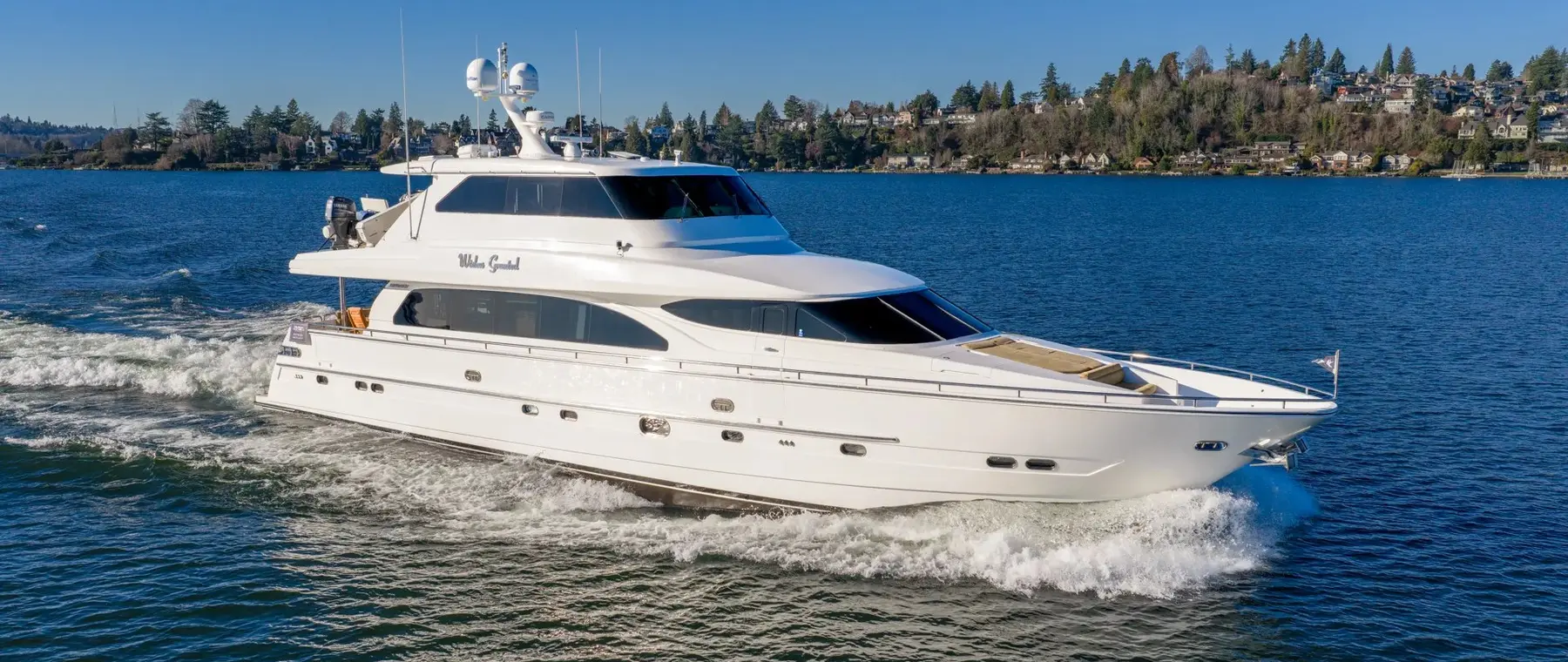
WISHES GRANTED — Denison sale announcement photograph. Source: Denison Yachting.
Explore
Go deeper into the yachts, companies, events and destinations directly connected to this article.
Continue reading
Denison's November review records sixteen price reductions across yachts of 83 to 140 feet, including a $2 million change for the 2014 Benetti EMINA.
The 38.1m Westport SERENITY has changed hands with Denison introducing the buyer and Worth Avenue representing the seller, according to an October 15 transaction …
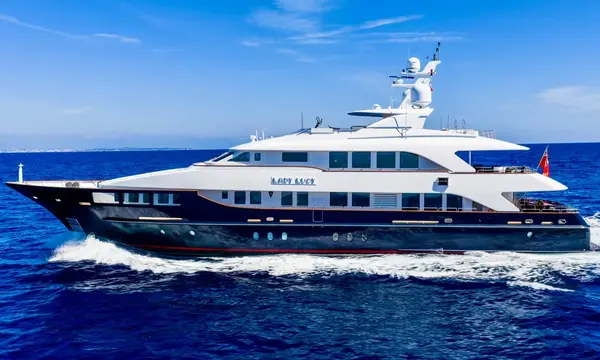
Denison has released a detailed video walkthrough of 39.6m Heesen LADY LUCY, a privately operated 2001 yacht now offered for sale at €8.495 million.
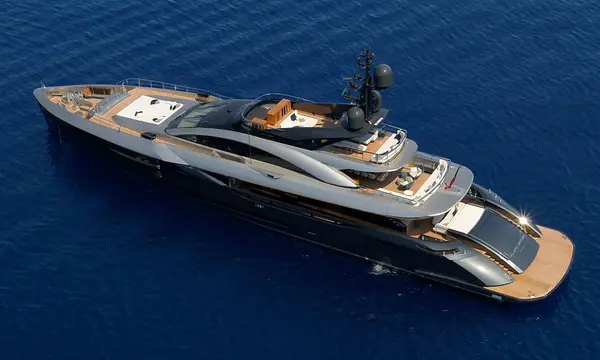
Denison will present the 49.9m Rossinavi FLYING DAGGER III at the 2026 Cannes Yachting Festival, with the 31-knot aluminium yacht asking €23.5 million.
Superyacht Guide
Continue into the wider Superyacht Guide.
Business opportunities · Superyacht Guide
Companies serving the superyacht market can discuss clearly identified advertising, sponsorship and business-profile opportunities. Commercial activity remains separate from independent editorial coverage.