
A new generation of technology wealth is reaching the yacht market, with younger buyers placing greater emphasis on privacy, connectivity, wellness, performance and immediate usability.
A new generation of technology wealth is beginning to reach the superyacht market, bringing with it buyers whose expectations have been shaped less by traditional luxury culture and more by digital businesses, rapid product cycles and highly mobile lifestyles. Their priorities increasingly centre on privacy, connectivity, wellness, performance and immediate usability, potentially changing not simply who buys yachts but what owners expect those yachts to do.
Artificial intelligence is therefore influencing the superyacht industry in a way that extends well beyond autonomous navigation, predictive maintenance or onboard software. The enormous flows of capital into artificial-intelligence companies, semiconductor businesses, data-centre infrastructure and the wider technology ecosystem are creating founders, investors and employees with the financial capacity to enter markets that historically depended on fortunes accumulated over decades.
Some of those newly wealthy individuals are entering yachting earlier in life than the industry's traditional ownership profile might suggest, while others are approaching the market first through charter, smaller yachts or brokerage purchases. There is not yet a reliable public dataset identifying how many superyacht acquisitions can specifically be attributed to AI-created wealth, so claims that technology entrepreneurs are already transforming yacht sales should be treated cautiously. What can be documented is the convergence of rapid wealth creation, continuing demand for high-value yachts and brokerage evidence that younger clients often have markedly different priorities from previous generations of owners.
The broader wealth environment helps explain why this matters. UBS reported that global personal wealth increased by 10.8% in US-dollar terms during 2025, while nearly one million people joined the dollar-millionaire population during the year. Capgemini's World Wealth Report 2026 similarly found growth at the upper end of the wealth spectrum, estimating that the global high-net-worth population increased to 25.3 million people and that the ultra-high-net-worth segment grew particularly strongly.
Artificial intelligence accounts for only part of that expansion, but technology has become an increasingly important mechanism through which very large fortunes are being created. UBS's Billionaire Ambitions Report recorded substantial growth in technology-sector billionaire wealth during 2025 and identified almost 200 new self-made billionaires globally, while its 2026 Family Office Report found artificial intelligence to be the leading investment theme among the family offices surveyed.
For the yacht industry, these developments are significant because demand ultimately begins far beyond shipyards and brokerage houses. Builders, designers and brokers can compete for wealthy clients, but they cannot create the underlying fortunes that make ownership possible; every substantial expansion in entrepreneurial wealth therefore enlarges the potential ownership pool from which future yacht buyers may emerge.
The unusual feature of the current technology cycle is the speed at which some of those fortunes are being accumulated. An entrepreneur who reaches substantial wealth in their thirties may approach ownership with very different expectations from an industrialist who commissions a yacht after spending four decades building and ultimately selling a mature business.
Recent reporting by the Financial Times has highlighted a growing class of AI-generated millionaires and billionaires moving into yachts, private aviation, property and high-performance cars. In yachting, the preferences associated with some of these clients include privacy, speed, long-range capability, sophisticated fitness facilities, uninterrupted connectivity and equipment that supports active use of the sea rather than purely formal leisure.
Those observations are consistent with comments coming directly from the brokerage sector. Burgess has reported seeing clients in their thirties and forties entering yacht ownership earlier, describing a generation that is highly mobile, continuously connected and increasingly focused on health, outdoor living and direct access to the water. The brokerage has also noted interest in proven semi-custom platforms that can offer greater certainty over delivery times, operating characteristics and costs than an entirely bespoke project.
This does not mean traditional expressions of yacht luxury are disappearing. Fine craftsmanship, formal dining, highly finished interiors and discreet service remain important to many owners, but they increasingly sit alongside a broader understanding of luxury based on control over time, privacy, physical wellbeing and the freedom to operate effectively from almost anywhere.
For a technology founder whose professional life is organised around cloud-based systems, secure communications and constant international movement, a yacht may consequently be judged less as an isolated holiday environment and more as a highly private extension of everyday life. It may need to function simultaneously as a family retreat, remote workplace, fitness centre, exploration platform and secure communications environment without compromising the experience of being at sea.
High-bandwidth connectivity illustrates the change particularly clearly. Satellite communications and modern onboard networks mean an owner increasingly expects to participate in video calls, review investments, communicate with management teams and access cloud services while cruising, making reliable connectivity part of the yacht's infrastructure rather than an optional technical enhancement.
Burgess has identified robust onboard communications, including modern satellite connectivity, as an increasingly important part of design discussions with younger clients. For owners whose businesses can move significantly in value during a few days at sea, an inability to communicate securely or work effectively from the yacht may be viewed as a fundamental limitation rather than an inconvenience.
Wellness is undergoing a similar transition. Gyms on large yachts are evolving from relatively modest exercise rooms into sophisticated facilities incorporating serious training equipment, treatment areas, saunas, recovery systems and other spaces designed around physical performance, while owners are also devoting increasing attention to diving, hydrofoiling, watersports and direct interaction with the marine environment.
The charter market provides another indication of that shift. Burgess has reported strong growth in charter activity alongside increasing expectations for personalisation, privacy, wellness provision, fitness facilities and extensive selections of watertoys, suggesting that these preferences are not confined to new-build clients but are influencing the broader luxury-yachting experience.
Privacy is becoming equally multidimensional. For technology entrepreneurs and investors, discretion can involve physical separation from observers, carefully designed glazing and deck arrangements, communications security, information management and highly disciplined crew procedures, particularly where the owner's movements, investments or business activities attract public or financial attention.
The changing buyer profile is emerging at an interesting moment for the brokerage market. Northrop & Johnson reported 326 pre-owned superyacht sales during the first half of 2026, representing fewer transactions than during the equivalent period of 2025, but aggregate transaction value moved in the opposite direction and increased to approximately $3.51 billion.
That combination suggests a market in which buyers are being selective while substantial capital remains available for yachts that meet their requirements. A decline in transaction numbers therefore does not necessarily indicate that the upper end of the market is weakening, particularly when the aggregate value of completed business and the average value of individual sales are increasing.
Burgess has also reported strong activity in larger yachts during 2026, with its completed sales involving substantial average yacht lengths and values. Fraser, meanwhile, has reported outperforming the broader market during the first half of the year, adding further evidence that significant transactions continue to occur even in an environment where buyers appear more discriminating.
These figures should not be misrepresented as proof that AI entrepreneurs are responsible for increasing transaction values. What they demonstrate is that the high-value yacht market retains the ability to absorb major purchases at the same time that another substantial source of entrepreneurial wealth is emerging, creating conditions in which a shift in ownership demographics becomes increasingly plausible.
The influence of younger technology wealth may become particularly visible in the way yachts are acquired. Fully custom superyacht construction rewards patience, requiring an owner to select designers and shipyards, define a detailed specification, negotiate contracts and then remain committed to a construction programme that can extend across several years.
That process may be less attractive to clients whose businesses and personal lives operate on much shorter cycles. Burgess has reported that some younger buyers are placing greater value on proven platforms and shorter delivery periods, suggesting that sophisticated semi-custom yachts and recent brokerage vessels may become increasingly attractive ways to obtain a highly personalised yacht without accepting the entire timetable of a bespoke construction programme.
A nearly new brokerage yacht can provide another solution when the specification is sufficiently close to what the buyer wants. Modern communications systems, flexible interiors, wellness facilities and contemporary exterior spaces may allow a purchaser to acquire and refit an existing yacht considerably faster than beginning an entirely new project, particularly when the yacht comes from a recognised builder and offers a technically mature platform.
Shipyards may consequently face a different form of customisation challenge. Future buyers may continue to demand highly individual interiors, equipment and lifestyle features while becoming less willing to wait for every structural and engineering decision to originate from a blank sheet of paper, creating greater opportunity for semi-custom platforms that combine technical certainty with significant personalisation.
The deeper change may concern the definition of luxury itself. Previous generations of superyachts often communicated status through scale, interior materials, formal entertaining spaces and conspicuous craftsmanship, whereas some younger owners appear to place greater value on privacy, freedom of movement, physical wellbeing, access to the water and the ability to remain connected to their professional lives on their own terms.
None of those preferences necessarily results in a simpler or less expensive yacht. A vessel designed around sophisticated communications, extensive sports equipment, large tenders, wellness facilities, acoustic privacy and serious long-range capability can be technically demanding and exceptionally costly, but the expenditure is directed towards what the yacht allows its owner to accomplish rather than simply what its interiors display.
This distinction could influence designers as much as builders. Exterior spaces may become more important, circulation between the yacht and the sea may receive greater attention, gyms and wellness areas may expand, flexible rooms may replace some highly formal spaces, and technical areas supporting communications, equipment storage and exploration may compete more strongly for volume within the vessel.
It would be easy to reduce the development to a simple luxury-market narrative in which artificial intelligence creates billionaires and billionaires buy yachts. The more consequential possibility is that a new source of wealth changes the product itself, just as successive generations of industrial, financial, entrepreneurial and international wealth have influenced yacht design and ownership patterns in previous decades.
AI-related fortunes may eventually be visible not merely through additional orders but through the types of yachts being commissioned and purchased. More functional interiors, stronger connectivity, serious wellness facilities, larger collections of toys and tenders, greater privacy, expedition capability and faster routes into ownership would collectively represent a meaningful evolution in what the market regards as a desirable superyacht.
The industry does not need every newly wealthy technology entrepreneur to become an owner for that influence to matter. If a sufficiently important group enters charter and ownership with similar priorities, shipyards, designers and brokers will adapt their products to compete for them, and those adaptations will inevitably become available to the wider market.
For the superyacht industry, the question is therefore not simply whether AI wealth will create more buyers. It is whether the people whose fortunes are being created by this technological cycle will bring a sufficiently different understanding of luxury to change what tomorrow's yacht is expected to provide, and the evidence now emerging from the wealth and brokerage markets suggests that this process may already be under way.
Explore
Go deeper into the yachts, companies, events and destinations directly connected to this article.
Continue reading
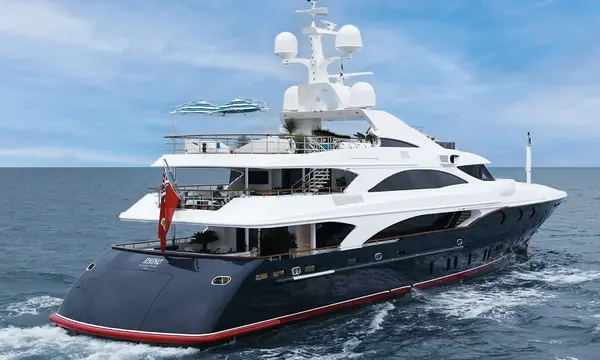
Buyers are concentrating on 40–60m superyachts that deliver serious range, luxury and charter potential without automatically taking on the complexity of much larger vessels.
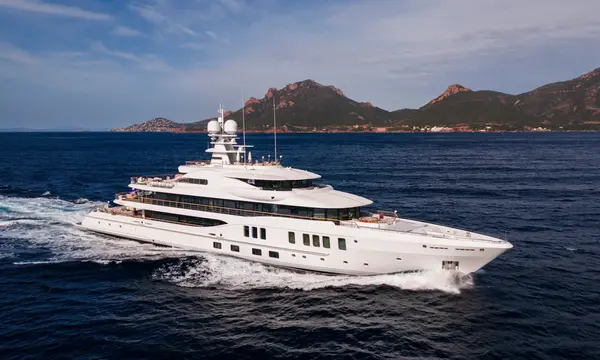
The 74m Amels SYNTHESIS is offered for sale through Burgess at €132 million after a 2025–26 Amels yard period that included her five-year special …
Two yachts of similar age and size can follow very different value curves. Maintenance, pedigree, specification, refit timing and buyer demand explain why.
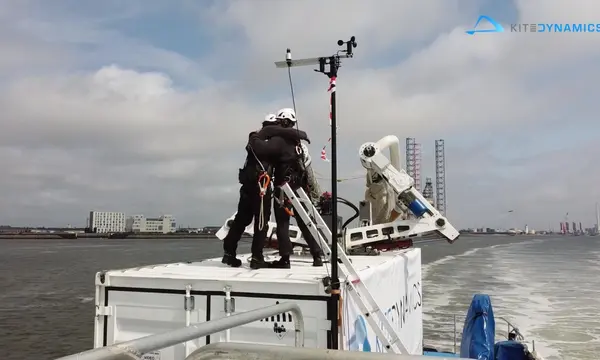
Kite Dynamics is developing four-line kite propulsion following at-sea trials in 2025 and 2026, with yacht applications remaining at the prototype and engineering stage.
Superyacht Guide
Continue into the wider Superyacht Guide.
Business opportunities · Superyacht Guide
Companies serving the superyacht market can discuss clearly identified advertising, sponsorship and business-profile opportunities. Commercial activity remains separate from independent editorial coverage.