How Are Superyachts Transported Around the World?
Superyachts move between cruising grounds under their own power or aboard specialist transport ships. We explain lift-on and float-on methods, preparation, cost and wear.
Draft can decide whether a yacht can enter a harbour or anchorage safely. Using current SYG fleet data, we explain typical draft, deep-draft examples and route limitations.
A superyacht’s draft is the vertical distance between the waterline and the deepest fixed part of the hull or underwater appendage, and it is one of the dimensions that most directly limits where the yacht can go. Length and beam determine whether a berth or lock can physically accept the vessel, but draft determines whether there is enough water beneath it to enter a harbour, cross a bar, approach an anchorage or navigate a shallow channel safely.
There is no single “normal” superyacht draft because hull form, displacement, keel design and yacht type vary enormously. In Superyacht Guide’s current public fleet dataset, 170 yachts have a verified draft value, ranging from 1.37 metres to 9.30 metres with an average of about 3.64 metres, which shows why itinerary planning cannot be based on yacht length alone.
The published draft is normally measured from the waterline to the lowest permanent point below the hull, but the operational figure can change with loading. Fuel, water, stores, tenders, equipment and even major refit changes alter displacement, so the captain works from the yacht’s actual condition and stability information rather than treating a brochure figure as exact for every voyage.
Sailing yachts can be particularly deep because their keels provide lateral resistance and stability, while some modern motor yachts are deliberately designed with relatively shallow draft to access islands, bays and marinas that would otherwise be unavailable. A shallow draft can expand itinerary options, but it does not remove the need to consider under-keel clearance, tide, swell, chart accuracy and local harbour restrictions.
Draft is also different from depth of water, because a yacht should not normally operate with the keel almost touching the seabed. Masters apply an under-keel-clearance policy that accounts for squat, heel, wave action, tide, seabed type, survey accuracy and company or flag procedures, so a yacht drawing four metres may require substantially more than four metres of charted or observed depth.
At the deep end of the current Superyacht Guide dataset, the 164-metre Fulk Al Salamah is recorded with a draft of 9.30 metres, while the 106.7-metre sailing yacht Black Pearl is listed at 7.00 metres. Large motor yachts including Dilbar and Opera are around six metres, illustrating that the very largest vessels can face restrictions even in harbours that comfortably accept smaller superyachts.
Other major yachts sit closer to five or six metres, including Eclipse at 5.90 metres, Octopus at 5.76 metres, Blue at 5.50 metres and Nord at 5.40 metres in the current database. These dimensions explain why large-yacht itineraries often depend on deep-water commercial ports, dedicated superyacht berths or offshore anchoring with tender transfers rather than traditional marina access.
By contrast, a large yacht with a draft closer to two metres can enter a much wider range of ports and anchorages, provided its beam, length and manoeuvring envelope also fit. That flexibility is particularly valuable in shallow cruising grounds such as parts of the Bahamas, where depth can become the controlling design and itinerary factor.
Port Hercule in Monaco demonstrates how a major yachting harbour can provide very deep water in some areas while remaining shallower in others. The official port information lists depths of about 30 metres at the outer pier, 40 metres in the outer harbour and basin depths ranging from roughly 2.5 to 55 metres, so berth allocation still has to match the yacht’s dimensions and local geometry.
A marina may advertise a maximum yacht length without publishing a single depth that applies to every berth, because dredged channels, inner basins, quay faces and approach routes can all differ. Captains therefore need the harbour plan, current notices, charted depths and direct confirmation from the marina or harbour master before committing a deep-draft yacht to an unfamiliar berth.
Tidal range can increase or reduce available water significantly in some regions, while Mediterranean marinas often have relatively small tides but may still have local shoaling or dredging constraints. In areas with strong tides, the timing of arrival can be as important as the nominal chart depth, particularly if the yacht must cross a bar or narrow entrance.
A deep-draft yacht may anchor outside a shallow harbour and use tenders for guest transfers, which can preserve access to a destination without forcing the main vessel into unsafe water. That works well in settled weather, but it can become less attractive when swell, wind, security, customs procedures or guest mobility make repeated tender operations difficult.
The captain may also choose a nearby deep-water commercial port and reposition guests by road or tender, particularly for very large yachts whose length and beam already restrict marina choice. This is common operational planning rather than a failure of the yacht, because many giga yachts are designed for ocean capability and volume rather than access to every small harbour.
Some itineraries are effectively ruled out by draft before the charter or owner cruise begins, and a good broker or manager should identify those limitations early. A client who wants shallow beaches, lagoon access or compact island harbours may be better served by a yacht with moderate dimensions and draft than by a much larger vessel with more impressive interior volume.
Passage planning combines official charts, electronic navigation data, Notices to Mariners, harbour information, weather, tide and the yacht’s own manoeuvring characteristics. The master also considers squat at speed, the effect of waves and heel, tug requirements, pilotage and whether the berth provides enough clearance alongside the route as well as at the final position.
Large yachts often communicate dimensions to the marina well before arrival, including length overall, beam, draft, displacement and shore-power requirements. For unfamiliar or marginal ports, the captain may seek written confirmation of berth depth or arrange pilotage rather than rely on an old directory entry or a marketing claim.
Draft data should itself be verified because public specifications are not always consistent, especially after conversions or refits. Superyacht Guide treats published draft values as useful planning references rather than substitutes for the yacht’s approved stability information and the captain’s real-time navigation assessment.
The practical answer is that a yacht can go wherever its draft, length, beam, air draft, range, regulatory status and local permissions all allow it to operate safely. A 30-metre yacht drawing two metres and a 100-metre yacht drawing five metres may share the same cruising region but use completely different anchorages, approaches and guest-transfer plans.
Owners choosing a yacht should therefore think about draft as a lifestyle specification rather than a technical footnote. If the priority is deep-water ocean cruising, the restriction may matter little, but if the dream is to enter shallow island anchorages and smaller historic ports, a few metres of draft can determine whether the yacht reaches the destination at all.
Continue reading
Superyachts move between cruising grounds under their own power or aboard specialist transport ships. We explain lift-on and float-on methods, preparation, cost and wear.
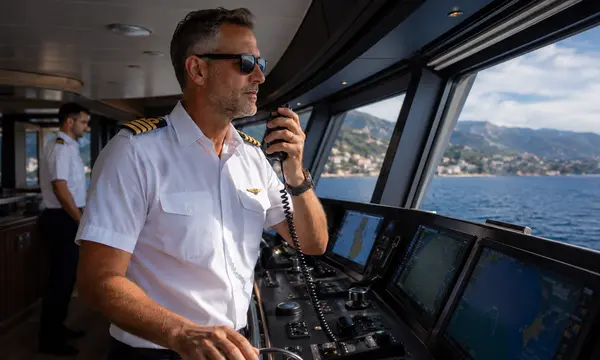
Current 2026 salary benchmarks show captain pay rising sharply with yacht size and responsibility, while time-for-time rotation is increasingly common. We compare published pay …
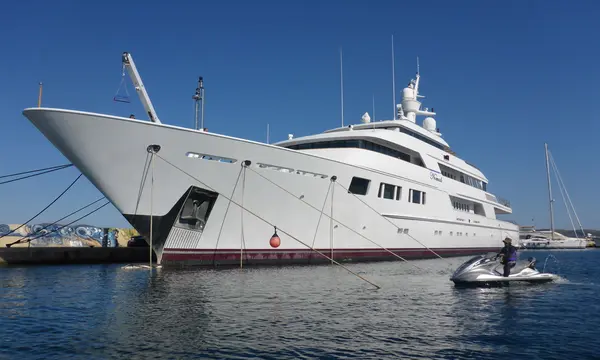
Yachtmaster and OOW are not competing certificates: Yachtmaster proves practical skipper competence, while OOW is the STCW officer route for large yachts. We explain …
An ENG1 confirms that a seafarer meets recognised medical and eyesight standards for work at sea. We explain who needs it, what the examination …
Superyacht Guide
Continue into the wider Superyacht Guide.