Company
Royal Yachting Association
Explore the company profile and related Superyacht Guide coverage.
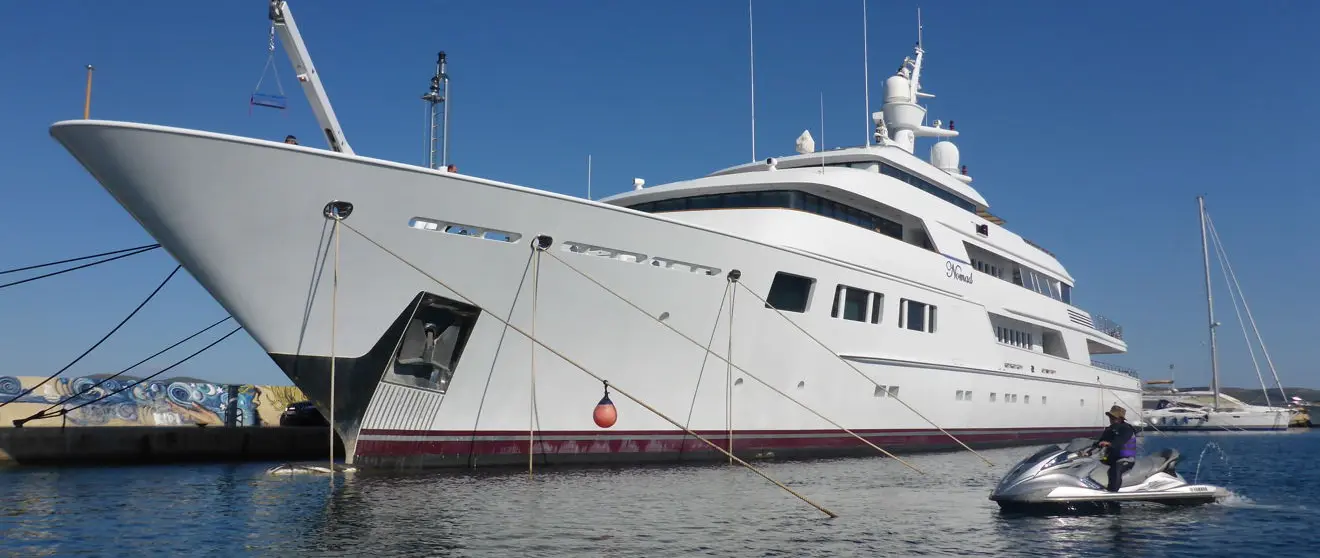
Yachtmaster and OOW are not competing certificates: Yachtmaster proves practical skipper competence, while OOW is the STCW officer route for large yachts. We explain the current RYA and MCA requirements and where each fits.
Yachtmaster and OOW are often discussed as though they are competing qualifications, but on the large-yacht career path they serve different purposes. An RYA Yachtmaster certificate demonstrates practical command and navigation competence at a defined level, while an MCA Officer of the Watch certificate is an STCW officer qualification intended for service on much larger yachts and carries a wider regulatory training and sea-service framework.
For a deckhand or bosun planning the next stage of a superyacht career, the useful question is therefore not simply which certificate is "better". The right qualification depends on the size of yacht, the position you want to hold, the area of operation and whether you are building toward command of smaller commercial yachts or progressing through the officer structure on yachts up to 3,000 GT.
The RYA describes Yachtmaster Offshore as a Certificate of Competence for skippers capable of planning and conducting passages up to 150 miles from a safe haven. When commercially endorsed, it can be used as Master of commercial vessels up to 200 GT in the relevant operating categories, and the qualification is also recognised as an important entry point into the MCA large-yacht officer pathway.
The Yachtmaster Offshore examination is practical rather than a simple classroom test. Candidates are assessed on skippering, boat handling, seamanship, navigation, safety awareness, meteorology, collision regulations and signals, so the certificate is intended to demonstrate that the holder can make competent decisions while actually running a vessel.
Current RYA prerequisites include documented sea time, qualifying passages, skipper experience, a suitable radio certificate and valid first-aid certification. The examination can be taken under sail or power and the certificate is endorsed accordingly, which matters because a candidate's qualifying experience must be appropriate to the discipline in which the examination is taken.
For commercial use, the Yachtmaster certificate must be commercially endorsed where the MCA small-commercial-vessel rules apply. The RYA also makes clear that the vessel and area of operation determine what the qualification permits, so holding Yachtmaster Offshore does not by itself make somebody an OOW on a 50m, 70m or 100m superyacht.
The MCA OOW Yachts, less than 3,000 GT, unlimited area Certificate of Competency is designed for officers serving in charge of a navigational watch on large yachts. It sits within the STCW certification structure and is a professional officer qualification rather than simply an extension of the Yachtmaster practical exam.
The current rules are set out in MSN 1858 Amendment 2, published by the MCA in May 2026. They form part of a progressive route through OOW, Chief Mate and Master qualifications for deck officers on commercially and privately operated yachts of 24 metres and above.
That difference matters on board because an OOW has statutory watchkeeping responsibilities within a larger bridge team and vessel-management structure. A Yachtmaster holder may be highly experienced and may command smaller commercial yachts within the limits of the certificate, but the OOW route addresses the formal officer competencies expected on larger tonnage and worldwide operations.
For many yacht deck officers, Yachtmaster is not an alternative to OOW at all; it is one of the qualifications used to enter the OOW pathway. Under the 2026 MCA notice, an RYA Yachtmaster Offshore certificate together with the relevant shore-based Yachtmaster Offshore course is one accepted prerequisite, alongside specified IYT qualifications and the newer coastal routes listed by the MCA.
The OOW requirements then go substantially further. Candidates must be at least 19, meet the MCA's onboard and seagoing-service requirements, hold an Efficient Deck Hand certificate issued by an approved training provider, complete the required ancillary certificates and pass the approved Navigation and Radar and General Ship Knowledge training and professional examinations.
The current route also normally requires completion of the MCA Yacht Training Record Book, although the notice provides an exemption where a candidate can demonstrate 36 months of actual seagoing service on yachts of at least 24 metres in load line length. A valid ENG1 or accepted equivalent is required, and the final step includes passing the MCA OOW oral examination.
Sea service is therefore one of the biggest practical differences between planning Yachtmaster and planning OOW. MSN 1858 Amendment 2 requires 36 months of onboard yacht service since age 16, including at least 365 days of seagoing service on vessels of 15 metres or more in load line length, with at least 250 days classed as actual seagoing service and the balance meeting the permitted service definitions.
A commercially endorsed Yachtmaster Offshore can be entirely appropriate when the job is command of a smaller commercial yacht within the certificate's tonnage and operating limits. The RYA states that it can be used as Master of commercial vessels up to 200 GT and up to 150 miles from a safe haven, subject to the applicable coding, flag and endorsement requirements.
Yachtmaster Ocean extends that smaller-vessel command route further by allowing a commercially endorsed holder to work worldwide as Master of commercial vessels up to 200 GT. It is also important later in the MCA yacht pathway because Yachtmaster Ocean or an accepted equivalent forms part of the progression toward higher yacht officer and Master qualifications.
For crew working on larger superyachts, however, "I already have Yachtmaster" should not be interpreted as meaning that no further officer training is required. The manning document, vessel tonnage, flag administration and position being filled determine the certificate needed for the watchkeeping role, and those requirements can exceed the privileges of a commercially endorsed Yachtmaster.
If your target is a long-term deck career on yachts over 24 metres, especially where you want to progress from bosun or lead deckhand into officer roles, OOW should usually be viewed as a career milestone rather than an optional extra. It creates the formal bridge-officer route that can later lead to Chief Mate, Master under 500 GT and Master under 3,000 GT qualifications when the further sea service, courses and examinations are completed.
Timing matters because the OOW route cannot be compressed into a last-minute course package. Sea service, the training record book, EDH timing, ancillary certificates, written modules and the oral exam all have sequencing or evidence requirements, so crew who intend to progress should keep testimonials and sea-service records accurate from the beginning of their career.
It is also sensible to separate qualification planning from job-title inflation. A crew member may perform bridge support duties or gain watchkeeping exposure before holding OOW, but the statutory certificate required to stand a navigational watch in a particular capacity is determined by the yacht's manning requirements, not by what somebody informally calls the role on a CV.
Choose Yachtmaster because you need the practical skipper competence and commercial privileges that it provides, or because it forms part of the route into higher professional certification. Choose the OOW pathway when your intended career requires formal officer-of-the-watch certification on large yachts and you are ready to meet the much broader sea-service, STCW, technical-training and examination requirements.
For many successful superyacht deck careers, the sequence is not Yachtmaster versus OOW but Yachtmaster and then OOW. The safest plan is to work backwards from the yacht size and officer position you want, check the current MCA and RYA requirements before booking courses, and make sure every month of qualifying sea service is documented in a form that will actually be accepted when you apply.
Explore
Go deeper into the yachts, companies, events and destinations directly connected to this article.
Company
Explore the company profile and related Superyacht Guide coverage.
Continue reading
Superyachts move between cruising grounds under their own power or aboard specialist transport ships. We explain lift-on and float-on methods, preparation, cost and wear.
Draft can decide whether a yacht can enter a harbour or anchorage safely. Using current SYG fleet data, we explain typical draft, deep-draft examples …
Current 2026 salary benchmarks show captain pay rising sharply with yacht size and responsibility, while time-for-time rotation is increasingly common. We compare published pay …
An ENG1 confirms that a seafarer meets recognised medical and eyesight standards for work at sea. We explain who needs it, what the examination …
Superyacht Guide
Continue into the wider Superyacht Guide.