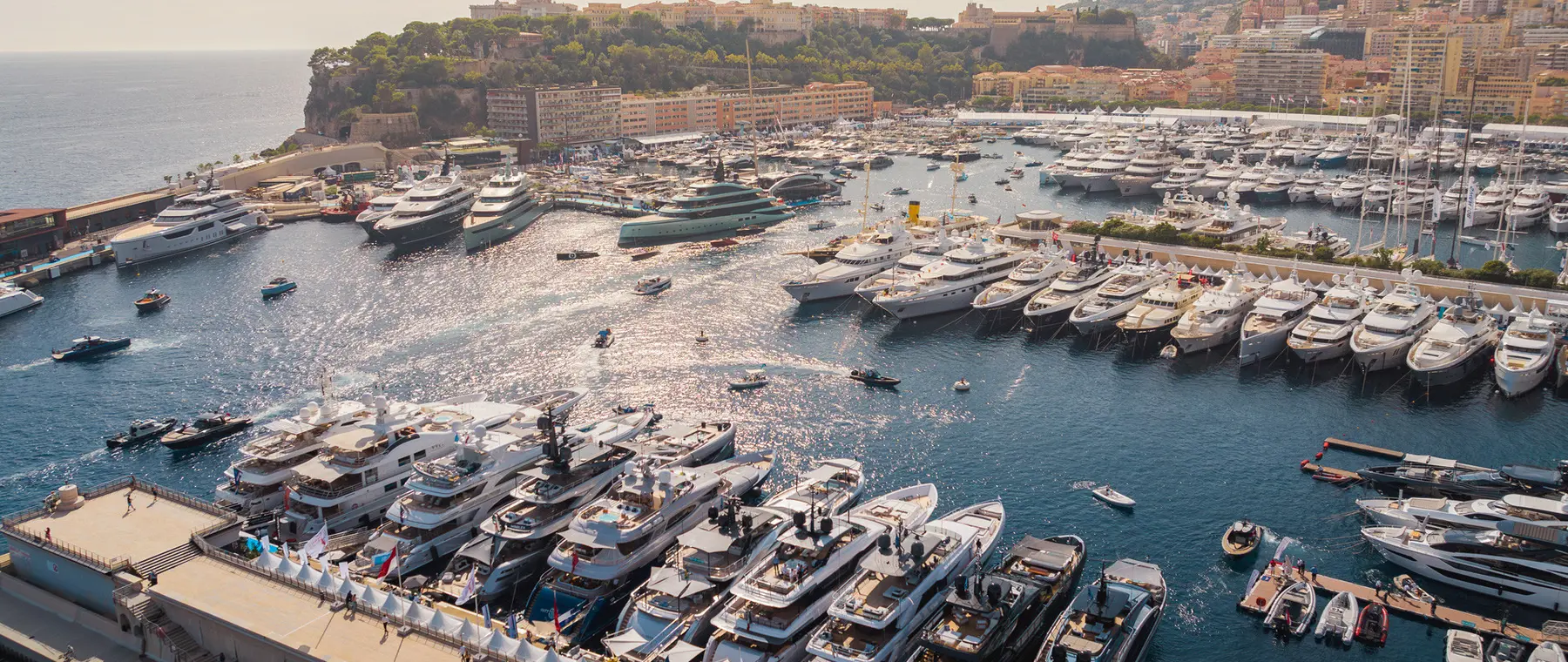
How Much Does It Cost to Keep a Superyacht in Monaco?
By Stephen Yardley · Edited by Stephen Yardley
Official 2026 Port Hercule rates show how Monaco berthing scales with yacht length and season. The berth is only one part of a much larger annual ownership budget.
Keeping a superyacht in Monaco is not simply a matter of paying for a berth in Port Hercule. The real annual cost combines berthing, crew, maintenance, insurance, fuel, technical support, provisioning, administration and the premium attached to operating in one of the Mediterranean’s most concentrated yachting hubs.
Monaco is expensive, but it is also unusually efficient for owners who value access to brokers, managers, shipyards, suppliers, finance, restaurants, airports and the wider French and Italian Riviera. The correct comparison is therefore not Monaco versus a cheap marina in isolation, but Monaco against the total operating cost and convenience of the yacht’s intended programme.
The Société d’Exploitation des Ports de Monaco publishes official 2026 short-term rates for Port Hercule, with prices varying by yacht length and by season. The published tariff is inclusive of the applicable 20% VAT and separates low season from the high season running from 1 May to 1 October 2026, while special events such as the Monaco Grand Prix operate under separate allocation and pricing arrangements.
For a yacht between 50.00 and 54.99 metres, the published Port Hercule rate is €500.40 per day in low season and €1,258.80 in high season, with monthly rates of €13,749.60 and €25,207.20 respectively. A yacht between 80.00 and 84.99 metres is listed at €1,016.40 per low-season day and €2,142 per high-season day, with monthly prices of €22,377.60 and €34,990.80.
At 100.00 to 109.99 metres, the 2026 tariff rises to €1,454.40 per low-season day and €2,964 per high-season day, while the corresponding monthly rates are €30,122.40 and €43,987.20. These figures illustrate the scale of ordinary berth charges, but they should not be treated as a guaranteed annual berth quotation because availability, quay position, wintering contracts, services and event periods can all change the final cost.
For most large yachts, crew payroll and technical operation cost far more over a full year than the marina invoice. A 50-metre yacht may require a professional team covering command, deck, engineering, interior and galley roles, while larger yachts add more officers, engineers, service crew and specialists, increasing payroll, travel, training, uniforms, medicals and recruitment costs.
Superyacht Guide’s standard budgeting model uses annual operating expenditure of about 14% of yacht value when no yacht-specific operating budget is available, although individual yachts can sit materially above or below that figure. On that model, a yacht valued at €50 million could imply roughly €7 million of annual operating expenditure, while a €100 million yacht could imply around €14 million, making even a prime Monaco berth only one component of the wider ownership cost.
Fuel can vary dramatically according to engine power, speed, generator use and cruising pattern, so a yacht that spends much of the summer moving between Monaco, Saint-Tropez, Corsica, Sardinia and Italy will consume more than one used mainly as a static base. The same applies to tenders, chase boats, water toys and hotel loads, all of which add fuel and maintenance requirements that do not disappear simply because the yacht is berthed.
Port Hercule is useful because technical support is close at hand, with Monaco Marine and Monaco Boat Service operating careening and shipyard facilities within the port area. The port authority lists fresh water, shore electricity, fuel, waste facilities and grey- and black-water collection options, while the wider Riviera provides dense access to specialist subcontractors and major refit yards.
That convenience does not make maintenance cheap, because class surveys, paint, machinery servicing, generators, stabilisers, HVAC, navigation equipment, safety systems and interior work all follow their own maintenance cycles. Owners who defer these items may lower one year’s cash outflow, but the result can be a larger refit bill later and a less attractive yacht when insurance, charter compliance or resale is considered.
Seasonal scheduling also matters because a yacht that winters in Monaco may secure a different commercial arrangement from one occupying a transient berth only during peak summer weeks. Captains and managers should therefore compare official passage tariffs, wintering offers and neighbouring alternatives rather than extrapolate a short-term summer price across twelve months.
Insurance pricing is not determined by Monaco alone, but the yacht’s value, cruising limits, claims record, flag, class, use and wider risk profile all feed into the premium. A Monaco-based programme may also involve charter compliance, VAT administration, management fees, corporate costs and professional advice, depending on how the yacht is owned and operated.
Crew living costs can be higher when the yacht is based on the Côte d’Azur, particularly where shore accommodation, transport or extended yard periods are required. Even when crew live aboard, payroll remains the dominant people cost, and rotational senior positions can increase the number of individuals employed to keep the yacht continuously manned.
Provisioning and guest operations can add another layer because Monaco is often used as a departure point for high-service itineraries rather than as a quiet home port. Flowers, premium food and wine, vehicles, security, events, entertainment and last-minute logistics can all create large variable expenses that sit outside a simple marina tariff.
The Monaco Grand Prix is a separate economic environment from an ordinary summer berth, and the port authority uses a special allocation process and event tariff rather than the normal passage table. Owners should not assume that paying the standard daily or monthly rate guarantees a berth during the race period, because applications, position, vessel profile and port requirements are handled under event-specific conditions.
For owners who mainly want Monaco access rather than a permanent address, an alternative strategy is to berth elsewhere on the Riviera and visit Monaco when operationally convenient. That can reduce berth expenditure, although the saving needs to be weighed against fuel, tender logistics, guest transfers, availability and the owner’s preference for immediate access to the Principality.
The most useful answer is to build the budget from the yacht upward: establish the actual crew structure, technical maintenance plan, expected cruising hours, insurance programme, management costs and intended Monaco occupancy, then apply the official port tariff to the periods for which a berth is genuinely required. A 50-metre yacht using Port Hercule for one high-season month faces a published berth rate of about €25,207 before special events and other operating costs, while a 100-metre yacht in the corresponding length band is about €43,987 for that month.
Those numbers are significant but should be kept in perspective against a multi-million-euro annual operating budget. Monaco is best understood as a premium operating base whose value lies in location, access and infrastructure, while the largest ownership costs continue to be the yacht itself, its crew, technical upkeep and the programme the owner chooses to run.
Explore
Go deeper into the yachts, companies, events and destinations directly connected to this article.
Continue reading
The 80m Amels PANGEA will make her world debut at the Monaco Yacht Show 2026, marking the first time an Amels 80 has been …
Smart Yachts will present the 50-metre Admiral Panorama 50 SPRIBE at the Monaco Yacht Show 2026, where the yacht will make her official debut …
Moonen’s 37.4m LOLLIPOP will make her world debut at the Monaco Yacht Show 2026 after entering service earlier this year. The eighth Moonen 122 …
Baglietto will present the first FAST50 and first T60 in world premieres at the Monaco Yacht Show 2026. The 49.9m FAST50 reaches 30 knots, …
Superyacht Guide
Continue into the wider Superyacht Guide.