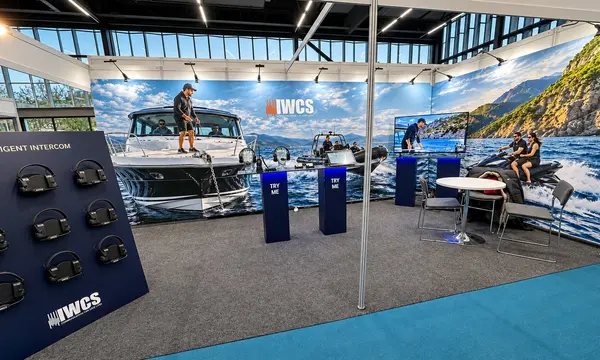
IWCS Reviews Yacht Communications Demonstrations at METSTRADE
IWCS describes three days of product demonstrations and new marine communications contacts at METSTRADE 2026, thanking its distributors and confirming plans for 2027.
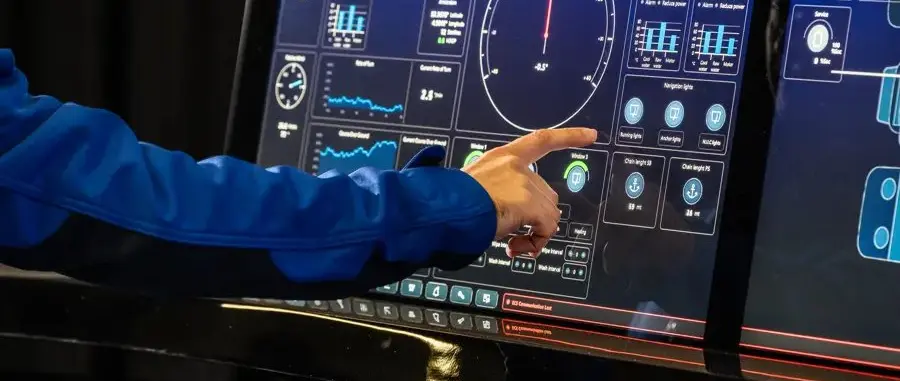
© Huisman Etech Experts. Official manufacturer image accompanying the Manta superyacht bridge launch.
Huisman Etech Experts launches Manta, an integrated bridge concept developed with Pariani Italy and Radio Holland for advanced custom yacht operation.
Huisman Etech Experts announced Manta on 18 November 2026, presenting an integrated bridge concept intended for custom yachts. The Dutch marine electrical specialist describes a single environment bringing together alarm, monitoring and control, power management, navigation and communications. Its proposition is to simplify the relationship among systems that can otherwise compete for space and attention at the wheelhouse. The company also calls the design flexible enough for custom projects rather than treating every yacht as if it has identical equipment requirements. For large-yacht owners and project teams, the announcement raises practical questions about bridge architecture, serviceability and who maintains responsibility when multiple systems are presented through one interface.
The Manta name refers to the manta ray, and the company makes an explicit connection between natural form, efficiency and bridge design. Such inspiration is a creative starting point rather than proof of improved performance. A form borrowed from nature must still be evaluated against the requirements of watchkeeping, equipment access and safe operation. The concept aims to merge technical functionality with a refined architectural appearance. That distinction matters on custom superyachts, where the bridge may be visible to owners or visiting guests but remains principally a working space for qualified crew. Its visual character should support rather than complicate operational awareness.
The manufacturer identifies navigation, communications, energy management, vessel control and next-generation alarm, monitoring and control as central elements. Integrated presentation can reduce the number of disconnected screens and control panels, but actual safety depends on how information is prioritised and how failures are handled. The announcement does not establish that every possible third-party device has already been certified for every yacht type. Engineers and captains will need detailed interface specifications, redundancy arrangements and acceptance testing for a particular build. The significant news is a proposed shared bridge environment; the technical outcome must be proven vessel by vessel.
Huisman Etech Experts says Manta was developed in close partnership with Pariani Italy and Radio Holland. Those collaborators bring different specialist perspectives to a project that must reconcile industrial design with communications, navigation and equipment integration. The press statement does not assign every individual subsystem to a specific partner, so it would be misleading to invent a complete division of responsibilities. What can be established is that the launch is not a solitary design exercise by a single equipment supplier. Coordinating several technical disciplines at an early stage can help identify potential conflicts before a wheelhouse is physically constructed.
One of the most consequential areas for any bridge is the way alarms are presented. Watchkeepers must understand which condition requires immediate action, which information is advisory and which warning may be associated with another event. A visually restrained bridge could be attractive, but the handling of critical alerts must never be sacrificed for appearance. Manta's description specifically includes alarm, monitoring and control functions. During project integration, operators should ask how warnings are prioritised, how acknowledgements are recorded and what happens when a display fails. The official release introduces the concept rather than supplying the vessel-specific evidence needed to answer every question.
Large yachts depend on complex power arrangements supporting propulsion auxiliaries, hotel loads, stabilisation and technical services. Decisions about electrical generation and distribution can influence how the vessel is operated, particularly where energy-saving modes are available. The Manta proposal includes energy and power management within its integrated environment. That could make information easier to reach, but an interface is not itself an energy-efficiency guarantee. Owners should distinguish the presentation of operating data from the actual performance of batteries, generators or control software. Trials, engineering documentation and crew procedures remain essential for establishing what a particular installation can achieve.
The company says Manta can be configured for different design and user requirements, including a fully custom bridge created from a blank sheet. It also identifies screen technology, material selection, surface finishing and control layout as areas for personalisation. Such flexibility is relevant to superyacht projects because a wheelhouse may need to align with a broader interior language while providing specialised equipment. Yet each custom decision adds a need for review. Screen reflections, viewing angles, handholds and access to essential controls are operational matters rather than decorative preferences. A convincing design process has to hold those priorities together from the outset.
The owner commissioning a yacht may choose an overall aesthetic, but crew members use the bridge continuously in real conditions. Their feedback can identify problems that are difficult to see in a studio rendering: an inconvenient menu sequence, a control located beyond easy reach or a display that becomes distracting at night. Huisman Etech Experts describes the platform as intuitive and oriented towards crew use. The claim becomes meaningful when a project documents the tasks it must support and includes bridge teams in evaluation. A modern interface should reduce unnecessary effort while preserving clear access to essential information during routine operations and emergencies.
The Manta announcement mentions intelligent AI assistance among its integrated elements. That phrase is intriguing but should not be interpreted as a promise of autonomous navigation or independent vessel command. The release does not define a certified level of autonomy or disclose all algorithms used. An owner considering AI-related functions should ask what the assistance is allowed to recommend, how errors are detected and whether the crew can override or disable it. The distinction between supporting a qualified operator and replacing that operator is fundamental. Responsibility for safe navigation remains a central part of vessel operations regardless of interface sophistication.
A custom bridge does not remain unchanged from launch to the end of a yacht's life. Navigation systems, communications equipment and digital controls may be upgraded as standards and operational needs evolve. Huisman Etech Experts emphasises that Manta's components are designed to be maintainable and provide long-term ease of use. Prospective customers should ask how individual modules are replaced and whether software updates can be installed without disrupting unrelated functions. A beautifully integrated structure can become expensive if access is difficult. Maintenance planning should therefore begin with the design rather than being postponed until the first equipment failure.
Consolidated controls may reduce clutter, but a yacht still requires resilience when a single component or network is unavailable. The consequences of an interface failure can extend beyond inconvenience if essential information is no longer accessible. Project teams should establish independent fallback arrangements, power supplies, protected communication paths and documented response procedures appropriate to the vessel. Manta's public announcement does not provide a complete architecture for those safeguards. Its value as a concept will depend in part on engineering decisions made during implementation. A successful installation should improve situational awareness without introducing avoidable single points of failure.
The launch statement says Manta is ready to be integrated into yachts or developed into a bespoke bridge. That is a commercial and technical invitation, not evidence that every proposed configuration has completed sea trials. Yacht builders, naval architects and surveyors will need to coordinate documentation, equipment approvals and commissioning to suit the particular vessel. Early design models can help crews identify human-factor problems before construction. Later acceptance should test alarm logic, communications, navigation feeds and interface responses under realistic conditions. A bridge can meet the visual brief yet require further refinement when installed aboard a moving vessel.
The larger the vessel, the more systems and operating contexts its bridge may need to support. Long-distance cruising, tenders, crew operations and sophisticated hotel services can all increase information demands. Manta is not limited in its announcement to one vessel length, but the custom superyacht sector has a particular interest in coordinated wheelhouse design. A 24-metre yacht and an 80-metre yacht may require very different equipment and bridge layouts, so a flexible platform must not imply uniform technical requirements. The potential benefit lies in defining a coherent design strategy while retaining space for the equipment and procedures demanded by the individual project.
Bridge development increasingly sits at the meeting point of electrical engineering, software, navigation, industrial design and interior architecture. Manta reflects that intersection through its partner relationships and integrated ambitions. It also shows why procurement decisions made late in construction can create expensive complications. A bridge supplier entering the project early can help identify where display infrastructure, cabling, furniture and access need to be coordinated. However, the responsibility for certifying and operating the completed system remains distributed among relevant parties. The announcement should be understood as one supplier's approach to a complex technical challenge, not as the establishment of a new universal standard.
Huisman Etech Experts has given the market a clear outline of Manta's scope: integrated bridge functions, personalisable design and attention to maintenance. The next stage for interested owners is detailed technical due diligence. They should ask about supported vendors, data interfaces, cybersecurity, fault tolerance, crew training, and the timetable for the specific configuration proposed. Cost and installation timing will depend on the vessel and the level of customisation. Those questions do not diminish the concept's significance. They distinguish a persuasive design presentation from the evidence needed to commission an operational bridge on a major yacht.
The 18 November launch places Huisman Etech Experts and its collaborators into the conversation about how a superyacht wheelhouse should look and function. Manta's central idea is to bring multiple technical disciplines into one environment shaped by user needs and the yacht's design character. Its success will be judged not by the simplicity of a publicity image but by the clarity, resilience and maintainability of the installed system. For shipyards and owners, the announcement offers an opportunity to ask whether bridge integration is being considered early enough and whether operational crews have a meaningful voice in the final design.
Continue reading
IWCS describes three days of product demonstrations and new marine communications contacts at METSTRADE 2026, thanking its distributors and confirming plans for 2027.
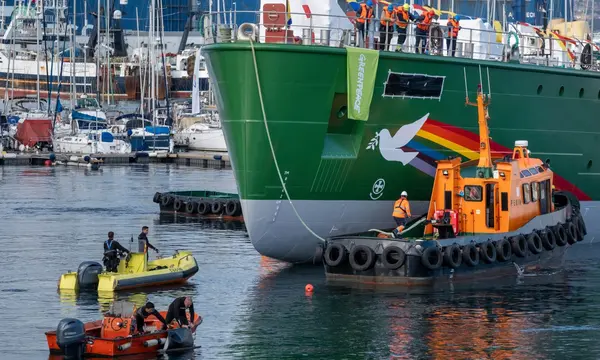
Greenpeace's 75-metre wind-powered campaigning and research ship has floated out at Freire Shipyard in Vigo, combining a DynaRig concept with hybrid onboard energy systems.
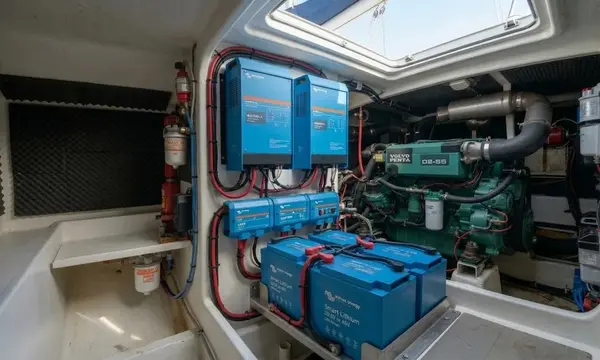
Valencia-based Mediterranean Yachts Solutions describes how 48V batteries, solar panels and high-output alternators may reduce generator use on suitable smaller boats.
AMIT Marine Services reports its 2026 Abu Dhabi International Boat Show appearance, outlining five marine technology and safety sectors and its international brand partnerships.
Superyacht Guide
Continue into the wider Superyacht Guide.
Business opportunities · Superyacht Guide
Companies serving the superyacht market can discuss clearly identified advertising, sponsorship and business-profile opportunities. Commercial activity remains separate from independent editorial coverage.