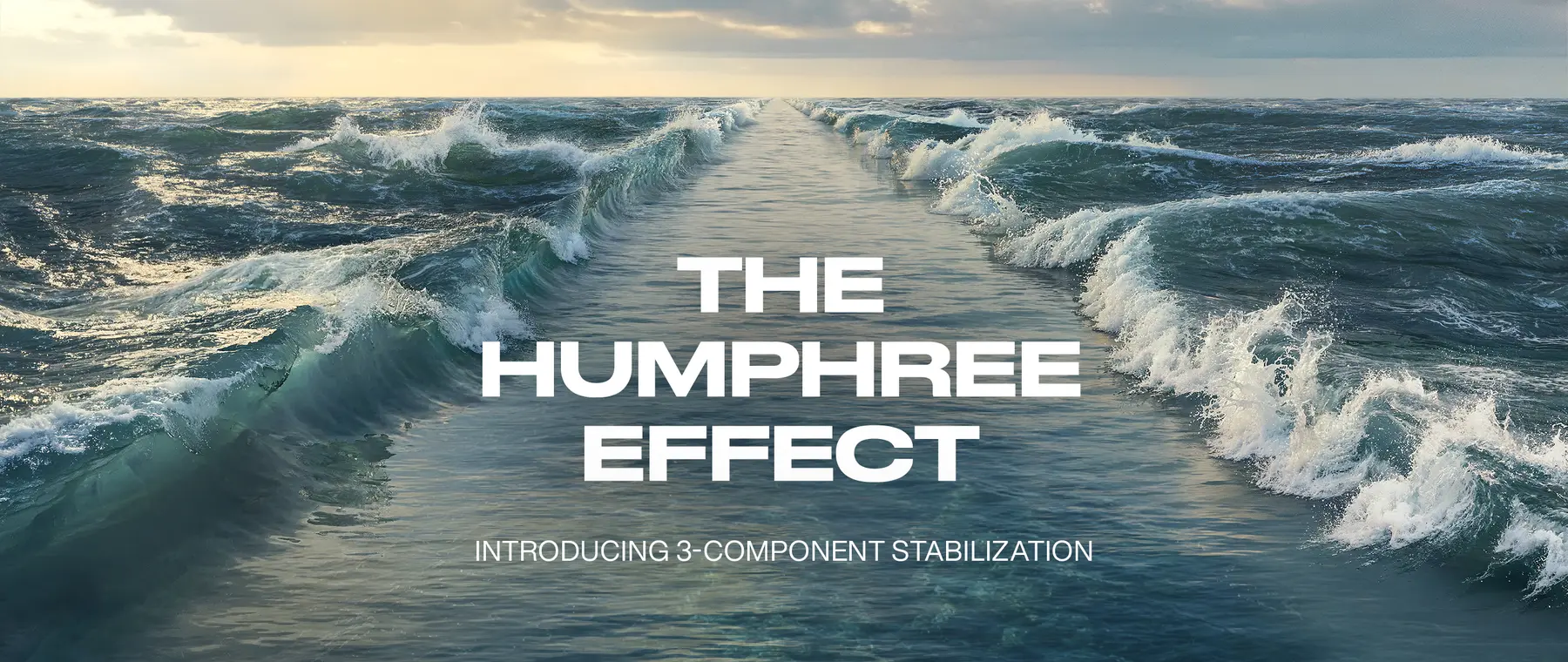
Humphree Unveils Three-Component Yacht Stabilisation System
By Stephen Yardley · Edited by Stephen Yardley
Image: Humphree
Humphree has integrated a new HIG5 gyro with its fins and interceptors under one control system, claiming roll reduction of up to 95% in suitable conditions.
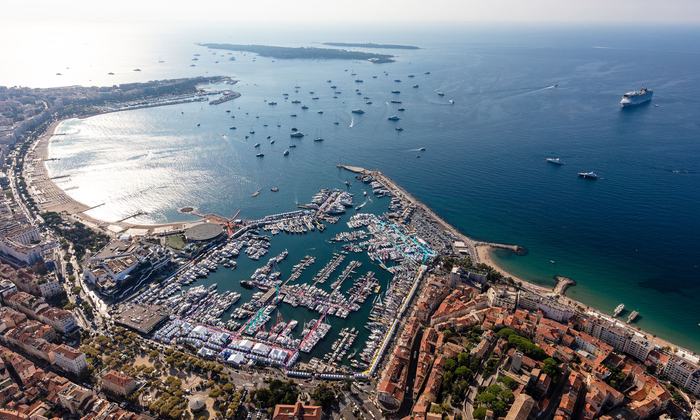
Humphree has introduced an integrated yacht-stabilisation system that combines a gyro, fins and interceptors under one control architecture, with the new arrangement making its public debut during Cannes Yachting Festival 2026. The Swedish company says the three components are coordinated by a central control system so they can work together across different speeds rather than behaving as independent pieces of equipment.
The launch, announced on 7 September 2026, adds the new HIG5 gyro to Humphree’s existing fin and interceptor technologies. The company says the combined system can reduce roll by up to 95% depending on the boat, installation and operating conditions, while also controlling pitch and yaw as part of a broader motion-management strategy.
Gyros, fins and interceptors each influence vessel motion in different ways. A gyro can generate stabilising force without requiring water flow over an external fin, fins are highly effective for active roll control through a broad operating range, and interceptors alter hydrodynamic lift at the transom to influence trim, pitch and roll.
Traditionally, those systems may be selected and commissioned as separate packages. Humphree’s proposition is that coordinating them through one control platform allows the yacht to use the most effective response for the current condition instead of asking each system to solve the same motion independently.
The control unit continuously analyses vessel movement and commands the available components in real time. That systems approach is important because poor coordination between stabilisation devices can waste energy or create conflicting responses, whereas a common control strategy can allocate work according to speed, sea state and operating mode.
The HIG5 is the first model in a new Humphree gyro range and is intended to add another source of stabilising force when the yacht is stationary or moving slowly. A rapidly spinning flywheel develops gyroscopic torque that can counter roll generated by waves, which is particularly useful at anchor where conventional fin performance may be limited by low water flow.
Humphree says the gyro is managed by a dedicated control unit that remains integrated into the overall stabilisation logic. Rather than operating as an isolated appliance, it contributes data and force to the same system that coordinates the fins and interceptors.
For owners, the practical objective is comfort across a larger share of the yacht’s operating day. Guests may experience motion while the vessel is at anchor, during displacement-speed cruising, while accelerating and at planing speed, so a system that changes its stabilising strategy with the operating condition can be more valuable than one optimised for only a narrow speed range.
Humphree states that the integrated package can reduce roll by up to 95%, but the company also makes clear that performance depends on vessel type and operating conditions. Yacht size, displacement, hull form, centre of gravity, installation geometry, sea state and the dimensions of the stabilising equipment all influence the result.
That qualification matters because stabilisation percentages are not directly transferable from one yacht to another. A naval architect or stabilisation specialist has to size the system around the vessel’s characteristics and expected use, while commissioning and control tuning determine whether the hardware delivers the intended comfort without creating excessive drag or energy consumption.
The new architecture may also simplify that integration process for builders because Humphree can supply and support all three motion-control elements. A single supplier does not automatically make an installation better, but it reduces the number of interfaces between independent control systems and creates one technical point of responsibility for tuning and service.
Humphree says its systems support remote access for diagnosis, configuration and technical assistance. That allows technicians to review faults, adjust parameters and support sea trials without always travelling to the yacht, potentially reducing downtime when a vessel is cruising far from a specialist service centre.
Remote access on any critical yacht system also raises cybersecurity and access-control questions, so builders and managers need to treat connectivity as part of the engineering specification rather than simply a convenience feature. Secure authentication, controlled permissions, network segmentation and clear service procedures are important whenever outside technicians can reach onboard equipment.
From a lifecycle perspective, remote support can still be valuable because stabilisation systems require periodic inspection, software support and tuning as the yacht’s weight or operating profile changes. A refit that adds equipment high in the vessel, for example, can alter motion characteristics and may justify reviewing stabiliser settings.
The new gyro integration is being shown in Cannes as Humphree demonstrates how the three components work together and how the package can be adapted to different boat sizes. The company says availability will begin through boatbuilders and selected dealers in the Mediterranean region, with a North American launch to follow.
For the superyacht market, the important development is the move from individual stabilisation products toward coordinated motion-control platforms. As yachts add more active systems, the quality of the control logic and the integration between components can become as important as the peak performance of any one piece of hardware.
Humphree’s three-component system is therefore notable not because gyros, fins or interceptors are new technologies on their own, but because the company is bringing all three under a common architecture. The next evidence will come from real installations, where builders and owners can compare comfort, energy use, serviceability and reliability against more conventional combinations of separate systems.
The integration question extends beyond motion control because gyros, fins and interceptors also draw electrical or hydraulic power and add weight in different parts of the vessel. A well-designed installation therefore has to balance comfort against machinery-space volume, electrical demand, structural reinforcement and service access rather than selecting equipment solely on a headline roll-reduction figure.
Owners considering retrofit installations will need an especially careful feasibility study because space, foundations and cable or hydraulic routes may already be fixed. The integrated concept may simplify controls, but the physical installation still has to suit the yacht rather than the other way around.
Explore
Go deeper into the yachts, companies, events and destinations directly connected to this article.
Continue reading
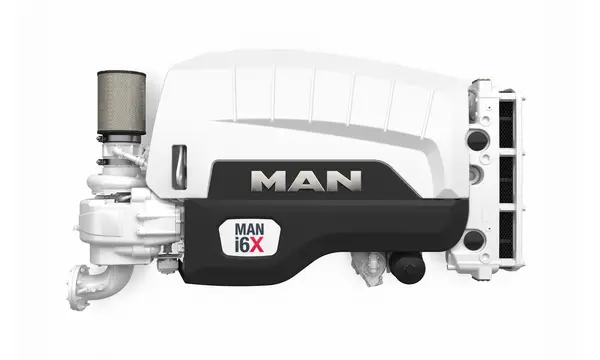
MAN Engines has shown its new 1,000hp i6X yacht engine at Cannes, extending its 12.4-litre six-cylinder platform ahead of production planned for 2028.
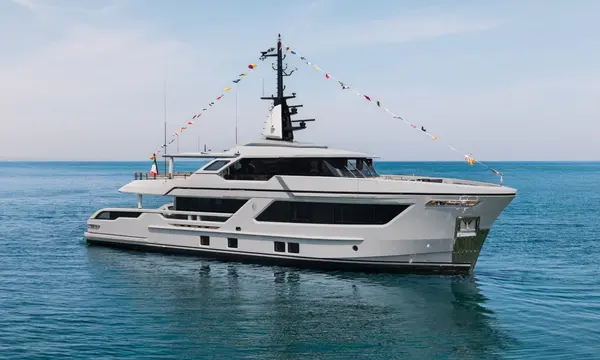
Cantiere delle Marche’s 31-metre RJ102 MON COEUR is part of the Cannes 2026 new-model lineup, bringing the yard’s RJ explorer DNA into its most …
Sanlorenzo’s 25.5-metre SHE has made her world premiere at the Cannes Yachting Festival 2026. The Heritage model combines 1960s-inspired Italian styling with Volvo Penta …
Columbus Yachts has brought the 38-metre Atlantique PRINCIPESSA CAPRICCIOSA to the Cannes Yachting Festival 2026 for her official show debut. The all-aluminium 299 GT …
Superyacht Guide
Continue into the wider Superyacht Guide.