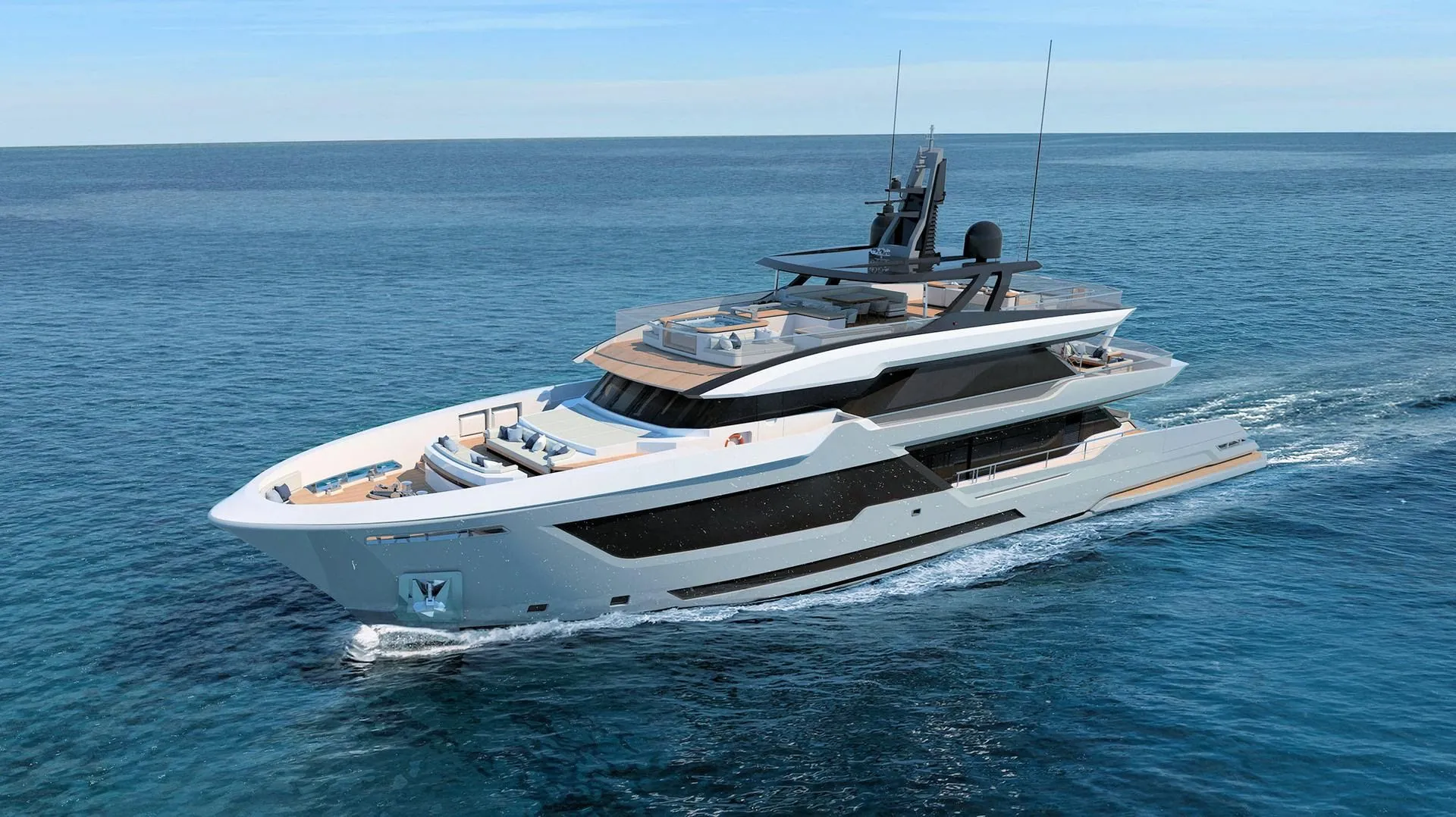
INACE Aventura 130 explorer yacht, official IYC project rendering of proposed 39.6m design

News

INACE Presents 39.6m Aventura 130 Explorer with Hydro Tec Design

Nov. 13, 2026 Shipyard

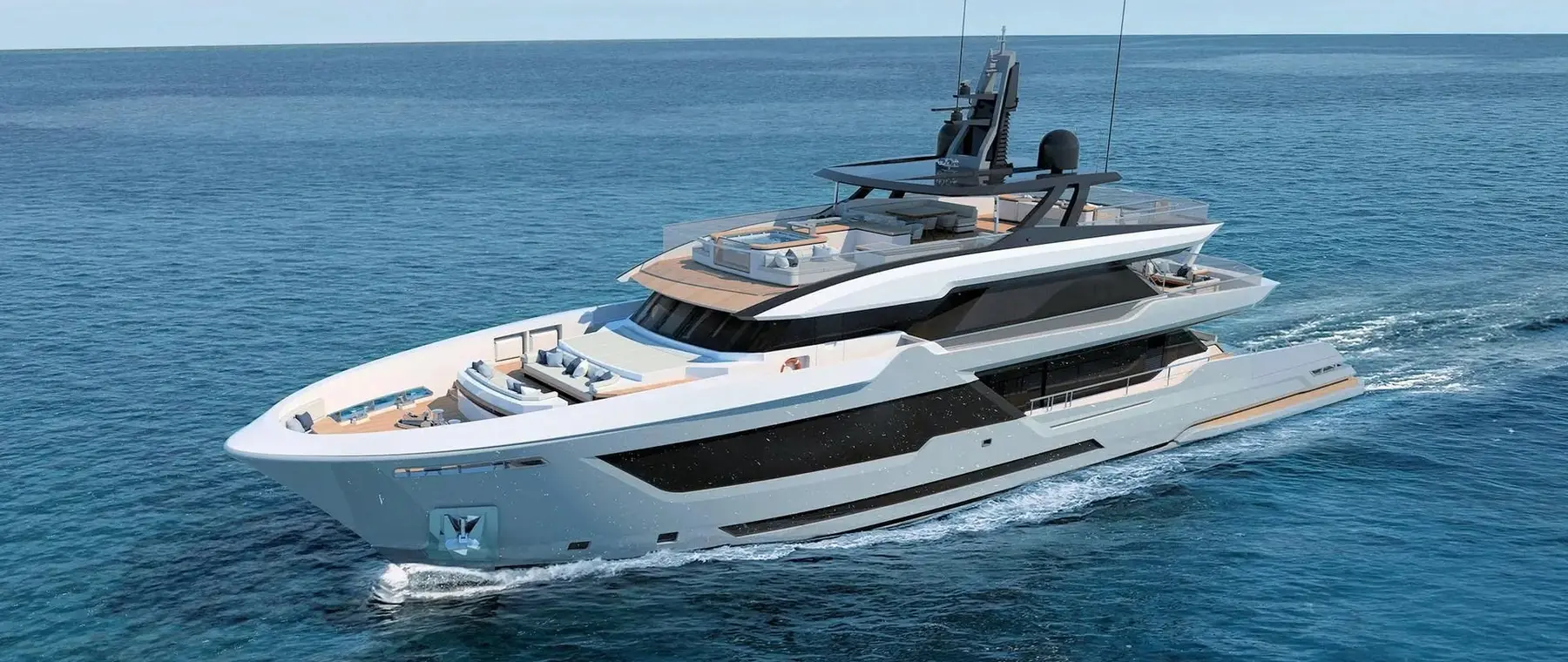
INACE Aventura 130 explorer yacht, official IYC project rendering of proposed 39.6m design

Brazil's INACE Superyachts has presented a 39.6m Aventura 130 explorer concept with Hydro Tec styling, steel construction and five guest cabins.

A Brazilian shipyard updates its explorer offering INACE Superyachts has brought its 39.6-metre ISY 130 Aventura explorer design to wider international attention in November 2026, with new project imagery and a sales presentation through its brokerage partner IYC. The concept has been described in current reporting as a Hydro Tec design intended to support extended cruising and comfortable private life aboard. Its proposed construction combines a steel hull with an aluminium superstructure, positioning the yacht as a displacement-style explorer rather than a high-speed planing motor yacht. This is a new-model marketing development, not confirmation that a particular 39.6-metre hull has been launched or delivered. Prospective buyers should distinguish the illustrated proposal from a completed vessel and obtain the current specification before making comparisons with existing yachts.

The dimensions place it firmly in the superyacht sector IYC's published listing gives the design an overall length of approximately 39.62 metres and a beam of about 8.3 metres. The stated enclosed volume is around 410 gross tonnes, while a draft figure would require confirmation from current technical drawings. Gross tonnage is a measurement related to enclosed volume, not a statement of actual vessel weight. The proposal is therefore substantially larger in functional terms than many fast 40-metre yachts with more modest internal space. That volume can accommodate machinery, stores, guest rooms and crew facilities needed for longer voyages. Owners must nevertheless understand how a relatively full hull performs at sea, including whether the arrangement allows appropriate access to individual ports and anchorages.

Hydro Tec brings explorer-yacht experience Current reporting credits Italian designer Hydro Tec with the naval architecture and exterior of the updated ISY 130 Aventura. The company's work is associated with expedition-style vessels whose geometry is shaped by range, stability and practical operation as well as aesthetics. That design pedigree is relevant, but the yacht's final performance will depend on completed calculations, construction and trials. The published visualisation shows a robust profile and a raked bow, distinct from the more vertical forms found on some contemporary explorer concepts. A render can help demonstrate the intended character without proving how the vessel will respond in particular sea states. Buyers should review the final hull-form and stability documents before committing to an operating programme.

Existing manufacturer material is not fully consistent INACE's older public brochure for a product also called ISY 130 Aventura refers to Sérgio Cutolo and presents different volume and beam figures. The 2026 sales-partner listing instead identifies a broader beam and approximately 410GT, while current industry coverage credits Hydro Tec. These discrepancies may reflect successive design versions, revised specifications or material that has not been updated consistently online. They should not be silently combined into a fictitious single final build specification. For this report, the current IYC listing and 2026 launch materials are treated as the relevant basis for the design now being marketed. An owner should request dated drawings and a definitive technical specification to clarify exactly what is available for contract.

Five cabins are planned for ten guests The current IYC description lists accommodation for ten guests in five cabins, alongside an eight-person crew complement. This arrangement suggests a yacht oriented towards private cruising, where guests may stay aboard for extended periods while professional staff manage the vessel. The balance between guest capacity and crew facilities can be particularly important when the cruising programme includes remote regions or extended time without shore support. No current statement proves that the illustrated design is already built or certified for commercial charter. The layout and crew numbers should be considered preliminary until they appear in the actual construction contract and the final safety and flag documentation.

An upper-deck lounge supports extended stays The proposal's visual arrangement includes an upper deck with seating, dining and spaces designed for relaxation. Glass bulwarks are used to preserve views, while overhanging portions of the superstructure are intended to offer shade below. These design choices may appeal to owners who spend considerable time at anchor in warm regions. They also introduce requirements for weather protection, cleaning and maintenance. Large exposed glass elements need suitable specifications and installation details, and deck layouts should provide safe routes for people moving around a vessel underway. The presentation is a design proposal rather than proof that every exterior furnishing has been selected or installed on a specific yacht.

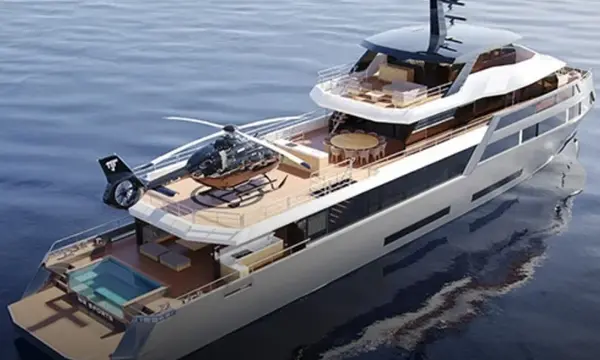
A tiered aft deck connects the sea and living areas One of the most recognisable features is the stepped arrangement aft, where a waterside pool or terrace connects with seating and social spaces on higher levels. This gives the design a resort-like atmosphere without eliminating the need to handle tenders, mooring equipment and crew activities safely. Such exterior planning can be attractive to owners who favour swimming and watersports, but the technical consequences should be studied carefully. A pool adds weight and requires water-treatment systems, while large platforms may need structural reinforcement and protected mechanisms. On an explorer yacht, any arrangement near the water should be evaluated against the conditions expected during long passages and at remote anchorages.

Steel and aluminium offer a familiar construction combination The proposed structure uses steel for the hull and aluminium for the superstructure. This is a well-established combination for displacement superyachts, particularly where designers want a robust hull and flexibility in shaping upper decks. The two metals still require appropriate engineering, joining methods, protective coatings and maintenance. Galvanic considerations, access to structural areas and the practicality of future repairs all deserve attention. A prospective owner should also assess how the builder will verify welding and material quality. Construction material is only one aspect of expedition capability; onboard systems, crew expertise and the maintenance regime are equally important. The current render alone cannot establish the durability of a future completed hull.

Aventura follows the yard's earlier models The 39.6-metre concept sits within INACE's Aventura family, which already includes the approximately 32.3-metre Aventura 106 SEA BOSS delivered in 2024. The Brazilian company has experience building commercial and government vessels, a background that informs the way it positions its private explorer programme. Nevertheless, individual yachts can differ considerably in systems, interior finishes and degree of customisation. The existence of SEA BOSS does not prove that a larger Aventura 130 has entered service. The model offers an option for potential owners to explore rather than evidence of a completed series. The appropriate benchmarks will be future construction milestones, sea trials and owner experience.

The engine specifications should follow the current revision IYC lists a maximum speed of about twelve knots and a cruising speed of approximately ten knots for the offered design. Older INACE information gives different figures, reinforcing the need to distinguish the present concept from earlier brochure material. Neither a sales estimate nor a preliminary machinery calculation is a witnessed sea-trial result. Buyers interested in long-distance passages should request speed and fuel-consumption curves, tank capacities and a calculation showing the assumed vessel weight. A yacht described as an explorer must be able to support its crew and guests through the intended itinerary, including maintenance, hotel loads and appropriate reserves. Advertised range claims need to be linked to their specific operating assumptions.

Remote cruising needs more than large fuel tanks The term explorer can describe a yacht's styling, but owners planning genuine offshore use need to consider redundancy, spare parts, water production, food storage and systems that can be serviced away from major ports. A vessel may be visually robust but lack the practical arrangements required for an extended voyage in remote waters. The new Aventura concept should therefore be assessed through its complete general arrangement and systems design. Crew accommodation, maintenance access and the ability to launch tenders safely are critical. A buyer should also consider the intended climate and whether the insulation, ventilation and seawater systems are appropriate. These questions are part of responsible project specification, not criticisms of a concept whose final details are still being developed.

The IYC listing does not prove a contracted delivery The brokerage page gives a future build year of 2029 and a price on application. Those are marketing details for the opportunity being offered, not evidence that construction of the specific yacht pictured has been completed or that delivery in 2029 is contractually guaranteed for an identified client. A buyer could receive a different schedule depending on when a contract is signed and how the specification is finalised. The relevant construction agreement should set out milestones, payments, inspections and remedies for delay. Independent owner's representation may be useful, particularly when a design is being produced at a yard far from the intended cruising area. The visualisation is a starting point for negotiations, not a finished asset.

The international sales arrangement matters INACE's relationship with IYC gives prospective buyers an international brokerage contact for discussing specifications and potential projects. That can help a Brazilian shipyard reach owners who may not be familiar with its facilities or construction practices. However, the involvement of a brokerage does not replace independent technical and legal review. The buyer should establish the contracting parties, ownership of design documents, warranty arrangements and service responsibilities. Questions about the completion programme and export requirements should be addressed early. A well-organised new-build process gives the owner confidence not merely in the concept but in how construction will be managed, inspected and accepted.

The model is a distinct story from another INACE order Recent coverage of INACE also includes the 45.6-metre ISY 150 Explora project VIVIERAE III, reportedly under contract for delivery in 2029. That is a separate vessel and design family, not an alternative name for the Aventura 130. This November update concerns the smaller 39.6-metre Aventura design, its Hydro Tec styling and the specifications currently marketed through IYC. Careful database management should distinguish a conceptual model, a construction contract and an existing delivered yacht. The three types of information may appear near each other on company websites, but they represent different levels of commercial and technical certainty. This report does not count Aventura 130 as a completed order.

A new configuration in a competitive explorer market The 2026 Aventura 130 presentation illustrates how builders are trying to combine genuine offshore capability with the outdoor spaces and residential comforts now expected in the superyacht market. INACE's proposal features substantial enclosed volume, five guest cabins and layered social areas, while its Brazilian industrial background and Hydro Tec association provide a recognisable development narrative. The final commercial and technical merits will depend on a contracted specification, construction quality, commissioning and use at sea. For now, this is a clearly identified 39.6-metre design being marketed internationally, not a delivered yacht or a confirmed fleet sale.

**Sources:** INACE / IYC current Aventura 130 sales-partner listing; November 2026 manufacturer design briefing reported by SuperYacht Times. Hero: IYC first-party project rendering of the future 39.6-metre yacht; model illustration, not a photograph of a completed 2029 vessel. Older INACE brochure figures are not blended with the 2026 specifications.

Primary source: INACE / IYC first-party updated Aventura 130 project listing, plus 3 November 2026 Hydro Tec design presentation.

Image: IYC / INACE Superyachts official first-party Aventura 130 project rendering; prospective 2029 new build, not a delivered motor yacht. Updated 2026 design parameters differ from older INACE brochure. Official source image.

Photo licence and source

Image: IYC / INACE Superyachts official first-party Aventura 130 project rendering; prospective 2029 new build, not a delivered motor yacht. Updated 2026 design parameters differ from older INACE brochure.

Continue reading

All news

Superyacht Guide

Explore the superyacht world

Continue into the wider Superyacht Guide.

Business opportunities · Superyacht Guide

Reach the superyacht industry audience

Companies serving the superyacht market can discuss clearly identified advertising, sponsorship and business-profile opportunities. Commercial activity remains separate from independent editorial coverage.