Inmarsat NexusWave Wins Bureau Veritas Cyber Type Approval
By Superyacht Guide · Edited by Stephen Yardley
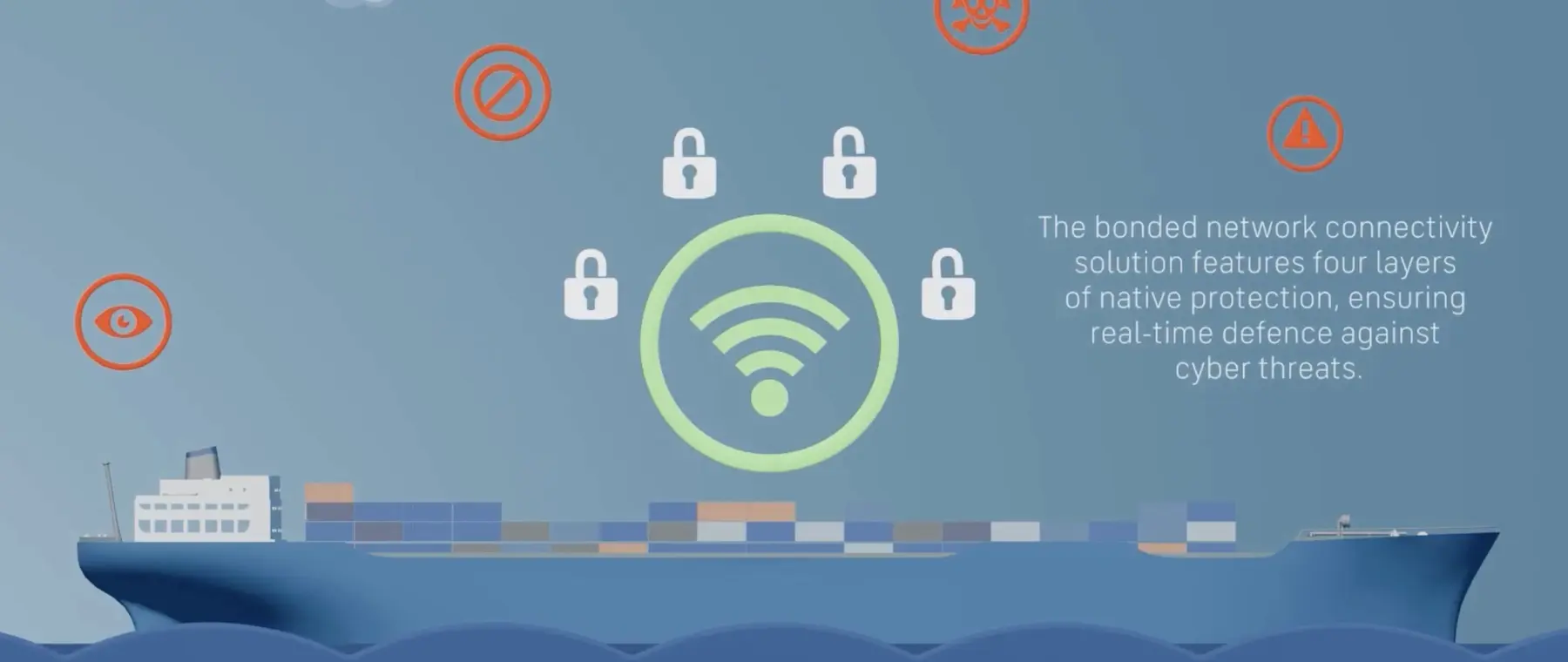
Bureau Veritas has granted Cyber Security Type Approval to Inmarsat Maritime’s NexusWave bonded multi-network service against IACS UR E27.
Inmarsat Maritime has received Cyber Security Type Approval from Bureau Veritas Marine & Offshore for NexusWave, its fully managed bonded multi-network connectivity service. The approval assesses the system against IACS Unified Requirement E27, which sets cyber-resilience requirements for onboard systems and equipment, and adds another classification credential to a service designed for increasingly connected vessels.
For large yachts, the development matters because communications networks now carry far more than guest internet traffic. Connectivity increasingly supports operational systems, remote support, business communications, crew welfare and cloud services, so the resilience of the onboard network has become part of the wider technical-risk picture rather than simply an IT issue.
According to Inmarsat Maritime, Bureau Veritas considered the onboard ICT architecture, network equipment, orchestration processes and relevant managed-service edge infrastructure together rather than testing isolated components. That approach is significant because cyber resilience depends on how systems interact, how networks are segmented and how security controls are managed across the complete communications environment.
The approval follows a ClassNK Cyber Security Type Approval for NexusWave against the same IACS requirement earlier in 2026. Multiple independent approvals can be useful for operators whose fleets or projects work with different classification societies, reducing the need to treat connectivity architecture as an entirely separate technical case for every vessel.
NexusWave combines several connectivity underlays, including geostationary satellite, low-Earth-orbit satellite, LTE and L-band, into a single managed service. Inmarsat says its security architecture includes network segmentation, encryption and centrally managed capabilities intended to support corporate, operational and crew communications.
That multi-network approach reflects the way modern superyachts are already evolving. Owners and captains increasingly expect continuous connectivity across coastal cruising grounds, ocean passages and remote destinations, while technical departments must manage multiple satellite and terrestrial links without allowing complexity to undermine security or reliability.
IACS UR E27 sits within a broader move toward formal cyber requirements for connected shipboard equipment. For new-build superyachts and major refits, that means naval architects, integrators, yards and management companies increasingly need to think about network architecture during specification rather than treating cyber security as a software layer added near delivery.
A type-approved connectivity service does not remove the need for vessel-specific policies, access control, software management, backups or crew training. It does, however, give project teams an independently assessed building block that has been reviewed against an established maritime cyber framework.
The superyacht sector combines unusually high demands for bandwidth, privacy and remote technical support. As bridge, engineering, AV/IT and owner services become more connected, a failure or compromise in communications infrastructure can affect much more than entertainment. Independent cyber assessment is therefore becoming commercially relevant as well as technically important.
For owners and managers, the practical takeaway is that connectivity procurement is moving closer to the same standards-based thinking applied to other critical onboard systems. The Bureau Veritas approval gives NexusWave another recognised cyber credential at a time when digital-vessel requirements are becoming harder to separate from class, safety and operational resilience.
Explore
Go deeper into the yachts, companies, events and destinations directly connected to this article.
Continue reading

Marlink has launched an operational-technology security offering for connected vessel systems, targeting risks around navigation, propulsion, HVAC, access control and other operational equipment.

Superyacht security now covers far more than guards and cameras, from drone privacy and intruders to cyber risk, social media leaks and shore movements.
Cybersecurity on superyachts is now a core safety, privacy and operational issue, covering navigation, Wi-Fi, AV, crew devices and suppliers.
Scania is showcasing its 13-litre marine engine built on the Scania Super platform alongside hybrid systems and industrial battery technology.
Superyacht Guide
Continue into the wider Superyacht Guide.