
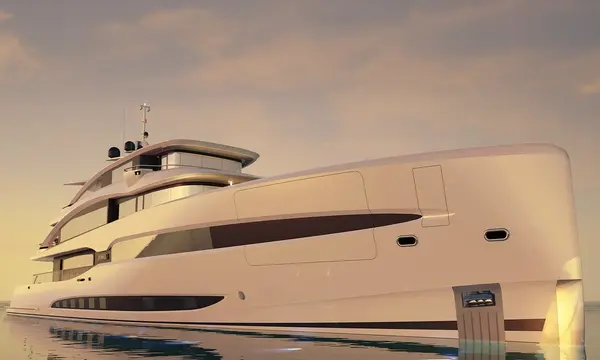
Romeo Marine Builds Two 59.75m Romeo 60 Hybrid Yachts in Dubai
Independent November 2026 yacht-industry reports identify two Romeo 60 superyachts under construction at Romeo Marine's Dubai Maritime City facilities.

© ISA Yachts / Palumbo Superyachts, original February 2026 Gran Turismo 68m keel-laying photograph.
The 68-metre ISA Gran Turismo has been reported entering the outfitting phase, a new construction milestone following the shipyard’s 2026 sale and keel-laying announcements.
The 68-metre ISA Gran Turismo project has been reported entering its outfitting phase, marking a new stage in a custom yacht programme already documented by its builder through a January 2026 sale announcement and a February keel-laying ceremony. A construction report published on 27 November identifies the latest milestone; the shipyard's earlier first-party releases establish the vessel's core dimensions, design team, technical concept and proposed 2028 delivery. These are different types of evidence and should not be blurred. The launch of interior and technical outfitting is not the delivery of a completed yacht, nor does it establish that final sea trials have begun. For owners following the large-custom sector, the progression is nevertheless significant because it brings the project closer to the demanding phase in which design decisions must become working, serviceable systems.
ISA Yachts publicly announced the sale of the new 68-metre Gran Turismo on 13 January 2026 and described a scheduled delivery in 2028. On 4 February the shipyard recorded a keel-laying ceremony, establishing that the project had moved from a commercial commitment into the physical construction programme. The 27 November report of an outfitting milestone adds a subsequent development to that sequence. It is important not to treat a dated news report as evidence of a completed handover, because substantial engineering, interior integration, testing and owner acceptance can still follow. The most reliable editorial formulation is that outfitting has been reported and the 2028 delivery remains the builder's stated schedule, subject to further confirmation as work progresses.
The builder describes this Gran Turismo as a full-custom interpretation of an established design lineage rather than a production boat with only decorative variations. Its steel hull and aluminium superstructure give the design team a structure in which different material properties, fabrication processes and maintenance requirements must be reconciled. These are standard considerations in the construction of large motor yachts, particularly where different metals meet and where protective coatings must remain accessible. The fact that an owner-specific yacht shares a platform tradition with earlier projects does not make its machinery, accommodation or equipment fit identical to those predecessors. A full specification should always be assessed by the individual hull and signed technical documents, not inferred from the reputation of the model name alone.
The official January release credits Vallicelli Design for the exterior and Team for Design – Enrico Gobbi for the interiors. That division matters because the yacht must present a coherent appearance while accommodating quite different technical requirements beneath visible surfaces. Exterior lines determine how decks, windows, structural supports and guest areas are perceived from outside; interior design brings material choices, circulation, lighting, storage and comfort into that envelope. On a custom project, the successful result depends on how those disciplines interface with naval architecture, machinery, electrical engineering and daily crew work. The named firms are documented by ISA, but exact materials and the final decorative scheme of the yacht have not been independently released in the sources examined for this report.
ISA highlights arches linking its three deck levels and a circular dining space on the main deck as visual signatures of this Gran Turismo family. Such elements can establish brand identity more clearly than a generic profile or a familiar deck arrangement. Yet they also create engineering responsibilities: structural members, glazing interfaces, external fittings and interior services must fit together while allowing inspection and repair. The official description makes these features part of the design narrative, not independently measured evidence of increased structural strength or superior seakeeping. Buyers and their representatives should request the appropriate naval architecture and classification documentation when assessing technical claims. The published renderings are useful visual references, but they cannot demonstrate the finished condition of equipment that has yet to be installed or commissioned.
The shipyard's account places emphasis on opening platforms at beach-club level, with space conceived for wellness and sociable use. It describes a gym, lounge and spa, allowing different activities to share the aft waterfront zone rather than being distributed across disconnected areas. Opening platforms can produce an attractive relationship between guests and the sea, but their usefulness depends on sea state, anchoring arrangements, crew supervision and safe movement between deck and water. They are also complex pieces of the vessel's exterior envelope requiring sealing, drainage, structural support and mechanical maintenance. ISA identifies the intended facilities and concept, but the details of operational limitations, inspection intervals and individual equipment suppliers should be confirmed through later technical documentation rather than guessed from imagery.
A swimming pool and surrounding lounge area are prominent elements in ISA's description of the yacht's aft design. On a large custom vessel, positioning water amenities is not merely an exercise in aesthetics, because water weight, drainage, treatment, thermal control and the effect of moving liquid all require careful engineering. A pool may be visually central while some of its most important features are hidden behind technical access panels. Good design allows engineers to service pumps and filtration equipment without creating unnecessary disruption in guest zones. The original release does not specify the pool's full volume or proprietary treatment arrangement, and this report does not invent such figures. The important verified fact is the central role the pool and beach-club complex are intended to play in the experience aboard.
According to the builder, the accommodation plan is designed for as many as 14 guests. Three cabins are proposed on the main deck, including two guest doubles and a forward owner's suite; four more cabins are placed below, with three doubles and one twin arrangement described in the official plan. This distribution can shape privacy and circulation because the main-deck owner's space is physically separated from much of the other guest accommodation. It also influences how service routes, noise control and lift or staircase access are planned. The final certified guest capacity and equipment specification need to be confirmed against the delivered yacht. The public arrangement is a design description, not evidence that every aspect of an owner's final interior has been shown in detail.
The shipyard describes the owner's suite as extending toward the forward part of the main deck to exploit the available beam. The published plan includes a dressing area, substantial bathroom, lounge and desk, suggesting a private residential function beyond basic overnight accommodation. A suite at this scale has to manage privacy, acoustic isolation, technical ventilation, lighting control and direct but discreet service access. These are not glamorous details in renderings, yet they have a significant influence on whether the layout remains comfortable during extended passages. The source establishes the intended arrangement but does not offer a validated noise level, vibration figure or independent assessment of the space. Such information would be more useful at a technical survey or later onboard evaluation than in an early production narrative.
ISA specifies a crew complement of 14 in eight cabins for the project. Crew accommodation should be considered with the same seriousness as guest space because large yachts rely on trained personnel for engineering, hospitality, navigation and safety. Staffing arrangements must reflect flag rules, safe manning and the owner's operational programme, not just the maximum number listed by a builder. Crew areas also need practical storage, laundry access, suitable rest facilities and routes that allow tasks to be carried out without continuously crossing guest spaces. Nothing in the published release establishes a final roster or identifies particular crew members for this yacht. It provides an intended accommodation scheme, while actual staffing and watchkeeping decisions will belong to the vessel's eventual management arrangements.
The January shipyard statement lists two MTU 12V4000M65L engines, each rated at 1,771 kilowatts, a stated maximum speed of 17.5 knots and a cruising speed of 14 knots. It also gives an approximate range of 5,000 nautical miles at cruising speed. These are builder-supplied design figures, and a responsible account should preserve that distinction rather than presenting them as independently measured sea-trial results. Fuel consumption, load, weather, hull condition, hotel demand and reserve requirements can materially change real-world endurance. A 5,000-nautical-mile planning figure is useful for assessing the intended long-range character of the yacht, but the owner's captain should rely on validated consumption curves and appropriate reserves when planning a passage.
Outfitting is the stage in which a completed or advancing structure must become a functional vessel with accessible systems and a coherent interior. Engineers coordinate mechanical plant, cabling, piping, ventilation, hydraulic equipment, entertainment systems, safety installations and hundreds of detailed interfaces with joinery. Some tasks can proceed concurrently, while others require a clear sequence to avoid dismantling completed work. The process benefits from careful change control, because late owner requests may affect systems hidden behind walls, ceilings or furniture. This is a general description of the discipline, not a claim about an unpublished ISA work schedule. The reported progress into outfitting gives this phase particular news value, although final completion and test dates remain unconfirmed.
A new-build owner is normally supported by technical representatives who track agreed specifications, documentary evidence of inspections and the handling of variations. On a 68-metre yacht, it is useful to maintain a clear record of approved materials, waterproofing details, electrical system diagrams, class inspection points and commissioning responsibilities. A design change that appears minor to a guest may influence access to a service valve or the movement of a heavy component years later. Documentation discipline during outfitting therefore affects maintainability after delivery. This report does not allege a defect or delay in ISA's programme; none has been established. The considerations are those that matter to any sophisticated custom-yacht construction project approaching a later testing and acceptance phase.
The language of full customisation can create the impression that every desire can be accommodated at any stage. In practice, design flexibility changes as hull construction, equipment placement and interior installation progress. Early decisions about layout, glass, structure and principal machinery have consequences for later cabin finishes, furniture and lighting. An owner may continue selecting fabrics or art positions while fundamental stability, escape routes and service access remain governed by engineering and regulation. A strong yard-client relationship is one that distinguishes options still open for change from decisions already frozen for technical reasons. ISA describes the project as owner-led, but the precise variation schedule and contractual decisions remain private and should not be reconstructed from promotional statements.
The November 27 construction report concerns progress into outfitting. It does not itself prove a new sale, identify a different owner, establish a formal delivery date revision or confirm that machinery acceptance and class trials are complete. The January shipyard release remains the primary source for the originally announced 2028 delivery target and the published design particulars. The February yard statement is the separate primary record for keel laying. Using those sources together allows a more accurate chronology than treating every new article on the same yacht as another world premiere. It also permits genuine new progress to be reported without disguising already-covered announcements. Further firsthand updates will be required to establish launch, technical trials and delivery.
A 68-metre custom yacht combines the scale of commercial-grade engineering with guest spaces and exterior architecture tailored to a private owner. The builder's reported design balances long-range performance aspirations with prominent wellness and waterside social areas. If the build continues on the announced timetable, 2028 remains the relevant delivery year to watch, but a timetable is not a guarantee and should be stated as a plan. The real significance of the latest outfitting report is the movement from major structure toward the integrated systems and finishing work that ultimately determine how the yacht behaves in service. This is a measurable project milestone, not an excuse to speculate about unannounced specifications or confidential commercial arrangements.
ISA Yachts' January 2026 sale release is the source for dimensions, designers, general arrangement, crew and guest capacities, machinery and the stated delivery target. Its separate February 2026 keel-laying publication documents the earlier construction event and supplies the genuine shipyard photograph used here. The more recent 27 November outfitting development was reported independently by SuperYacht Times, and that attribution is maintained rather than recast as a new ISA press release. No claim is made that the historical photograph depicts work taking place this week. All technical values should be regarded as builder-provided until later verified commissioning data become available.
Original primary record: YachtBuyer 26 November 2026 original report on ISA Gran Turismo 68m entering outfitting; ISA Yachts first-party design data. © ISA Yachts / Palumbo Superyachts, original February 2026 Gran Turismo 68m keel-laying photograph. Original first-party media: source photograph or official illustration. Copyright and image source are credited; first-party availability does not imply unrestricted reproduction permission.
© ISA Yachts / Palumbo Superyachts, original February 2026 Gran Turismo 68m keel-laying photograph.
Continue reading
Independent November 2026 yacht-industry reports identify two Romeo 60 superyachts under construction at Romeo Marine's Dubai Maritime City facilities.

Ferrari Hypersail recruits two-time Ocean Race winner Simon Fisher and formalises a Yacht Club Italiano partnership as its 100-foot foiling monohull enters the next …
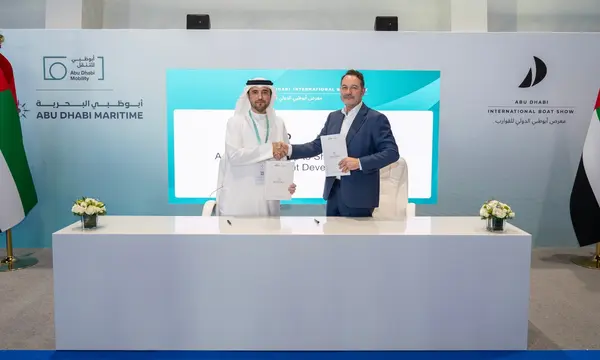
MERED and AAA Marine sign a feasibility memorandum for a potential marina at Riviera Residences on Abu Dhabi's Al Reem Island; berths remain unconfirmed.
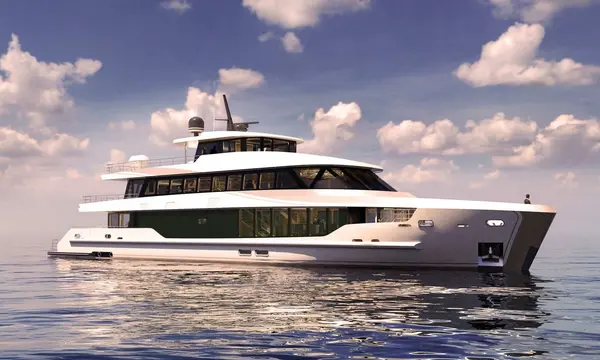
Wynn Al Marjan Island reveals Natural 9, a 43.2m event superyacht by Cheoy Lee and Incat Crowther for celebrations at its planned 2027 marina.
Superyacht Guide
Continue into the wider Superyacht Guide.
Business opportunities · Superyacht Guide
Companies serving the superyacht market can discuss clearly identified advertising, sponsorship and business-profile opportunities. Commercial activity remains separate from independent editorial coverage.