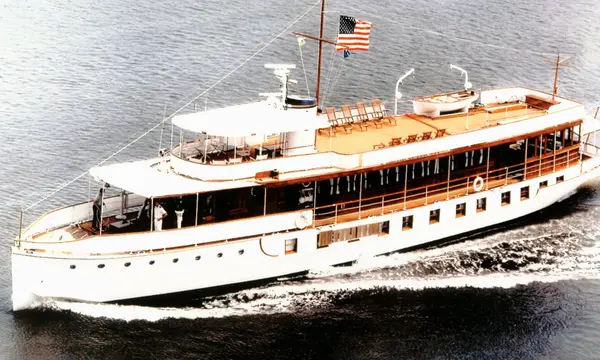
USS Sequoia: The Presidential Yacht Used by Nine U.S. Presidents
USS Sequoia served nine U.S. presidents and became a floating setting for diplomacy, political decisions and private presidential life. From Roosevelt and Kennedy to …
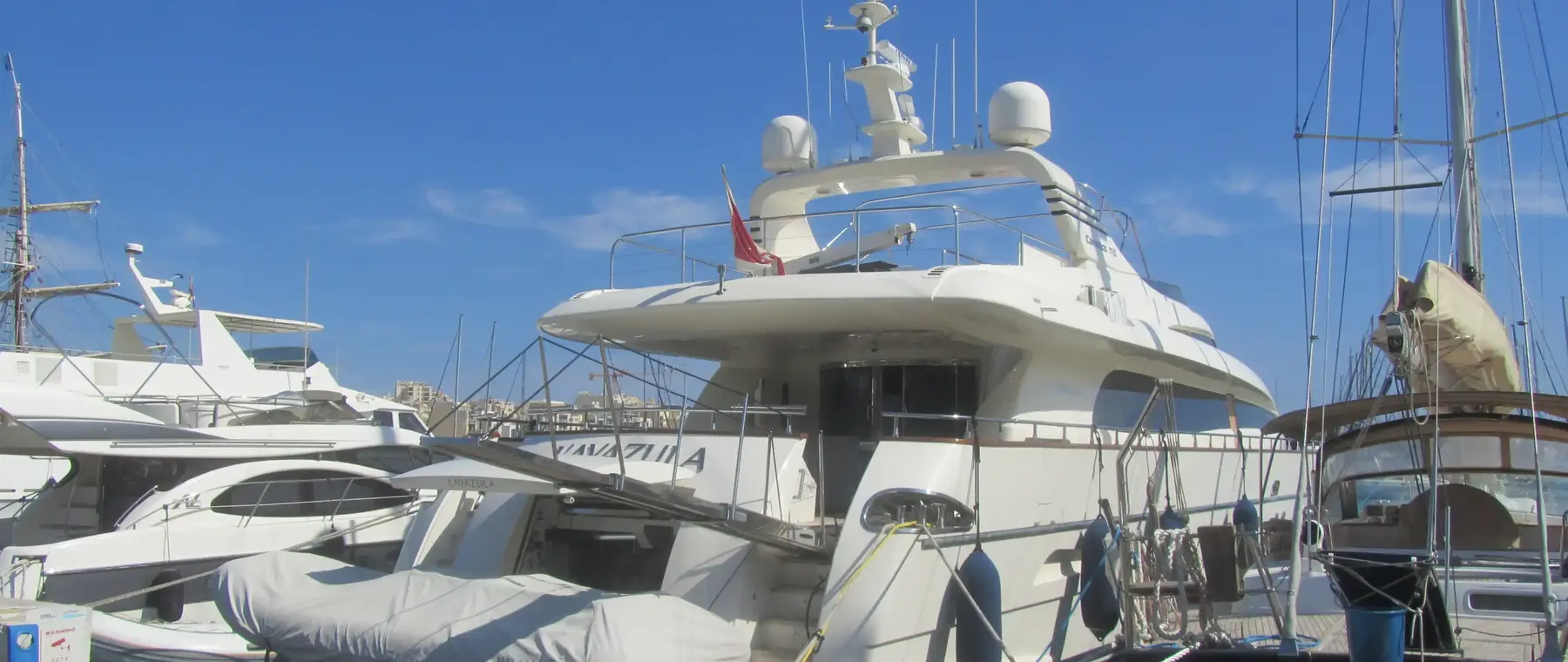
Italy’s competition authority has opened a formal investigation into Luise Group and related companies over allegations concerning access to scarce superyacht berths and competition in yacht agency services.
Italy’s competition authority has opened a formal investigation into Luise Group and several related companies over allegations that control of important superyacht berths in the Gulf of Naples may have been used to favour businesses within the same group. The case is potentially significant well beyond Naples because it raises a broader question that is rarely examined publicly in the superyacht industry: what happens when the same corporate group controls access to scarce berths while also competing to provide agency and support services to the yachts that need them?
The investigation, identified by the Italian Competition Authority, the AGCM, as case A581, was opened on 23 June 2026 following a complaint submitted by ACQ Italy, a maritime agency active in the Gulf of Naples. The companies named in the proceedings include Luise Group S.r.l., Joseph Luise E Sons S.r.l., Luise International & Co. S.r.l., Luise Associates S.r.l. and Porto Antico di Stabia S.r.l. The opening of a formal investigation is not a finding of wrongdoing, and the allegations remain to be tested through the authority’s proceedings.
What makes the case particularly relevant to the superyacht sector is the concentration of large-yacht berth capacity in one of the Mediterranean’s most desirable cruising areas. According to the AGCM’s preliminary assessment, Luise-linked businesses account for an estimated 43 to 49 berths out of a relevant market of approximately 91 to 97 berths, depending on the yacht sizes included in the calculation. That equates to a provisional market share of around 47 to 51 per cent, rising above 53 per cent for yachts longer than 45 metres.
The authority also considers Luise Group uniquely positioned within the market it has provisionally defined to accommodate yachts above 75 metres. That point matters because the largest yachts have the fewest realistic alternatives when choosing where to berth. Length, draft, manoeuvring space, security requirements and harbour infrastructure can sharply reduce the number of suitable locations available to a very large yacht, making access to specific berths commercially important not only to the yacht itself but also to the agents and service companies competing for its business.
The Gulf of Naples is an especially valuable market because it combines Naples, Capri, Ischia and the Sorrento Peninsula, all destinations that attract significant concentrations of large private and charter yachts. For owners and captains, berth location is not simply a question of where a yacht can physically fit. It can determine guest transfers, access to airports, provisioning logistics, shore transport, embarkation arrangements and proximity to hotels, restaurants and other services.
The AGCM places particular emphasis on Mergellina, which it describes as a key large-yacht landing point on the Naples waterfront. The authority’s preliminary reasoning suggests that demand for certain berths can be relatively insensitive to price because owners and guests may specifically want to be in Naples rather than at an alternative location further away. In those circumstances, access to the berth itself can become a critical part of the commercial relationship between a yacht and its maritime agent.
That is where the allegations become more important than a simple dispute over berth allocation.
According to the complaint summarised by the AGCM, ACQ Italy made a series of berth requests between 2022 and 2025 on behalf of yachts ranging from approximately 34 to 85 metres. Some of those requests were allegedly refused because no suitable berth was available. ACQ later alleged that certain yachts were subsequently contacted by Luise-linked companies and offered access to berths that had previously been unavailable through the competing agent. Similar allegations were made in relation to Porto Antico di Stabia at Castellammare di Stabia.
These claims remain allegations under investigation and have not been established as fact. However, they illustrate why the case could become important for the wider superyacht services industry.
A yacht agent seeking a berth must normally disclose commercially sensitive operational information, including the yacht’s identity, dimensions, arrival and departure dates and contact details. The AGCM is examining whether information obtained through berth enquiries in the capacity of marina or concession operator may have been available to related companies competing in the downstream yacht-agency market.
The distinction is commercially significant because marina operations and yacht agency services are different businesses. A marina or berth concessionaire controls physical access to infrastructure. A yacht agent represents the yacht and may arrange berthing, customs and immigration, fuel, provisioning, technical assistance, crew logistics, transport, guest movements and a wide range of other services.
There is nothing inherently unusual or unlawful about those activities existing within the same corporate group. Vertical integration can provide yacht owners and captains with a convenient single point of contact and can improve efficiency. The competition issue arises only if control over scarce infrastructure is used in a way that disadvantages independent competitors or makes access to berths conditional on using related services.
That is the central question the AGCM is now examining.
The authority’s preliminary assessment considers whether yachts seeking access to Luise-controlled berths may have been encouraged to appoint Luise-linked maritime agencies, and whether control of the berth relationship could have strengthened the group’s position in the wider agency market. The investigation also considers whether the handling of information obtained through berth requests could have created a competitive advantage over rival agents.
The financial stakes are substantial because a superyacht berth can be the entry point to a much larger chain of expenditure. A single large yacht call can generate business for fuel suppliers, provisioners, transport companies, florists, technical contractors, security providers, crew travel services, waste companies, chandlers and local tourism operators. For charter yachts, repeated calls throughout a season can multiply that economic impact.
The AGCM’s sector analysis highlights the disproportionate value of large-yacht tourism. Although large yachts represent only a small share of vessels visiting the Italian coast, they account for a much larger proportion of the economic value generated by nautical tourism. This helps explain why control of a limited number of large-yacht berths can have consequences far beyond marina occupancy alone.
For an independent yacht agent, failing to secure a preferred berth may mean losing much more than the commission associated with the mooring. A yacht that changes agent in order to obtain a berth may also move its provisioning, transport, logistics and wider itinerary-management business to the new provider. In that sense, access to scarce berth infrastructure can influence the distribution of much more valuable downstream business.
This is particularly important at the upper end of the fleet, where alternatives are limited. A 35-metre yacht may be able to choose between several marinas within a region. An 80-metre yacht may have only one or two practical options. The larger the vessel, the greater the commercial importance of whoever controls those berths.
The AGCM’s preliminary figures underline that concentration. The authority estimates that Luise-linked businesses hold around 47 to 51 per cent of relevant berth capacity, more than 53 per cent for yachts above 45 metres, while also occupying a strong position in yacht agency services. The authority cites an estimated national share of around 50 per cent in the relevant agency market, although these market definitions and figures remain subject to further examination during the proceedings.
The case therefore raises a wider issue for the Mediterranean superyacht economy. Yacht agencies, marina operators, provisioning businesses and technical service companies are often connected through ownership, partnerships or commercial agreements. In many cases this creates efficiencies and is entirely normal. The competitive concern arises when control over infrastructure that rivals cannot easily replicate may influence who wins the associated service business.
That makes the Luise investigation potentially important outside Italy as well.
If the AGCM ultimately finds that competition law has been breached, the case could influence how vertically integrated marina and agency groups manage berth allocation, customer information and relationships with competing service providers. It could also increase pressure for clearer separation between infrastructure management and downstream commercial activity where berth access is particularly scarce.
It may also encourage greater scrutiny of how berth availability is communicated to owners, captains and independent agents, and whether confidential enquiry information is adequately separated from sales activity within related companies.
At this stage, however, no conclusion should be assumed. The investigation may ultimately determine that the evidence does not support the allegations or that the market operates differently from the authority’s preliminary assessment. Luise Group and the other companies involved will have the opportunity to respond fully during the proceedings.
What is already clear is that the case exposes an important but rarely discussed part of the superyacht business.
The most valuable asset in a destination is not always the marina itself, the yacht agency or the service network. Sometimes it is simply the limited number of places where the largest yachts are physically able to stop.
In a market where a single berth can unlock millions of euros of associated spending over a season, control of that access can carry considerable commercial power. The AGCM investigation will now examine where the boundary lies between legitimate vertical integration and conduct that may restrict competition.
Until that process is complete, the allegations remain unproven. But the case has already brought an important question into public view: in the Mediterranean’s most sought-after superyacht destinations, who controls access to the berths — and how much influence does that control have over the business that follows?
Continue reading
USS Sequoia served nine U.S. presidents and became a floating setting for diplomacy, political decisions and private presidential life. From Roosevelt and Kennedy to …
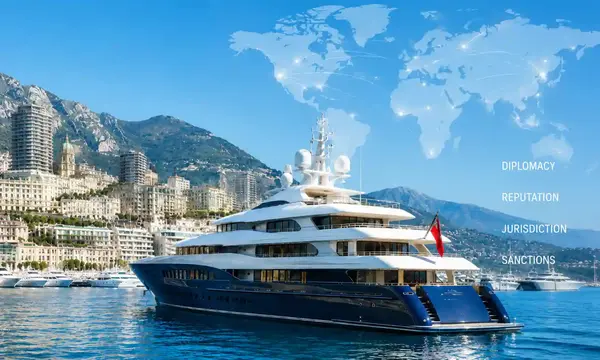
Superyachts are unusually visible forms of private wealth, so where they berth can carry reputational as well as legal significance. Soft power begins with …
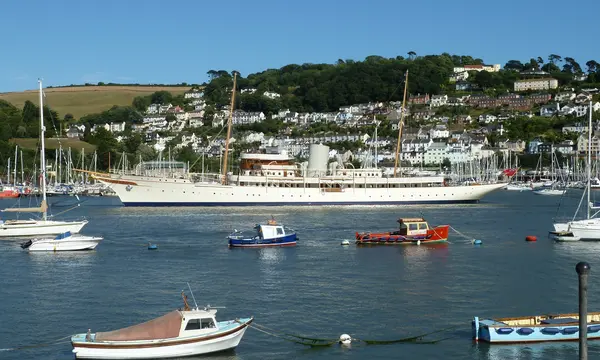
Nahlin is a 91.44-metre classic motor yacht built by John Brown & Sons in 1930 to a G.L. Watson design. Her 1936 Mediterranean charter …
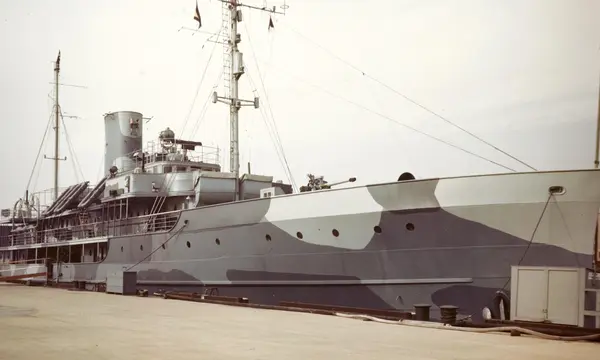
Built for Horace Dodge in 1921, SS Delphine survived sinking, wartime service as USS Dauntless and decades of uncertainty before a landmark restoration returned …
Superyacht Guide
Continue into the wider Superyacht Guide.