Aon Highlights Insurance and Climate Risks for Fine Art Aboard Superyachts
Aon specialists have highlighted insurance limits, humidity, vibration, transit and shipyard risks owners should consider when carrying fine art aboard yachts.
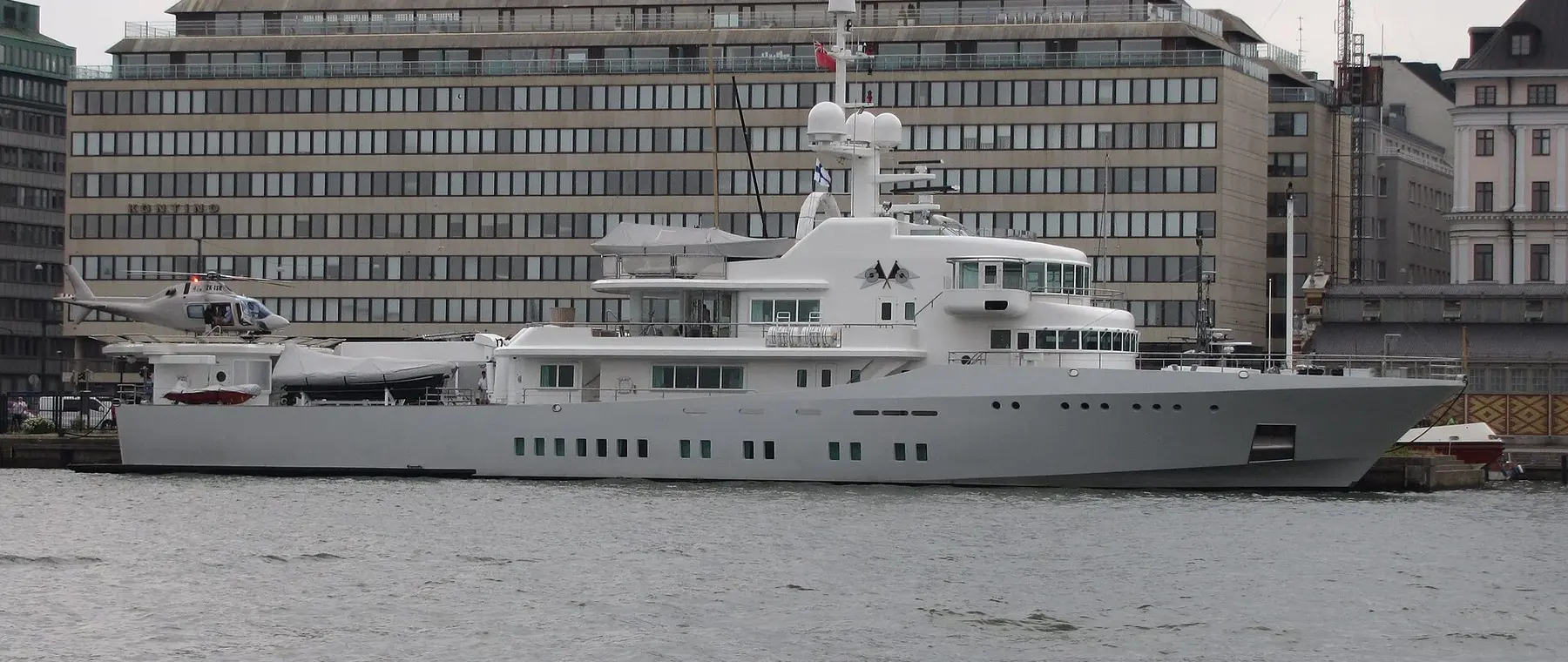
57m yacht SENSES in Helsinki, 2010 — MKFI / Wikimedia Commons public domain
French yacht owner Jack Setton died on 4 November aged 77, according to Megayacht News. His projects spanned BELLE FRANCE, converted expedition yacht SIMSON S, SENSES and a remarkable succession of bespoke sailing boats.
Jack Setton, the French businessman and yacht enthusiast whose projects challenged conventional ideas about both superyachts and small sailing craft, died on 4 November 2026 at the age of 77, according to a 6 November obituary by yacht journalist Diane M. Byrne of Megayacht News. Setton was notable not simply for the vessels he owned, but for the demands he placed on designers and builders. Some of his choices were deliberately unconventional: ocean-going vessels acquired for their toughness, ambitious conversions, distinctive custom sailing boats and an insistence that speed and direct experience of the sea mattered more than fashion. His career offers a rare perspective on yacht ownership as a continuing design experiment. This retrospective looks at the documented projects and the wider lessons of a lifetime on the water.
Setton's enthusiasm began long before his best-known large yachts. He developed a business career associated with the introduction of Pioneer audio equipment to France, while his interest in high-performance powerboats was taking shape. His ventures reflected an appetite for testing established assumptions rather than simply buying familiar products. The early Setton Bullit powerboat programme was one expression of that outlook. In the account published by Megayacht News, those lightweight boats drew on offshore-performance ideas at a time when many buyers were following more conventional layouts. The point of the story is not that every experiment proved commercially superior, but that Setton consistently asked whether a different configuration might serve his intended use better. That curiosity became a distinctive feature of his later projects.
An important step into the large-yacht world came when Setton acquired the 55.1-metre Feadship CACIQUE, a 1986-built yacht, in 1990 and renamed her BELLE FRANCE. The obituary records that he undertook two circumnavigations aboard her. Such extensive use gave him a working understanding of what a traditional luxury yacht could and could not do for the itineraries he wanted. In particular, draft limitations kept the vessel farther from some shores than he preferred, and the lack of suitable arrangements for carrying larger exploration tenders restricted his options away from port. These were not criticisms of the builder's craftsmanship. They were reflections of the gap that can emerge between the original design brief and the ambitions of a subsequent owner who has spent substantial time using the yacht.
Rather than commissioning a conventional larger yacht, Setton looked to the practical capabilities of workboats and tugs. His research led to the German-built North Sea vessel SIMSON, approximately 77.7 metres long, which he acquired for conversion. Between 1993 and 1995 he worked with naval architect Claus Kusch on the transformation into the expedition yacht SIMSON S. The project became a reference point in discussions about rugged converted yachts: a substantial working-vessel foundation repurposed around an owner's cruising needs. The vessel later became known as SEA RANGER. The appeal of such a route is clear, but conversion is not a short cut around engineering. Every change to accommodation, access, loading and operations requires careful integration with an existing structure designed for different duties.
Setton's interest in a converted vessel reflected his wish to reach remote coastlines while carrying smaller craft capable of exploring where the main yacht could not safely go. A mothership in that sense is more than a large hull with extra deck space. It must accommodate tenders, equipment, provisions and crew operations in a way that remains workable in sea conditions and over long passages. Large clear deck areas can be more valuable than traditional yacht terraces when an itinerary involves substantial equipment. At the same time, owners considering a conversion should examine stability, regulatory requirements, machinery age, structural condition and long-term maintenance cost. Setton's approach showed the possibilities of the concept, but it does not mean that any commercial ship can be economically transformed into an equivalent private yacht.
In 1999 Setton commissioned SENSES, a custom yacht of about 57 metres associated with designer Martin Francis. Unlike the converted SIMSON, this project began as a purpose-built private vessel, allowing the owner's interests to be reflected in the fundamental design. The yacht became one of the more recognisable names connected with Setton's fleet. The accompanying archival photograph of SENSES was taken in Helsinki in 2010, well after her original delivery; it is included to illustrate a vessel formerly commissioned by Setton, not to imply that he remained her owner when the picture was taken. The distinction matters in a career involving numerous acquisitions, refits and changes of ownership. A yacht's association with an influential owner can persist long after that person's direct involvement ends.
Designers who worked with Setton encountered an owner willing to ask for solutions outside standard practice. Megayacht News names collaborators including German Frers, Marc Lombard and Rolf Vrolijk across his varied portfolio. In the case of SENSES, the publication also notes the early involvement of Stefano Pastrovich in the design office. These connections show how a determined client's brief can provide designers with opportunities to challenge accepted forms. Yet the productive tension between owner and professional adviser demands discipline. Ambitious specifications can affect hull performance, structural weight, safety, cost and practical maintenance. Setton's projects are most useful to study where the unconventional requirement was tied to a clear operational objective rather than novelty for its own sake.
Setton's preference for robust existing boats did not end with his largest projects. He also acquired and converted a shrimp trawler into a 32-metre yacht named PINK SHRIMP. The vessel's name and pink radome helped signal its character, but the underlying idea was familiar from the earlier expedition work: begin with a platform that can serve a practical cruising purpose and adapt it to private use. Conversions of this kind vary enormously in scope, particularly where the original hull and machinery remain central to the result. They can offer compelling character and utility, yet buyers should never confuse an unusual exterior with a guarantee of reliability. The engineering records, survey findings and quality of the conversion remain decisive. Setton's willingness to revisit this formula is itself part of his legacy.
For all the attention attracted by superyachts, Setton maintained a strong interest in sailing small, responsive boats himself. A detailed 2020 profile in Yachting World, based on first-hand reporting and his explanations of the design process, gives insight into the thinking behind several custom daysailers. He commissioned CIAO GIANNI, a Frers-designed 60-footer launched in 2010, and later developed the all-carbon ROLJACK, a 36-foot design associated with Judel/Vrolijk. His objective was not simply to achieve a fashionable top-speed figure. He wanted boats that would remain engaging, controllable and comfortable when sailing close to the wind, particularly in the conditions he enjoyed around Sardinia and the Bonifacio Strait.
One of the most revealing projects was PAJA, a narrow modern daysailer developed with designer Paolo Bua and built by Multiplast. Yachting World described the boat's radical proportions and the way its controls were organised for a single sailor. Setton wanted a light, fast yacht capable of sailing efficiently upwind without uncomfortable slamming, yet he also demanded straightforward handling and practical road transport. That combination is technically difficult: a slender hull, demanding sailing angles, stability and the weight of the keel must all be reconciled. The resulting design is a useful reminder that sophistication is not synonymous with larger size. The same engineering mindset can be applied to a nine-metre sailing boat or a much larger expedition platform when the owner states the mission clearly.
The contrast between a rugged ocean-going conversion and a minimalist daysailer is less stark when seen from Setton's perspective. Both projects were built around what he wanted to do personally on the water. One aimed to take him to remote coastlines and carry the craft needed to explore them; another sought the direct sensations of sailing in demanding winds. Yachting World's account describes extensive design exploration before the final PAJA configuration was selected. Multiple hull and deck possibilities were considered rather than accepting the first attractive rendering. That process is relevant to prospective superyacht owners who are sometimes presented with finished-looking images before their requirements have been tested against how the vessel will actually operate.
The superyacht industry is shaped by builders, designers and engineers, but experienced owners can also influence the development of new approaches. A client who uses a vessel heavily is often well placed to identify operational limitations that an otherwise polished concept does not reveal. Setton's projects brought this practical feedback to the design table repeatedly. His involvement also illustrates the value of a sustained relationship with technical specialists who are willing to explain trade-offs rather than merely accommodate demands. The objective of good custom yacht design is not to satisfy every wish independently; it is to resolve competing wishes into a seaworthy, maintainable and coherent vessel. Setton's career made those negotiations visible in a succession of very different boats.
A prolific owner's story can easily acquire exaggerated claims about fleets, ownership records and project achievements. The more reliable approach is to distinguish identified vessels, dates and documented design collaborations from anecdote. The available reporting clearly links Setton with BELLE FRANCE, SIMSON S, SENSES, PINK SHRIMP and a series of custom sailing projects. It does not provide a definitive complete inventory of every boat he owned, and this article makes no attempt to create one. Similarly, the 6 November obituary states that his cause of death was not known at the time of publication. There is no responsible basis here for adding a cause, speculation about medical circumstances or private details about relatives. The documented contribution to yachting is substantial without such additions.
The most practical lesson from Setton's work is that a yacht brief should start with intended use. Owners can ask what cruising grounds they genuinely expect to visit, which tenders they need to carry, how much time they plan to spend under way and which spaces or systems they will operate themselves. They can then work with designers and technical managers to test the consequences of those choices. A deep-draft yacht may suit one cruising programme perfectly and frustrate another. A conversion may supply the deck area an expedition requires but demand extensive engineering work. A fast daysailer may offer intense enjoyment with few concessions to conventional comfort. There is no universally correct yacht; there is only a vessel whose purpose, capability and constraints have been understood.
Jack Setton's death closes a notable chapter in modern yacht ownership. He was associated with prestigious yachts, but the more enduring part of his reputation is a willingness to experiment across sharply different kinds of craft. The record includes a major Feadship used on long voyages, an unconventional North Sea vessel converted for exploration, a custom expedition yacht, a former shrimp trawler and highly specialised sailing designs. In each case, the distinctive feature was a continuing engagement with what boats could make possible. The first-hand 2020 account of his sailing projects and the 2026 obituary together portray an owner more interested in shaping a vessel's behaviour than simply displaying its scale. That is a fitting way to remember a figure whose influence went well beyond a list of yachts.
Continue reading
Aon specialists have highlighted insurance limits, humidity, vibration, transit and shipyard risks owners should consider when carrying fine art aboard yachts.
The first Sunreef 100 Eco, Ipharra, will combine private family cruising with student educational voyages focused on the sea and environment.
Heesen has formally christened 55-metre Pa’lante, formerly Project Frida, after successful North Sea trials.
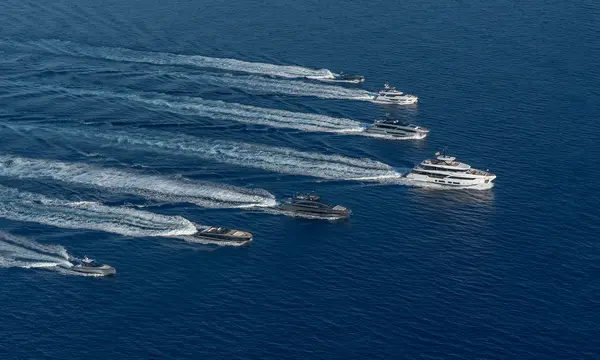
Ferretti Group has introduced its Quality Promise programme, adding one year of limited coverage beyond the standard warranty for eligible yachts up to 45m.
Superyacht Guide
Continue into the wider Superyacht Guide.
Business opportunities · Superyacht Guide
Companies serving the superyacht market can discuss clearly identified advertising, sponsorship and business-profile opportunities. Commercial activity remains separate from independent editorial coverage.