
26.5m Johnson ALENIEL Sold After Extensive Refit Investment
By Superyacht Guide Newsroom · Edited by Superyacht Guide Newsroom
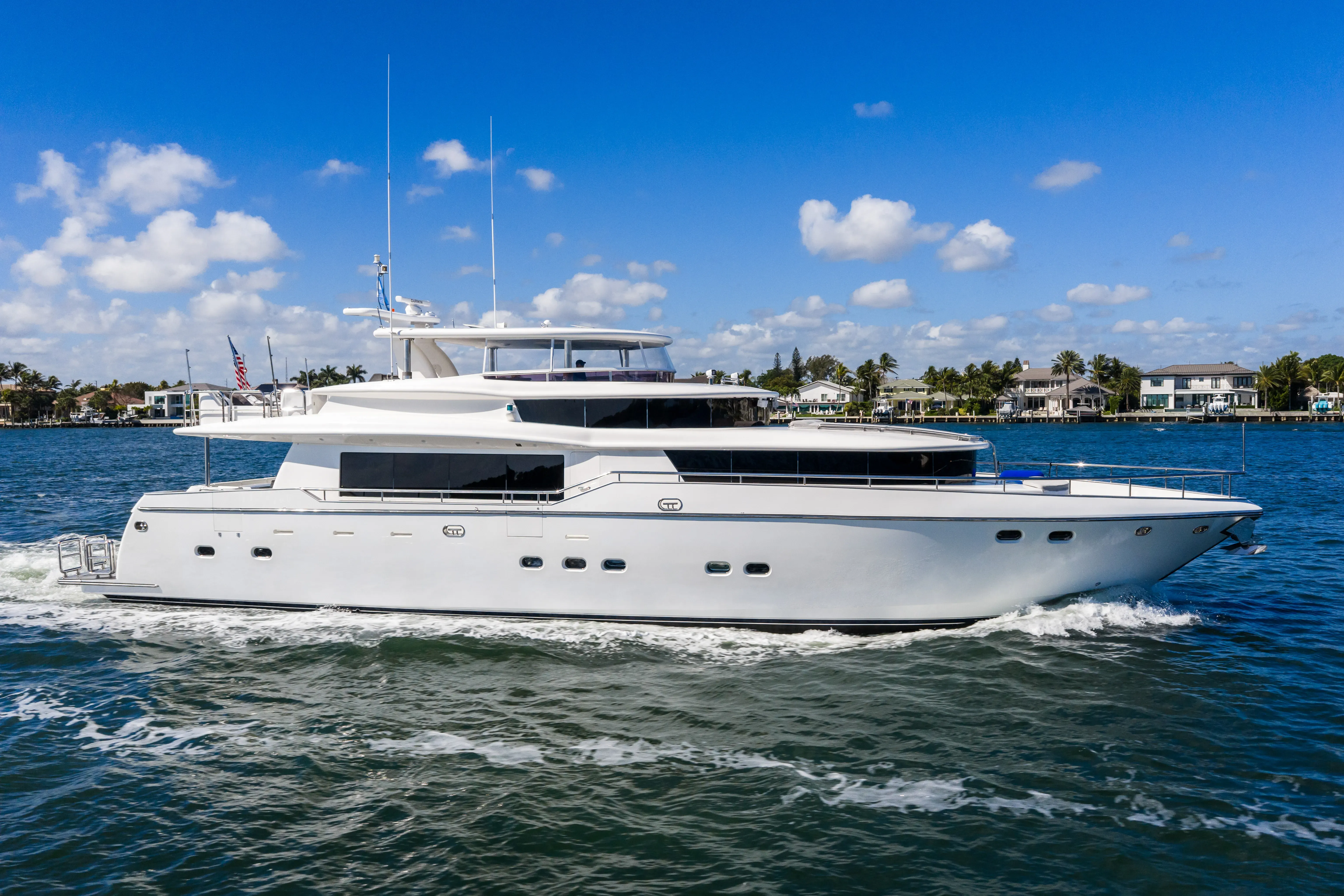
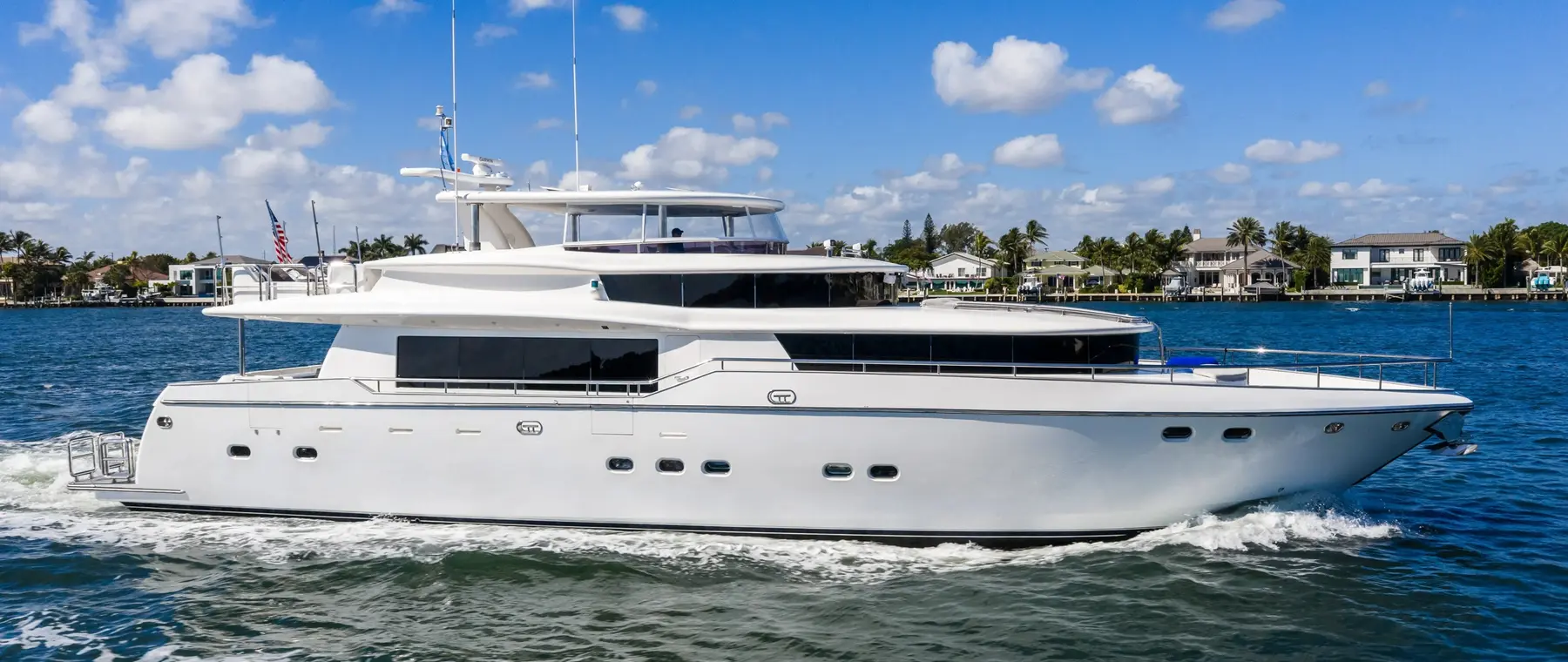
Johnson 87 ALENIEL official Denison November 2026 sale announcement publicity photo
Denison announces the sale of 26.5m Johnson ALENIEL, last asking $2.049m, after a substantial programme of investment and refit work in recent ownership.
Denison Yachting reported the sale of ALENIEL on 18 November 2026, adding another transaction to the November market for professionally managed motor yachts above 24 metres. The Johnson 87, built in 2005, was marketed in Fort Lauderdale at a final advertised price of US$2.049 million. Denison's Russ Schafer represented both sides of the deal, according to the firm's announcement. The actual consideration has not been made public.
This is a particularly interesting sale because the yacht has already undergone substantial investment during her service life. The broker reported expenditure estimated at US$1.8 million across the two previous ownership periods, as well as a more recent programme of refit work. Those figures provide useful context, but their exact scope and underlying invoices were not published. They should not be regarded as an independent assessment of the yacht's value or condition.
The Johnson 87 belongs to a group of yachts in which a comparatively compact length is offset by a generous transverse dimension. Her published beam is 23 feet six inches, approximately 7.16 metres, against an overall length of approximately 26.5 metres. The relationship between these dimensions is one of the defining features of this Bill Dixon design.
Width has important consequences for an owner. It can create room for more substantial accommodation, an accessible deck arrangement and service facilities that might otherwise occupy space dedicated to guests. Yet it is also an important consideration in selecting a home berth, arranging haul-out and identifying appropriate yards for subsequent maintenance.
The significance is not simply that a yacht feels more spacious. A buyer must evaluate her physical dimensions against the places where she will be operated and the services required throughout ownership. Two vessels with similar overall lengths may present very different requirements when a marina places restrictions on beam or when a travel lift must accommodate both the hull and particular appendages.
The Johnson's layout places its wheelhouse above the principal living level rather than occupying the same physical space as the main deck lounge. This arrangement can allow the designer to develop a more continuous interior on the main deck while providing a suitable working environment for the navigational team.
A raised pilothouse also creates multiple routes between accommodation, operational and external spaces. In a yacht of this scale, the practicality of those routes can be more important than the absolute number of separate rooms. Crew members need to move supplies and equipment without unnecessarily interrupting guest activities; guests need safe and comprehensible access to exterior decks.
ALENIEL's published arrangement includes exterior passageways, a large aft seating area and a galley conceived around informal family use. The combination gives the yacht a different character from a design with a fully separated commercial-style guest service arrangement.
During an inspection, purchasers of similar yachts should consider the relative accessibility of the principal spaces when both crew and guests are aboard. An attractive interior can be considerably less satisfactory in operation if its access routes are poorly suited to the actual cruising programme.
Denison identifies four guest cabins and five sanitary compartments in its specification. The number of cabins makes the yacht suitable for a range of family arrangements without necessarily requiring the extensive guest capacity of much larger vessels.
What matters operationally is how the cabins are distributed and how well they support the owner's preferences. For a family intending to share the vessel with adult children or friends, the relative privacy of each cabin may matter more than whether the yacht accommodates additional occasional visitors. Sound insulation, access from the accommodation level and the availability of suitable storage also deserve attention.
The design of a family motor yacht must strike a balance between generous living space, private accommodation and the working areas required to deliver a consistent standard of service. A yacht's size does not remove the need for this balance. At 26 metres, choices made in the original layout may remain decisive for a purchaser even after substantial refurbishment of individual rooms.
A broker's accommodation description should therefore be treated as the starting point for assessing the vessel's fit with the ownership programme rather than a substitute for visiting and inspecting her.
The scale of the investment cited by Denison distinguishes ALENIEL from a vessel that has simply remained in service without major expenditure. Nevertheless, a reported expenditure total does not reveal the technical benefit of every component of that work.
A purchaser evaluating a refitted yacht should establish what was renewed, what was overhauled and which equipment was retained. The distinction can be important for determining the likely timing of future interventions. Replacement of an independent system may be relatively straightforward, whereas alterations to an integrated electrical or hydraulic installation can require careful documentation to understand the configuration.
Work undertaken for cosmetic reasons may enhance enjoyment of the yacht without resolving maintenance obligations associated with machinery, tanks or underwater equipment. Conversely, expenditure on concealed systems may have a meaningful positive impact on reliability even if it produces little visible difference during a showing.
The quality of the records is therefore central. Invoices, engineering specifications, commissioning records and relevant survey findings help a buyer and their advisers understand the nature of the work performed. A subsequent owner should retain those materials as part of the vessel's continuing management rather than treating the refit as a finished event with no future administrative importance.
ALENIEL is powered by Caterpillar C32 diesels. The broker also reports that both onboard generators underwent substantial mechanical work in 2025, followed by the installation of new operating-hour meters.
An important distinction arises in interpreting a generator's recorded hours after an overhaul. A newly installed meter reflects usage since a particular intervention; it does not independently prove that every component of the generator installation is new. Service records should establish whether the engines, alternators, control systems and associated cooling and exhaust arrangements were included in the work.
The two propulsion engines and supporting systems also need to be considered in the context of the yacht's intended usage. A motor yacht regularly undertaking longer passages will produce a different maintenance profile from one predominantly operated for coastal cruising or short trips around a home port.
The announced cruising and maximum speeds are sixteen and nineteen knots respectively. These are published specification figures rather than measurements of a sea trial independently undertaken for this report. Fuel consumption and available range will depend on the yacht's actual loading, hull condition, speed and the operating environment.
The broker describes additional equipment intended to assist the vessel when manoeuvring and improve passenger comfort, including hydraulic thrusters, fin stabilisation and a wireless control arrangement. ALENIEL also offers auxiliary steering positions on either side of the aft deck.
This multiplicity of control positions is of interest because the operator's view of the yacht and immediate surroundings is not always equally good from every station. Depending on the direction of approach, available space and weather conditions, the bridge team's ability to coordinate activity with crew on deck can influence the ease of manoeuvring.
Independent inspection of such equipment should consider control authority, emergency arrangements and the consistency of maintenance across the separate installations. A wireless control device, for instance, does not remove the need to understand the yacht's physical behaviour or maintain appropriate communications during an operation.
Equipment installed after delivery should be supported by the relevant information on integration with the vessel's original systems. This is particularly important when a new owner is unfamiliar with the maintenance history of the yacht.
The final advertised amount of just over US$2 million represents the brokerage position immediately before the announced sale. Denison has not published the financial terms of the transaction. Its broker referred to a lease option in discussing the deal, but the structure and obligations of that arrangement have not been independently established.
It would therefore be misleading to describe the asking amount as either the realised sale price or the total financial commitment of the buyer. An agreement involving a lease may have different consequences from a conventional outright acquisition, and those consequences depend on the actual contract.
Likewise, the previous owners' investment cannot be added to the asking price to derive an objective market valuation. An individual buyer's assessment depends on the yacht's present condition, the alternatives available and the anticipated investment during the next period of ownership.
For the wider brokerage industry, ALENIEL's sale illustrates the continuing commercial importance of older, substantially maintained yachts at the lower end of the superyacht length range. The market for these vessels is shaped by both the accessibility of the initial purchase and the ability of the purchaser to support the vessel over time.
Denison's announcement confirms the transaction; neither the realised price nor the buyer's identity was disclosed in the source reviewed.
Primary source: Denison Yachting official sale announcement, 18 November 2026.
Photography: Denison Yachting, official ALENIEL sale announcement publicity image. Official source.
Photography: Denison Yachting, official ALENIEL sale announcement publicity image.
Explore
Go deeper into the yachts, companies, events and destinations directly connected to this article.
Continue reading
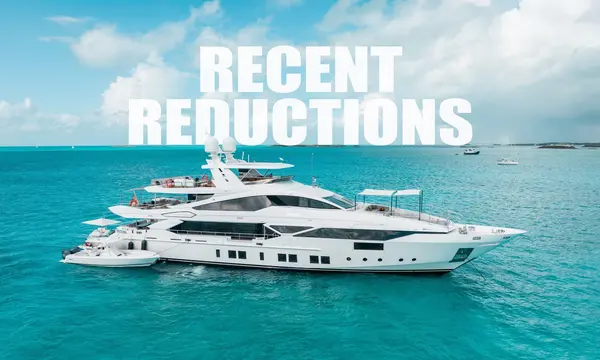
Denison's November review records sixteen price reductions across yachts of 83 to 140 feet, including a $2 million change for the 2014 Benetti EMINA.
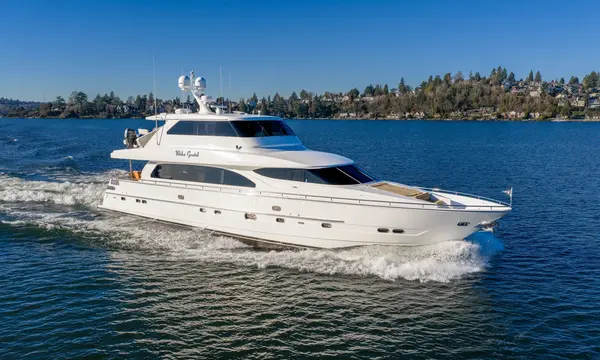
Denison confirms an in-house sale of a custom 2005 Horizon 82 in Seattle, whose enlarged saloon and skylounge distinguish it from the standard model.
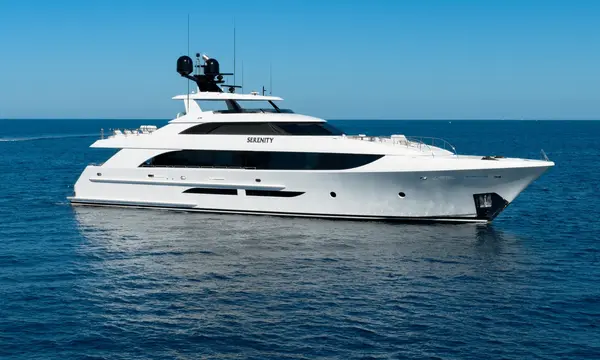
The 38.1m Westport SERENITY has changed hands with Denison introducing the buyer and Worth Avenue representing the seller, according to an October 15 transaction …
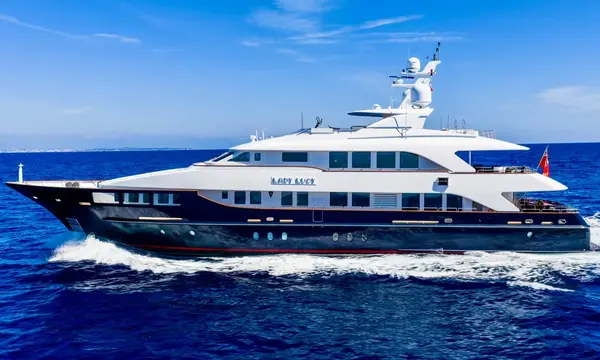
Denison has released a detailed video walkthrough of 39.6m Heesen LADY LUCY, a privately operated 2001 yacht now offered for sale at €8.495 million.
Superyacht Guide
Continue into the wider Superyacht Guide.
Business opportunities · Superyacht Guide
Companies serving the superyacht market can discuss clearly identified advertising, sponsorship and business-profile opportunities. Commercial activity remains separate from independent editorial coverage.