
dsnm Acquires NavigatX to Unite Superyacht Navigation and Bridge Hardware
Superyacht navigation specialist dsnm has acquired sister company NavigatX, bringing navigation management, passage-planning software and bridge refit support together.
KONGSBERG announced on 3 November 2026 that two new models, Aegir17 and Aegir57N, have joined its Aegir Subsea Situational Awareness sonar family. Together with the existing Aegir57, the three systems are available for orders, according to the Norwegian technology group. The products are aimed primarily at maritime security, navigation and critical-infrastructure protection. That intended market is important: this is not an announcement that a named superyacht has installed an Aegir system, nor is it evidence that the equipment has received a yacht-specific navigation or collision-avoidance certification.
KONGSBERG announced on 3 November 2026 that two new models, Aegir17 and Aegir57N, have joined its Aegir Subsea Situational Awareness sonar family. Together with the existing Aegir57, the three systems are available for orders, according to the Norwegian technology group. The products are aimed primarily at maritime security, navigation and critical-infrastructure protection. That intended market is important: this is not an announcement that a named superyacht has installed an Aegir system, nor is it evidence that the equipment has received a yacht-specific navigation or collision-avoidance certification.
The industry interest comes from a long-standing gap between what crews can see above water and what vessels or port operators may need to understand beneath it. Radar, cameras and AIS have distinct roles at the surface, but underwater objects and poorly charted approaches present different questions. KONGSBERG's new releases highlight sonar choices for scanning around a platform, looking ahead or monitoring selected areas. For superyacht owners and marina operators, the technology offers a relevant development to watch, even if the immediate sales case is framed around security and specialised monitoring infrastructure.
The Aegir17 is described by KONGSBERG as a longer-range, 360-degree system for larger maritime platforms, using a lower acoustic frequency and larger transducer to achieve greater detection performance than Aegir57. The new Aegir57N takes a different approach: it uses a compact matrix sonar to direct beams towards selected areas, delivering higher-definition information on the water column and seabed. Its maker identifies forward-looking navigation in poorly charted waters and obstacle detection among its applications. These are separate operational strengths rather than interchangeable specifications.
The existing Aegir57 provides a third reference point as a compact omnidirectional unit, with the company citing detection ranges of up to 2,000 metres. That is a published maximum for that model, not a guarantee of detection under every seabed, weather, acoustic or target condition. KONGSBERG characterises the family as market-ready and available to order. It does not publish a universal price list, a standard superyacht retrofit cost or side-by-side test results establishing which model is superior for a particular harbour. Selection would depend on the actual task and constraints.
A forward-looking sonar and an omnidirectional system answer different operational questions. An operator concerned about a difficult approach may want information in the direction of travel; a facility monitoring a perimeter may instead prioritise awareness across a wider field. The Aegir57N is designed to concentrate acoustic beams, while Aegir17 and Aegir57 are described as 360-degree products. KONGSBERG also points to the ability of the directional model to complement a broader surveillance installation by examining a particular approach with more detail.
For a large yacht entering remote cruising grounds, the possibility of additional information about the seabed is intriguing, but no manufacturer statement reviewed here makes Aegir57N a replacement for surveyed charts, visual pilotage, echo sounders or professional bridge procedures. Acoustic detection depends on many conditions, and interpreting a display can require training. The superyacht application is therefore an editorial inference from the stated navigation capabilities, not a reported onboard deployment. Readers should distinguish a promising technical option from an approved change to their vessel's navigation arrangements.
Much of KONGSBERG's stated rationale concerns the protection of ports and critical maritime infrastructure. Fixed installations, buoys and uncrewed surface vessels are among the platforms named in its announcement. The Aegir57N's compact form and Ethernet interface are presented as advantages for integration where space is constrained. For a marina serving large private yachts, the underlying subject is relevant: protecting a facility and understanding underwater approaches is part of a broader security picture, though each operator must decide which risks actually justify a specialist sonar investment.
That broader picture cannot be reduced to an automatic alert on a screen. A security programme may combine physical access rules, patrols, cameras, radar, procedures and coordination with authorities, depending on location. KONGSBERG describes its systems as possible components of layered surveillance, alongside satellite observation, coastal radar, drone detection and passive acoustics. The public material does not say that every marina requires such an arrangement or that an Aegir installation alone can eliminate underwater threats. Any operational benefit would need to be evaluated in its specific environment.
Alongside the hardware launches, KONGSBERG says it is expanding a collaboration with Viam, a US-based physical-AI and automation company, to develop an AI-powered virtual sonar operator for the Aegir family. The companies previously worked on Sonar AI for Simrad systems, applying automatic detection to fish-related sonar data. The new effort is intended to recognise and track objects underwater and reduce the burden of constant observation, particularly on fixed monitoring installations and uncrewed vessels. Operators may use existing models or models adapted to defined environments.
There is a critical distinction between reducing a monitoring burden and removing the need for a responsible human decision. Automated systems can help direct attention to data that warrants review, but a detection must still be interpreted in context and the appropriate response authorised. The company does not claim the new virtual operator is a certified autonomous yacht lookout. Nor does the press release document error rates or false-alarm statistics under all environmental conditions. For owners familiar with marine AI proposals, those missing details should become part of due diligence rather than assumptions embedded in a purchase decision.
Space, power, interfaces, hull penetrations, maintenance access and classification requirements can all matter when marine equipment is considered for installation aboard a yacht. KONGSBERG describes compact designs for some of its Aegir products, but that phrase by itself does not establish an easy retrofit on any 24-metre-plus vessel. Positioning a transducer, protecting it from interference and integrating data into bridge workflows would require the appropriate engineers and approvals. No vessel-specific wiring diagram or approved installation route for the SYG fleet is included in the company announcement.
An owner contemplating this type of capability would sensibly begin with an operational question: is the intended benefit obstacle awareness in uncertain waters, monitoring around a berth, assistance to a support vessel or protection of a fixed asset? Each application may call for a different coverage pattern and response protocol. A technical evaluation should also ask how updates, cybersecurity, data retention and operator training will be handled. These are professional considerations, not claims that KONGSBERG has made every such feature a standard part of the Aegir family.
KONGSBERG traces the Aegir family to an earlier Aegir57 introduction at ONS 2026 in August and says the first commercial Aegir delivery is scheduled for November. A scheduled delivery is not yet proof of completed installation, and the release does not name a private-yacht customer. The company draws on decades of commercial sonar development to explain why it believes the new products can address a broader market. Technical commonality may be an advantage, but buyers should continue to request application-specific demonstrations and operating data.
The launch also reflects a convergence between underwater sensing and software that automatically organises and prioritises what a sensor detects. Such technology can be useful when a fixed installation produces continuous data or when several remote sites must be overseen. That does not mean a sonar can tell operators everything happening under water or that every automated classification will be correct. Responsible adoption depends on understanding detection limits, local conditions and how human oversight is maintained, especially when security and navigational decisions have material consequences.
For Superyacht Guide readers, the most useful confirmed facts are the two new models, the three-model range's availability, their different scanning approaches and the announced collaboration with Viam. The possible applications in superyacht marinas, remote cruising and support operations are interpretations drawn from those capabilities, not installations announced by the manufacturer. No figures are provided for yacht-specific costs, annual savings or safety improvements, and this report makes none up. The product launch deserves attention because it expands the available language of subsea awareness.
As yacht technology becomes more interconnected, equipment that began in commercial or infrastructure settings may influence future owner requirements and harbour operations. The right response is neither an uncritical endorsement nor a dismissal because no yacht has yet been named. It is to examine what the equipment demonstrably senses, who must interpret the result, how it is integrated and whether a proposed use has the appropriate approvals. KONGSBERG's November announcement advances the conversation about underwater awareness without settling those questions for any particular superyacht.
Primary source: original announcement; corroborating source: additional first-party or industry material. Report dated 7 November 2026. Announcements and operating plans may change; editorial interpretations are distinguished from confirmed facts.
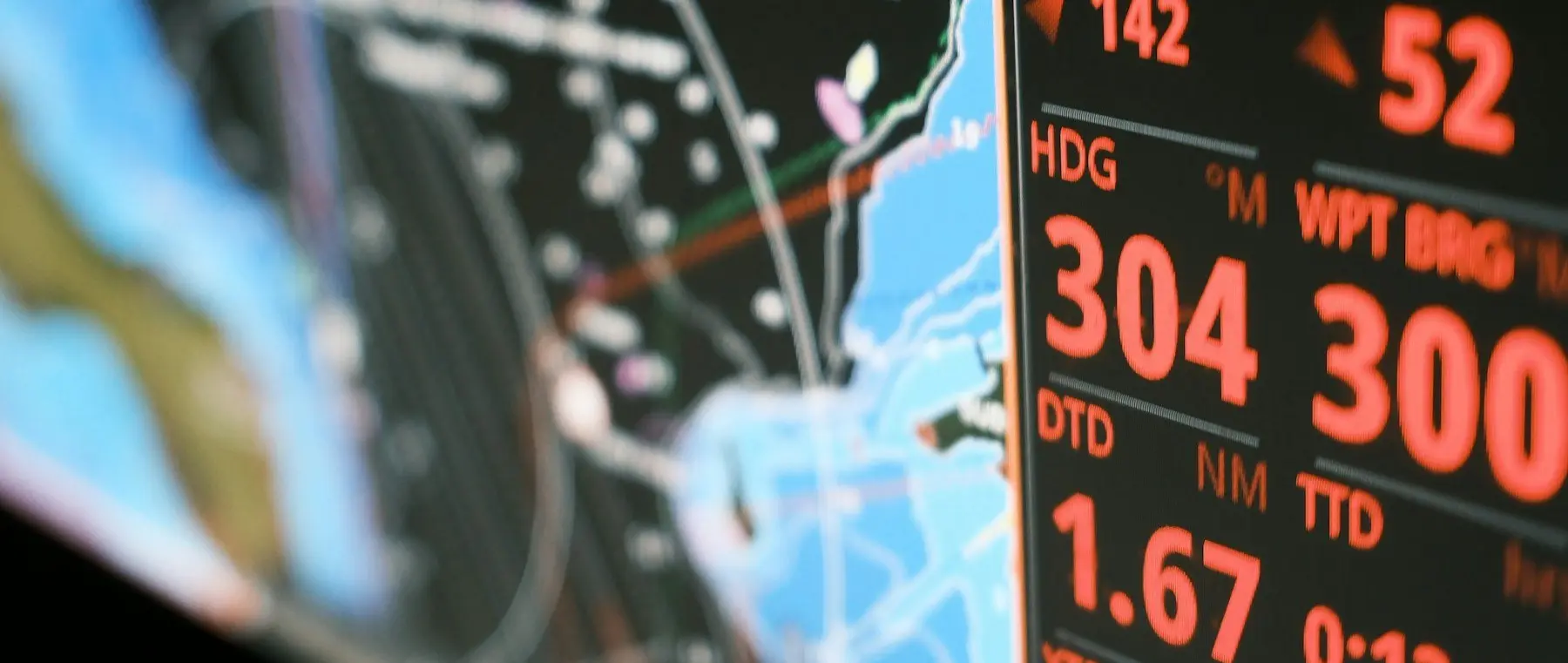
Editorial photograph: photographer and original image — Leon Bredella / Unsplash License; generic nautical chart navigation display; not a KONGSBERG Aegir sonar system or interface. Cropped and resized under the Unsplash License. Illustrative photograph only; it does not show the 2026 event or named product.
Continue reading
Superyacht navigation specialist dsnm has acquired sister company NavigatX, bringing navigation management, passage-planning software and bridge refit support together.

Avikus USA executive Sangwon Shin is discussing how sensors, steering, propulsion and AI need to operate as one system for future assisted superyacht navigation.
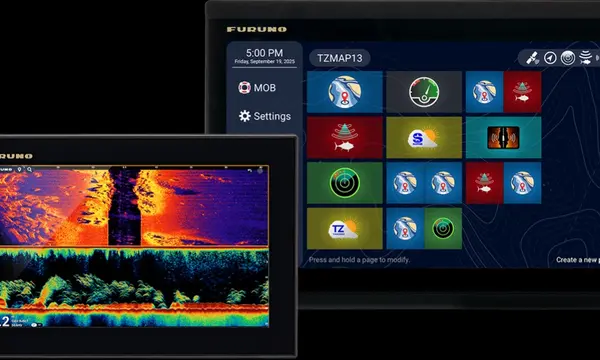
Furuno’s TZMAP9 and TZMAP13 combine stand-alone navigation, TZ MAPS cartography and built-in TruEcho CHIRP sonar in compact displays.
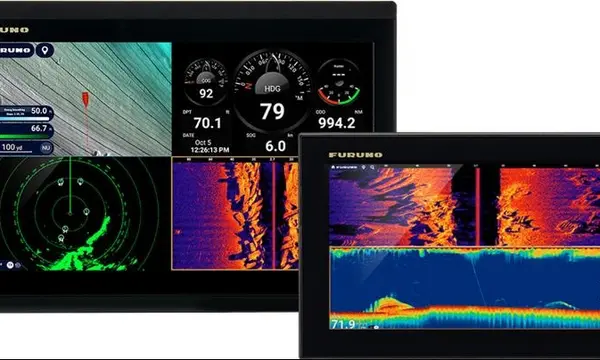
Furuno’s TZtouchE series adds 9- and 13-inch networked MFDs with TZ MAPS, radar and sonar integration in a more compact navigation package.
Superyacht Guide
Continue into the wider Superyacht Guide.
Business opportunities · Superyacht Guide
Companies serving the superyacht market can discuss clearly identified advertising, sponsorship and business-profile opportunities. Commercial activity remains separate from independent editorial coverage.