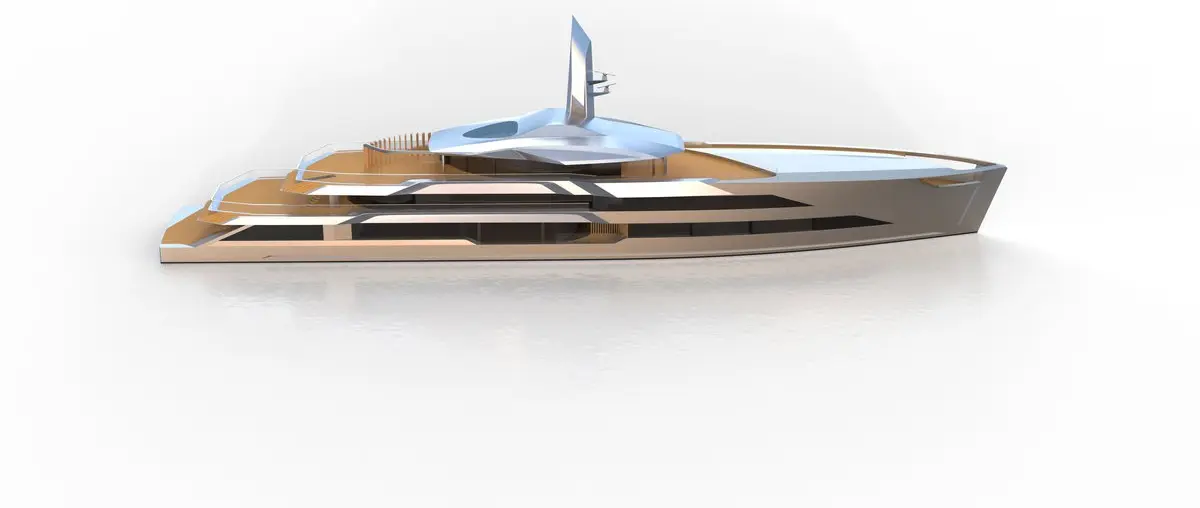
Lateral's 83m HUB Concept Uses Free From Bulkheads Engineering to Open the Lower Deck
By Stephen Yardley · Edited by Stephen Yardley
Lateral, byJC and Lawson Robb have developed the 83.3m HUB concept around a Free From Bulkheads platform, opening up the lower deck and rethinking machinery arrangement.
Lateral Naval Architects has developed the 83.3-metre HUB concept with byJC and Lawson Robb around a technical platform that changes how the lower deck can be arranged. HUB is a proposed yacht, not a delivered vessel, but its engineering makes a useful case for treating structure, machinery and guest circulation as one design problem from the outset.
The design team calls the underlying architecture Free From Bulkheads, or FFB. Instead of accepting a conventional sequence of watertight divisions as the visible organising principle for the entire lower deck, the team has investigated how a different technical arrangement can leave more freedom for waterside living spaces above the machinery zone.
Lateral describes the FFB platform through a simple analogy: essential machinery is packaged below, while the deck above has greater freedom for layout. In HUB, watertight bulkheads terminate at the lower deck, creating an opportunity to make the waterline accommodation feel more continuous.
The proposal combines a beach-cave area, watersports centre and hull-side platforms to connect the interior directly with the water. These are concept-stage architectural possibilities, and detailed classification, escape and damage-stability work would remain fundamental to turning any such arrangement into a buildable vessel.
The concept uses Lateral's electric-hybrid architecture with a DC grid, in which batteries provide the primary means of delivering energy to propulsion, manoeuvring and hotel loads. Diesel generators remain available for recharging and higher-speed operation rather than being required to follow every short-term load change directly.
The technical proposal is intended to support quieter operation, lower vibration and periods with no local exhaust emissions. Those benefits depend on the actual energy source and operating profile, so battery operation at sea should not be confused with eliminating the yacht's full lifecycle emissions.
Lateral lists a length of 83.3 metres, a 13.8-metre beam, approximately 2,500 GT, a proposed top speed of 16.5 knots and a range of 7,000 nautical miles. The design provides around 900 square metres of luxury space, with an asymmetric arrangement intended to create less formal routes between living areas.
HUB shows the value of involving naval architecture and interior design in the same early conversation. For owners commissioning a future superyacht, the more useful question is not simply how much space is available, but which technical choices determine where that space can be placed and how comfortably it can be used.
Explore
Go deeper into the yachts, companies, events and destinations directly connected to this article.
Continue reading

Transport Malta has issued Yachting Notice 19, setting out accepted manning and crew qualifications for Malta-flag commercial yachts under the sCYC and CYC.
i-Bos and EWG have formed an alliance linking CelloPlus crew-management and payroll workflows with international and multi-currency payment services.
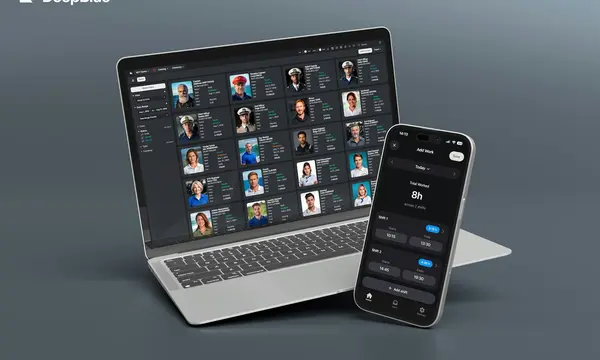
DeepBlue has overhauled its Crewing Package so contracts, crew planning, payroll, timesheets and Hours of Rest work from a connected crew record.
Malta has introduced a risk-based Assistant Engineer manning framework for qualifying Short Range and Extended Short Range commercial yachts below 500 GT.
Superyacht Guide
Continue into the wider Superyacht Guide.