LGM and Ramtech Put Wireless Fire Detection in Focus for Superyacht Refit Yards
By Superyacht Guide Newsroom · Edited by Superyacht Guide Newsroom
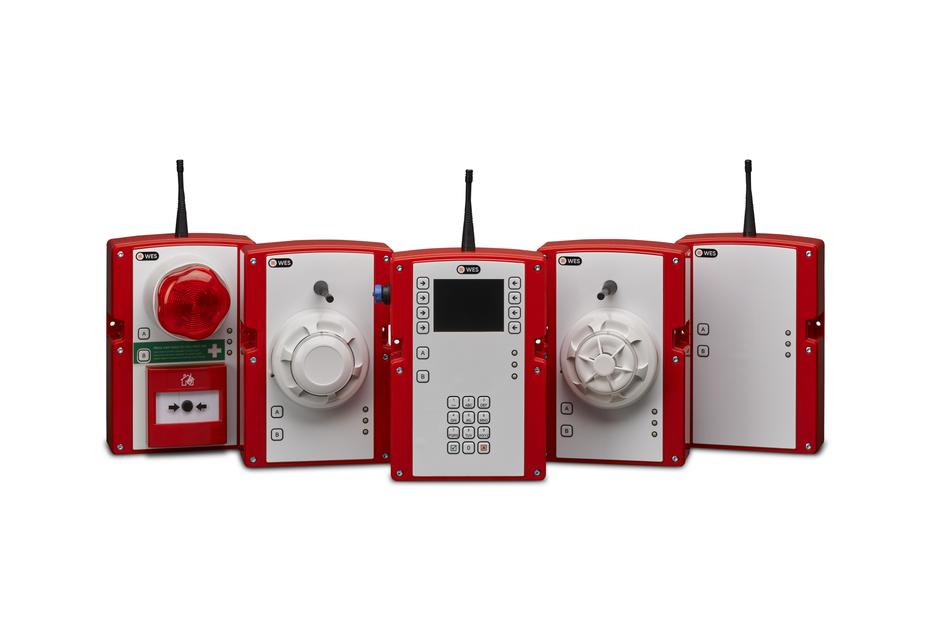
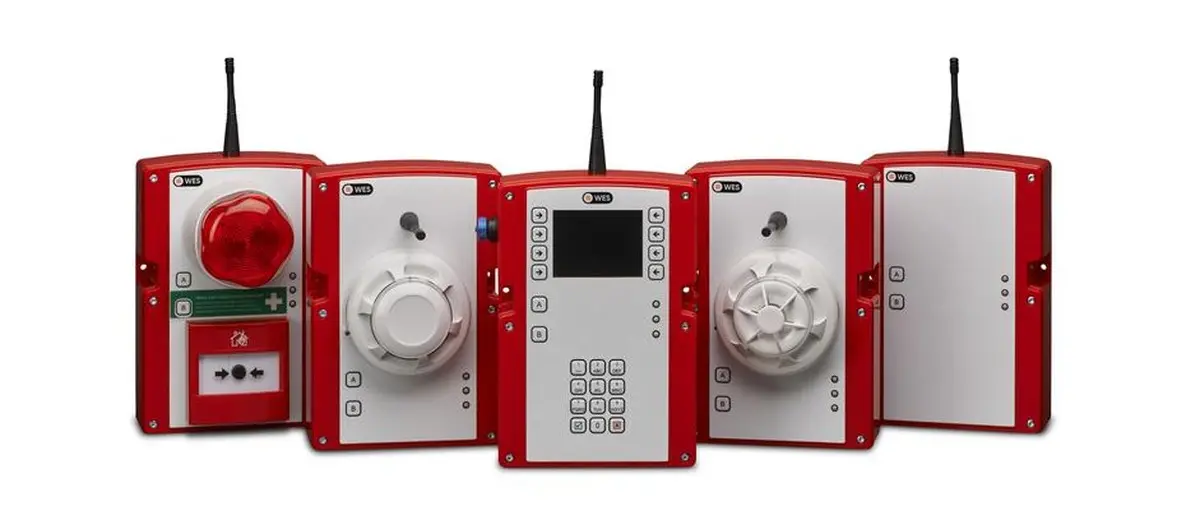
LGM Ramtech WES wireless shipyard fire detection official manufacturer product photograph
LGM and Ramtech present WES wireless smoke, heat and manual fire detection for changing superyacht refit sites, with REACT app alerts for yard managers.
British marine-safety supplier LGM Products is highlighting a wireless fire-detection offering developed with Ramtech in the METSTRADE exhibitor catalogue, focusing on an important but sometimes underestimated part of the superyacht industry: the safety of vessels and people while extensive construction or refit work is in progress. The official product listing describes WES as a wireless system using smoke detectors, heat detection and manual alarm points, with compatibility for Ramtech's REACT app to send notifications to site managers. That combination is relevant to changing workspaces where permanent detection may be incomplete, disconnected or unsuitable during alterations. The listing does not establish that WES is a new invention for 2026, nor that its installation alone satisfies every relevant yard or vessel requirement. Instead, it offers a basis for examining how temporary monitoring, site procedures and professional fire response can be coordinated around a large yacht undergoing work.
A yacht's normal safety arrangements are designed around its operating configuration, equipment and crew. During a refit, contractors may open deckheads, remove insulation, disconnect electrical circuits and carry out hot work near sensitive machinery or combustible materials. The vessel can also contain temporary cabling, tools and protective sheeting that would not be present in ordinary service. This changing environment complicates hazard detection and the ability to summon assistance quickly. A temporary wireless system may help a yard place detectors where work is occurring and move them as the job progresses, but that flexibility requires planning. The duty to evaluate fire risks remains with the responsible management and safety personnel. A supplier's alarm devices are not a replacement for the controls necessary to prevent ignition or limit the consequences of a fire.
LGM's METSTRADE product page states that the company has partnered with Ramtech to offer WES wireless fire detection for harsh and changing marine sites. It identifies smoke, heat and manual alarm devices and describes compatibility with the REACT app for live notifications to managers' devices. These are useful product details, yet the published summary does not specify every radio characteristic, detector spacing, battery endurance or certification condition. A yard should obtain the current technical documentation and verify whether the particular site, building and vessel layout fall within the system's intended use. Wireless convenience is meaningful only when it is supported by reliable coverage, appropriate placement and clear procedures for responding to faults. The product should be judged as part of a complete site-specific fire-safety arrangement.
Refit projects seldom remain static. One week contractors may be replacing machinery in an engine room; the next they may be installing interior joinery or applying coatings in a different zone. A fire-detection plan prepared before a project begins can become outdated as walls are opened and temporary barriers are moved. Wireless devices can potentially be redeployed to follow work activity, but every relocation must be documented and tested. Yard management should identify who may move devices and who verifies continued coverage. It is risky to assume that a detector removed to make way for equipment will be returned automatically at the end of a shift. The system's flexibility is therefore a management benefit only when the yard has disciplined inspection and change-control procedures.
LGM lists both smoke and heat detection, reflecting the fact that no single detector type is ideal for every work environment. Dusty operations, welding, painting and temporary ventilation can influence the suitability and performance of equipment. The selection of devices should be based on the hazards and environmental conditions at the actual location, informed by the manufacturer's recommendations and relevant standards. Incorrectly selected or positioned detectors may create nuisance alarms or fail to detect a developing incident promptly. A competent safety designer should consider the nature of the work and whether normal conditions could mask or interfere with a sensor. Wireless transmission solves part of the cabling challenge; it does not remove the basic engineering questions of detector technology, coverage and suitable response time.
An employee may see flames or unusual smoke before a detector reaches its activation threshold. Manual alarm devices allow people who recognise a hazard to raise the alarm without having to find a supervisor or rely on mobile telephone coverage. Their position and visibility need thought when access routes are frequently altered by scaffolding, lifting operations or contractor materials. Workers should know which alarm system is in use, how it is activated and what sound or notification signals evacuation or emergency action. If a yard operates several alarm networks for vessels, workshops and temporary compounds, the meaning of each signal must be unambiguous. A wireless manual point can be convenient to relocate, but its value depends on training and on workers being able to reach it quickly during an emergency.
The supplier's description states that WES is compatible with Ramtech's REACT app, allowing live updates to site managers' devices. Mobile notifications may improve awareness for personnel moving between buildings or supervising several work zones. However, the existence of an app does not prove that a push notification will always be received promptly in a high-noise industrial environment or during a network outage. Project planners should establish which alarms are audible locally, who receives remote notifications and what action is required if a manager cannot be reached. Phones may be switched off, set to silent or disconnected from a data network. There should be an independent emergency response procedure that does not depend on a single individual's handset. The digital layer is most useful when it supports an already clear command structure.
Large yachts and shipyards present particular challenges for wireless communication. Steel bulkheads, machinery, temporary structures and building geometry can attenuate signals, while equipment may be moved as the project evolves. The METSTRADE listing calls WES a wireless solution but does not provide coverage guarantees for any particular vessel. A serious deployment should therefore include a measured or manufacturer-supported radio assessment and practical tests in the planned installation positions. Changes to the site could require retesting if a detector has been moved or if large new structures are installed. Managers need a simple way to identify lost devices or communications faults rather than discovering them only after an incident. Reliable wireless detection requires regular attention to coverage, connectivity and device health.
Portable wireless equipment depends on its own energy supply and internal electronics, so inspection must include battery condition and any fault warnings. A detector that is physically present but has become disconnected or depleted may create the appearance of coverage without providing useful protection. The yard should follow the manufacturer's recommended service intervals and keep records of battery replacement, device moves and faults. Roles matter: a subcontractor should not assume that a general site supervisor is checking the alarm, and the supervisor should not assume that the supplier will monitor the equipment without a contract. A clear responsibility matrix helps ensure that detection remains active throughout periods of changing work. Procurement questions should include the system's fault-supervision behaviour and how quickly an unavailable device is brought to a manager's attention.
Fire detection does not prevent sparks or heat from reaching combustible materials. Work involving welding, grinding and other ignition sources needs the controls appropriate to the project, including permits, preparation, competent personnel and fire watches when required. Contractors should identify adjoining compartments where heat or sparks can travel through openings and service penetrations. A wireless system may provide additional detection for some zones, but it cannot replace safe work procedures or ensure that every hidden cavity is monitored. After work has finished, the yard may need to maintain inspections and a watch for the period specified by its approved procedures. Owners should be particularly cautious if the vessel remains occupied or retains valuable equipment while heavy refit work proceeds. Prevention, detection and response are separate layers that must work together.
A yacht may arrive with its own onboard detection and suppression equipment, but some of those systems may be shut down, isolated or incomplete during repair work. The shipyard's emergency arrangements also need to interact with external fire services and the vessel's crew. A temporary system is most useful when there is a clear plan describing which alarms cover which areas, how alarm information is shared and who makes evacuation or emergency decisions. If contractors operate after normal working hours, the arrangements must still be effective. The vessel's captain and project manager should be involved in understanding any limitations and the escalation process. A well-defined interface prevents delays caused by uncertainty about whether an alarm concerns a vessel, the surrounding building or a temporary storage area.
The 2026 exhibition has placed an increased emphasis on refit activity, infrastructure and the suppliers that support safe operation. The LGM–Ramtech WES listing addresses a practical problem within that wider supply chain: providing an adaptable means of detection while shipyard work continually changes the environment. The system's advertised smoke and heat detectors, manual alarm points and mobile notifications offer a useful outline, but the eventual level of protection depends on the yard's detailed design and procedures. A yacht owner considering a major refit should ask the contractor to explain how fire detection and alarm response will function throughout each phase. The right question is not simply whether the yard owns wireless detectors, but whether a competent team has designed, tested and maintained suitable coverage for the evolving site.
Before accepting a WES proposal, a project manager should request the intended device map, how each area is protected, the plan for radio tests and the method used to supervise batteries or device faults. The yard should also identify its local alarm signals, remote recipients and response procedures outside working hours. Training should include subcontractors who may move through protected spaces only briefly. When a project changes, the fire plan must be reviewed rather than allowing devices to remain in outdated locations. These measures do not require a complicated technical theory; they require good execution and a documented chain of responsibility. The METSTRADE catalogue provides an opportunity to discuss LGM's partnership with Ramtech, but the buyer must verify the complete proposal against the actual refit.
As yacht refits become more extensive, temporary infrastructure and safety measures deserve the same professional attention as the permanent equipment going into the vessel. Wireless detection can potentially make it easier to follow changing work areas, with notifications supporting the managers responsible for immediate action. That is a relevant capability for yards working simultaneously on multiple high-value vessels. It is not a licence to relax fire prevention, disregard local rules or assume that mobile software is infallible. LGM's official exhibition listing supports a grounded discussion about adaptable fire monitoring and marine-site coordination. The lasting value is in ensuring that a yacht returns to service safely, without an avoidable incident during the period when it is most physically exposed.
Primary source: LGM Products Ltd — official METSTRADE WES wireless shipyard fire detection product listing.
Manufacturer product photograph: LGM / Ramtech WES wireless fire detection, official METSTRADE product listing. Official source.
Explore
Go deeper into the yachts, companies, events and destinations directly connected to this article.
Continue reading

KM Yachtbuilders advertises second-quarter 2027 refit capacity in Makkum, highlighting the planning, scope and survey needs of 24–30-metre yachts.
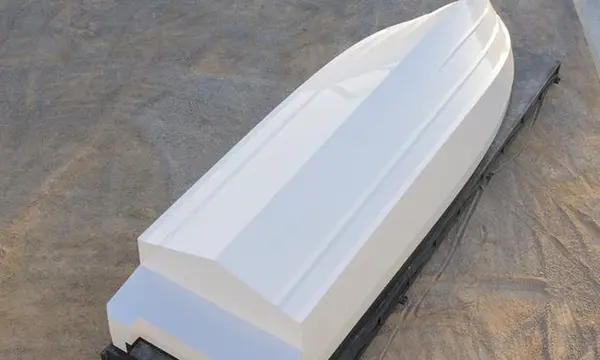
METYX promotes composite plug and mould production services in Türkiye and Hungary at METSTRADE 2026, focusing on precise tooling for yacht construction.

Bilgin Yachts sells its third 52m Bilgin 170 superyacht, Project APOGEE, securing the final 2027 delivery slot with a summer handover planned.

Freire Shipyard has started a 65m support yacht project with Schwalgien Yacht Design, a 13m beam and reported 2028 delivery target.
Superyacht Guide
Continue into the wider Superyacht Guide.
Business opportunities · Superyacht Guide
Companies serving the superyacht market can discuss clearly identified advertising, sponsorship and business-profile opportunities. Commercial activity remains separate from independent editorial coverage.