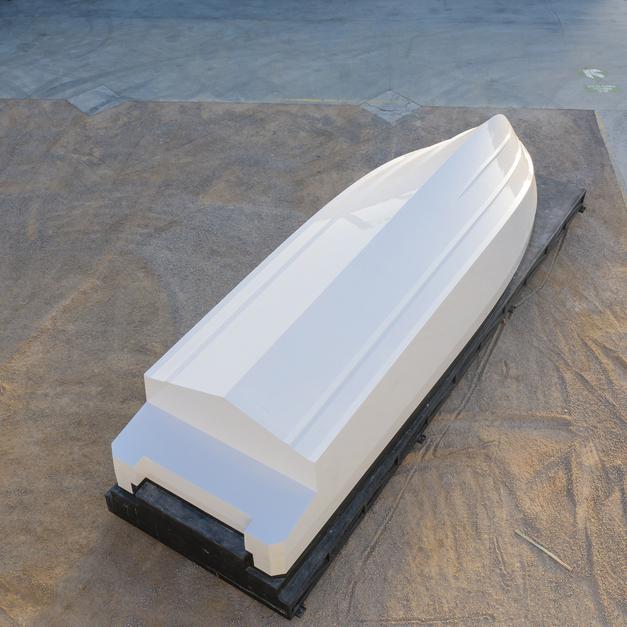
METYX composite tooling plug and mould manufacturing genuine exhibitor photograph METSTRADE 2026
METYX promotes composite plug and mould production services in Türkiye and Hungary at METSTRADE 2026, focusing on precise tooling for yacht construction.
Composite-materials specialist METYX is featuring its plug and mould production services in the METSTRADE 2026 construction-materials programme, bringing attention to the industrial infrastructure needed to produce modern yacht hulls, superstructures and intricate custom components. The company's official exhibitor listing identifies dedicated tooling facilities in Manisa, Türkiye, and Hungary, supported by a business unit created to provide design engineering and manufacturing services to boatbuilders. It also describes a wider offering of technical textiles, vacuum-bagging materials and tailored material kits. These are not presented as a brand-new factory opening in November 2026; the news is the company's current promotion of an integrated tooling service to the international marine supply chain. For superyacht shipyards, the relevant issue is how production tooling, material selection and quality control determine the repeatability of a finished composite structure long before it is painted or fitted out.
A plug is the shaped master from which a production mould can be manufactured. It embodies the geometry that designers expect to reproduce in the final part, and inaccuracies at this stage can be costly to correct later. A mould is then used to shape and cure the structural laminate or finished component. On a custom yacht, those parts may include complex fairings, deckhouse elements, hatches or sections of superstructure. Every transfer between the digital model, plug and mould creates opportunities for dimensional error. The more demanding the expected appearance and fit of the final component, the more important it becomes to verify the master shape and tool condition. Tooling is therefore not merely factory equipment; it is a critical link between the naval architect's design and the actual yacht.
The official METSTRADE product listing states that METYX offers plug and mould production services in Manisa and at a site in Hungary, principally for boatbuilders. The company says its dedicated Tooling Business Unit was established in response to customer demand for engineering assistance and competitively priced, high-quality manufacturing solutions. Those are supplier statements about capability and market positioning rather than independently verified comparative cost results. An owner or yard assessing the service should request examples of similar marine structures, a description of the production method and details of inspection procedures. The best tooling partner for a complex hull may differ from the best supplier for an occasional decorative panel. A clear assessment begins with the dimensions, tolerances, quantities and finish needed for the actual project.
A 50-metre custom superyacht may include unique shapes that will never be repeated, while a yard building a series of smaller vessels may need a tool capable of producing several identical components over many years. Those different production models affect tooling economics. A one-off mould can be designed around a limited number of releases, but a serial-production tool may justify more substantial construction and maintenance to preserve dimensional stability. The yacht's material and cure schedule also influence the required tool properties. A structure made using a high-temperature process can impose different demands from one laminated and cured at ambient conditions. The buyer should specify intended use rather than assume the same plug-and-mould package is optimal for every composite component.
Superyachts are assembled from components that must fit together accurately. A large moulded deck panel may interface with steel, aluminium, glass and interior joinery, each subject to its own tolerances and thermal behaviour. If the moulded part deviates from the design, those errors can appear during an expensive stage of outfitting. The tooling contractor should therefore have a method for checking the original plug, mould surface and final part against the agreed data. Digital scanning, reference points or other measurement techniques can be appropriate depending on the geometry and required accuracy. The METYX exhibition summary does not publish universal tolerance figures, so those must be negotiated in the project specification. A yard should require inspection records and an agreed acceptance process before the tooling leaves the supplier or enters routine production.
METYX also describes multiaxial reinforcements, woven textiles and vacuum-bagging materials as part of its broader business. The presence of these product families can be useful when a shipyard seeks more coordinated supply, but it does not mean every proposed material combination is approved for the same structural application. Glass, carbon, aramid and hybrid reinforcements each have different engineering properties and processing requirements. Resin selection, fibre orientation and cure conditions can affect the mechanical behaviour and long-term durability of a structure. A competent engineer must determine the laminate schedule and appropriate manufacturing process. The tooling vendor's responsibility for accurate geometry is closely linked to the materials and process used, but the ultimate structural design requires its own calculations and approvals.
Tooling may experience vacuum pressure, thermal cycling, resin exposure, handling loads and repeated cleaning during service. An unstable tool can distort, deteriorate or transfer unwanted surface imperfections into the finished part. The yard should examine the construction of the mould itself, including its backing structure, stability and compatibility with the planned resin and cure schedule. The supplier should specify any temperature restrictions and how the tool is stored between uses. A large composite mould is also a substantial physical object that may require special handling equipment. Damage during transport can undo months of careful preparation, so the logistics and support arrangements belong in the contract. A low initial price is of limited value if the tool requires extensive repairs before the first part can be made.
One reason superyachts invest in precise tooling is the cost of subsequent surface preparation. A poorly shaped component may need substantial filling, fairing and rework before it meets the yacht's exterior finish standard. Such work consumes skilled labour and can create dimensional issues at adjacent joints. An accurate tool cannot eliminate every finishing task, but it may reduce unnecessary correction and improve consistency. The financial argument should be tested on the intended part, considering surface area and finish requirements. A supplier's claim to offer high-quality tooling is not a numerical guarantee of labour savings. A yard can compare measured results from trial components and use those findings to refine the agreed acceptance standards for larger parts.
The company's wider catalogue includes material kitting services for core materials, glass and vacuum consumables. Pre-cut or organised kits may help a yard control the sequence of lay-up operations and reduce time spent preparing material on the shop floor. They can also improve traceability if each kit is linked to a production record. However, a kit must be generated from the correct revision of the component drawing and the approved laminate specification. A design change that is not carried through to the kit can create an expensive or unsafe mistake. The project should identify who controls engineering revisions and who authorises the release of material for production. If a yachtbuilding programme relies on external kits, logistics and storage conditions become part of the quality system.
METYX's stated tooling presence in Türkiye and Hungary may provide manufacturing choices for yards operating in different parts of Europe and the Mediterranean. Yet geographic reach creates project-management issues as well as opportunities. A builder should establish where its particular mould will be designed, manufactured and inspected, and which company is responsible for delivery. The transport of a large tool can involve special road permits, lifting plans and customs arrangements. Changes requested after manufacture may require personnel and equipment to move between sites. Clear communication of the approved digital model is essential when the shipyard and tooling contractor work remotely. The supplier should identify its project engineer and the process for technical queries, particularly during design freezes and major changes.
A robust tooling acceptance process should review surface condition, geometry, support structure and any required heating or vacuum features. The buyer may also need to verify demoulding access and the location of fittings used to lift or move the tool. A first article produced from the mould can provide evidence of actual manufacturing performance, but any discrepancies need a clear process for investigation and correction. The yard should record the version of drawings used for manufacture and the inspection results that support acceptance. Where the tool is intended for a classified structure, relevant approvals and material traceability must be addressed. An attractive model photograph or a supplier's exhibition display cannot replace these controls.
Composite manufacturing raises questions about material waste, energy use, emissions and the future reuse or disposal of tools. An external tooling supplier may be able to organise material cutting efficiently, but any claimed environmental improvement requires evidence specific to the process. Offcuts from core materials, disposable vacuum consumables and certain cured composite structures can be difficult to recycle. The design team should examine whether a tool can be used for multiple parts, repaired between projects or manufactured using lower-impact processes where technically suitable. Those decisions must still preserve structural safety and required production accuracy. It would be misleading to claim that a certain type of composite tooling is automatically sustainable simply because it is lighter or uses advanced materials. Practical waste accounting and process control are more useful.
A mould can be an important asset on a yard's balance sheet, especially for semi-custom projects that may continue through multiple sales cycles. Cleaning, release-agent procedures, storage and periodic inspection can affect whether later components match the first one. The manufacturer and shipyard should agree on maintenance requirements and who will repair the surface if damage occurs. A tool stored without suitable support may distort even if it was accurate at delivery. Temperature and humidity may also affect some materials. A planned-maintenance record helps preserve the investment and provides a basis for deciding whether another production run remains technically appropriate. Owners commissioning a series of yachts may gain assurance from knowing how the yard manages this less visible part of its operation.
A major refit can require replacement of damaged panels or the construction of new fairings, seating structures and equipment housings. Such work may not justify an industrial tool intended for repeated production, but it still benefits from accurate patterns and sensible material selection. A tooling service that supports one-off components could assist when an original part is no longer available. The yard must assess the structural role of the replacement and determine whether a new design needs approval. Reverse engineering should not be treated as permission to copy a load-bearing component without verifying its function. The practical value of a specialist contractor lies in the ability to make a properly documented shape that fits the vessel's constraints and can be finished to the expected standard.
A yachtbuilder evaluating METYX should ask about maximum tool dimensions, the materials and cure processes supported, available measurement methods, typical lead times and any limitations of the relevant facility. It is also useful to request examples with comparable hull geometry, surface quality and production volume. The quotation should state what design information is required, which party owns the tool, who controls revisions and how damage or nonconformance is resolved. A specialist company can offer useful manufacturing expertise, but the contract should leave no ambiguity about the deliverables. Clear specification protects both the buyer and supplier when a project inevitably encounters design refinements.
The 2026 METSTRADE presentation shows how specialist tooling suppliers form part of the increasingly international network behind high-value yachts. METYX promotes dedicated plug and mould production supported by material and engineering capabilities, with facilities in Türkiye and Hungary. Those facts support an industrial story about manufacturing infrastructure rather than a claim that a new factory opened during the show. For superyacht owners and shipyards, reliable tooling helps turn complex design into repeatable, inspectable components and can limit avoidable delays in outfitting. The best result is achieved when the supplier is involved early and the yard treats geometric accuracy, materials and production records as essential parts of the finished yacht's quality.
**Primary source:** METYX official plug and mould production exhibitor page for METSTRADE 2026, supported by the manufacturer's exhibitor profile describing its tooling and composite-material services.
Primary source: METYX official METSTRADE 2026 Plug & Mold Production tooling service listing.
Manufacturer photograph: METYX composite plug and mould tooling production, official METSTRADE 2026 supplier listing. Official source.
Explore
Go deeper into the yachts, companies, events and destinations directly connected to this article.
Continue reading

KM Yachtbuilders advertises second-quarter 2027 refit capacity in Makkum, highlighting the planning, scope and survey needs of 24–30-metre yachts.

LGM and Ramtech present WES wireless smoke, heat and manual fire detection for changing superyacht refit sites, with REACT app alerts for yard managers.

Bilgin Yachts sells its third 52m Bilgin 170 superyacht, Project APOGEE, securing the final 2027 delivery slot with a summer handover planned.

Freire Shipyard has started a 65m support yacht project with Schwalgien Yacht Design, a 13m beam and reported 2028 delivery target.
Superyacht Guide
Continue into the wider Superyacht Guide.
Business opportunities · Superyacht Guide
Companies serving the superyacht market can discuss clearly identified advertising, sponsorship and business-profile opportunities. Commercial activity remains separate from independent editorial coverage.