Company
Lloyd's Register Yacht Services
Explore the company profile and related Superyacht Guide coverage.
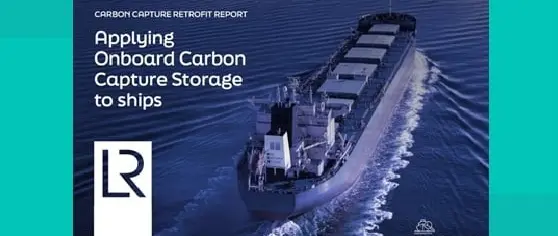
Image: Lloyd's Register
Lloyd’s Register says onboard carbon capture could help reduce emissions from existing vessels while alternative-fuel infrastructure develops, but space, energy use and CO2 offloading remain major constraints.
Lloyd's Register Yacht Services says onboard carbon capture and storage could provide a practical route to lower CO2 emissions for some existing vessels while alternative-fuel supply chains continue to develop. A new LR report argues that the technology has moved beyond the concept stage, but warns that it is only suitable where vessel design, trading pattern and shore infrastructure support it.
The findings are relevant to the large-yacht sector because many yachts remain in service for decades and undergo repeated machinery and hotel-system refits during their working lives. Carbon capture therefore joins alternative fuels, hybridisation and efficiency improvements as a technology that owners of long-life assets may need to assess, even if it is not appropriate for every yacht.
LR reports that current full-scale installations are capturing around 30 to 40 per cent of CO2 emissions, while larger pilot projects are targeting rates of about 70 per cent. The attraction is that capture equipment can potentially reduce emissions from vessels that continue operating conventional engines rather than waiting for a complete change in fuel infrastructure.
That potential comes with significant engineering trade-offs. LR says many current applications can impose a fuel-consumption penalty of roughly 15 to 30 per cent, while the capture plant and stored CO2 require substantial onboard space that may be difficult to justify on vessels where volume is already at a premium.
The report identifies stronger candidates as vessels with more than ten years of useful life remaining, meaningful exposure to carbon pricing, sufficient machinery or technical space and access to a credible CO2 offloading chain. Those conditions underline why any yacht application would have to be studied individually rather than treated as a standard retrofit package.
On a superyacht, designers would also need to examine the effect on weight, stability, machinery ventilation, tank capacity, service access and guest-space priorities. A system that is commercially workable on a tanker or feeder vessel may need a substantially different engineering case when the platform is a yacht.
LR identifies limited port infrastructure for receiving captured CO2 as the main barrier to wider deployment. Carbon can only be permanently accounted for if the vessel has somewhere to discharge it into a transport and storage chain, which makes shore-side infrastructure just as important as the equipment fitted onboard.
Regulation is another moving part, with different carbon-accounting frameworks still developing their treatment of captured emissions. For yacht owners and shipyards, the practical message is to watch the technology as part of a broader decarbonisation toolkit while remaining cautious about installation until the energy penalty, onboard-space requirement and offloading network make sense for a specific vessel.
Explore
Go deeper into the yachts, companies, events and destinations directly connected to this article.
Company
Explore the company profile and related Superyacht Guide coverage.
Continue reading
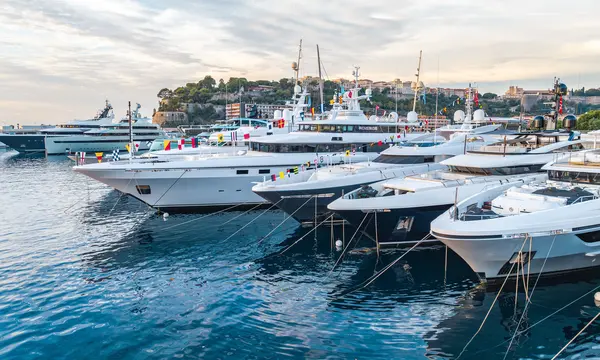
Teledyne FLIR Marine will present M460, M364C and Ocean Scout Pro thermal systems at Monaco Yacht Show 2026 for yacht navigation and security.
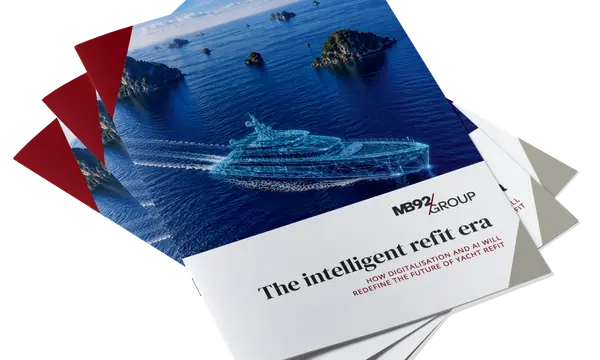
MB92 Group’s latest industry report examines how data, AI and connected technology could reshape superyacht refit, while identifying interoperability, cybersecurity and skills as key …

Lumitec has added a Channel Expander feature to its Poco Digital Lighting Control platform, allowing multiple four-channel modules to operate over an NMEA 2000-based …
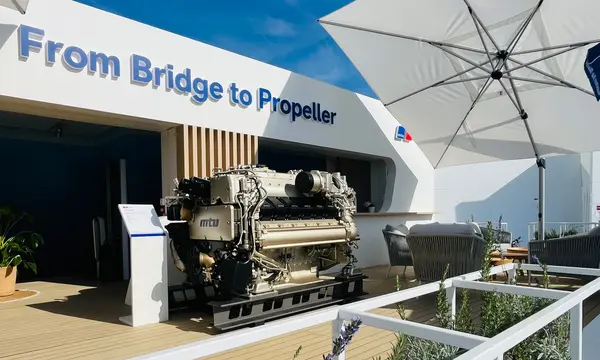
Rolls-Royce has expanded its mtu yacht portfolio with variable-speed Series 2000 generator sets and a new SCR exhaust after-treatment system aimed at lower fuel …
Superyacht Guide
Continue into the wider Superyacht Guide.