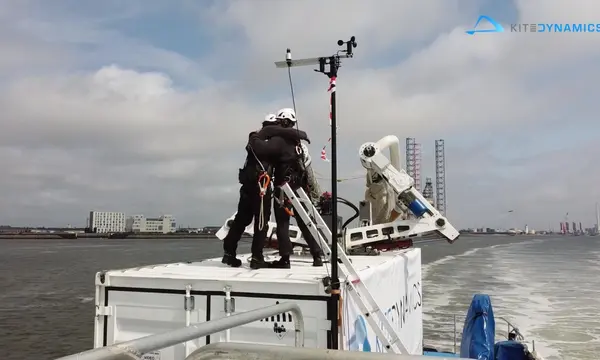
Kite Dynamics Advances Wind-Assisted Marine Propulsion After 2026 Lisbon Trials
Kite Dynamics is developing four-line kite propulsion following at-sea trials in 2025 and 2026, with yacht applications remaining at the prototype and engineering stage.
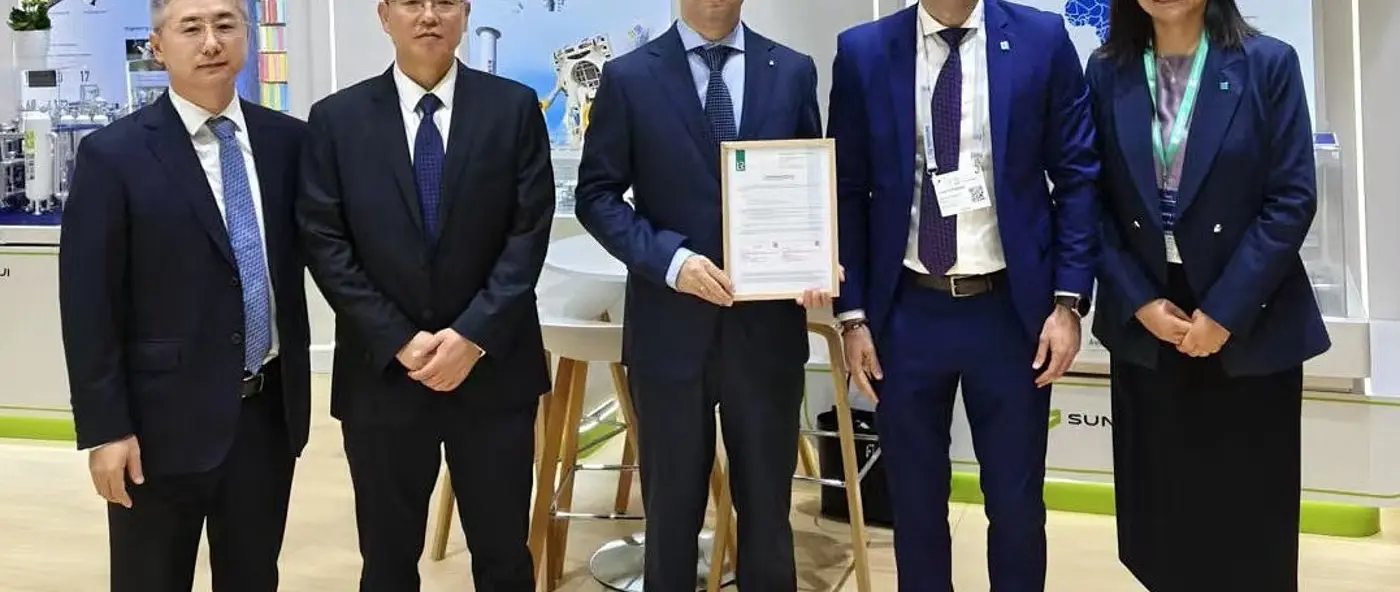
Image: Lloyd's Register / SunRui
LR has independently checked CFD methods for SunRui's suction sail, helping owners assess how wind-assisted propulsion claims are calculated before investment.
Lloyd's Register has completed an assessment of the computational fluid dynamics methodology used to evaluate SunRui's suction sail technology. Announced at SMM in Hamburg on 3 September 2026, the work examines how a proposed sail system generates thrust and handles wind loads rather than certifying a particular yacht installation.
That distinction matters to the wider superyacht supply chain as wind-assistance proposals become more varied. Owners, designers and naval architects need a reliable basis for discussing potential fuel savings, but a verified method is not a guarantee of performance across different hulls and voyages.
The review concerned a six-metre by 26-metre suction sail and considered aerodynamic and wind-load calculations against LR's wind-assisted-propulsion guidance, IACS Recommendation 173 and relevant ITTC procedures. LR concluded that the proposed CFD analysis used satisfactory standards and could be accepted.
The evaluated simulations reported up to 260 kilonewtons of thrust for a single sail and a maximum combined 700 kilonewtons for three sails on the modelled configuration. Those are figures from the study, not a sea-trial result on a superyacht.
A designer considering an auxiliary wind device must account for deck loading, structural support, access, visibility, operating limitations and interactions with existing propulsion. Independent scrutiny of modelling provides a starting point for comparing technology claims, although a real project will still need vessel-specific engineering and class review.
The SunRui design studied by LR has dimensions suited to substantial ships rather than a standard leisure yacht. Its relevance here is the validation process and the broader technical direction, not an assertion that the product has been adopted by a named yacht.
The industry can only establish actual fuel and emissions effects after considering wind conditions, routes, control strategy and the vessel's power demand. A robust modelling process helps narrow uncertainty while avoiding an unsupported one-size-fits-all savings claim.
LR's primary announcement describes the review and its limits. The accompanying official image records the SunRui and LR announcement rather than substituting a generic sailing-yacht photograph.
Continue reading
Kite Dynamics is developing four-line kite propulsion following at-sea trials in 2025 and 2026, with yacht applications remaining at the prototype and engineering stage.
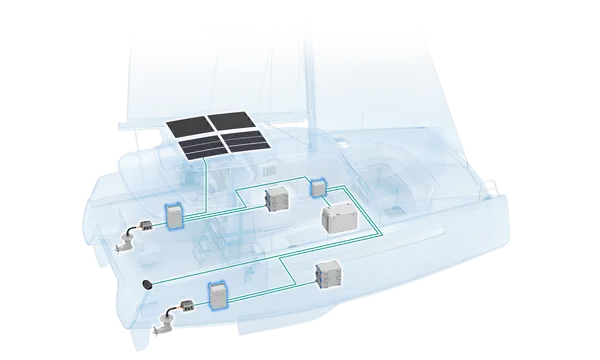
ePropulsion's new eCore Energy Management System combines a 96V DC core with an optional AC module to coordinate propulsion and onboard electrical demand.
Volvo Penta is using Monaco Yacht Show 2026 to present its IPS Professional Platform, D13 IPS Hybrid system and an interactive energy-management demonstration for …
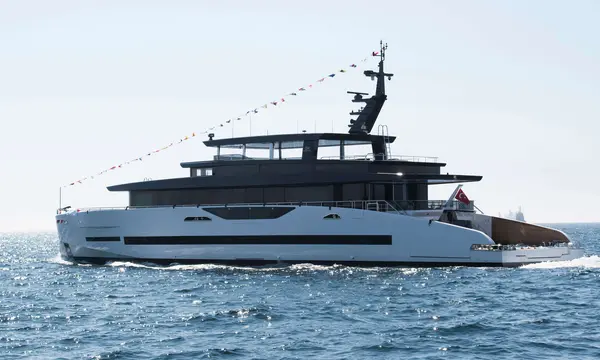
SES Yachts is highlighting the delivered 42m MERINOS at Monaco, where its 940kWh battery bank and solar-assisted hybrid architecture provide the technical focus.
Superyacht Guide
Continue into the wider Superyacht Guide.