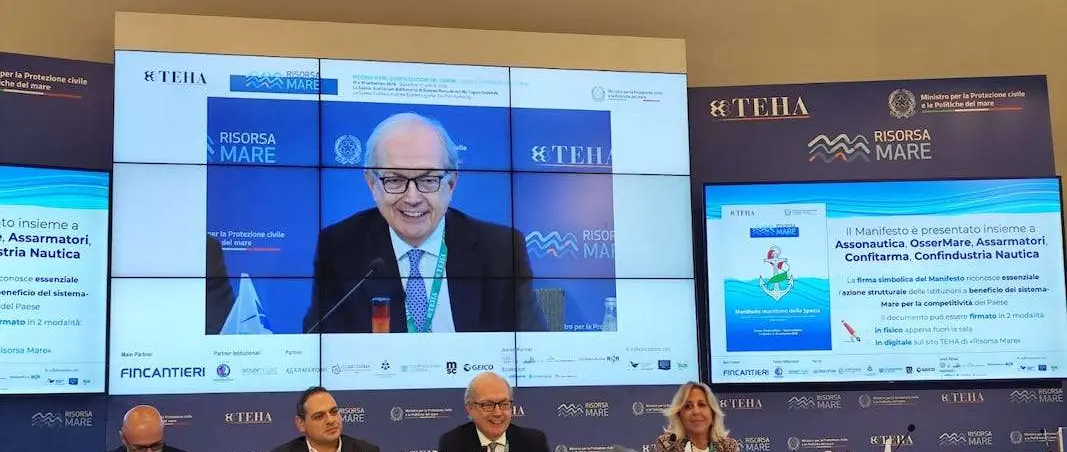
Image: Marinedi via PressMare
Marinedi CEO Renato Marconi says fragmented administration and uncertainty over concessions and taxes are making long-term Italian marina investment harder.
Marinedi chief executive Renato Marconi has called for clearer and more consistent rules governing Italian tourist marinas, arguing that fragmented administration and uncertainty over concessions and taxation are discouraging private investment. He made the comments during the Risorsa Mare forum in La Spezia, organised by The European House - Ambrosetti.
Marconi's position is an industry argument rather than a formal government finding, but it highlights a recurring issue for marina operators planning long-term infrastructure projects. Tourist ports often require substantial capital expenditure over concession periods measured in decades, making regulatory predictability especially important to investors.
Marconi identified the division of responsibilities between different public authorities as one of the obstacles facing the sector. He argued that management of state concessions by individual municipalities can create differing procedures and interpretations between locations.
For marina groups operating across several coastal regions, inconsistent processes can complicate investment planning and project timelines. Marinedi's view is that tourist ports should be treated as complex infrastructure requiring specialist technical capability, industrial planning and a stable long-term framework.
The company also highlighted uncertainty around concession rules and differing interpretations of local taxation and VAT. According to Marconi, those variables can make it harder for private operators to forecast returns and commit capital over the full life of a marina project.
The details can vary significantly according to the concession, municipality and commercial structure involved, so the comments should not be read as describing every Italian marina in the same way. The broader argument is that a more uniform framework would reduce uncertainty for operators competing for international yacht traffic.
Marconi argued that tourist marinas generate economic activity beyond berth revenue alone, including shipyards, maintenance companies, restaurants, retail and tourism services. Growth in yacht charter and visits by foreign owners has increased the potential value of that wider local supply chain.
For superyachts, marina investment also affects the availability of deep-water berths, shore power, technical services and crew infrastructure. Those facilities can influence whether a destination becomes a regular operating base or remains primarily a short-stay cruising stop.
Marinedi supports continued work through Italy's Piano del Mare and the CIPOM maritime-policy framework, while arguing that clearer rules and more efficient administration are still needed. Marconi said stable and homogeneous conditions would allow operators to plan long-term investments more confidently and compete with other Mediterranean destinations.
The debate matters beyond Italy because marina capacity and regulation increasingly shape the practical geography of Mediterranean superyacht cruising. As yachts become larger and shore-power, environmental and service expectations rise, investment decisions made now will determine which ports can accommodate future demand.
Explore
Go deeper into the yachts, companies, events and destinations directly connected to this article.
Continue reading
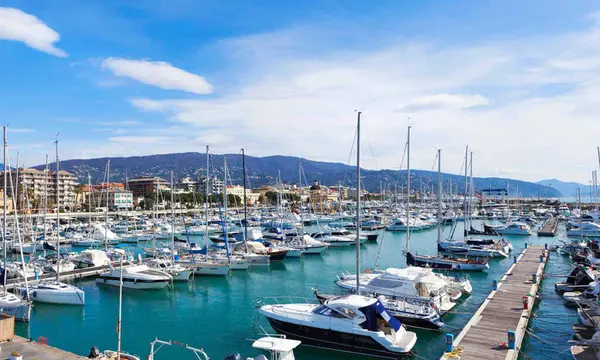
Marinedi has completed a financing transaction with BCC Banca Iccrea and BCC Roma that clears Tigullio Shipping debt linked to the Chiavari port expansion.
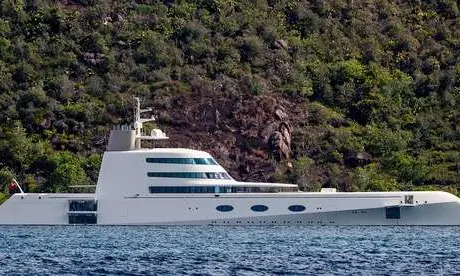
SOS Yachting and Uncharted Yachting have formed an exclusive Seychelles partnership supporting foreign commercial superyachts with permits, VAT and customs.
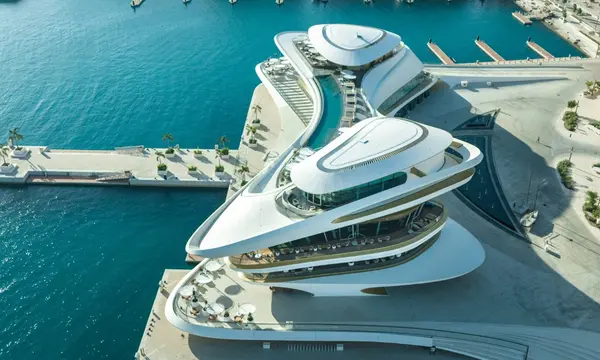
Red Sea Global has launched Yachting Network, linking AMAALA and Shura with 278 berths for yachts up to 120m under a single operating structure.

Floating Life says its current new-build activity includes a 42m superyacht, a Maiora M|30 and a 48m full-custom Baglietto project under construction in Italy.
Superyacht Guide
Continue into the wider Superyacht Guide.