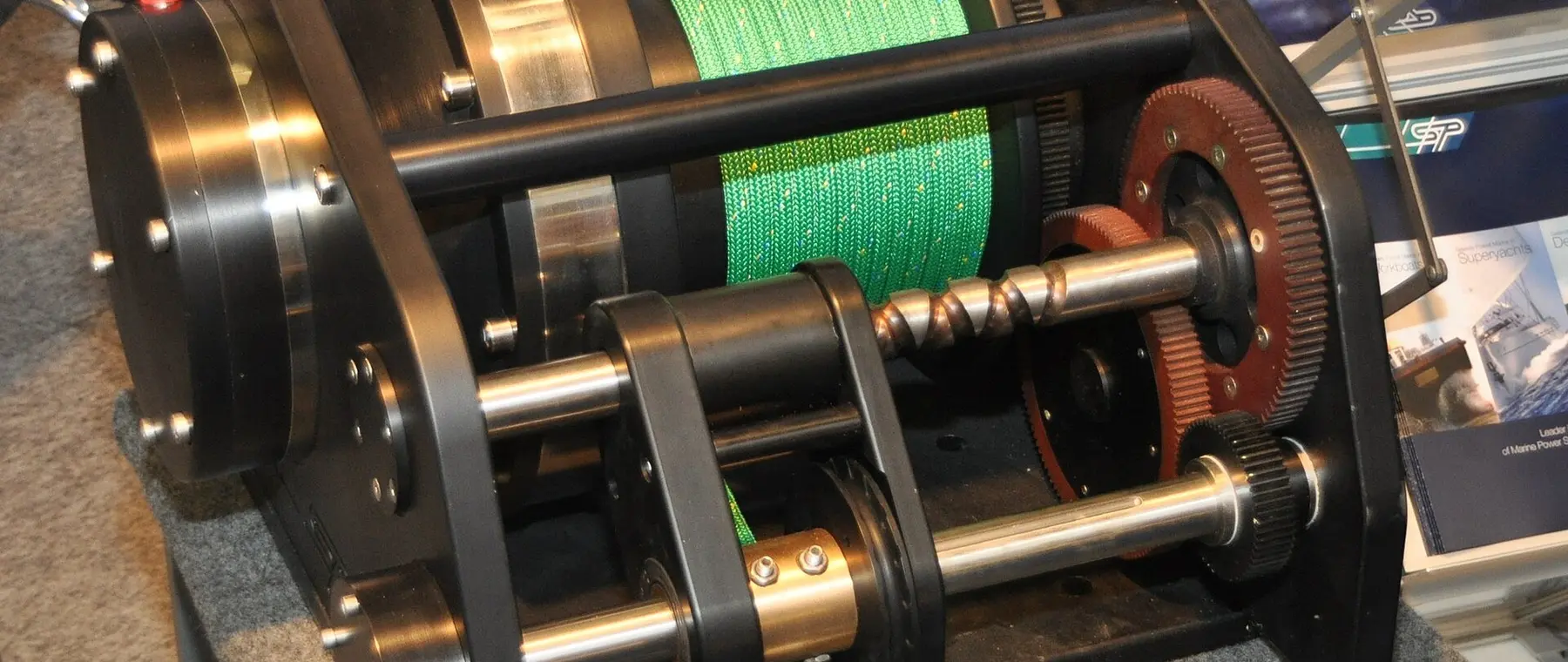
Metstrade Guidance Urges Marine Suppliers to Sustain Communication After Show — licensed SYG News 26Nov batch03
Metstrade guidance warns yacht suppliers against disappearing after trade shows and stresses technical accuracy, customer follow-up and year-round visibility.
Marine suppliers leaving Metstrade 2026 face a familiar commercial challenge: how to turn conversations, demonstrations and product announcements into lasting relationships. A guidance article published by Metstrade on 27 October argues that one of the industry's most common mistakes is concentrating promotion around a major trade show and then falling silent for much of the year. The article draws on comments from Mike Shepherd, publisher of Marine Industry News, who emphasises the value of accurate editorial information, search visibility and coordinated communication. With the Amsterdam exhibition held from 17 to 19 November, the advice is relevant to yacht equipment companies, shipyards and service providers deciding what to do with their new contacts.
Metstrade attracts large numbers of suppliers, builders and other marine professionals, many of whom use the event to introduce new products or business relationships. A launch can generate immediate attention, but purchasing decisions in the superyacht sector often take considerably longer. A technical system may need to be evaluated by naval architects, engineers and project managers before it can be specified on a new build. That process can extend far beyond a three-day exhibition.
A supplier that communicates only during the show may be absent when a yacht project finally reaches the relevant procurement stage. This does not mean every company needs an expensive promotional campaign. It means customers should be able to find accurate information and a reliable contact when the purchase becomes practical. The Metstrade article frames consistency as a commercial necessity rather than a decorative marketing exercise.
A yacht project moves through concept development, engineering, contracting, procurement, construction and commissioning. Equipment selection at one stage may depend on decisions made much earlier. A supplier of stabilisers, electrical systems or specialist interior materials might need to introduce its product well before a yard places an order. If documentation is missing or outdated, a potential customer may choose a familiar alternative.
This long decision process explains why a single exhibition conversation should not be treated as a likely immediate sale. Technical teams may be exploring options rather than committing funds. An effective supplier should record what information the customer needs, provide it accurately and follow up at an appropriate stage. Pressuring a prospective client with repeated generic messages can undermine the relationship rather than strengthen it.
Metstrade's article quotes Mike Shepherd of Marine Industry News on the tendency of companies to invest heavily in a trade-show announcement without maintaining a wider communications programme. His position is that information published over the year can remain discoverable after the initial news cycle. That is a professional media perspective, not an independent experiment proving a specific increase in sales.
The advice is relevant because a supplier's reputation develops through many contacts and experiences. A clear product description, professional support and well-documented case studies can be more useful than a burst of extravagant publicity. The original article promotes the role of editorial and other channels; this report should not imply that coverage in one publication is the only effective approach.
The guidance recommends that a press release clearly explain the essential facts of a development. For marine readers, those include what has been introduced, who is responsible, where it is available and why it matters. A technical product also needs information about its intended use, limitations and compatibility. A statement that merely declares a system innovative gives buyers little basis for evaluating it.
Editors face the same problem. If a press release omits model identifiers, dimensions or verified performance data, responsible coverage may need to omit the claim entirely. Providing accurate facts at the outset improves the chances that the resulting article is useful rather than vague. The Metstrade guidance stresses clarity over unsupported superlatives, a principle particularly important when products may affect the safety or reliability of a yacht.
Yacht equipment is sometimes promoted with promises of lower fuel consumption, improved performance or simplified maintenance. Such claims may be credible when they are supported by testing and transparent assumptions. Without that information, readers cannot know whether a stated benefit applies to their own vessel. Manufacturers should explain the test conditions and any restrictions before buyers treat the numbers as universal.
If a product has been installed on a particular yacht, it is useful to identify the installation accurately and clarify whether the image is authorised for publication. A photograph of a similar vessel should not be presented as evidence of an installation that has not been verified. Trust depends on these details. The most valuable trade reporting helps technical and commercial readers separate measured results from marketing expectations.
Metstrade's guidance recommends clear, high-resolution images with captions. Marine products can be difficult to understand without good photography, but image quality is only one concern. Rights to reproduce a photograph must also be established, and the caption should describe what it actually shows. A supplier may own a product design without owning every photograph taken of it.
For superyacht media, misidentifying a vessel or equipment installation can create commercial and reputational problems. A picture of an archival yacht may be suitable as context if labelled honestly, while a new launch should preferably have imagery tied to the actual vessel. Source information, photographer credit and usage permission are part of responsible editorial practice rather than an administrative detail to be addressed after publication.
The article notes that potential customers may find a supplier through conventional search engines, AI-assisted discovery, LinkedIn or trade publications long after a product announcement. That creates an incentive to maintain accessible and accurate information. A well-structured technical page can remain useful for years if it is updated when specifications change and includes a way to contact the relevant team.
Search visibility should not be confused with a guarantee of commercial success. A company might attract visits from people who have no intention of purchasing, or a buyer might discover information through a professional recommendation instead. The practical goal is to make reliable facts easy to verify when a decision-maker looks for them. That complements personal relationships rather than replacing them.
Metstrade's article discusses editorial coverage alongside advertising and other promotional activity. These channels have different roles. Independent reporting should be based on editorial judgment and verified facts, while paid promotion is a commercial arrangement that should be identified appropriately. Businesses may use both, but they should not present sponsored messages as independent findings.
For yacht owners and professional buyers, understanding provenance matters. A product claim made by its manufacturer is different from a result observed in a test or confirmed by a customer. A company's own promotional material can still contain useful facts, provided the source is clear. Responsible industry journalism preserves those distinctions even when covering a commercial launch.
After an exhibition, businesses may have contact details for shipyard representatives, engineers, brokers and potential partners. Sending the same generic message to everyone is unlikely to be as useful as addressing what each person actually asked about. A technical manager may need drawings or certifications, while a purchasing specialist is concerned with pricing and delivery times. The right response requires accurate notes from the original conversation.
Communication should also respect privacy and applicable marketing rules. Attending a trade show does not necessarily mean someone has agreed to receive unlimited unrelated messages. Suppliers need an appropriate legal basis for outreach and should honour preferences and unsubscribe requests where required. Good follow-up strengthens a relationship through relevant information, not through volume alone.
The superyacht sector relies heavily on long-term service. An owner may continue using specialised equipment for many years after installation, across several cruising regions. A supplier that can explain its support network, spare-parts policy and service arrangements may offer more value than one with a dramatic launch presentation but little practical documentation.
Potential buyers should ask how software updates, warranty work and emergency assistance are handled. A manufacturer should avoid implying global coverage if service is available only in certain ports or through specific partners. Clear expectations reduce the risk of a disappointing ownership experience. This is one example of how year-round communication can provide operational information rather than simply maintain brand awareness.
An equipment manufacturer may earn trust when it responds accurately to technical questions, delivers what it promises and supports products after installation. This takes time. Conferences can create introductions, but daily interactions determine whether a relationship survives. A company that publishes useful case studies and updates may help buyers understand its capabilities without relying entirely on sales calls.
Case studies should be properly sourced. If a supplier claims that a yacht saved fuel or reduced maintenance costs, it should identify the measurement method and relevant conditions where disclosure is permitted. Confidential client details should not be exposed without consent. The strongest evidence is both informative and respectful of the owner's privacy.
Not every marine company has a large communications department. A specialist workshop or engineering business may depend primarily on technical expertise and referrals. That does not remove the value of maintaining an accurate website, a current contact address and clear descriptions of services. A consistent approach can be modest in scale yet still help buyers evaluate a supplier.
For a small business, a few substantive updates with reliable facts may be more useful than frequent weak announcements. Sharing completed projects, new qualifications or verified capabilities can demonstrate progress without exaggeration. The Metstrade guidance is best interpreted as an argument for dependable visibility, not a demand for constant advertising expenditure.
A shipyard or manager reviewing prospective suppliers can learn something from the clarity of their documentation. A company that provides precise information and responds consistently may be easier to work with during a complex build. However, polished communications are not proof of engineering quality. Technical competence, financial stability, certifications and references still require independent checks.
A supplier selection process should therefore balance what a company says with what it can demonstrate. Meetings at Metstrade can start this process, while subsequent correspondence and due diligence help establish whether the proposed relationship is suitable. The article's marketing argument should not be treated as a substitute for normal technical procurement.
Metstrade 2026 ran from 17 to 19 November in Amsterdam. The source article was published on 27 October, before the show, and its advice was framed around what businesses should do afterward. On 26 November, that period has begun. The guidance remains relevant, but the public article does not establish which companies have followed it or whether their sales have improved.
A company can assess the effectiveness of its own efforts by reviewing the quality of enquiries, the information requested and the progress of genuine commercial opportunities. Simple counts of emails or website impressions may not demonstrate a meaningful result. The objective should be better service for potential customers and clearer understanding of their requirements.
Superyacht construction is a relationship-led, highly technical business in which purchase decisions and support obligations can extend over years. That makes a short publicity burst a limited strategy. The advice published by Metstrade is to preserve visibility through accurate information, appropriate follow-up and a combination of communication channels.
For the sector, the real significance is not marketing for its own sake. Better information can help engineers select suitable components, owners understand equipment and professional buyers contact the right suppliers. Success should be measured through reliable service and informed decisions rather than promotional noise. With the 2026 trade show finished, those responsibilities are now part of everyday business.
Primary source: Metstrade, original 27 October 2026 post-show commercial communications guidance.
Licensed archival photo of the earlier METS marine trade exhibition in 2011; not the 2026 event. Photo: S.J. de Waard; CC BY-SA 3.0 via Wikimedia Commons. Official source.
Explore
Go deeper into the yachts, companies, events and destinations directly connected to this article.
Continue reading

The 2026 Superyacht Forum urged builders and managers to act on geopolitical risks, engineering priorities and crew expertise, with 100 captains involved.

A METSTRADE interview with former Indian Navy engineer Darsitha Babu examines the transfer of engineering, project leadership and compliance skills to yachting.
METSTRADE will again separate its marine startup displays into two specialist areas at RAI Amsterdam from 17 to 19 November 2026. The show organisers …

Metstrade has confirmed six initial exhibitors for its dedicated 2026 Superyacht Startups Area in Hall 8, with Fort Insurance sponsoring the wider programme.
Superyacht Guide
Continue into the wider Superyacht Guide.
Business opportunities · Superyacht Guide
Companies serving the superyacht market can discuss clearly identified advertising, sponsorship and business-profile opportunities. Commercial activity remains separate from independent editorial coverage.

