Superyacht Forum Urges Industry to Turn Debate Into Practical Action — licensed SYG News 26Nov batch03
The 2026 Superyacht Forum urged builders and managers to act on geopolitical risks, engineering priorities and crew expertise, with 100 captains involved.
The 2026 Superyacht Forum opened at RAI Amsterdam with a message that industry discussions should lead to action rather than end as conference presentations. In an official announcement dated 16 November, Metstrade described a keynote by Jaap de Hoop Scheffer, the former NATO Secretary General and Dutch Minister of State, calling for yacht businesses to put geopolitical risks on their boards' agendas. The two-day event brought together designers, shipyards, owners' representatives, captains and other professional stakeholders, with a programme built around people, projects, progress and processes. The challenge for the sector is how to convert those conversations into operational changes that can later be assessed.
The opening keynote placed global affairs at the centre of the discussion. A superyacht may be built in one country, fitted with equipment from several others, registered elsewhere and operated internationally. That creates potential exposure to changes in trade, regulations and relationships between governments. De Hoop Scheffer encouraged companies to monitor such developments and consider them as part of ordinary governance rather than occasional crisis management.
This is particularly relevant to shipyards that depend on specialist components and materials. A disruption affecting one supplier can have consequences for a construction schedule, especially when an item must be certified or integrated with other systems. An effective response does not necessarily mean abandoning international trade. It means understanding where dependencies exist and what alternatives could be considered if circumstances change.
One of the practical points in the keynote was the danger of relying too heavily on a single supplier. Many yacht systems use proprietary parts or controls that require support from the original manufacturer. Such arrangements can work very well, but they can also cause difficulties if a supplier experiences disruption or changes its product range. Owners and builders need to understand the lifecycle of equipment, not just its purchase price.
Technical teams may reduce risk through spare-parts planning, maintenance documentation and a careful assessment of support arrangements. Alternatives are not always interchangeable, especially when safety or classification requirements apply. A procurement strategy should therefore distinguish between standard consumables and critical systems that require specialist approval. The keynote establishes an area for management attention rather than an assertion that any named company is currently failing.
The Superyacht Forum's programme included more than thirty hours of keynotes, workshops, panels and breakouts, according to Metstrade. That breadth reflects the complexity of modern yacht building. Projects involve naval architecture, engineering, interior design, classification, construction and owner decision-making. No single participant has a complete view of every issue, and poor coordination can create expensive changes late in a build.
A forum can be useful when it allows people to compare approaches and identify problems that recur across companies. But a good discussion is only an initial step. Practical progress needs named responsibilities, clear decisions and methods for checking results. Owners and their advisers can benefit from asking which recommendations have actually been adopted rather than judging success by the number of sessions delivered.
The official programme was structured around people, project, progress and process. These themes offer a useful way to think about the industry. People concerns include training, competence and working conditions. Project issues involve design, specifications, budgets and construction. Progress can refer to the adoption of useful technologies or operating practices, while process addresses how work is coordinated and governed.
The categories overlap. Better project performance may require improved processes and experienced people, while new technology can create fresh training needs. A company adopting a digital system without giving its staff enough time to learn it may create complexity rather than reduce it. The themes are best understood as connected areas for action, not as independent initiatives that can be managed without communication.
Metstrade explains that the 2026 agenda was curated in close collaboration with the Superyacht Industry Advisory Council and organisations working together through the Superyacht Alliance. The announcement names representative groups including SYBAss, MYBA, IAMI, ICOMIA, PYA and IYBA. The purpose of this cooperation is to bring multiple parts of the yachting sector into discussions that might otherwise remain isolated within one commercial or professional community.
Representation has value, but it is important to distinguish an alliance discussion from a binding regulation or industry-wide vote. Organisations may develop guidance, shared projects or recommendations without having legal authority over every builder and yacht owner. The effectiveness of joint work will depend on whether participants agree specific actions and whether those actions are implemented in practice.
A notable addition to the 2026 Forum was the Crew Voices initiative. Metstrade reports that approximately 100 captains and senior crew attended through this programme, allowing operational experiences to inform discussions with designers, builders and business leaders. This is important because a yacht that appears effective on a drawing may be difficult to maintain or operate when it is at sea.
Crew members can identify practical problems with access, equipment location, storage and service routes. Such observations may help design teams avoid recurring difficulties in future projects. But listening is only useful if the feedback is recorded and considered during decision-making. A forum can establish connections, while the real test is whether technical teams incorporate those insights in subsequent specifications or operating procedures.
The organiser describes over ten hours of scheduled networking during the two-day programme. In an industry where relationships develop over years, time for conversations outside formal presentations can be valuable. A specialist supplier may meet a shipyard team that needs its technology, or a captain may explain an operational challenge directly to a designer. Informal exchanges can help identify practical projects that would not emerge from a keynote alone.
At the same time, networking time is not an independently measurable business outcome. The announcement does not establish how many new contracts were signed or which partnerships will be completed. Responsible reporting should not present the schedule as proof of commercial success. Its significance lies in creating opportunities for dialogue that participants may choose to pursue afterward.
Metstrade highlights a contribution scheduled from Selin Tur, Managing Director and CTO of Williams Grand Prix Technologies, intended to explore lessons from Formula One and high-performance engineering. The idea is relevant because advanced marine projects also involve complex systems integration and a need to balance performance, reliability and safety. However, the source announcement outlines a presentation topic, not a verified new partnership or technical application.
Transfer of knowledge between sectors requires careful adaptation. A solution effective in a racing car may not be suitable for a yacht operating continuously over long distances. Serviceability, redundancy, classification and the onboard environment all impose different constraints. The value of cross-industry discussions lies in identifying principles that can be tested, not assuming that technologies can be copied unchanged.
Superyachts cross national boundaries in ways that many industrial products do not. Flag-state requirements, port controls, environmental rules and sanctions can influence their operation and commercial transactions. Builders also need to understand requirements affecting construction and supply chains. A more uncertain geopolitical environment makes these obligations an ongoing management issue rather than a final legal check performed at delivery.
Yacht businesses should seek qualified guidance when rules change. No speech at a forum can determine whether a particular vessel or transaction complies with the law. The keynote's message is about keeping governance aware of international risks, while detailed decisions must rely on current official regulations and the facts of each project.
Metstrade's conference manager Patricia Becker describes the sector as one with ideas, innovation and ambition, but stresses the need to turn discussion into commitments. This distinction is familiar in many industries: conferences may produce enthusiasm, yet operational problems can remain unresolved unless someone takes responsibility for acting. A useful follow-up process identifies who will do what and when progress can be reviewed.
Owners may look for evidence in how projects are delivered, how costs and specifications are controlled, and how crew concerns are resolved. Shipyards may measure changes through quality, rework and delivery performance. Suppliers may focus on service support and the integration of equipment. No single metric suits every initiative, but well-defined objectives make claims of improvement more credible.
The organisers refer to the Forum as a catalyst for working groups and industry initiatives extending beyond the event itself. Such groups may be able to concentrate expertise on specific problems, but they need a practical mandate. If the issue is a technical standard, participants must understand the relevant regulatory bodies. If it concerns training, they should involve educators and professional organisations. A broadly worded statement of intent is unlikely to produce meaningful change by itself.
Good working arrangements also need transparent participation. Businesses of different sizes may face different constraints, while owners and captains can provide perspectives missing from an exclusively commercial discussion. A forum that brings those groups together can start the process, but the legitimacy of any eventual recommendations depends on how they are developed and reviewed.
A superyacht often reflects an owner's individual preferences, creating opportunities for innovation and changes during construction. These decisions can complicate budgets and schedules if they are not managed carefully. A more process-focused industry could help owners understand the consequences of late alterations and support clearer communication between representatives, designers and yards.
The Forum's broad discussion does not provide a new universal contract or a guaranteed method of avoiding disputes. Owners still need independent professional advice and a project team with clearly defined responsibilities. The conference can help raise awareness of common challenges, while contractual and technical solutions must be assessed on their own merits.
The presence of captains and senior crew reinforces the need to consider those who operate yachts after delivery. Training, retention and access to technical knowledge can affect both safety and service quality. A highly advanced vessel may be difficult to maintain if relevant documentation or specialist support is not available during its working life.
Those concerns also connect with education and apprenticeships. Builders and refit yards need future engineers and craftspeople, while operating fleets need competent seafarers. Conferences can help align the needs of employers and professional bodies, but they do not replace actual training schemes. The useful outcome would be practical cooperation with measurable results rather than another statement that talent matters.
The confirmed information is that the 2026 Superyacht Forum met on 16–17 November at RAI Amsterdam under the theme of accelerating industry evolution. The opening keynote came from Jaap de Hoop Scheffer, and the programme was organised around people, projects, progress and processes. Metstrade reported over thirty hours of content and an initiative involving around 100 captains and senior crew.
The event's impact cannot be determined from the opening press release alone. For the superyacht sector, the continuing question in late November is whether those involved can turn risk awareness, crew experience and engineering discussion into projects with clear accountability. The Forum has articulated the challenge; the practical work of meeting it remains with the organisations and professionals who took part.
Primary source: Metstrade, official Superyacht Forum opening announcement 16 November 2026.
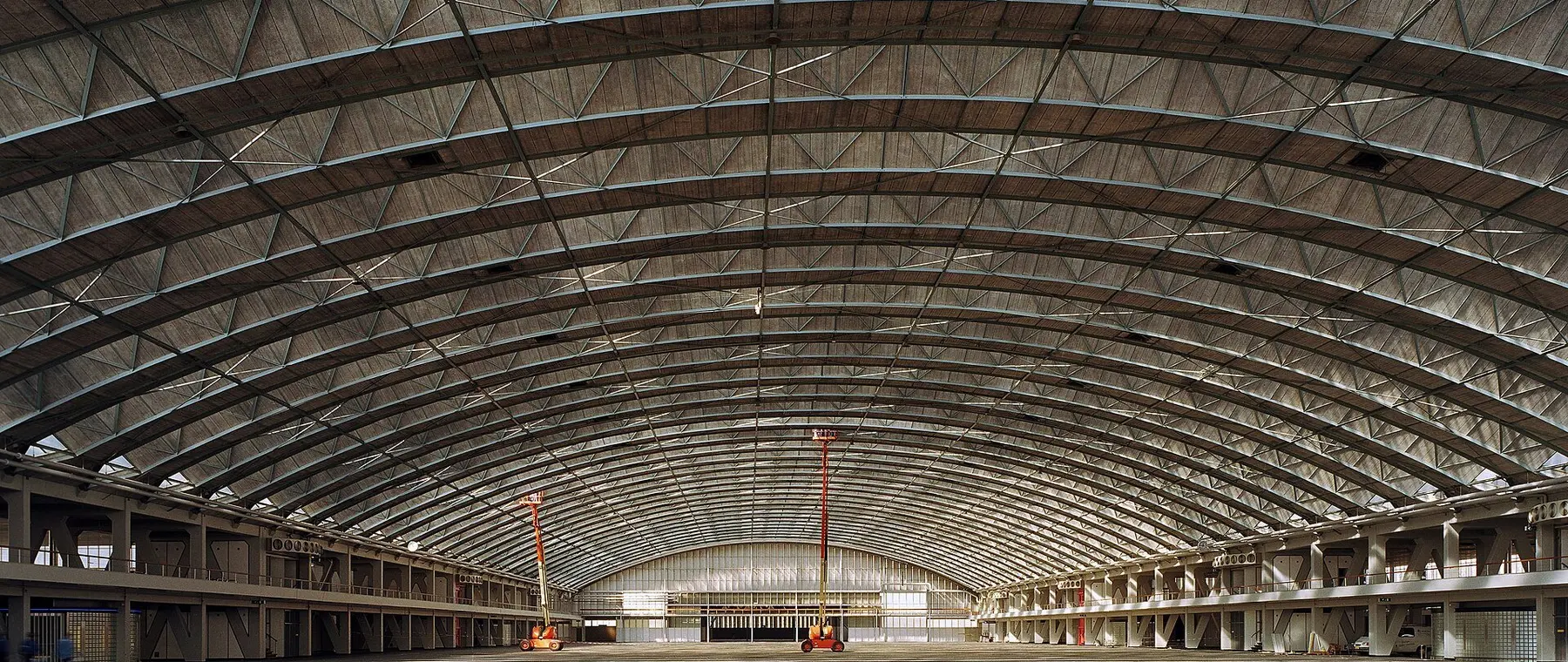
Licensed archival photo of the RAI Amsterdam exhibition centre or interior; not a photograph of the 2026 Superyacht Forum. Photo: A. J. van der Wal; CC BY-SA 4.0 via Wikimedia Commons. Official source.
Explore
Go deeper into the yachts, companies, events and destinations directly connected to this article.
Continue reading
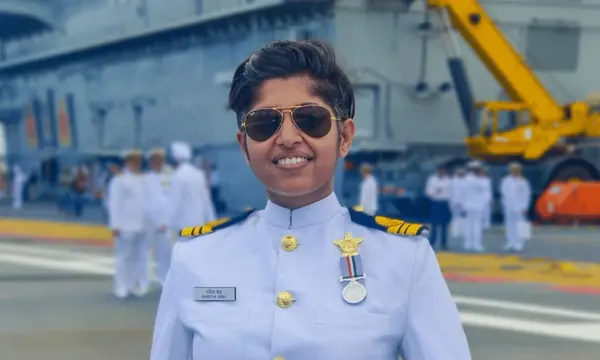
A METSTRADE interview with former Indian Navy engineer Darsitha Babu examines the transfer of engineering, project leadership and compliance skills to yachting.
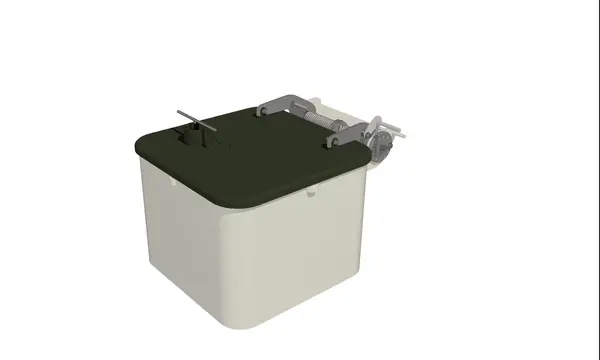
Oceanco adds established Dutch marine manufacturer Winel to its group, bringing custom yacht door and hatch engineering, tank vent valves and specialist suppliers.
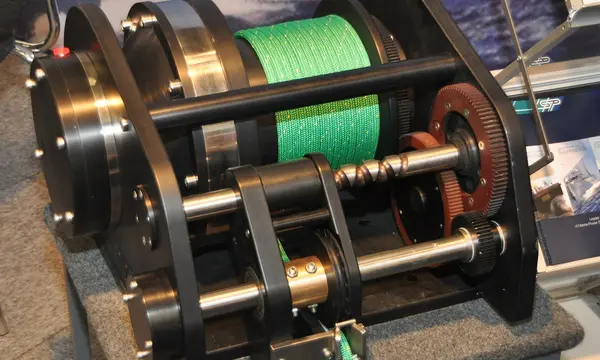
Metstrade guidance warns yacht suppliers against disappearing after trade shows and stresses technical accuracy, customer follow-up and year-round visibility.
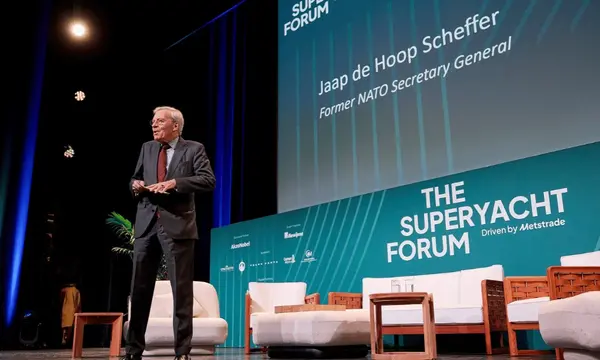
Jaap de Hoop Scheffer's opening address at the 2026 Superyacht Forum calls for stronger geopolitical awareness, supplier resilience and industry cooperation.
Superyacht Guide
Continue into the wider Superyacht Guide.
Business opportunities · Superyacht Guide
Companies serving the superyacht market can discuss clearly identified advertising, sponsorship and business-profile opportunities. Commercial activity remains separate from independent editorial coverage.

