Metstrade Examines AI and Market Change for Marine Businesses
By Superyacht Guide Newsroom · Edited by Superyacht Guide Newsroom
Metstrade Examines AI and Market Change for Marine Businesses — licensed SYG News 26Nov batch03
Metstrade’s North American Stage programme addressed AI marketing, changing marine retail and technology adoption, with suppliers facing new commercial risks.
Artificial intelligence, market restructuring and changing customer expectations were among the subjects identified by Metstrade for its North American Stage during the 2026 Amsterdam exhibition. In an official article published on 27 October, author Michele Goldsmith of Soundings Trade Only outlined nine sessions scheduled across 17–19 November in Hall 12. The programme brought together executives and specialists to consider marketing, marine retail, emerging technologies and the practical consequences of industry change. For superyacht builders and suppliers, the wider lesson is that technological adoption and commercial resilience need to be supported by accurate information and sound management decisions.
Metstrade is held in Amsterdam, but yacht supply chains and customers extend far beyond Europe. The North American Stage was developed with Soundings Trade Only, the International BoatBuilders' Exhibition & Conference and the National Marine Manufacturers Association. Its purpose was to make regional experience relevant to a global trade audience. A supplier in Europe may sell equipment to American boatbuilders, while a Dutch shipyard may depend on systems manufactured or supported across the Atlantic.
That interdependence makes it useful to examine how different markets respond to changing demand and technology. A presentation at a trade show is not a substitute for an independent market survey, but it can introduce issues that merit further investigation. The official preview identifies planned discussions rather than results measured after the event, so reported programme themes must not be converted into unverified claims of what attendees decided.
The North American Stage was scheduled for 17–19 November 2026 in Hall 12, with nine sessions covering different commercial and technical subjects. The programme format matters because it suggests more than a single headline discussion about artificial intelligence. Participants were expected to consider how innovation interacts with marketing, financial conditions and customer experience, each of which can affect marine businesses differently.
For superyacht suppliers, concentrated events provide an opportunity to compare concerns across companies. An electronics manufacturer may be focused on new digital interfaces, while an interior supplier is managing lead times and customer relationships. Both may need better systems for communicating technical claims and maintaining long-term support. The usefulness of the programme rests on how those insights are applied after the exhibition, not simply on the number of presentations.
One featured session, New Tools, New Rules: Marketing in the Age of AI, addressed artificial intelligence and its effect on marketing operations. Buyers increasingly encounter manufacturers through search engines, online content, professional recommendations and digital platforms. AI-assisted tools may change how information is assembled and presented, creating opportunities to make technical details easier to locate but also introducing risks of inaccuracies.
A superyacht owner or captain looking for equipment needs reliable specifications, not generic promotional claims. Incorrect dimensions, compatibility information or service requirements can cause practical problems. Marine companies should therefore ensure that their own documents are current, that public statements can be traced to evidence and that staff review AI-generated material before publication. Automation may improve workflow without removing the need for technical responsibility.
Metstrade's preview emphasised the tension between new marketing tools and the trust that supports long-term customer relationships. In the marine sector, a buyer may maintain contact with a supplier for years before specifying equipment on a new yacht. Trust can be damaged by exaggerated performance claims or by images that imply a product was installed where it was not. Accurate attribution and honest demonstrations remain essential.
AI-generated summaries can be useful when they preserve the meaning of approved technical information. They become risky when they invent certifications, fuel savings or compatibility. A yacht builder may be interested in a supplier's digital capability, but it will also expect proper product documentation, service commitments and evidence. Technology should make reliable facts easier to communicate rather than produce more confident versions of uncertain claims.
The programme listed Matt McKenna of McKenna Townsend, Laurie Louvier of Dometic Marine and David Gee of Soundings Trade Only among contributors to the AI marketing discussion. Michele Goldsmith was identified as moderator. Their planned participation reflects different perspectives: communications, equipment manufacturing and marine journalism. Those viewpoints can be useful when considering how companies share information with customers and professional buyers.
A promotional preview does not establish the precise statements each panellist ultimately made. Editorial coverage should distinguish the listed participants and topics from an event transcript. It would be inappropriate to attribute a detailed quotation or recommendation without a separate record. The verified information is the programme as advertised and the issues it sought to explore.
Another scheduled topic addressed changes in the United States retail market. Metstrade's article cited the 2026 restructuring of West Marine as a prominent example of how financial pressure can affect marine supply and distribution. The published preview states that the company entered Chapter 11 proceedings in May and emerged in August after reducing debt and consolidating its retail operations. These are contextual claims made by Metstrade; the article is not a financial analysis of West Marine.
For yacht owners and builders, retailer stability can matter when seeking equipment, consumables and support. A change in a distribution network may affect availability or the locations where products can be obtained. It does not automatically imply a problem with every brand sold through the business. Owners should confirm warranties and support arrangements directly with the relevant manufacturers rather than assume that a retailer's financial history determines the status of all equipment.
Large superyachts often obtain equipment through specialist manufacturers, yards and technical representatives rather than ordinary retail stores. Even so, changes in the wider marine distribution system can be informative. They illustrate how inventory, credit conditions and customer expectations may affect access to parts and services. A business planning a new yacht should consider not only the purchase of equipment but also how it will be supported over many years.
Professional procurement teams can reduce some risks by maintaining accurate parts lists and understanding alternative service channels. However, not all components are readily substitutable, particularly when they form part of certified systems. The correct response is careful planning, not speculative claims that a particular product will become unavailable.
Metstrade's preview discussed new materials and technological change in boatbuilding. Advances in design software, automated production or manufacturing data may improve coordination, but they must be adapted to the needs of individual yards. Superyachts involve a large amount of customised engineering, and a system suited to high-volume boat production may require modification before it works in a one-off build.
An effective digital programme should start with a specific problem. For example, a yard may want to improve drawing control or track the installation of technical systems. Success can be measured through fewer errors, better documentation or clearer communication. Buying new software without defined responsibilities or trained staff can add cost and complexity rather than solve the original issue.
The official article identified changing consumer expectations as another pressure on the marine industry. Yacht buyers may expect better online information, faster responses and an easier path from initial enquiry to technical specification. At the same time, purchasing a complex yacht remains a highly personal process that usually involves professional advice and detailed negotiation. Digital convenience should not be confused with the elimination of human expertise.
Companies need to understand the different stages of a buyer's journey. A first-time owner may require clear explanations of running costs, crewing and regulatory obligations, while an experienced owner may want immediate access to technical details. A good commercial system supports both without oversimplifying the product or hiding significant responsibilities.
AI-driven search and online discovery were among the matters flagged for the marketing session. A manufacturer whose data are poorly organised may find that customers encounter outdated or incomplete descriptions through third-party services. Maintaining a reliable official website can therefore be as important as producing attractive promotional imagery. Technical documentation should use consistent names, dates and model identifiers.
This is particularly relevant for yacht equipment that undergoes revisions. A component installed several years ago may have different specifications from the latest version. If search tools present the two as interchangeable, a crew member could make an incorrect purchasing decision. Companies should provide version-specific information and a clear path to human technical support.
Metstrade describes the pace and interconnectedness of change as defining features of the current market. That observation is credible as a framing of industry concerns, but it is not a quantified measure of risk. Businesses should identify their particular exposures through data. A shipyard may monitor order books and lead times, while a supplier may track service capacity, currency risk and customer concentration.
Evidence matters because industry sentiment can vary sharply by segment. Strong demand for certain superyachts does not mean every smaller boatbuilder or component supplier faces the same conditions. Similarly, a downturn in one retail channel may not describe the whole market. The practical value of an international forum is to encourage comparison while preserving those distinctions.
The North American Stage was designed mainly for marine professionals, but the questions raised have consequences for owners. Reliable equipment data, stable suppliers, competent service networks and clear communication all affect a vessel's long-term operation. Owners should ask their technical teams about documentation, software updates and contingency plans for critical components.
They should also be careful about relying on AI-generated product advice without confirmation from a qualified professional. A digital assistant may help locate a manual or summarise a specification, but it should not replace a manufacturer's instructions or a class-approved engineering decision. The industry's adoption of AI should be judged through practical usefulness and accountability, not enthusiasm alone.
The scheduled 17–19 November programme has concluded by the date of this report. The source used here was a preview published on 27 October, so its descriptions are attributed as planned session topics. This distinction matters: the preview confirms the format, partners and listed participants, but not what each panellist said on stage or which business decisions resulted.
For the superyacht industry, the subjects retain relevance after the exhibition. Companies are facing changes in technology, marketing and distribution that can influence how projects are specified and supported. The enduring test is whether organisations can improve the accuracy of their information, the reliability of their services and their ability to respond to genuine customer needs.
Primary source: Metstrade, original 27 October 2026 North American Stage 17-19 November programme article.
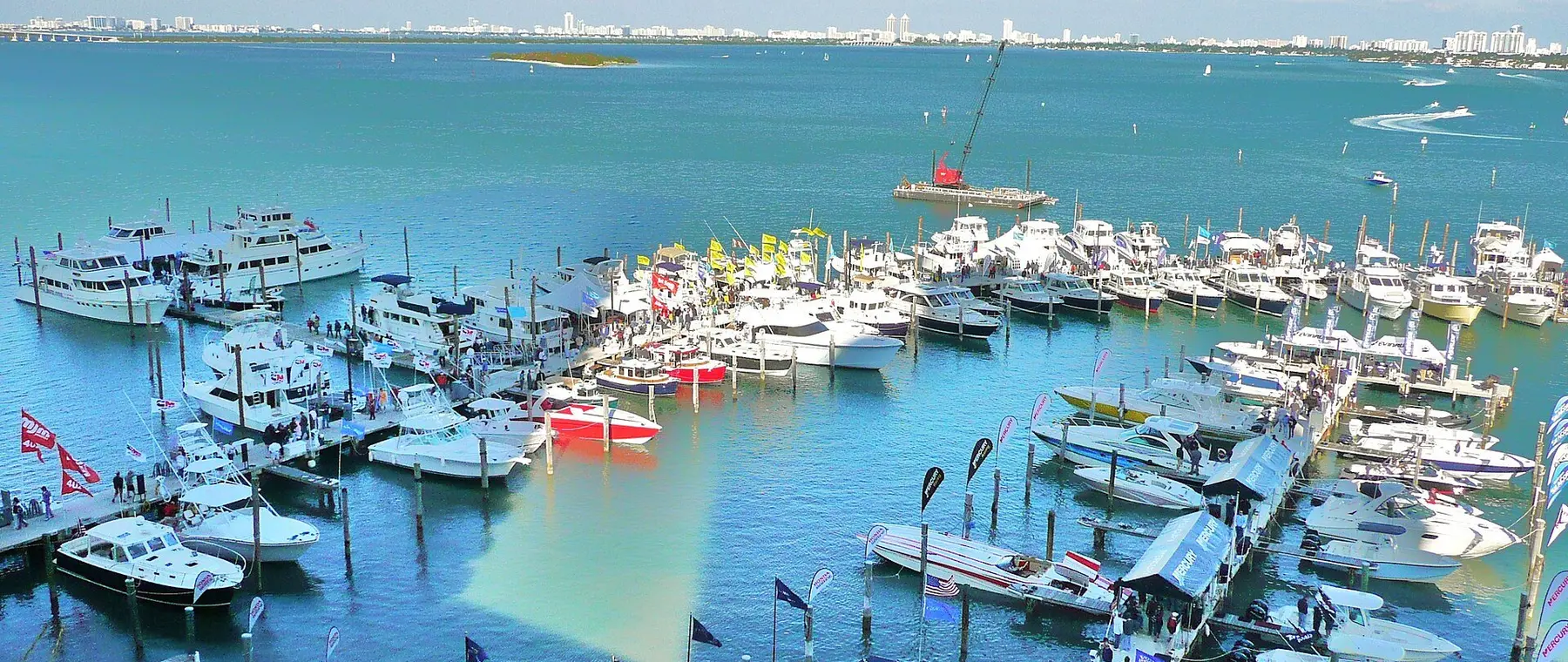
Licensed archival photo of North American boating or marina infrastructure; not an image of the 2026 North American Stage. Photo: Averette; CC BY 3.0 via Wikimedia Commons. Official source.
Explore
Go deeper into the yachts, companies, events and destinations directly connected to this article.
Continue reading

METSTRADE's DAME Design Awards has named 74 product nominees for 2026, ahead of its jury awards and November Amsterdam trade-show showcase.
Metstrade guidance warns yacht suppliers against disappearing after trade shows and stresses technical accuracy, customer follow-up and year-round visibility.

The 2026 Superyacht Forum urged builders and managers to act on geopolitical risks, engineering priorities and crew expertise, with 100 captains involved.
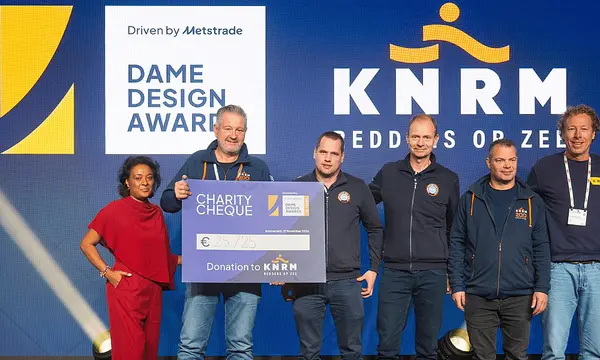
The 35th DAME Design Awards recorded 153 entries, 74 nominations and a €25,725 contribution to sea rescue, with a first-ever three-way overall result.
Superyacht Guide
Continue into the wider Superyacht Guide.
Business opportunities · Superyacht Guide
Companies serving the superyacht market can discuss clearly identified advertising, sponsorship and business-profile opportunities. Commercial activity remains separate from independent editorial coverage.

