
Image: Raymarine
Teledyne has promoted Michelle Hildyard to General Manager of Raymarine and FLIR Marine, aligning strategy, product development and commercial execution.
Teledyne has promoted Michelle Hildyard to General Manager of both Raymarine and FLIR Marine, placing one executive across the group’s marine electronics and thermal-imaging businesses. Hildyard is based in Fareham, England and reports to Gregoire Outters, President of Teledyne Marine Group, with responsibility for strategy, product development and commercial execution.
The appointment matters because the two brands increasingly overlap in real vessel applications even though their product histories are different. Raymarine brings navigation, radar, digital control and vessel integration, while FLIR Marine adds thermal imaging for safety, situational awareness and security, so a common leadership structure can make cross-brand planning more deliberate.
Hildyard’s brief includes strengthening innovation and operational performance while delivering more integrated solutions to customers. For yacht builders and refit yards, that suggests a focus not simply on individual displays or cameras, but on how those products communicate, appear on common interfaces and fit into broader bridge and monitoring systems.
Integration is most effective when product teams think about it before hardware reaches the vessel. A chartplotter, radar and thermal camera may each be capable on their own, but owners and captains judge the finished bridge by how naturally information is shared and how quickly operators can move between navigation, surveillance and system-control tasks.
Hildyard has spent more than two decades across Teledyne Raymarine and FLIR Marine and most recently served as Vice President of Operations for both businesses. In that role she led supply chain, engineering and product management, giving her direct exposure to the parts of the organisation that determine whether new products can be built, delivered and supported at scale.
That background is relevant in the marine sector because innovation is only useful if manufacturing, certification, software support and spares can keep pace. Yacht projects have long service lives, so customers often judge a technology supplier as much by continuity and after-sales capability as by the specification of the latest product at launch.
FLIR Marine cameras are used for night navigation, search, security and detection in restricted visibility, while Raymarine systems increasingly provide the displays and networks through which that information is used. Bringing those businesses under one general manager creates a clearer route for treating thermal imagery as part of the wider situational-awareness picture rather than as an isolated specialist feed.
The same trend can be seen across professional and leisure vessels as bridge systems absorb more sensor types into common user interfaces. For superyachts, the opportunity is a cleaner operator workflow, but the challenge is ensuring that integration does not hide important controls or make a failure in one part of the network harder to diagnose.
Raymarine has been expanding partnerships and integrations across autopilot, stabilisation, charting, digital control and rescue applications during 2026. FLIR Marine remains a major reference in thermal imaging, so aligning strategy across both brands gives Teledyne a stronger platform for pursuing projects where navigation and visual awareness need to work as one system.
For yacht owners and project teams, the leadership change is significant less because of the title itself than because it may shape how future products are developed and supported. A supplier that can coordinate radar, navigation, thermal imaging and vessel-control technology around a common operating philosophy can reduce interface complexity, provided the integration remains open, serviceable and understandable to professional crews.
Explore
Go deeper into the yachts, companies, events and destinations directly connected to this article.
Continue reading
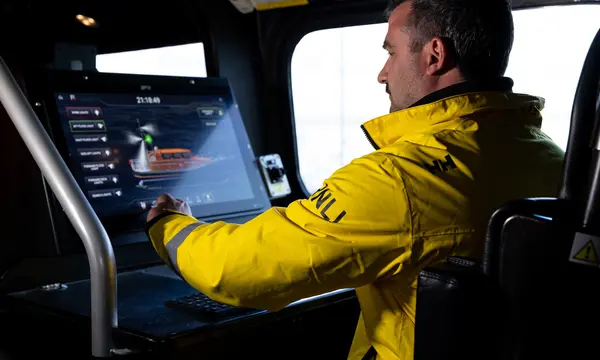
Raymarine and FLIR Marine will provide navigation, ship-control and thermal-imaging systems across the RNLI fleet under a five-year partnership.

Raymarine has integrated more than 45,000 marine protected areas into LightHouse Charts to support route planning around sensitive and regulated waters.

Raymarine has expanded LightHouse Charts GEN2 with new regional coverage, updated hydrographic data and online chart management for Axiom systems.
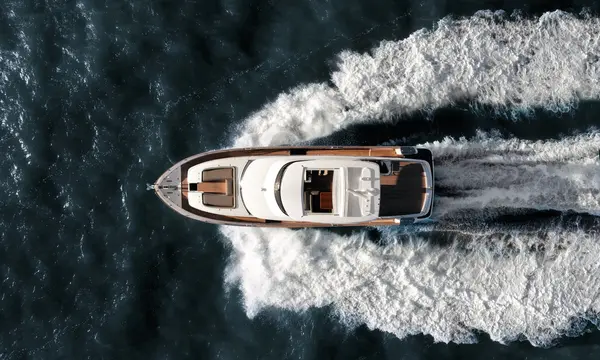
Raymarine Axiom chartplotters can now monitor and control compatible Smartgyro stabilizers through a native LightHouse interface.
Superyacht Guide
Continue into the wider Superyacht Guide.
Business opportunities · Superyacht Guide
Companies serving the superyacht market can discuss clearly identified advertising, sponsorship and business-profile opportunities. Commercial activity remains separate from independent editorial coverage.