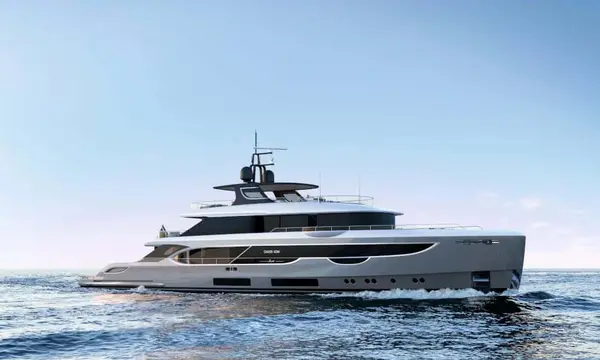
40m Superyacht Running Costs: Crew, Fuel, Berthing and Refit
Running a 40m superyacht requires a substantial annual budget for crew, maintenance, fuel, berthing and other operating costs. Superyacht Guide's 2026 model of 322 …
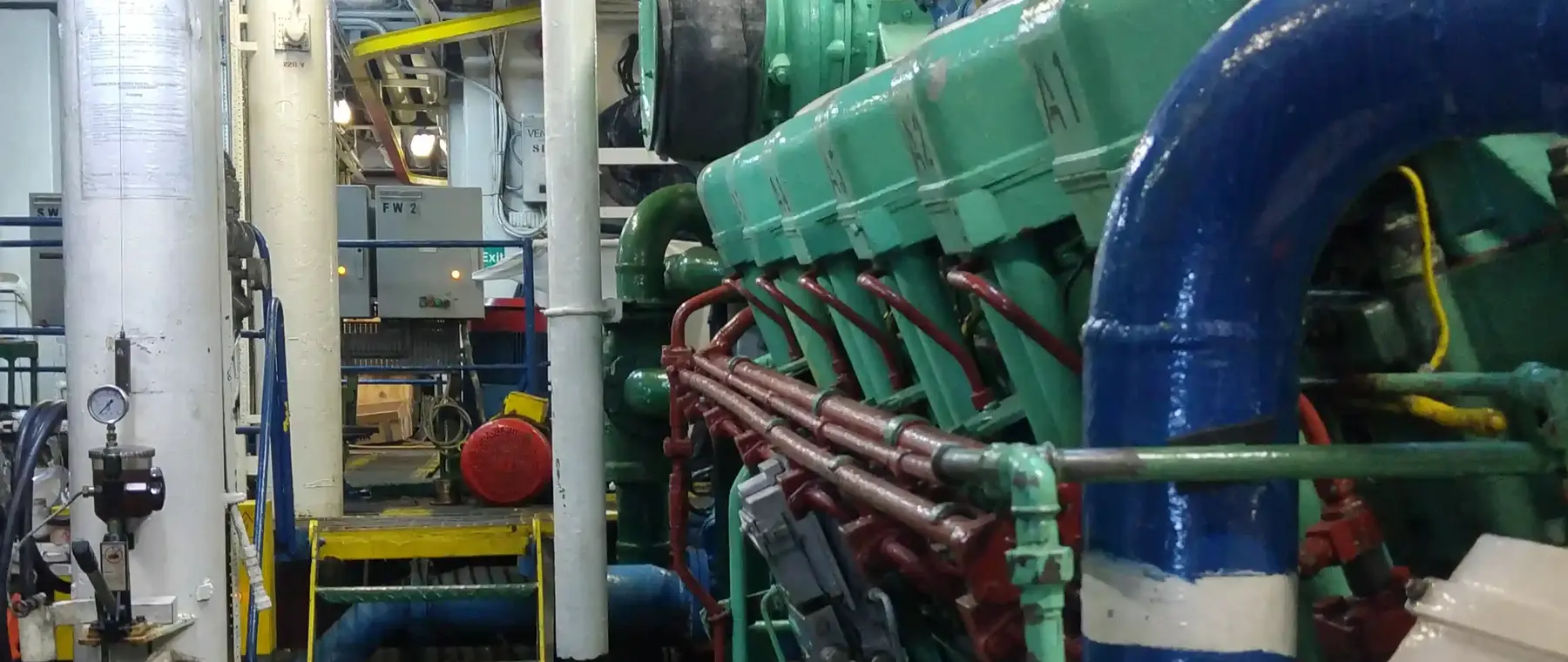
A CHIRP Maritime case shows how a single component omitted during engine maintenance allowed a fuel line to fail and spray diesel onto hot machinery. For superyacht engineering teams, the incident is a reminder that maintenance is not complete until every safety-critical system has been checked, restored and independently verified.
A missing vibration mounting following routine engine maintenance was enough to create the conditions for a potentially serious engine-room fire, according to a case published by CHIRP Maritime. The incident demonstrates how a seemingly minor omission can bypass several layers of protection once machinery returns to service.
The case, designated M2848, involved a vessel operating approximately 100 nautical miles offshore when the master detected an unusual smell while the engines were running. Other crew initially believed the smell might be associated with cooking, but the master investigated rather than accepting that explanation and discovered a cloud of atomised diesel in the engine-room area.
The engines were stopped, the crew alerted and action taken before the situation developed further. Subsequent investigation found that an injector vibration mounting had not been refitted following previous maintenance, allowing excessive movement that ultimately caused an injector fuel line to fail and spray diesel onto hot exhaust components and the turbocharger.
CHIRP does not identify the vessel in M2848 as a superyacht, so the incident should not be presented as a superyacht casualty. The maintenance, engineering and safety-management lessons, however, apply directly to large yachts where high-pressure fuel systems, confined machinery spaces and intensive maintenance programmes create many of the same risks.
Engineering failures are often associated with worn components, defective equipment or machinery reaching the end of its service life. This case is more uncomfortable because the initiating problem appears to have been introduced during maintenance that was supposed to leave the machinery in better condition.
The missing mounting was not itself a large or complex component, but its purpose was important. Without adequate restraint, vibration was transmitted into the injector fuel line until the line failed, demonstrating how the removal of one small protective measure can transfer damaging loads elsewhere in a machinery system.
Once the line failed, the consequence was considerably more serious than a simple fuel leak. Atomised diesel was released around hot exhaust and turbocharger components, creating the conditions in which fuel could ignite rapidly and turn a technical defect into a major machinery-space emergency.
That progression is particularly relevant aboard superyachts because engineering work often requires equipment to be dismantled, isolated and subsequently returned to service under operational pressure. The physical repair may be completed correctly while a clip, mounting, guard, isolation, sensor connection or other apparently secondary item remains omitted, incorrectly positioned or still disabled.
The lesson is that completion of the principal maintenance task cannot be treated as the end of the job. Restoration of the entire system to its correct operational configuration is a separate engineering stage and requires the same discipline as the repair itself.
CHIRP identifies incomplete maintenance control as one of the central factors in the incident. Its analysis specifically points to the need for effective post-maintenance inspection, verification and sign-off when safety-critical machinery has been disturbed.
On a well-managed yacht, that means the engineer carrying out a job should not simply close the work order when the replacement or repair has been completed. Fasteners, mounts, pipe supports, guards, electrical connections, alarms, leak detection, isolation points and anything removed to obtain access should be considered as part of the final reinstatement process.
More complex work may justify a second-person verification, particularly when fuel, lubrication, exhaust, steering, propulsion or fire-safety systems have been disturbed. Independent checking is not an admission that the engineer performing the work is unreliable; it is a recognition that people working on complicated machinery can overlook small details, especially near the end of a long task.
The same principle applies when contractors carry out the maintenance rather than yacht crew. Crew accepting machinery back into service should understand what was dismantled, what was altered, which safeguards were temporarily disabled and what checks have been completed before the equipment is operated normally again.
CHIRP has highlighted this problem in other maintenance cases as well. In an earlier report involving a CO2 firefighting system, safety pins fitted during maintenance were not removed afterward, which would have prevented the system from operating during an engine-room fire had the condition remained undetected.
Together, the cases point to a recurring problem rather than an unusual technical failure. Maintenance can temporarily remove safety barriers, and those barriers have to be deliberately restored before machinery or safety equipment is considered operational again.
The technical failure was only one part of M2848. When the relieving master joined the vessel and requested a safety induction, it became apparent that a formal induction had not previously been carried out, prompting a more extensive familiarisation with emergency systems, escape routes and equipment.
That process exposed wider deficiencies. CHIRP reports that firefighting and lifesaving equipment was found to be out of date, incomplete or unserviceable, while the crew had apparently not conducted fire and abandon-ship drills for several years.
Those conditions matter because a serious engine-room fire is rarely controlled by one piece of equipment or one individual response. Detection, machinery shutdown, fuel isolation, ventilation control, fixed firefighting systems, communications, escape routes and trained crew all form overlapping layers intended to prevent one failure from becoming catastrophic.
When drills have not been carried out and equipment has not been verified, those layers may exist on paper without providing reliable protection in an actual emergency. CHIRP describes this gradual weakening of safeguards as complacency, with degraded standards becoming accepted because they have existed without immediately producing an accident.
That pattern is highly relevant to yachts with long-serving crews and familiar machinery. Familiarity can make abnormal conditions easier to recognise, but it can also allow longstanding defects, temporary repairs or unconventional working practices to become accepted as normal because everyone on board has become accustomed to them.
A relieving engineer, captain or newly joined crew member can therefore provide an important safety benefit precisely because they have not yet adapted to those conditions. Questions that appear basic to an established team can reveal deficiencies that have become invisible through repetition.
One of the most useful lessons from the case concerns something as simple as smell. The master recognised that something in the vessel's normal operating environment had changed and investigated even when another explanation was immediately available.
CHIRP emphasises that experienced seafarers become familiar with the normal background smells of machinery spaces and should treat anything different, stronger or unexplained as an early warning. Fuel leaks, electrical faults, overheating components and developing fires can all become detectable through smell before a formal alarm provides an obvious indication.
The initial suggestion that the smell came from cooking illustrates how easily an abnormal sign can be rationalised. Human beings naturally try to fit new information into familiar explanations, particularly when normal operations are continuing and there is no alarm demanding immediate attention.
On a yacht, the equivalent may be an unfamiliar vibration attributed to sea conditions, a hot smell blamed on machinery recently worked on, a small fluid trace dismissed as residue or an intermittent alarm treated as a sensor problem. Each explanation may turn out to be correct, but the safe approach is to establish the cause rather than assuming it.
CHIRP identifies situational awareness and communication among the contributing factors in M2848 because the warning was not initially interpreted with sufficient seriousness by the wider crew. The master's decision to investigate prevented that assumption from becoming another failed barrier between the fuel leak and a potentially much more serious outcome.
The most important lesson is not that vibration mounts should be inspected, although they clearly should be. The broader lesson is that every maintenance task has a point at which machinery passes from being worked on to being considered safe for operation, and that transition needs to be controlled.
For yacht engineering departments, the return-to-service process should reflect the risk of the system involved. Fuel and oil connections may require leak checks under operating conditions, disturbed pipework should be examined for support and vibration, alarms should be confirmed operational, temporary isolations should be removed and relevant parameters should be watched closely after machinery is restarted.
The first period of operation after maintenance deserves particular attention because faults introduced during dismantling or reinstatement may only become visible when machinery is hot, pressurised or vibrating normally again. A dry inspection alongside cannot reveal every problem that becomes apparent once the engine is carrying load.
Documentation also matters, but paperwork alone is not the safeguard. A signed work order has little value if the person signing it has not physically confirmed that the machinery has been restored correctly, while a checklist becomes ineffective if it is completed from habit rather than used as a genuine verification tool.
For captains and chief engineers, the case also reinforces the connection between engineering standards and emergency preparedness. Maintenance control, induction, fire equipment and drills can appear to belong to different parts of yacht management, but M2848 shows how quickly those systems can converge when a technical omission begins producing a fire hazard offshore.
Modern superyachts contain increasingly sophisticated machinery monitoring, fire detection and fixed firefighting systems, yet none of that technology eliminates the need for fundamental engineering discipline. A fuel line still has to be correctly supported, equipment still has to be reinstated after maintenance and someone still has to investigate when the machinery space smells different from normal.
CHIRP's wider July 2026 Maritime Feedback edition makes the same point across several incidents: accidents seldom result from one dramatic failure, but instead emerge as smaller weaknesses accumulate and become normalised. Its M2848 case is a particularly clear example because the missing mounting, weakened emergency preparedness and initial dismissal of the smell all existed before the potentially dangerous condition was discovered.
For the superyacht sector, the practical response is straightforward even if maintaining it consistently is difficult. Maintenance should end with verification, safety equipment should be proven rather than assumed ready, drills should be routine enough to expose weaknesses, and abnormal signs should remain unexplained only for as long as it takes someone to investigate them.
The cost of those disciplines is mainly time and attention, while the potential cost of ignoring them is considerably greater. In an engine room containing fuel under pressure alongside surfaces hot enough to ignite it, one forgotten component can be enough to turn an ordinary maintenance job into the beginning of a serious emergency.
Continue reading
Running a 40m superyacht requires a substantial annual budget for crew, maintenance, fuel, berthing and other operating costs. Superyacht Guide's 2026 model of 322 …

Superyacht Guide's 2026 running cost calculator provides annual, monthly and five-year ownership estimates using either an existing yacht or a planning value. It gives …

Crew fatigue on superyachts affects safety, judgement, service, maintenance, crew welfare and compliance, making rest management essential on board.

D-Marin UAE marina customers can now access marine insurance advice and risk-management services through ult. Insurance, with placement and claims handled by the broker.
Superyacht Guide
Continue into the wider Superyacht Guide.
Business opportunities · Superyacht Guide
Companies serving the superyacht market can discuss clearly identified advertising, sponsorship and business-profile opportunities. Commercial activity remains separate from independent editorial coverage.