
IYC Monaco Panel Links Crew Welfare to Better Yacht Charters
An IYC and SuperYacht Times panel at Monaco Yacht Show 2026 examined how crew rest, staffing, mental wellbeing and working culture affect the guest …
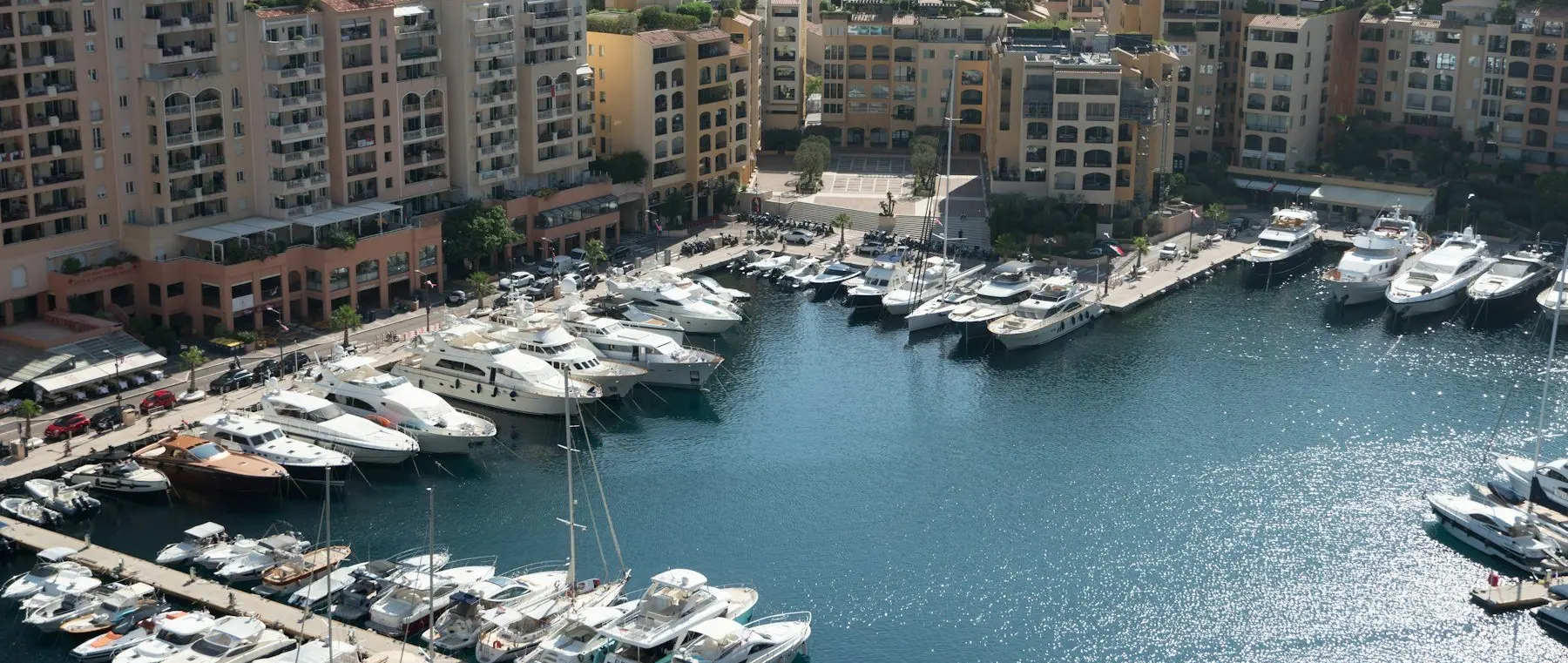
Ocibar Group has set out how its network of Mediterranean marina interests is intended to serve owners and crews with different cruising requirements, in an industry interview published in early November 2026. The Mallorca-headquartered business has been involved in marina management for decades and is associated with berthing destinations in the Balearic Islands, mainland Spain and Italy. A recent profile attributes more than 3,500 moorings across six locations to the wider group and describes capacity for vessels up to 190 metres somewhere within its offering. Those are group-level figures, not specifications for every marina or a guarantee of available space.
Ocibar Group has set out how its network of Mediterranean marina interests is intended to serve owners and crews with different cruising requirements, in an industry interview published in early November 2026. The Mallorca-headquartered business has been involved in marina management for decades and is associated with berthing destinations in the Balearic Islands, mainland Spain and Italy. A recent profile attributes more than 3,500 moorings across six locations to the wider group and describes capacity for vessels up to 190 metres somewhere within its offering. Those are group-level figures, not specifications for every marina or a guarantee of available space.
The timing is relevant to captains reviewing where to position yachts for the Mediterranean season, undertake work or embark guests. Berthing decisions increasingly involve much more than a location on a map: owners want appropriate security, shoreside facilities and dependable technical access, while crew need practical services and manageable transfers. The recently published comments from Ocibar's sales business manager, Nani Mas, emphasise the idea of marinas offering different experiences rather than a uniform product. That is a commercial perspective from the operator and should be distinguished from independently measured customer satisfaction or occupancy.
Ocibar's own website names Port Adriano in Mallorca, Botafoc Ibiza, Marina Santa Eulalia in Ibiza, Port Tarraco in Catalonia and Marina Port Valencia among the facilities it promotes. A related group business also identifies Marina di Arechi in Italy, which helps explain why different material refers to five named Spanish marinas or six locations across Spain and Italy. The distinction matters: management relationships and developments can change, and a company-wide fleet of berths should not be allocated equally among individual sites without published evidence.
Each location has different geographic advantages and constraints. The Balearic ports appeal to yachts operating around Mallorca and Ibiza, whereas Tarragona can serve a mainland Spanish itinerary and Valencia is tied to a developing waterfront project. The Italian location offers a separate coastal option. A captain's choice will depend on seasonal routing, berth dimensions, draft, access arrangements and the particular requirements of the vessel. Neither a group brand nor a high maximum length can substitute for confirmation by the marina concerned that a suitable berth is available on the intended dates.
Port Adriano on Mallorca's south-west coast is one of the group's most recognisable destinations. Developed from an earlier harbour, it was substantially redesigned and expanded by Philippe Starck, with the modern marina reopening in 2012. The design is often associated with a high-end waterfront environment as well as yachting facilities. For larger yachts, however, the appearance of a marina remains only one criterion. Access to berths of the necessary dimensions, safe manoeuvring room and facilities appropriate for the ship's electrical and service demands need separate examination.
The destination also has a working relationship with Mallorca's broader network of yacht services, provisioning companies and specialist contractors. A planned stay may involve both hospitality and maintenance, and an efficient itinerary can reduce unnecessary movements between ports. Where technical works are required, the owner or manager should verify contractor availability and any restrictions on work while alongside. The existence of nearby marine businesses is helpful context but does not establish that every form of major refit is permitted or practical within a leisure marina. Those questions belong in the berth and service agreement.
Port Tarraco in Tarragona is associated with the superyacht market and appears in Ocibar's public portfolio. It provides an alternative to some of the busier Balearic itineraries for owners seeking mainland access. Yachts visiting the area may also require connections to aviation, provisioning, technical support and shore-based leisure arrangements. These factors can be particularly significant for vessels whose operations involve substantial crew complements and regular logistics. The range of services should be checked with the marina and local providers instead of inferred from the title of a destination.
A large yacht may stay alongside for quite different reasons: awaiting the next season, preparing for a charter, coordinating maintenance or giving crew an operating base. Such visits can have different power, water, waste and security needs. Evaluating Tarragona against other ports therefore requires current tariffs, length and draft limits, contractual terms and restrictions on commercial activity. A marina network may provide useful introductions, but pricing and availability remain individual decisions. The public material reviewed does not establish an across-the-board Ocibar berthing rate or allow a responsible calculation of a vessel's annual mooring budget.
Botafoc Ibiza and Marina Santa Eulalia are both named in Ocibar's published list, yet they should not be treated as interchangeable locations. Their approaches, local surroundings, berth configurations and service arrangements differ. For yachts navigating the Balearics, the distance between a guest's preferred destination and the operating berth can affect tender transfers, scheduling and crew time. Captains must also account for local marine traffic, weather, seasonal berth demand and any restrictions affecting the yacht's operation. These are practical considerations that can change from week to week.
The hospitality dimension may attract attention, but the ship itself still needs reliable support. Waste management, fuel access, freshwater supply, communications and land transport are important when a yacht is hosting guests or preparing for departure. A group with several Balearic locations may be able to direct enquiries to different sites as requirements change, although the availability of a suitable alternative should never be assumed. It would also be misleading to describe the same facilities as newly built in 2026; the current announcement concerns the operator's network and its commercial positioning, not a series of completed new marina openings.
Marina Port Valencia is described in recent industry coverage as an evolving project on Spain's eastern Mediterranean coast, with a phased construction programme expected to run towards 2027. Its location near the city may interest yacht owners seeking access to urban services, transport links and technical businesses. That prospect should be distinguished from facilities already fully available today. Owners considering a future berth need to establish which pontoons, utility systems and service spaces are operational at the time of booking, and which remain part of the announced development programme.
The project also illustrates why marina infrastructure should be discussed in terms of phases and delivered services rather than a single advertised end-state. A planned berth arrangement may rely on dredging, pontoons, shore-power installations or associated commercial services that must be completed and approved. Future capacity is valuable information for the market but is not equivalent to an existing berth that can be reserved for tomorrow. Likewise, no conclusion about the project's financial performance can be reached from its development timetable alone. These distinctions matter to yacht managers making operational commitments months in advance.
The reported ability of the wider network to accommodate vessels as long as 190 metres is an important indication of the group’s ambitions within large-yacht infrastructure. It does not mean that every one of the six sites has a 190-metre berth or that the largest berth is always available. A captain planning for a vessel of unusual size must consider turning circles, mooring arrangements, wind exposure, draft, safe access and berth-specific restrictions. The same caution applies to shore-power capability: an advertised marina utility does not establish that the exact frequency and load requirements of every yacht can be supported.
Owners and managers should obtain berth plans, technical service specifications and written confirmation from the relevant port before finalising an itinerary. This is especially important when a vessel has specialised tenders, aviation arrangements, large quantities of waste or high electrical demands. Larger yachts can make complex requests, but smaller yachts also benefit from clarity about services and access. A well-managed marina network may make comparison easier; it cannot remove the need for vessel-by-vessel due diligence. The group-level maximum length is therefore best understood as an upper-end capability reported in industry coverage.
Ocibar's recent public comments emphasise that the group's different marinas are meant to offer varied choices rather than replicate an identical experience at every destination. This is a credible strategic proposition in a region where superyacht itineraries often cross national and island boundaries. Its practical value will depend on whether managers can provide accurate information, respond promptly to changes and coordinate support without losing accountability at the individual marina. A destination's prestige may attract a first enquiry, but reliable handling of routine requirements often determines whether a captain recommends returning.
For Superyacht Guide readers, the material establishes a useful picture of a business serving several Mediterranean regions while developing additional infrastructure. It does not announce a new 190-metre berth at every site, disclose group revenues or publish universal prices. Future reporting can monitor progress at Marina Port Valencia, changes in individual capacity and any new investment formally confirmed by the operator. The present story is about how an established marina network positions itself for large-yacht cruising, with the necessary distinction between a group-wide promotional figure and a berth that is technically suitable and immediately available.
Reporting source: original announcement; corroborating source: additional first-party or industry material. Report dated 9 November 2026. Announcements and operating plans may change; editorial interpretations are distinguished from confirmed facts.
Editorial photograph: photographer and original image — Alex Ghiurau / Unsplash License; September 2025 Mediterranean harbour yachts; illustrative setting, not an identified Ocibar facility. Cropped and resized under the Unsplash License. Illustrative photograph only; it does not show the 2026 event or named product.
Continue reading
An IYC and SuperYacht Times panel at Monaco Yacht Show 2026 examined how crew rest, staffing, mental wellbeing and working culture affect the guest …

CMC Marine has provided new technical detail on the energy-management architecture behind its electric stabilisers and thrusters, explaining how capacitor storage can reduce abrupt …
During a charter, the captain has to balance guest expectations with crew capability, rest requirements and a weather picture that can change by the …
Guests may experience the first day of a superyacht charter as a seamless transition from airport to anchorage. For the crew, it is a …
Superyacht Guide
Continue into the wider Superyacht Guide.
Business opportunities · Superyacht Guide
Companies serving the superyacht market can discuss clearly identified advertising, sponsorship and business-profile opportunities. Commercial activity remains separate from independent editorial coverage.