IWCS Reviews Yacht Communications Demonstrations at METSTRADE
IWCS describes three days of product demonstrations and new marine communications contacts at METSTRADE 2026, thanking its distributors and confirming plans for 2027.
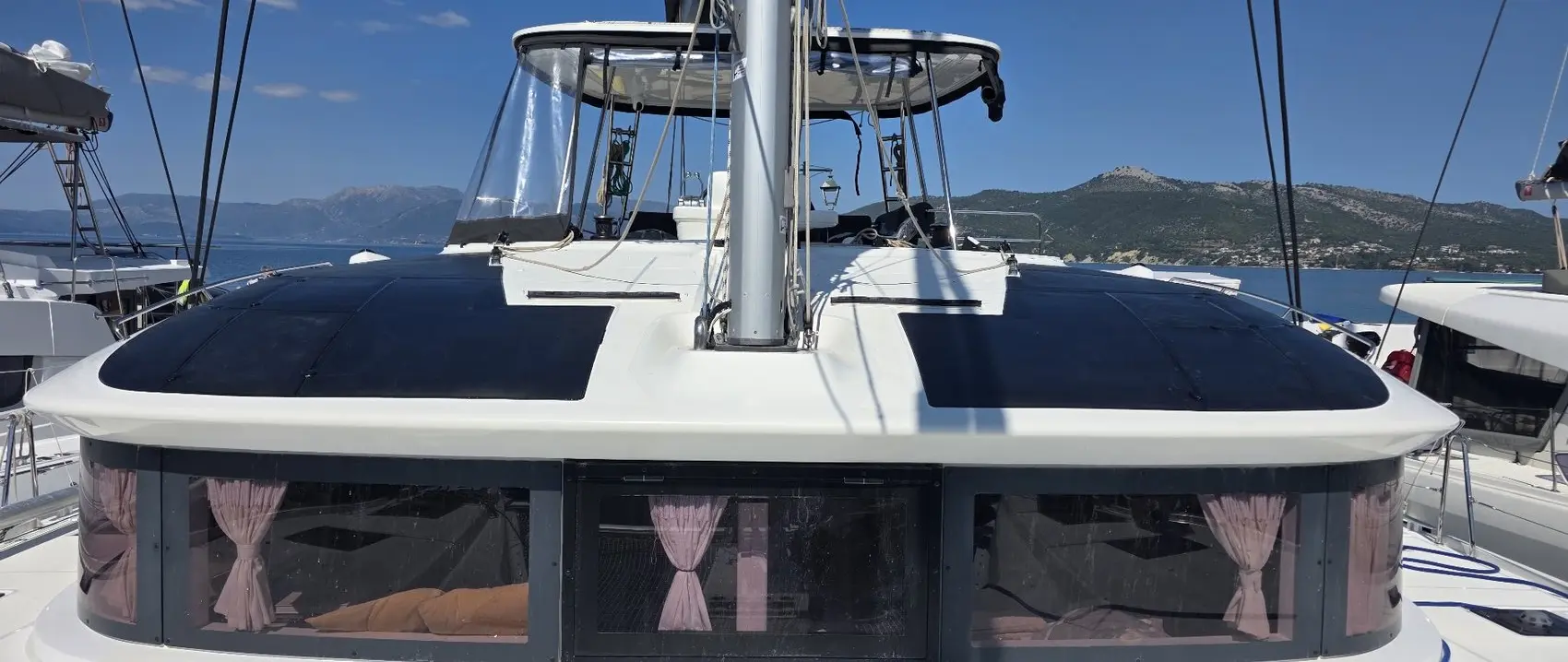
Open Waters Solar / official company press photography. Depicted catamaran is not independently identified.
Open Waters Solar used METSTRADE 2026 to introduce its composite, custom-fitted marine solar technology to international shipyards, designers and equipment partners.
Open Waters Solar used METSTRADE 2026 in Amsterdam to bring its Canadian-made composite solar technology before shipyards, naval architects and marine equipment partners. In an official announcement dated 12 November, the manufacturer described an international expansion effort focused on partnerships and production capacity. Its presentation in Hall 12, from 17 to 19 November, put particular emphasis on systems that can become part of a vessel's working surfaces rather than relying only on conventional framed modules.
The superyacht relevance lies in a design possibility, not a promise that solar alone will power a large yacht. Owners and builders of vessels over 24 metres must meet substantial hotel, electrical and propulsion-related demands while preserving usable deck space. Integrating generation into surfaces already required by the yacht could help, but every real installation will depend on the available area, shading, engineering and operating pattern.
The company said it was attending the Amsterdam trade show to strengthen relationships with original-equipment manufacturers, boatbuilders, shipyards, design practices, installers and distributors. Its official exhibition page identified stand 12.503 and invited specialists to discuss technology integration and collaborative development. This is a confirmed commercial initiative; the company did not announce a specific new superyacht contract in those published documents.
The event gives a relatively small technology manufacturer access to decision makers who influence the earliest stages of vessel design. For shipyards, product suitability involves more than the maximum electrical output advertised on a brochure. Deck designers, project managers, electricians and class advisers must reach agreement on materials and service routes. The ability to answer their questions reliably may be more important than an eye-catching demonstration at an exhibition.
Open Waters Solar presents its SolaDek technology as a walkable, composite-encapsulated generating surface made to suit specific shapes. According to the company's product material, it can replace selected areas of conventional decking while providing traction and electrical output. The manufacturer also makes other lightweight and flexible solar products, so the decking format is one application of a broader technology platform rather than the sole item in its range.
That proposition deserves attention from large-yacht designers because exposed deck surfaces already compete for many purposes. Seating, skylights, tender-handling equipment, service hatches, drainage and crew routes all consume space. A surface that contributes power without introducing a separate raised installation could change the trade-off, but only after designers examine local loading, finish, visual coherence, repair arrangements and safe access during routine operation.
The company's METSTRADE page describes its approach as protecting high-efficiency solar cells with composite encapsulation that resists impacts, vibration and flexing. It identifies Maxeon NE3 solar cells, bypass diodes and configurable layouts, and gives an approximate thickness of 1.3 millimetres for the relevant thin construction. These figures and performance descriptions come from the manufacturer. They should not be mistaken for an independently assessed specification for every panel arrangement or an approved system for any named yacht.
Marine engineering creates demanding conditions for electrical products exposed to the environment. Repeated foot traffic, temperature variation, salt deposits, fresh-water washing, movement and heavy objects can all matter. Installation quality may be as important as material design, particularly where loads are transferred through an adhesive or other mounting layer. A buyer would need the exact product's test evidence, limitations and installation instructions before treating resilience as a settled matter.
Solar energy can be easier to accommodate on a relatively simple roof than on a highly styled yacht where open areas have assigned functions. A conventional panel may require a frame, additional mounting structure, access around its edges and suitable cable management. The company's custom-deck concept attempts to reconsider that arrangement by starting with the physical surface and finding a way to generate electricity within it.
For yachts above 24 metres, the concept has implications for both newbuild and selected refit proposals. A design team might evaluate deck sections or other appropriate areas during concept development, before detailed plans have fixed the available space. On an existing yacht, the possibilities would be more constrained by the current structure and systems. Neither case justifies placing a new electrical surface on a public walking route without a dedicated safety and maintenance assessment.
The 12 November company press release describes a custom non-skid solar array supplied for an aluminium expedition catamaran being built by Sailing SV Delos. The project is described as a 53-foot vessel, with panels integrated into its roof in order to use available space while reducing structural alteration. This is a useful published application of the company's technology, but the project is smaller than Superyacht Guide's principal vessel category.
A smaller yacht can still offer important engineering lessons. Custom shapes, attachment methods, exposure, cabling and day-to-day cleaning can all be assessed in a real marine setting. Nonetheless, the requirements of a superyacht can differ substantially. Larger electrical loads, operating schedules, class requirements and owner's expectations mean that success on an expedition catamaran is not equivalent to a large-yacht approval or a guarantee of proportionate energy savings.
Large yachts operate electrical systems that extend well beyond lighting and phone charging. Climate control, navigation electronics, pumps, stabilisers, communications, galley equipment and hotel amenities may all influence the load profile. Even a useful amount of solar generation must therefore be considered alongside installed generators, shore power, storage and any hybrid arrangement. Solar exposure also changes with latitude, season, location, shading and the angle of the available surfaces.
The proper measure for a yacht owner is not a single peak-power claim. It is how much usable energy the system would generate during that vessel's normal operation and which other sources of electricity it could offset. A published design should show assumptions, expected production, losses and maintenance requirements. Without that evidence, statements about fuel savings or quieter anchorages would be an ambition rather than a measured outcome.
The official company material emphasises its ability to make solar products around complex layouts. That capacity may suit bespoke yacht projects whose deck geometry is difficult to reconcile with a standard rectangular panel. It also places more responsibility on information exchange between supplier and naval architect. Every custom component needs accurate drawings, installation tolerances, documented interfaces and a clear path for replacing damaged or degraded parts.
The maintenance implications should be considered before a panel is bonded or otherwise installed. A yacht's deck may have several layers with different service lives, and owners typically expect a high standard of finish after repair. If an individual generating section fails, the yard must know how to isolate it electrically, remove it safely and restore the surface without excessive collateral work. Attractive integration can become troublesome if serviceability is treated as an afterthought.
Open Waters Solar identifies its base as Prince George, British Columbia, and states that it is expanding manufacturing and its international business relationships. Its press material names organisations and collaborators across several sectors, including Sirena Marine, Brunswick and IMOCA Macif. The presence of those names in the company's own announcement does not establish the value, contractual form or installation status of any individual relationship; such details would need separate verification.
The company has also described opportunities for service partners and specialist installers. For a superyacht procurement team, that may ultimately be as consequential as the design of the cells. An internationally cruising yacht needs support beyond the place where it was built. Spare-part availability, installation competence, warranty terms and technical assistance should be considered as part of the procurement decision, especially when a product is specified in bespoke dimensions.
The manufacturer's communications link marine solar to the prospect of reducing time spent running smaller diesel generators, and to an ambition of quieter waters. Those ideas explain why solar technology receives attention from environmentally conscious boat owners and designers. However, an installation's actual impact depends on whether it displaces generator use, how the vessel consumes power and the life-cycle impacts of the equipment used.
A credible assessment should also address manufacture, replacement, repair and eventual disposal. Composite materials can present different end-of-life questions from a simple metal frame, while electrical storage may introduce additional systems and materials. None of these considerations invalidates the potential benefits of solar power. They mean that the relevant decision is a measured comparison with alternative means of reducing electricity demand, noise and fuel consumption on the particular yacht.
Before specifying an integrated panel, a large-yacht project should ask for its electrical and mechanical drawings, verified dimensions, installation procedure and relevant testing. The yard would need to consider deck use, personnel safety, wiring protection, isolation, access, emergency response and the effects of continued exposure to seawater and sunlight. Where classification or flag requirements are relevant, their application should be resolved early instead of assumed from general product marketing.
A fair comparison would also examine conventional solar installations, improved energy storage and more efficient onboard equipment. The best answer may involve a combination of technologies, with deck-integrated solar installed only where it provides an identifiable operational gain. A system that delivers a modest contribution reliably, without burdening crew with difficult maintenance, may serve a yacht better than a more ambitious arrangement that is hard to inspect or repair.
The confirmed development is that Open Waters Solar presented its composite solar technology and actively sought new marine-industry partnerships at METSTRADE 2026. Its first-party documents explain the company's intended market, describe the technical approach and provide a dated record of its commercial expansion plans. They do not demonstrate independently measured performance on a specific superyacht or confirm new orders beyond those explicitly documented by the company.
For the 24-metre-plus yachting sector, the story is therefore about a supplier inviting builders to reconsider how exterior surfaces could contribute to onboard energy needs. The next significant milestone would be project-specific evidence: design integration, independent technical assessment, documented operating performance and repeatable aftersales support. Those are the tests that will determine whether an interesting trade-show concept becomes a durable option in superyacht engineering.
This report is based on Open Waters Solar's own METSTRADE 2026 announcement, its official 12 November 2026 press release, and the firm's custom solar product information. Company statements about performance and relationships are attributed rather than presented as independently established outcomes. No new superyacht sale, contract value or yacht-specific performance figure has been inferred.
The accompanying photograph was taken from the manufacturer-linked press photography collection and is credited to Open Waters Solar. It shows an example of marine solar integration on a catamaran, but the depicted vessel has not been independently identified. This article analyses potential applications to larger yachts without confusing the company's documented smaller-vessel examples with superyacht installations.
Continue reading
IWCS describes three days of product demonstrations and new marine communications contacts at METSTRADE 2026, thanking its distributors and confirming plans for 2027.
Greenpeace's 75-metre wind-powered campaigning and research ship has floated out at Freire Shipyard in Vigo, combining a DynaRig concept with hybrid onboard energy systems.
Valencia-based Mediterranean Yachts Solutions describes how 48V batteries, solar panels and high-output alternators may reduce generator use on suitable smaller boats.
AMIT Marine Services reports its 2026 Abu Dhabi International Boat Show appearance, outlining five marine technology and safety sectors and its international brand partnerships.
Superyacht Guide
Continue into the wider Superyacht Guide.
Business opportunities · Superyacht Guide
Companies serving the superyacht market can discuss clearly identified advertising, sponsorship and business-profile opportunities. Commercial activity remains separate from independent editorial coverage.