
Company
Ostsee Marine Solutions GmbH
Explore the company profile and related Superyacht Guide coverage.
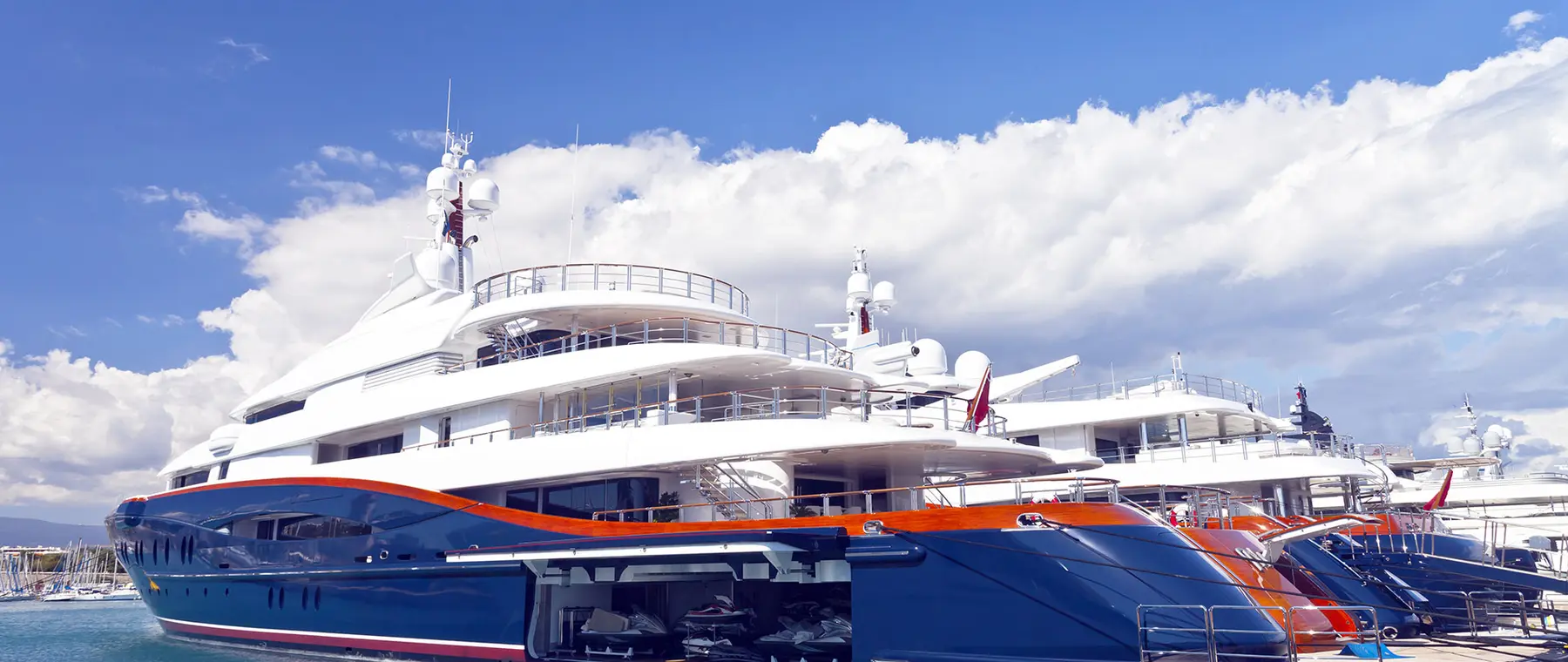
Ostsee Marine Solutions Takes Modular Superyacht Shell Doors to METSTRADE 2026 — original supplier photo, SYG News 24 November 2026 batch01
Ostsee Marine Solutions outlines modular yacht shell-door and hatch engineering, including powered tender garages, beach clubs and complex access openings.
German engineering company Ostsee Marine Solutions has presented its modular shell-door systems to the international yacht-building industry at METSTRADE 2026, placing large movable openings and their associated machinery in focus for designers of modern superyachts. The Stralsund-based supplier says its services span engineering, three-dimensional cold forming, fabrication, assembly, commissioning and after-sales support. Its systems cover tender garages, transom doors, stern openings, terraces, mooring access, bulwarks and other hatches, using hydraulic or electric actuation according to project needs. The significance for superyachts longer than 24 metres is not simply that a door can open in the side of a hull. These large moving structures are increasingly bound up with structural integrity, safety, aesthetics and the operational logistics of carrying tenders and accommodating guests at sea level.
Modern superyacht designs often call for expansive beach clubs, full-beam garages, fold-down balconies and unobstructed guest access. Every additional opening must fit into a hull structure that carries considerable loads and is exposed to seawater, spray and sometimes substantial pressure differences. A shell door is therefore not merely a decorative panel. It is a moving structural component that may need to resist external forces and preserve weather or watertight boundaries, depending on its location. The company’s presence at the 2026 Amsterdam exhibition highlights the growing importance of engineering specialists able to coordinate fabrication with the surrounding vessel design.
Ostsee Marine Solutions describes a turnkey approach from engineering and cold forming to assembly, commissioning and service. That matters because a door assembly typically includes structural framing, seals, bearings or hinges, locking arrangements, actuators, controls and position monitoring. Even where a yard manufactures the surrounding hull, successful operation depends on consistent tolerances between several suppliers. Responsibility for these interfaces should be established clearly in the project specification. A door supplied as a complete engineered system can simplify one aspect of integration, but its success remains dependent on the final installation and vessel-specific approval.
Modular systems can offer common design principles and component families across different types of openings. A yard building multiple vessels might welcome predictable actuator arrangements, service documentation or replacement parts. However, modular should not be confused with universal. The dimensions, mass, load case, closing force and installation conditions can differ markedly from a tender door to a fold-down terrace. Each opening still requires engineering calculations, detailing and a review of the particular hull structure. A modular supplier is useful when it can adapt a proven architecture without ignoring the distinctive demands of the project.
The company identifies both hydraulic and electric powered arrangements among its offerings. Hydraulic actuation may be attractive for high-force movement and may integrate with existing onboard hydraulic services. Electric actuation can offer different approaches to control, installation and maintenance, potentially avoiding some hydraulic pipework. Neither is automatically superior for every yacht. Designers must consider space, force, speed, noise, energy use, emergency operation and the effects of failure. A door's movement sequence may also include several separately controlled locks or supports. The choice of actuator should follow a safety analysis rather than general enthusiasm for one technology.
A large tender may occupy a bay that needs to remain dry and secure underway but open quickly and reliably when the crew launches it. The door could be located close to the waterline, bringing sealing and operational restrictions into sharp focus. The surrounding system may interact with cranes, winches, rollers or other tender-handling equipment. An engineering supplier cannot safely design the opening in isolation from those movements. Crew access, visibility, clearances and the consequences of a blocked escape route should all be addressed. A visually clean door only achieves its purpose if the tender operation itself remains manageable.
Unlike a machinery-space hatch that passengers rarely see, a beach-club terrace may become part of a yacht's public identity. Its surface finish, movement and alignment are all visible during guest use. At the same time, it must resist structural loads and include suitable safeguards against unexpected movement. A fold-down panel could carry furniture or people only where the approved design and operating procedure permit it. The attraction of a broad waterfront platform should not obscure requirements for rails, access, slip resistance or emergency closing. Naval architecture and guest experience meet at the same piece of equipment.
Ostsee Marine Solutions identifies 3D cold forming among its industrial capabilities. Complex hull openings may follow curved exterior surfaces rather than simple flat planes, and creating an accurate match can be essential to sealing and finish. Cold forming is a manufacturing technique, not proof that every possible shape can be produced economically or without material limitations. The engineering team must consider the panel thickness, alloy, curvature and required finish, alongside any classification requirements. Accuracy in the formed panel can reduce later fitting problems, but it still depends on good measurements and suitable quality controls throughout fabrication.
Cutting a large aperture into a shell changes the way loads travel through the surrounding structure. The yacht's structural designer must determine where reinforcement is required and how hinges and locks transfer forces back into the hull. If a door is introduced late in a refit, available space may constrain the arrangement and increase the amount of structural work. A supplier's ability to build a strong door does not guarantee that the surrounding hull is ready to support it. Class approval, finite-element analysis where appropriate and careful fabrication inspection can form part of the project’s technical controls.
Weather and watertight boundaries are not interchangeable. A particular hatch may be intended to keep out rain and spray, while another could form a barrier against direct external water pressure. The necessary performance level follows from the location and vessel rules. Effective seals depend on compression, alignment and maintenance, and may deteriorate if debris prevents correct closure. Position sensors and alarm circuits should verify the state of doors that must remain closed at sea. Operators should understand whether an indication confirms the panel is merely shut or that all required mechanical locks have fully engaged.
A powered door needs a controlled sequence for opening, supporting, closing and locking. Sensors can provide valuable information, but they must be integrated into a clear operating procedure. A crew member should not rely on a single light without understanding what it actually measures. Movement may need to stop if personnel enter a hazardous area or if another deck system is not in the correct position. The supplier's exact safety functions must be documented for each installation; the 2026 exhibition profile does not specify a universal control architecture. A carefully tested sequence is more important than adding unnecessary displays.
One of the most important questions about a powered yacht door is what happens after a fault. Hydraulic pressure might be unavailable; electrical power could fail; a component may jam while a panel is partially open. The crew should be able to follow a documented recovery procedure without resorting to improvised force or unsafe access. Emergency options need to be considered during design, not added as an afterthought after the yacht is delivered. A test programme should demonstrate the relevant failure responses under safe conditions and record any limitations. Different door positions can require different recovery arrangements.
Hinge pins, drive components, seals, locking mechanisms and sensors will require inspection over the vessel's life. Large decorative panels can make access awkward if the original design leaves no room to remove a component. Technical managers should therefore examine not only the appearance and operation of the system but also its service drawings and access routes. A seal should be replaceable without excessive dismantling, and lubricated parts should be reachable at approved intervals. The availability of spare parts and competent service in the yacht's cruising areas matters as much as the reliability promised by a new installation.
Large shell-door projects may involve the yard, naval architect, exterior designer, electrical integrator, mechanical contractor and classification society. Incomplete allocation of responsibility can lead to disputes about alignment, movement sequence and warranty after delivery. A turnkey supplier can help coordinate the equipment package, but interfaces with the hull and other ship systems must still be agreed contractually. A project should establish responsibility for drawings, calculations, testing and final acceptance. Clear documentation is particularly important when a vessel later changes owner or maintenance provider.
A successful door demonstration is more than watching it open smoothly on a sunny day. Acceptance testing should establish correct movement, locking and sensor indication, noise and vibration within the agreed specification, and the intended response to representative faults. Weather and watertight performance should be tested by the approved method for the installation. Crew should participate in the demonstration so that practical concerns about visibility and access can be identified. Owners may also request service information and a list of essential spares. These requirements are normal due diligence for high-value yacht equipment.
A new-build hull can incorporate structural reinforcement, cable routes and machinery spaces in advance. A refit introduces constraints from existing tanks, accommodation, services and paint finishes. Adding a large opening may have consequences for structural certification and the vessel's operating limitations. The financial case therefore needs to include engineering, dry-dock time, fabrication and commissioning rather than only the purchase price of the door assembly. A modular approach may help manage selected components, but it does not remove the fundamental work of reconfiguring the hull safely.
Ostsee Marine Solutions' official METSTRADE 2026 exhibitor profile identifies its Stralsund address, the stand number 08.181 and a product range covering tender, transom, stern, terrace, mooring and bulwark doors and hatches. The company also describes marine engineering, welding, assembly and after-sales support. These are supplier-provided statements of capability, not independent evidence that every listed door has been delivered to a particular yacht. The report does not assign the company an unverified customer or claim that a named shipyard has selected its systems. The distinction is important for responsible coverage of an industrial exhibitor.
The lead photograph is a company-published image of marine shell-door engineering obtained from Ostsee Marine Solutions' own website, with the original company credited. It is used to illustrate the supplier's general engineering capability rather than claim a specific 2026 delivery or show any identifiable owner's yacht. Image rights remain with the supplier and the original source is linked. The story's factual foundation is the company's official METSTRADE 2026 exhibitor entry, with technical interpretation presented as editorial analysis rather than as a manufacturer-endorsed specification.
More ambitious exterior openings bring opportunities for striking guest areas and practical tender access, but they also add structural, mechanical and operational complexity. Ostsee Marine Solutions' 2026 exhibition presence puts a specialist modular approach before shipyards and design offices confronting those challenges. The commercial value is likely to depend on whether a supplier can coordinate accurate fabrication, safe controls and reliable service across different opening types. For owners, the best question is not how spectacular a panel looks when deployed. It is whether the complete assembly can be operated safely and maintained predictably over many seasons at sea.
Primary source: Ostsee Marine Solutions 2026 first-party METSTRADE exhibitor profile.
© Ostsee Marine Solutions GmbH. Company-published superyacht marina photograph illustrating a large powered shell opening, not a claimed new delivery. Official source.
Explore
Go deeper into the yachts, companies, events and destinations directly connected to this article.
Company
Explore the company profile and related Superyacht Guide coverage.
Continue reading
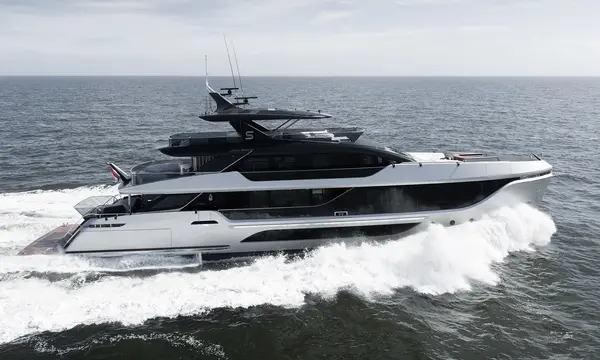
An examination of Van der Valk's 39.92-metre Shine, delivered in 2026 with a bespoke aluminium hull, fast-displacement engineering and interiors by Cristiano Gatto Design.
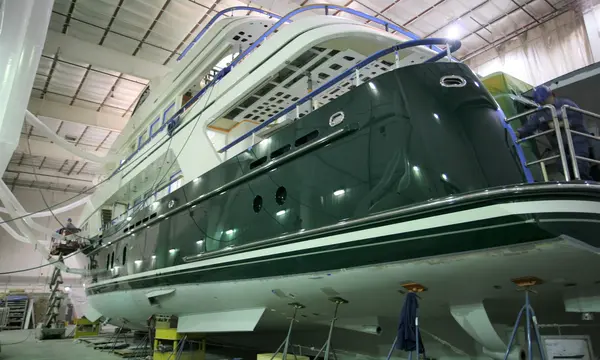
MARAD's 2026 shipyard awards provide $1.509m toward a 620-ton Travelift at Delta Marine and $568,720 for digital engineering systems at Burger Boat Company.
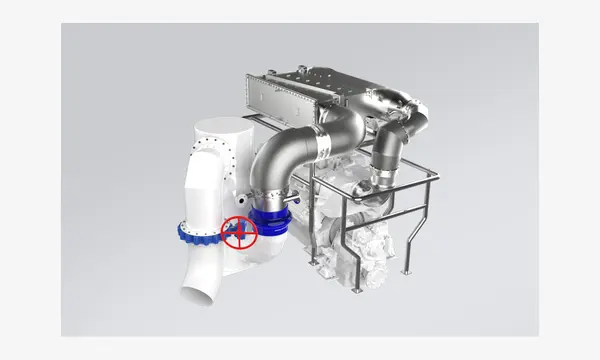
Hug Engineering presents a compact selective catalytic reduction arrangement intended to reduce nitrogen-oxide emissions from larger yacht engines.
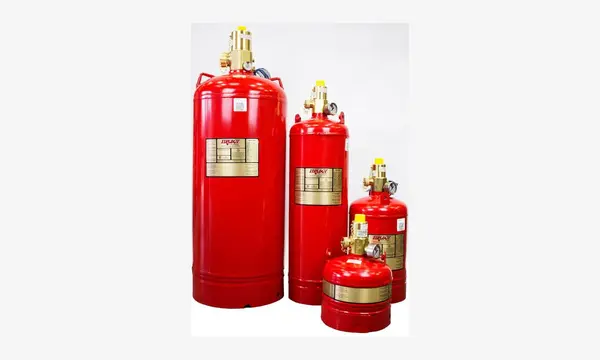
Fireboy Xintex's FES engineered clean-agent suppression targets machinery spaces under SOLAS-related design principles, with approval and system checks essential.
Superyacht Guide
Continue into the wider Superyacht Guide.
Business opportunities · Superyacht Guide
Companies serving the superyacht market can discuss clearly identified advertising, sponsorship and business-profile opportunities. Commercial activity remains separate from independent editorial coverage.