Hug Engineering Compact SCR Puts IMO Tier III Emissions Controls Under the Superyacht Spotlight
By Superyacht Guide Newsroom · Edited by Superyacht Guide Newsroom
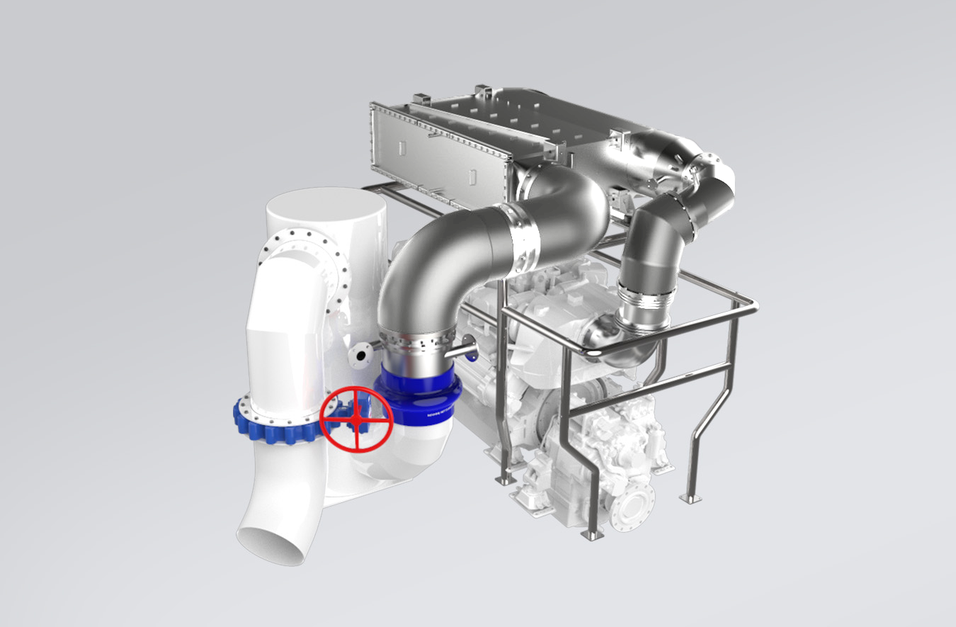
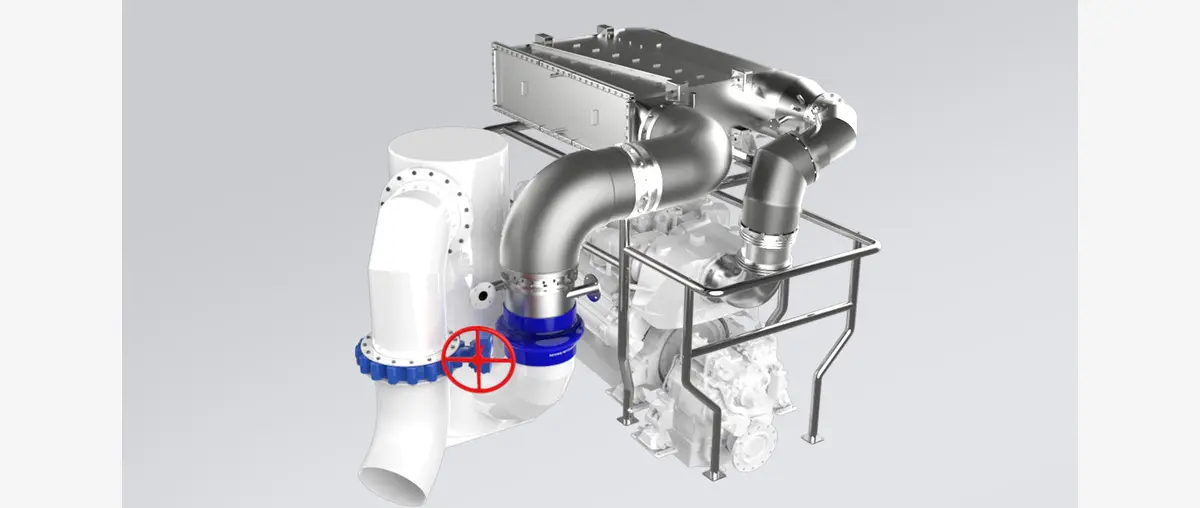
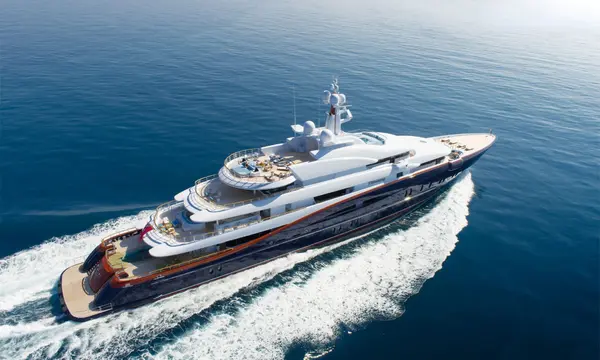
Hug Engineering Compact SCR Puts IMO Tier III Emissions Controls Under the Superyacht Spotlight — first-party photo SYG News 24 Nov 2026 batch08
Hug Engineering presents a compact selective catalytic reduction arrangement intended to reduce nitrogen-oxide emissions from larger yacht engines.
Managing the exhaust from a large yacht's diesel engines is both a technical and an operational problem. Hug Engineering is promoting a compact selective catalytic reduction system in the METSTRADE 2026 superyacht catalogue, describing a solution for engines in the one-to-two-megawatt class and a maker-stated reduction in nitrogen oxides of up to 85%. The company associates the product with IMO Tier III requirements and with space-conscious arrangements intended to limit the volume occupied by treatment hardware and urea storage. These are the manufacturer's claims for a specific product family, not independent measurements of installed performance aboard every yacht. The practical questions for naval architects and chief engineers are where the treatment equipment can fit, how it interacts with the engines, what consumables it requires and which operational modes are permitted under the vessel's certification.
Diesel combustion produces nitrogen oxides, often described collectively as NOx. These emissions contribute to local air-quality concerns and are subject to international marine engine regulations in defined circumstances. Larger yachts can have substantial installed propulsion and auxiliary capacity, and an engine-room arrangement that initially appears straightforward may need major revision to incorporate emissions-control hardware. NOx requirements must be understood in relation to the individual engines, applicable certification dates, operating region and engine rating. The presence of an exhaust-treatment product on a supplier list does not, by itself, demonstrate regulatory compliance for an entire yacht. The owner and yard need a vessel-specific assessment of the appropriate scheme and its approval pathway.
Selective catalytic reduction, or SCR, generally uses a reducing agent to enable chemical reactions that lower NOx content in exhaust gases under suitable conditions. Marine systems often require controlled dosing of an approved urea-based solution, catalyst elements and instrumentation to manage treatment performance. The precise dosing and exhaust-temperature requirements depend on the system design. Hug's product catalogue describes a compact solution aimed at engine-room space and urea consumption. It does not publish every chemical and control detail needed for specifying an installation. The project engineer should seek a complete process diagram and current engine approval matrix before assessing whether the offered equipment is appropriate for a particular main engine or generator.
The company's page says its compact SCR can reduce NOx by up to 85%. That is a ceiling described by the supplier, not a guaranteed outcome under all load conditions. The achieved reduction can depend on exhaust temperature, engine characteristics, reagent delivery and the condition of the catalyst. An owner should request the test basis and the operating range over which quoted performance applies. Comparing two systems on the basis of their maximum figures without reference to duty cycle can be misleading. A yacht that spends much of its time at low or variable load needs a solution that performs acceptably under those real conditions, subject to the system's approved mode of operation.
Hug refers to IMO Tier III compliance in the official product listing. The regulatory application of Tier III depends on the engine and vessel's status, location and other requirements. Certification may be tied to a particular engine-treatment combination rather than to a generic exhaust box. Builders and owners should establish the applicable rule with the flag administration, classification society and engine manufacturer. They should obtain the relevant certificates and technical file rather than assume that an exhibitor statement constitutes approval for their yacht. The distinction is especially important for refits, where existing machinery may not have been designed with the thermal, control or exhaust-pressure characteristics of an SCR system in mind.
A compact unit can reduce the design pressure on an already crowded machinery space, but the complete installation includes exhaust piping, access for service, supports, thermal insulation and reagent storage or transfer arrangements. The catalogue describes a space-conscious design for engines between roughly one and two megawatts. An engineer needs dimensional drawings that show the full service envelope, not simply the outer dimensions of the catalyst housing. Replacement of internal elements, access to sensors and maintenance of dosing equipment must be possible without dismantling major adjacent machinery. A smaller housing is valuable only when it sits within a maintainable and safe total arrangement.
Introducing treatment equipment into an exhaust line can affect pressure losses and engine operation. The allowable backpressure for each engine must be respected, including conditions when the exhaust path is hot or the treatment system is in an alternative operating mode. Engineers should obtain design calculations from the supplier and confirmation of compatibility from the engine manufacturer. Exhaust routing in large yachts is often complicated by structural boundaries and the desire to minimise visible outlets. Altering that route to accommodate a new unit can affect thermal expansion, supports, noise-control elements and maintenance access. A safe design considers the exhaust train as one system rather than installing an SCR unit as an isolated component.
Exhaust treatment equipment operates in an environment where high temperatures and nearby combustible or sensitive components can present hazards. Thermal shielding, clearances and insulation need to follow the applicable engine-room design and supplier instructions. Maintenance staff should understand which areas remain hot after shutdown and how cooling down affects access. Insulation chosen for sound or heat retention must not conceal a defect that requires routine inspection. Designers should also review the position of monitoring cables and reagent lines relative to hot surfaces. A compact installation may bring components closer together, making disciplined separation and as-built documentation especially important for continued safe maintenance.
A system that uses urea-based reagent introduces storage, handling and replenishment requirements into the yacht's logistics. Hug's page explicitly emphasises reducing urea consumption and storage demand, but the amount required aboard a particular vessel cannot be inferred from that description alone. It depends on engine load, duration of operation in applicable areas and the treatment equipment's settings. Technical managers should model representative voyages and identify ports where approved supplies can be obtained. The solution may also require attention to temperature limits and shelf life. A system that fits beautifully into the machinery room could become inconvenient if the yacht has inadequate capacity to carry the necessary consumables.
The supplier describes Tier II and Tier III operating modes in connection with the compact SCR offering, including switching outside an emission-control area. Such functionality must be governed by the approved engine and emissions-control documentation, not by crew preference alone. Watchkeepers need to understand when a mode change is allowed, how its status is recorded and what happens if the treatment equipment reports a fault. A control interface should make the active state and any restrictions clear. The regulation applicable to a voyage must be checked before arrival in an affected area. A product statement about switchability does not mean operators are free to disable treatment whenever it is inconvenient.
A treatment system may have temperature sensors, monitoring for reagent delivery and alarms associated with abnormal operation. Exact provisions for Hug's compact SCR need to be confirmed in its technical specification. Engineers should examine whether faults are reported through the yacht's existing alarm-and-monitoring system, whether the system retains a diagnostic history and whether spare parts are supported in the vessel's cruising areas. Sensor failure and inadequate maintenance can undermine the practical benefits of otherwise well-designed hardware. Crew need a clear distinction between warning, restricted operation and a condition requiring immediate action. The manufacturer and shipyard should demonstrate those responses during commissioning.
A newly installed SCR arrangement should be evaluated against the actual engine, exhaust configuration and the approved test programme. Commissioning may need to consider different engine loads, exhaust temperatures and modes, along with reagent consumption and alarm behaviour. It is not enough to confirm that the equipment powers up and that the vessel's monitoring screen shows no faults at idle. The project team should establish acceptance criteria in writing and retain supporting evidence for any relevant certification. A refit owner should also understand whether changing engine or controller software later will affect the validity of the approved combination. Testing the integrated system protects the investment and gives crew a reliable operational baseline.
A decrease in NOx emissions is potentially valuable, but an owner should avoid presenting the largest supplier percentage as a measured environmental result for the yacht. The treatment process consumes materials and may affect other aspects of operation, which should be considered when evaluating lifetime impact. Managers can document the baseline engine configuration, certified NOx figures, actual duty cycles and the treatment scheme selected. They can then explain the expected improvement using appropriate technical evidence. Compliance with a rule and a reduction relative to a baseline are distinct propositions. Both can be reported responsibly, but only with the documentation that supports them.
The first-party Hug Engineering entry identifies a compact SCR product designed for yacht applications, with a stated NOx reduction up to 85%, an IMO Tier III focus and a one-to-two-megawatt application range. It highlights engine-room and urea-space considerations. The page does not identify a named 2026 yacht installation, disclose independent measurements for every engine or provide a complete approval list. The product should therefore be described as an exhibitor offering, not as a newly delivered system or confirmed environmental performance of a particular vessel. Buyers must request current drawings, engine compatibility, certification and aftersales information directly from the manufacturer.
Emissions equipment is increasingly part of the earliest naval-architecture discussions rather than an addition made after machinery spaces have been designed. Hug's compact SCR illustrates that shift: environmental targets, physical space, reagent logistics and daily operating procedures have to be planned together. A well-specified solution can help an owner meet applicable requirements while retaining practical maintenance access. A poorly integrated one risks creating complexity and interruptions. The most useful next step for an owner is not to adopt a headline reduction percentage unquestioningly, but to commission a detailed analysis of the engines, routes and spaces that the yacht will actually use.
Primary source: Hug Engineering manufacturer-supplied Compact SCR technical catalogue listing, METSTRADE 2026.
Photo copyright Hug Engineering. Manufacturer-submitted original image of Compact SCR exhaust-treatment equipment. Official source.
Explore
Go deeper into the yachts, companies, events and destinations directly connected to this article.
Continue reading
Bosch Engineering's 800V SMG230 electric motor brings a stated 200kW capability to marine power design, with installation and high-voltage safety under review.
Opacmare details VIPER 1181 stainless-steel telescopic gangways with hydraulic actuation, multiple sections and a 150kg boarding limit at METSTRADE for crews.
MarQuip marks 25 years of specialist exhaust engineering, tracing its development from wet-exhaust technology to compact emissions systems for superyachts.

Triton Submarines provided engineering and integration assistance for DEEP's Vanguard human habitat, installed 17 metres underwater at Tennessee Reef in the Florida Keys.
Superyacht Guide
Continue into the wider Superyacht Guide.
Business opportunities · Superyacht Guide
Companies serving the superyacht market can discuss clearly identified advertising, sponsorship and business-profile opportunities. Commercial activity remains separate from independent editorial coverage.