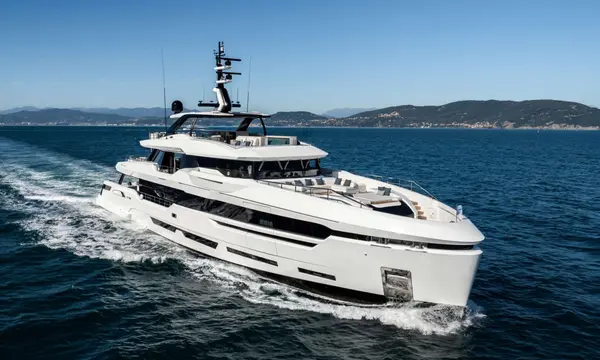
40.9m Baglietto ANDALA Sold with Autograph Representing Buyer
Autograph Yacht Group has announced the sale of the 40.9m Baglietto DOM133 ANDALA, representing the buyer in the transaction.

Image: PressMare, 21 October 2026, announcing Filippo Ceragioli's Beyond the Horizon economics series
A newly announced PressMare editorial series will examine the luxury-yachting market through the theories of four economists, drawing attention to how wealth, finance, technology and policy influence demand and shipyard competitiveness.
PressMare has announced Beyond the Horizon, an editorial series intended to bring established economic thinking to bear on the international yachting market. The author, Filippo Ceragioli, teaches at the International University of Monaco and Politecnico di Milano and is applying four distinct perspectives to questions facing yacht builders and buyers.
The announcement does not supply a new order-book forecast or a quantified sales result for October. It instead sets out a framework for exploring why some wealthy buyers commit to a new yacht while yards make long-term decisions about people, technologies and production capacity.
The first strand draws on the work of Branko Milanović, an economist known for studies of inequality and the distribution of income. In the superyacht market, the relevance is that very high-value purchases depend on the financial positions of a relatively small international group of households.
This does not mean each change in reported wealth immediately results in orders for larger vessels. An owner may delay an acquisition, alter the proposed design or purchase an existing yacht instead, and those decisions depend on preferences and financial conditions beyond headline wealth statistics.
Kenneth Rogoff's research on financial markets and wider economic conditions informs another element of the announced series. For some owners, financing costs, investment portfolio performance and confidence about future cash flows may affect the decision to start a multiyear yacht project.
A custom construction contract is more than a one-time discretionary purchase. It can involve scheduled payments, major design revisions and later operational commitments, making the relationship between liquidity and delivery timetables important to understand.
A third perspective is linked to Daron Acemoglu's work on technology and productivity. Superyacht yards are often associated with specialist craftsmanship, but they also rely on increasingly complex engineering, design coordination and supply chains.
Better production tools do not automatically reduce the price of a bespoke yacht, particularly if new systems add certification or training requirements. The worthwhile question is whether a technical investment improves reliability, quality or the ability to deliver promised milestones.
Mariana Mazzucato's research on innovation and public policy provides the fourth strand. Boatbuilding facilities operate within transport infrastructure, workforce-training systems and environmental regulations that influence how capacity can be expanded or modernised.
Local government decisions may affect the viability of a new assembly hall, shore-power installation or refit facility. However, announcing an industry strategy or a subsidy is not the same as proving that a yacht yard has increased its productive capacity.
Owners and family offices can use this broader perspective when assessing construction timetables and the long-term economics of yacht ownership. Labour availability, shipyard resilience, access to specialists and the direction of regulation all affect the quality of the finished vessel and its eventual maintenance.
No single economic theory determines whether a particular yacht project is sensible. A comprehensive decision still requires technical due diligence, independent surveys, clear contract terms and an operating budget tailored to the intended programme.
PressMare's announcement sets out the intended subjects and the economists whose work will be explored. Readers should not mistake it for a formal industry report endorsed by those economists or for an independently verified prediction of future superyacht sales.
What makes the initiative relevant is the recognition that changes in wealth, finance, technology and industrial policy rarely happen in isolation. The coming articles may offer different ways to interpret evidence, provided their claims are evaluated against actual shipyard activity and comparable data.
Continue reading
Autograph Yacht Group has announced the sale of the 40.9m Baglietto DOM133 ANDALA, representing the buyer in the transaction.

Delivery schedules at leading shipyards are stretching toward 2028 and 2029, forcing buyers to put a new value on build slots, fast-track platforms and …
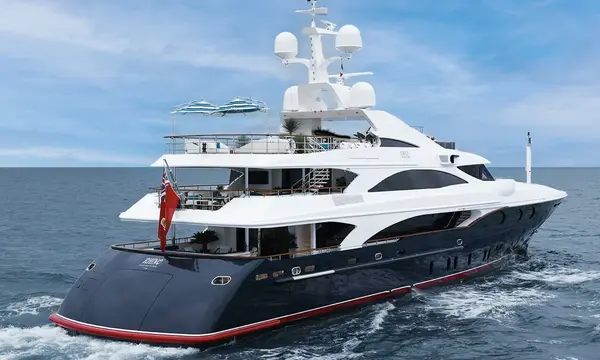
Buyers are concentrating on 40–60m superyachts that deliver serious range, luxury and charter potential without automatically taking on the complexity of much larger vessels.

A new generation of technology wealth is reaching the yacht market, with younger buyers placing greater emphasis on privacy, connectivity, wellness, performance and immediate …
Superyacht Guide
Continue into the wider Superyacht Guide.
Business opportunities · Superyacht Guide
Companies serving the superyacht market can discuss clearly identified advertising, sponsorship and business-profile opportunities. Commercial activity remains separate from independent editorial coverage.