Company
Quantum Marine Stabilizers
Explore the company profile and related Superyacht Guide coverage.
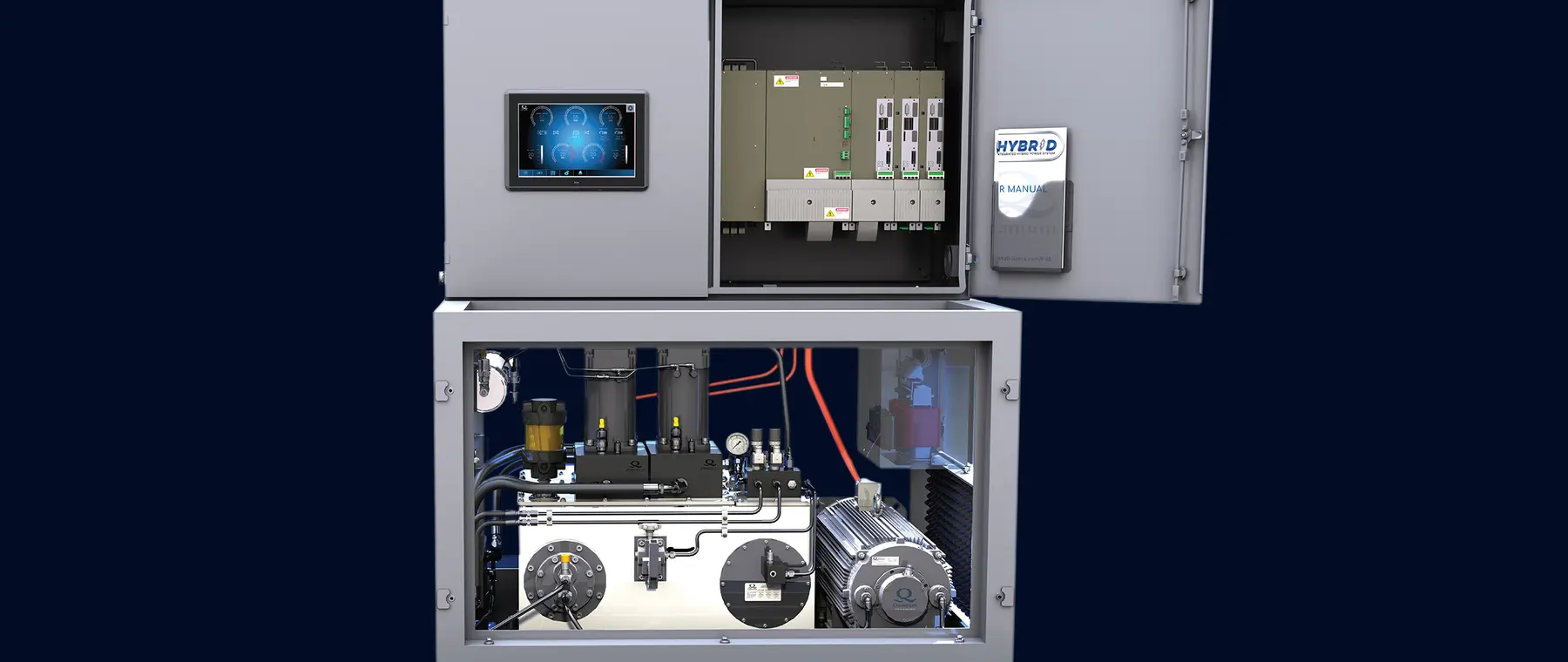
Image: Quantum Marine Stabilizers
Quantum says its F45 hybrid stabiliser power system can reduce power use by up to 80% underway and 60% at zero speed while recovering fin energy.
Quantum Marine Stabilizers is pushing energy recovery into one of a superyacht's largest intermittent electrical loads with its F45 hybrid stabiliser power system. The company says the electric-hydraulic architecture can reduce stabiliser power use by up to 80 per cent underway and 60 per cent in Zero Speed mode compared with a conventional hydraulic arrangement.
The F45 is aimed particularly at larger yachts where a fully electric fin drive can become expensive or difficult to package. Instead of abandoning hydraulics entirely, Quantum combines a closed-loop hydraulic system with electric servo control and an energy-storage device designed to absorb and return energy as the fins accelerate, decelerate and react to hydrodynamic loads.
Quantum calls the process Dynamic Energy Recovery. Energy generated during fin deceleration at anchor, or by water loads acting on the fins while the yacht is moving, can be captured by the system's Mass Energy Storage System and then returned when the stabilisers require another burst of power.
This matters because stabiliser demand is highly cyclical rather than constant. A conventional hydraulic power pack can continue drawing a significant baseline load even when the fins need little movement, while Quantum says the F45 can drop below 1 kW in standby and then use stored energy to smooth the next high-demand event.
At anchor, owners often want air conditioning, entertainment systems and stabilisers operating simultaneously while engines remain shut down. Quantum's own comparison highlights air conditioning and stabilisation as two of the major electrical consumers in that condition, so reducing one of those loads can change how many generators need to remain online.
The company quotes a 60 per cent power reduction in Zero Speed mode and says the F45 is four times quieter than a traditional hydraulic system. Lower noise and heat generation are particularly relevant to yacht installations because stabiliser machinery is often located close to accommodation or other technical spaces where acoustic treatment and cooling demand add further complexity.
Quantum's fully electric e-FIN is aimed primarily at yachts in roughly the 40–65 metre range, using a purpose-built gearbox and capacitor-based energy buffering. For larger vessels, the company presents the F45 hybrid as a way to retain the load-handling advantages of hydraulics while reducing continuous power demand and recovering energy.
That distinction is useful because there is no single stabiliser architecture that suits every yacht. Fin area, displacement, electrical generation, available machinery volume, expected zero-speed use and noise targets all affect the choice, while refit projects add another layer of constraints around existing hull units and cabling.
Quantum publishes an operating capacity of 72 kW for the F45 HyD90 and says actual savings depend on yacht size and operating pattern. The headline 80 and 60 per cent figures therefore describe system potential rather than a guaranteed reduction on every installation.
Even with that qualification, the design points to an important direction for superyacht engineering. As electrical loads rise and owners seek longer generator-off periods, equipment that can recover and buffer its own transient energy demand may be just as valuable as adding more battery capacity elsewhere in the vessel.
Explore
Go deeper into the yachts, companies, events and destinations directly connected to this article.
Company
Explore the company profile and related Superyacht Guide coverage.
Continue reading
OmniAccess Fusion 2.0 combines multiple LEO and GEO satellite services under one yacht subscription and shared data allowance instead of separate carrier plans.
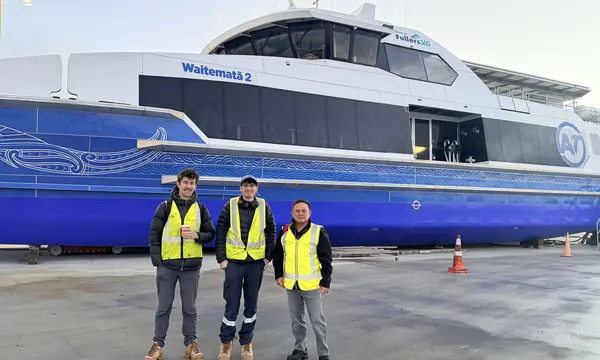
Danfoss says the hybrid-electric Waitematā 2 reached 36 knots in full-electric mode, demonstrating a high-power battery architecture with four propulsion lines.
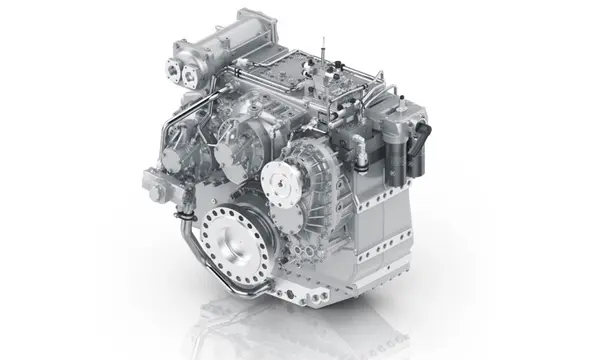
ZF has introduced the 9200 A/V PTI transmission, handling up to 3,903 kW of main-engine power and about 700 kW of hybrid electric power …
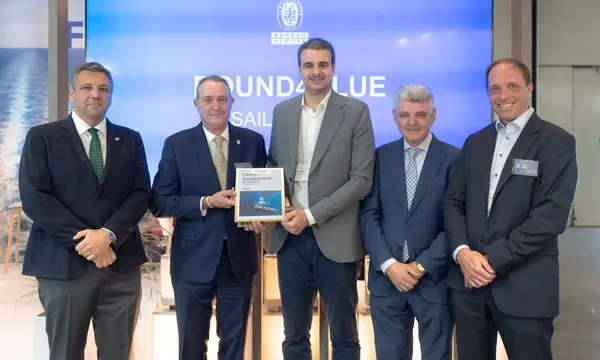
Bureau Veritas has completed a Design Assessment of bound4blue’s Model 3-24 eSAIL, independently reviewing the large-vessel suction-sail propulsion system.
Superyacht Guide
Continue into the wider Superyacht Guide.