Company
International SeaKeepers Society
Explore the company profile and related Superyacht Guide coverage.
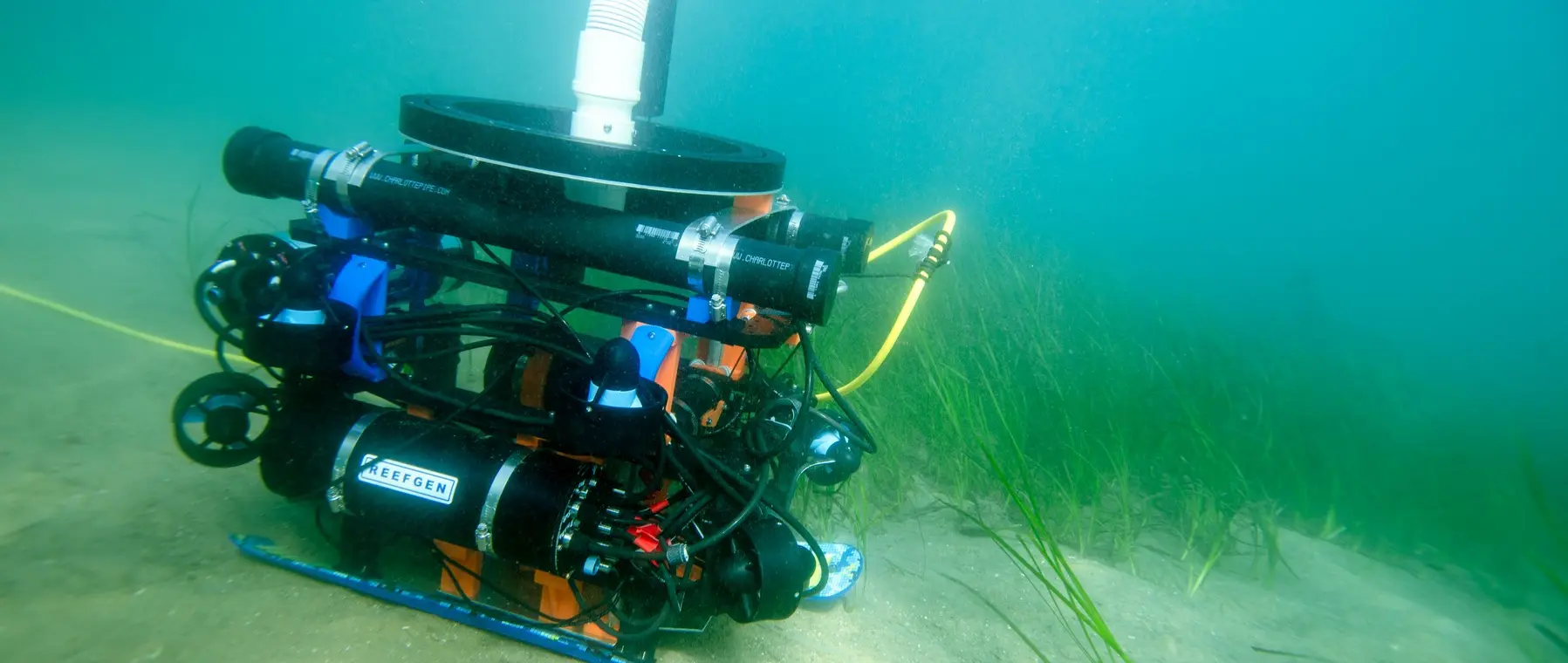
Image: Reefgen / PressMare
Reefgen’s remotely operated Grasshopper planting robot is being assessed for Mediterranean seagrass restoration, with a trial planned for the Gulf of Trieste in 2027.
A planned 2027 trial in the Gulf of Trieste is putting underwater robotics into the conversation about restoring Posidonia seagrass meadows in Mediterranean waters. The approach uses Reefgen’s Grasshopper, a remotely operated robot created to plant seagrass material in damaged areas more quickly than entirely manual methods.
The project was outlined in an environmental-technology report published by PressMare on 15 October, which describes collaboration with researchers associated with the Miramare Marine Protected Area. As the Mediterranean work remains a planned trial, it should not be reported as a completed Posidonia restoration project.
The concept is relevant to large-yacht owners and captains because anchoring pressure is one of the threats to sensitive seagrass beds. Restoration technology could assist damaged habitats, but it does not diminish the importance of selecting permitted anchorages and following local environmental controls.
Posidonia oceanica is a flowering marine plant rather than an alga, forming underwater meadows that help stabilise sediments and create habitat for marine species. These systems also store carbon and can protect shorelines by reducing the energy of waves before they reach the coast.
Damaged seagrass areas can require many decades to recover naturally, and scientific teams must first assess whether conditions will allow new plants to establish. Water quality, wave exposure, anchoring, sediment condition and the availability of suitable propagating material all influence whether a planting campaign is likely to work.
Protecting healthy beds through marine protected areas, mooring buoys and no-anchor restrictions remains the first and most important measure. An automated planter has potential value as part of active recovery where damage has already occurred, not as a licence to disturb intact underwater habitats.
Reefgen describes Grasshopper as a remote-controlled underwater planting platform capable of placing seagrass seeds or shoots directly into the seabed. It is designed to improve the repeatability and scale of restoration work that has commonly required divers to complete much of the planting by hand.
In practical operations, the robot moves over a preselected planting site and positions its planting equipment in the sediment, allowing an operator to repeat the process across a survey area. The advantage is the ability to perform many small placements at a consistent rate while maintaining a record of where the work took place.
Claims for its speed vary with the operation being compared, but company and project publications describe work many times faster than manual planting. Field performance should nevertheless be considered separately for eelgrass and Mediterranean Posidonia, which differ in ecology and may require different restoration methods.
Reefgen has already deployed Grasshopper systems for seagrass work in the United States, Indonesia and Wales, according to the developer’s own deployment records. At Milford Haven in Wales, it reports operations in 2023 and 2024 placing large numbers of eelgrass seeds to assist a local restoration programme.
Separate monitoring and planting activity has been conducted in Puget Sound and the Salish Sea, where local community partnerships have supported scientific experiments and practical restoration work. Those efforts show that the technology is not merely a digital concept, although success rates depend on the site and need to be measured after planting.
The proposed Trieste project would provide an opportunity to evaluate performance in a different marine ecosystem and under European conservation conditions. A technology that succeeds in one location must still be tested for local ecological suitability before being scaled.
The superyacht sector can contribute to conservation by helping owners and crews understand the effects of anchoring choices, tender operations and seabed disturbance. Accurate local charts and environmental advice, coupled with appropriate shore facilities, can reduce avoidable damage during otherwise routine cruising.
Large yachts may be able to support research partnerships and restoration funding, but those contributions need meaningful monitoring and transparent scientific outcomes to establish a benefit. A photographed planting event alone does not demonstrate that a restored meadow has become self-sustaining.
The planned Grasshopper trial illustrates how marine engineering skills are being adapted to conservation problems beyond yacht construction. For the yachting community, the lasting message is a combination of habitat protection today and carefully evaluated restoration techniques for places already damaged.
Explore
Go deeper into the yachts, companies, events and destinations directly connected to this article.
Company
Explore the company profile and related Superyacht Guide coverage.
Continue reading
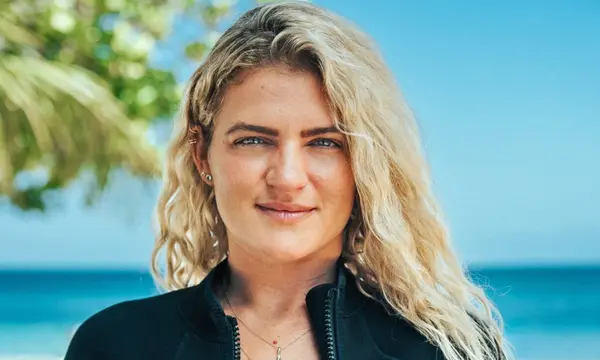
The International SeaKeepers Society will honour Christina Lotter as 2026 SeaKeeper of the Year and marine scientist Shelby Thomas with its NextGen Award.
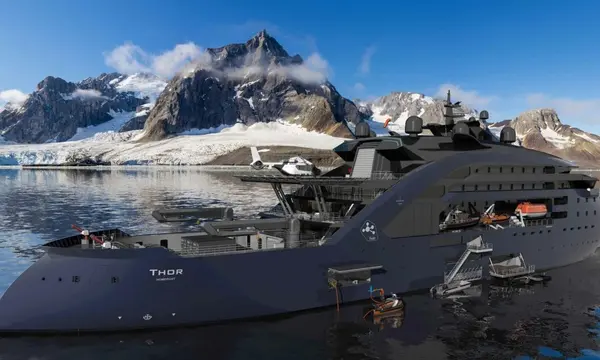
New research into micro modular reactors is raising the possibility of nuclear power for future large yachts, although classification, port access and approval remain …

Benetti’s 67m B.Now yacht DAGGER combines two Caterpillar main engines, bidirectional 200kW VEM shaft motors and a 360kWh sodium-metal chloride battery bank.
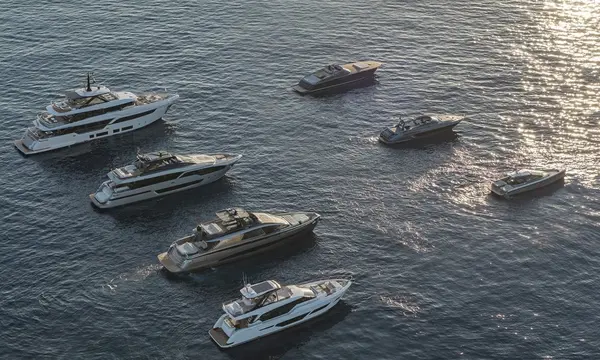
Ferretti Group is integrating WATCHIT SENSE 360 into its yacht programme, combining Simrad HALO radar with AIS, charts and AI-assisted hazard alerts.
Superyacht Guide
Continue into the wider Superyacht Guide.
Business opportunities · Superyacht Guide
Companies serving the superyacht market can discuss clearly identified advertising, sponsorship and business-profile opportunities. Commercial activity remains separate from independent editorial coverage.