Cramm Details Flush-Retracting Navigation-Light Masts for Large-Yacht Deck Design
Cramm Yachting Systems details stainless-steel telescopic navigation-light masts for superyachts, with flush deck retraction and managed cables at METSTRADE 2026.
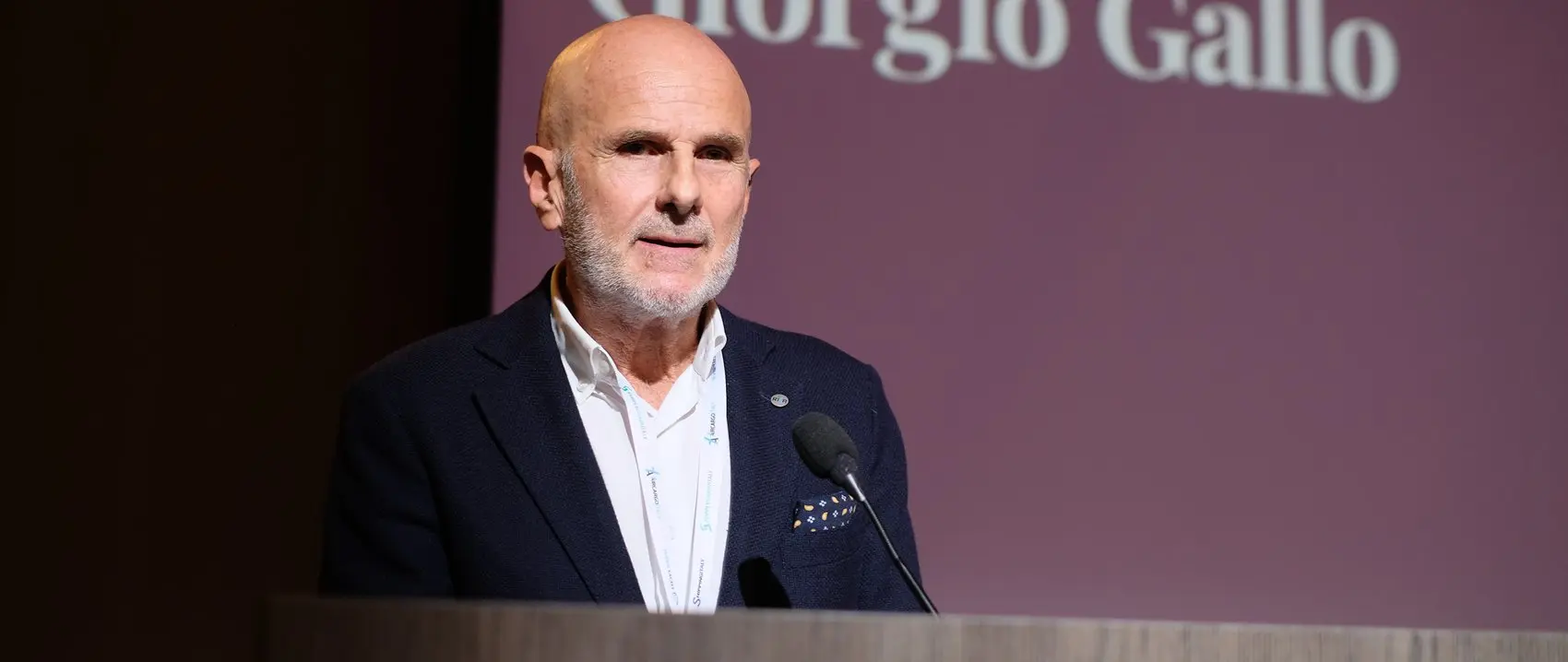
Sailing Super Yacht Forum organiser's original 27 November photograph of RINA speaker Giorgio Gallo. © SUPER YACHT 24 and photographer.
At Genoa's Sailing Super Yacht Forum, RINA representative Giorgio Gallo outlined a semi-autonomous navigation project and the unresolved question of who is responsible when algorithms steer.
RINA is working with an unnamed client on a semi-autonomous yacht navigation system, according to an account of Giorgio Gallo's presentation at the second Sailing Super Yacht Forum in Genoa on 27 November 2026. The proposed approach would allow defined parts of a passage to be managed by an algorithm, but the central obstacle identified at the event was how the captain's responsibility should operate when software makes navigational decisions.
This is a research and assessment project, not the announcement of a completed autonomous superyacht or a regulatory approval for unattended passages. The forum organiser's first-party report makes that distinction important: technology may perform certain functions, but an owner still needs to understand who supervises it, what limits apply and what happens if the automated response is wrong.
Gallo discussed the possibility of transferring certain navigation tasks to software after a vessel has left a port and busy traffic areas. The stated operational aim is to free crew members for rest during less demanding segments while keeping people available for higher-workload manoeuvres. The intended benefit is better allocation of attention rather than removing the bridge team from the vessel.
The proposal does not establish that an algorithm could safely navigate every condition or replace watchkeeping requirements. Details such as approved routes, weather limits, sensor configurations, fallback procedures and intervention times were not specified publicly. It would therefore be premature to call the project a deployed self-driving yacht, or to identify its unnamed client.
The liability question has direct consequences for masters and officers. A software system might choose a course or respond to changing conditions, but a captain may continue to be accountable under applicable law and professional obligations. Gallo highlighted the difficulty of asking a master to accept responsibility for a decision that the master did not personally select.
The practical issue is not resolved by a display showing that automation is active. A captain must know which choices the system can make, which limits cause control to return to a person and whether the bridge team has enough information to challenge a decision. The relationship between operational authority and legal accountability needs to be designed rather than assumed.
A large yacht navigating at sea encounters other vessels, floating objects, changing visibility and situations where information from one instrument may be incomplete. Human lookouts and professional judgement address aspects of this environment that cannot be reduced to a line on an electronic chart. Technology can add useful information, but that alone does not prove equivalent watchkeeping performance.
A responsible proposal should identify how radar, optical sensors, electronic navigation data and operator observations are combined, and where their limitations are acknowledged. RINA's forum comments did not disclose a detailed sensor suite for the unnamed project. Any specific description of how its collision-avoidance algorithms work would therefore be speculation.
The phrase semi-autonomous covers a potentially broad range of functions. One yacht could automate a narrow task under continuous supervision, while another could control steering across a defined offshore section with scheduled checks. The safety and liability implications differ substantially, even though both could be described as having automated navigation.
An owner considering such technology should ask for an operational design domain: the circumstances in which the system is intended to work and the conditions under which it must disengage. Limits on visibility, traffic density, sea state and geographical area are not merely engineering details. They help define what a captain can reasonably trust the system to attempt.
The most consequential moment may occur when automated control needs human attention unexpectedly. If a bridge officer has been monitoring the system only intermittently, the vessel must provide an understandable alert and sufficient time to regain situational awareness. A poorly handled transfer can erase the benefit of automation.
The Genoa presentation did not publish measured handover times or describe onboard trials. For future evaluation, those are precisely the kinds of matters that warrant demonstration under realistic scenarios. The design should not be assessed solely on how confidently the yacht proceeds when conditions are easy; it must also cope with the conditions that cause automation to stop.
Gallo linked the proposed system to the idea of allowing the captain and chief mate greater opportunity to recover during less demanding phases of a voyage. Fatigue is relevant to any watchkeeping operation, so reducing unnecessary workload may offer value. But rest benefits require appropriate watch organisation, reliable alarms and a clear plan for the transition between automated and human control.
The announcement does not establish reduced mandatory manning or an exemption from navigational duties. Owners should not interpret it as an immediate solution to crew shortages. An effective system would first need to show that it supports, rather than weakens, the competence and readiness of the professionals responsible for the yacht.
RINA's role is especially relevant because classification societies examine technical standards, system reliability and safety arrangements. When equipment falls outside an established rule framework, the assessment may require a more explicit examination of intended function and risk. The forum presentation described this broader task rather than announcing a final class notation for the unnamed yacht.
Classification cannot replace every decision made by a flag administration or release operators from applicable obligations. The interaction between equipment approval, vessel procedures and national requirements is part of the challenge. Prospective buyers should seek documentary confirmation of each approval instead of relying on the presence of an industry classification brand in promotional material.
The same speech referred to RINA's work on the Ferrari Hypersail programme, where the classification society helped develop technical requirements for an unusual sailing vessel intended for the Italian flag. The project was used as an illustration of adapting safety assessment to a design that did not fit existing precedents. It was not introduced as evidence that autonomous yacht navigation had already received the same treatment.
Gallo also discussed the planned support operation for Hypersail and the unusual challenge of a fast towing arrangement. These details belong to a separate project with its own requirements. They illustrate why an innovative yacht may require new procedures, but no claim should be made that the hypothetical automated superyacht shares the same equipment or approval.
A system that receives data, interprets its environment and influences navigation must be protected against interference and failures. The danger is not confined to theft of private information; unreliable or manipulated inputs could affect the quality of operational decisions. As vessels become more connected, cybersecurity increasingly becomes part of safety engineering.
RINA's presentation also addressed its Digital IoT notation and the protection of hardware, software and ship-to-shore data. Owners need to know how systems are segmented, monitored and updated, and who has authority to change critical configurations. The forum did not publish a penetration-test result for the autonomous project, so its cybersecurity cannot be certified in a news headline.
Greater automation can paradoxically increase the need for a clear, disciplined bridge interface. Operators must understand what software believes is happening, which information is uncertain and which control mode is active. A display that hides complex decisions without explaining the operational state would create its own safety and training risks.
The appropriate amount of detail depends on the task, but the principle is consistent: the bridge crew should be able to understand and challenge the system's behaviour. This is also a management consideration. Captains, engineers and owners need training and documentation that remain useful as software versions and equipment configurations change.
A new system is easiest to celebrate when it completes an ordinary passage without incident. Robust assessment, however, should examine degraded sensors, unexpected traffic, communications loss and the failure of individual components. An algorithm that performs well in routine conditions may behave differently when confronted with incomplete data.
Neither the precise test programme nor its results were publicly disclosed at the forum. No report should therefore assert that the system is sea-trialled, certified, or ready for commercial installation. Evidence of progress will come from documented trials, clearly specified responsibilities and eventual approval, not from the novelty of the research alone.
The opportunity described by RINA is strategically significant because large yachts combine complex technical equipment with professional crews and long international voyages. A reliable assistant for suitable offshore sections could change how a bridge team manages its workload. That potential does not mean buyers can order such a system today or integrate it into an existing yacht without technical and regulatory review.
Before making plans, an owner would need a vendor proposal, operational limitations, a recognised approval route, insurance consultation and crew training arrangements. The statement from Genoa is a reason to monitor development, not a substitute for those steps.
The core issue is who authorises the algorithm's decisions and who bears responsibility when the system fails or behaves unexpectedly. Contractual language, classification approval and operator procedures may all contribute, but they do not automatically answer each other's questions. The owner's project team should involve legal, technical, flag and insurance specialists early.
There is a risk of confusing automation with transfer of accountability. Gallo's remarks brought that problem into the open: a captain should not be expected to sign away practical control while retaining every consequence of an algorithm's actions. Clear boundaries are necessary both for safety and for professional confidence.
For now, RINA has described a semi-autonomous yacht navigation project and identified captain liability as an unresolved obstacle. The client remains unnamed, the system has not been publicly specified and no completed commercial installation was announced. Those limitations are part of the story, not reasons to inflate it.
The next meaningful news should consist of a defined testing milestone, a published framework for human supervision or a formal approval by the relevant authorities. Until then, the Genoa forum has revealed an important direction of research while reminding the industry that the question of responsibility must advance alongside the technology.
Continue reading
Cramm Yachting Systems details stainless-steel telescopic navigation-light masts for superyachts, with flush deck retraction and managed cables at METSTRADE 2026.
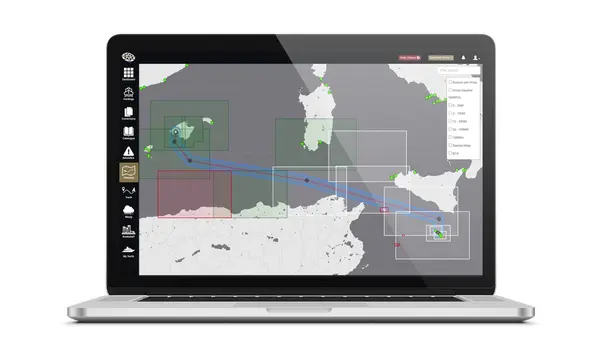
dsnm presents Compass software for superyacht chart corrections, passage planning, i4 Insight C-Map overlays and digital cruising publications at METSTRADE 2026.
Eagle Marine presents a modular ADAS platform combining cameras, onboard computing and third-party applications for yacht navigation and docking assistance.
Superyacht navigation specialist dsnm has acquired sister company NavigatX, bringing navigation management, passage-planning software and bridge refit support together.
Superyacht Guide
Continue into the wider Superyacht Guide.
Business opportunities · Superyacht Guide
Companies serving the superyacht market can discuss clearly identified advertising, sponsorship and business-profile opportunities. Commercial activity remains separate from independent editorial coverage.