
Captains’ Forum Finds No Single Fuel Can Decarbonise Every Superyacht
Yacht Club de Monaco's 31st Captains' Forum concluded that no single fuel or technology can meet every superyacht's future energy requirements.
Image: Official source
SRC Group's methanol superstorage technology has received RINA Type Approval, giving yacht designers a new certified approach to carrying methanol and ethanol aboard.
RINA has granted Type Approval to SRC Group's methanol superstorage system, validating a tank concept intended to make alternative alcohol fuels more practical on yachts and other vessels. The design addresses one of methanol's main naval-architecture penalties by increasing usable fuel volume within a given space.
Methanol contains less energy per unit volume than conventional marine diesel, so a yacht needs more tank capacity to achieve comparable range. SRC says its superstorage approach can hold nearly twice the volume of methanol or ethanol that could be carried in some conventional arrangements occupying the same space.
That matters on superyachts because fuel tanks compete directly with accommodation, machinery, tenders and technical spaces. Any alternative-fuel system that consumes excessive internal volume can undermine the owner's brief even if the propulsion technology itself works well.
The tank structure uses SPS Technology's Sandwich Plate System, with a twenty-five-millimetre solid elastomer core bonded between two steel plates. SRC says the construction provides A60-equivalent fire performance while also transferring loads and absorbing energy.
The elastomer forms an oxygen-free layer between the steel plates, helping prevent hidden corrosion while adding another sealing barrier. The fully bonded structure is intended to maintain shear transfer and structural continuity rather than functioning as two independent tank walls.
SRC says the system can eliminate the need for a separate cofferdam while maintaining protection against fire, mechanical impact and leakage. Removing that void is where much of the additional usable fuel volume becomes available within the same overall envelope.
Space savings will be particularly valuable on long-range yachts where methanol storage otherwise requires major compromises. Designers still need to integrate ventilation, bunkering, detection and fuel-conditioning systems around the tank because approval of the containment structure does not remove wider fuel-safety requirements.
RINA says the approval confirms compliance with defined safety, reliability and performance requirements. Formal classification acceptance can make it easier for owners, naval architects and shipyards to evaluate methanol without treating the storage system as an unproven one-off installation.
The technology remains one part of a larger transition because fuel availability, lifecycle emissions, engine choices and bunkering infrastructure still influence whether methanol suits a particular yacht. Its value is that storage becomes a less severe obstacle in projects where methanol already makes operational sense.
Official sources: marinebusiness.news.
Continue reading
Yacht Club de Monaco's 31st Captains' Forum concluded that no single fuel or technology can meet every superyacht's future energy requirements.
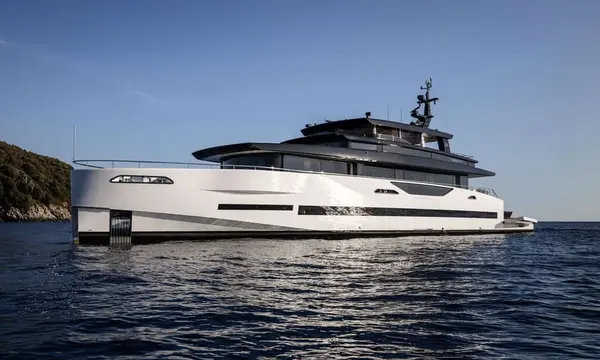
GX Superyachts has presented the 42-metre GX42 with a parallel hybrid drivetrain, substantial battery storage and solar generation integrated into one energy-management architecture.
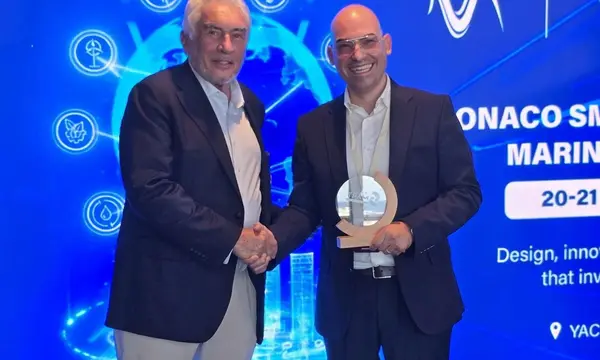
Seares has won the Scaling Pitch Award at Monaco’s Smart & Sustainable Marina Rendezvous for active mooring dampers with load monitoring and energy recovery.

Raymarine has integrated more than 45,000 marine protected areas into LightHouse Charts to support route planning around sensitive and regulated waters.
Superyacht Guide
Continue into the wider Superyacht Guide.
Business opportunities · Superyacht Guide
Companies serving the superyacht market can discuss clearly identified advertising, sponsorship and business-profile opportunities. Commercial activity remains separate from independent editorial coverage.