

Rolec Highlights Marina Power Planning Ahead of METSTRADE
By Superyacht Guide Newsroom · Edited by Superyacht Guide Newsroom
Rolec Rolec and Metpow Partner to Revolutionise Utility Management — official supplier image of existing equipment or infrastructure
Rolec outlines how shore power, vehicle charging, metering and load management are reshaping electrical infrastructure planning at superyacht destinations.
Marina electrical infrastructure specialist Rolec has set out its assessment of changing electricity demand at waterfront facilities ahead of METSTRADE 2026. In an exhibitor article published on 13 November, the company describes the growing importance of electrical capacity, consumption monitoring and the coordination of several types of demand at marinas, superyacht berths, ports and waterfront developments. Its contribution comes just before the Amsterdam exhibition on 17–19 November.
The publication is not an announcement of a particular new superyacht marina or the installation of a new power system at a named location. Rather, it identifies a commercial and engineering problem already relevant to the way existing waterfront facilities operate. Large yachts may draw substantial amounts of electricity to maintain accommodation and machinery services while alongside. At the same time, waterfront operators can face demand from buildings, electric vehicles, smaller electric craft and the equipment used in day-to-day maintenance. Rolec argues that these demands should increasingly be assessed together.
A marina's electrical requirements cannot be established solely by adding the nominal capacities of all the outlets at its berths. Some vessels may not be connected, while others may be drawing substantial electricity for prolonged periods. The pattern of demand depends on vessel occupancy, yacht systems, outside conditions and the way owners and crew operate their equipment while alongside. Air conditioning, ventilation, refrigeration, lighting and domestic equipment can all contribute to a yacht's demand.
Peak demand is important because the shore-side electrical system has to be designed and operated within its available capacity. Operators should examine actual consumption patterns alongside the capacities of transformers, distribution cables and protective equipment. An expansion into larger yacht berths may create new requirements even if the number of vessels does not increase. Rolec's article accordingly emphasises understanding the existing electrical supply and the demands already placed upon it before deciding how additional electrical services can be accommodated.
Waterfront businesses can experience pronounced variations in their activity over a year. A destination serving visiting superyachts may see demand change when vessels arrive for events, at the start of a cruising season or after the movement of yachts from another region. At different times of day a berth occupant may also operate different combinations of machinery. Additional electricity consumption can arise as several vessels connect at approximately the same time.
A marina management team benefits from distinguishing the maximum electrical load that might occur from a representative operating profile. Historical readings can help show when particular constraints arise and whether they are associated with berth occupancy, building use or another type of equipment. The resulting information can support decisions on expansion, distribution planning and demand management. It does not justify exceeding equipment ratings; qualified engineers must establish appropriate design allowances and protection requirements for the facility. Rolec has not published a quantified demand forecast applying to all superyacht marinas.
Accurate electricity measurement becomes particularly significant when vessels make materially different demands on a shared supply. A large yacht running several hotel services simultaneously may have a very different consumption pattern from a smaller boat using electricity primarily for battery maintenance and limited domestic equipment. Estimating all bills using a simple fixed allowance can make the relationship between actual demand and recovered operating costs difficult to understand.
Metering can provide the operator and customer with a clearer basis for reconciling consumption and identifying unusual changes. The equipment and billing approach must be suitable for the local regulatory and contractual arrangements. A yacht's captain may also find detailed consumption information useful when investigating faults or establishing an operating budget. Relevant procurement questions include the accuracy and legal suitability of the meters, how readings are recorded, customer access to information and the arrangements for correcting errors. Rolec highlights the increasing interest in remote and automated management rather than relying exclusively on manual recording.
Rolec's assessment extends beyond the electricity supplied to individual visiting vessels. The company points to the gradual adoption of electric water transport and commercial craft in some regions, together with the growing need to charge land-based vehicles. A waterfront development may need to support employees, marina customers, delivery vehicles and operational fleets without concentrating all their energy demand in the same limited space or time.
The requirements of those users are not necessarily interchangeable. A vehicle parked for much of a working day may have different charging needs from equipment required for repeated operational journeys. Larger waterfront sites may also have an established shore-power system that contributes heavily to overall demand. Electrical capacity should be considered alongside access, physical placement and the operational consequences of taking equipment out of use. Adding a charging point is a different design exercise from creating the infrastructure needed to supply a growing fleet reliably.
An energy management system can enable operators to monitor the use of shared electrical capacity and, where appropriately designed, coordinate flexible loads. The potential benefit is greatest when individual loads do not all need to draw their maximum power simultaneously. Some forms of vehicle charging, for example, may be scheduled or controlled in ways that would be inappropriate for essential services on an occupied yacht.
A facility must distinguish optional or deferrable demand from essential operating loads before implementing such arrangements. Controls should be designed by competent professionals, with appropriate electrical protection and defined behaviour in the event of equipment or communications failure. Operators must also consider how restrictions are communicated to customers, particularly where a yacht's shore supply is subject to an agreed service provision. Rolec's article discusses load management as part of future infrastructure planning, not as a universal method of increasing the capacity of existing wiring or distribution equipment.
Waterfront installations are exposed to operating conditions that may differ substantially from those of interior electrical systems. Salt deposits, humidity, spray, temperature variations, direct sunlight and the movement of pontoons can affect the selection and installation of equipment. Maintenance access may be restricted when berths are occupied, making reliability and thoughtful equipment placement especially important to the people operating a marina.
The suitability of electrical distribution equipment must be assessed in relation to the actual location, exposure and applicable technical standards. Designers need to consider how equipment will be isolated for maintenance and how its supporting cables and connections will be inspected over time. A high-quality installation is also easier to operate when distribution arrangements are adequately documented and circuits can be identified. A visually attractive pedestal is only one part of the shore-side system. Rolec's wider supplier portfolio includes electrical services for superyacht facilities, where the operational functions and appearance of equipment can both form part of the project brief.
The company's November article also considers how energy storage and locally generated electricity may fit into waterfront infrastructure. Where a site has suitable conditions and a demonstrated need, storage may allow some electricity to be made available at times different from those at which it is obtained. The design and economic value of such a system depend on its capacity, operating profile, energy tariffs and the constraints on its installation.
A marina does not necessarily need to become an independent electricity network to benefit from better energy planning. In some circumstances, the commercially sensible investment may instead involve improving distribution arrangements, introducing suitable monitoring, providing additional capacity or reserving routes for future cabling. Operators should evaluate the expected requirements of their site rather than assume that the same technical solution will suit every location. A staged plan can help avoid expensive work that would subsequently need to be repeated when new equipment or berths are introduced.
For owners and captains, the practical value of improved marina electrical infrastructure is the predictability of the services available during a stay. The equipment required by a specific yacht, its electrical compatibility and the capacity that a marina can provide should be established before a berth is confirmed. For the marina operator, a well-documented understanding of electrical consumption and realistic future requirements can inform commercial agreements, operating budgets and infrastructure investments.
Rolec's latest exhibitor article places these questions within the growing electrification of waterfront operations. Its relevance to the superyacht market lies in the need to plan shore-side services for demanding individual vessels while accommodating the increasingly varied electricity requirements of the entire waterfront. The accompanying official supplier image illustrates existing marina infrastructure rather than a newly announced installation. The November publication is an opportunity for industry participants to examine their planning assumptions ahead of METSTRADE, not a statement that a particular marina has completed a new electrical development.
Primary source: Rolec exhibitor announcement, 13 November 2026.
Rolec Rolec and Metpow Partner to Revolutionise Utility Management — official supplier image of existing equipment or infrastructure. Official source.
Explore
Go deeper into the yachts, companies, events and destinations directly connected to this article.
Continue reading
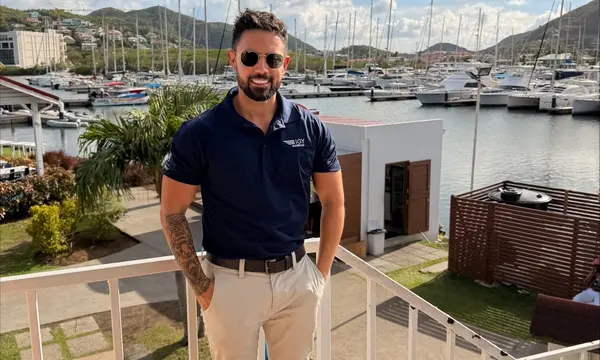
IGY profiles regional manager Santiago Herrera, whose seasonal assignments in Porto Cervo and Rodney Bay connect marina staff development with operational continuity.

CHIRP reports two dangerous incidents aboard a private sailing yacht: an accidental gybe and a later night-time foredeck near-miss involving the owner.
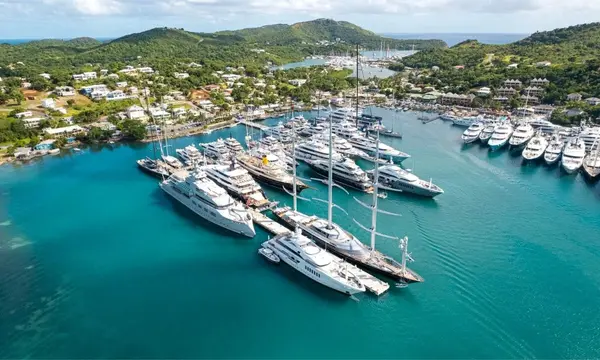
Acquera Yachting confirms a December 2026 Antigua Charter Yacht Show briefing on its nine-destination Caribbean agency network and crew-service integration.
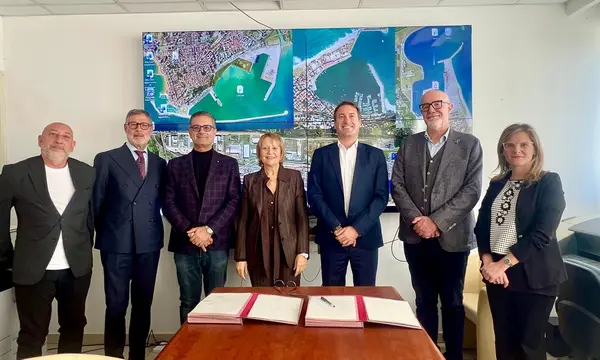
A revised yacht marina scheme at Vibo Valentia gains concession approvals for six floating jetties, support facilities and a new fuel layout in Calabria.
Superyacht Guide
Continue into the wider Superyacht Guide.
Business opportunities · Superyacht Guide
Companies serving the superyacht market can discuss clearly identified advertising, sponsorship and business-profile opportunities. Commercial activity remains separate from independent editorial coverage.