
Rolec Highlights Marina Power Planning Ahead of METSTRADE
Rolec outlines how shore power, vehicle charging, metering and load management are reshaping electrical infrastructure planning at superyacht destinations.
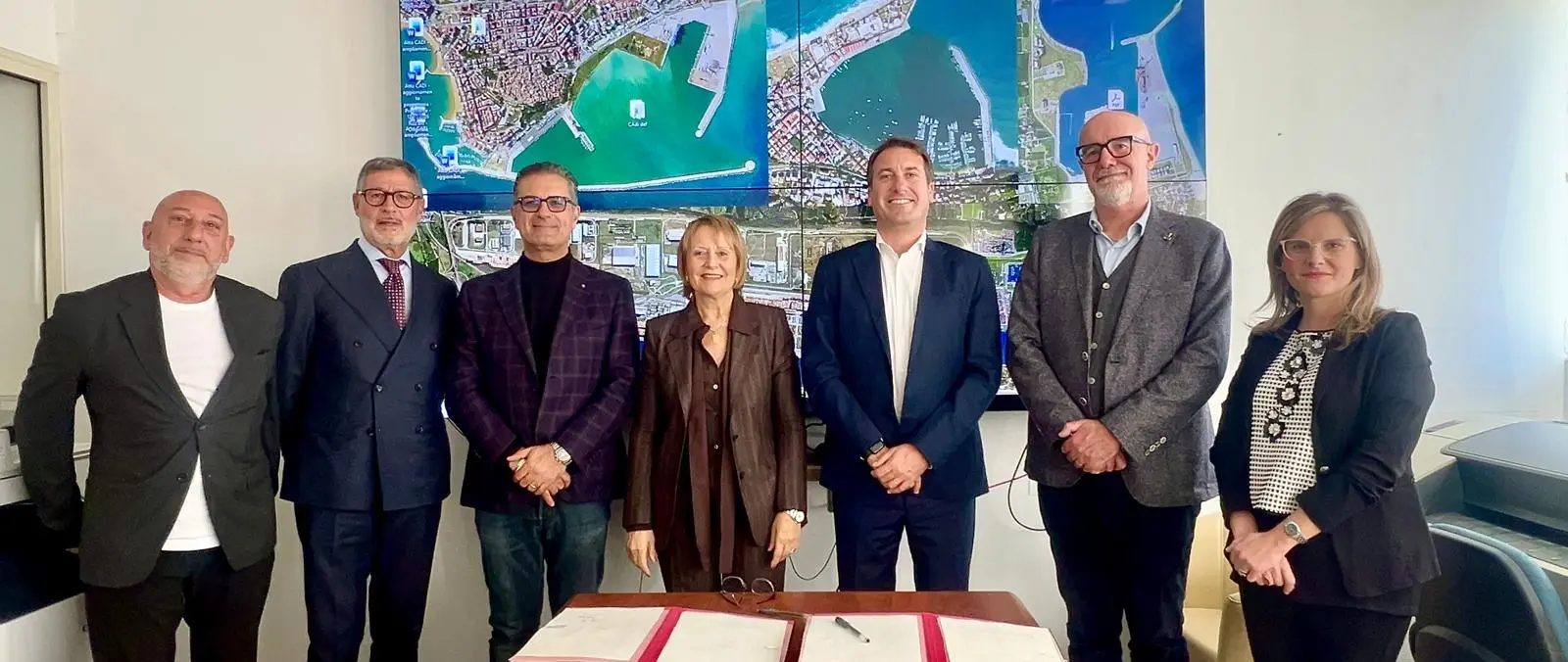
Port System Authority of the Southern Tyrrhenian and Ionian Seas — official signing photograph
A revised yacht marina scheme at Vibo Valentia gains concession approvals for six floating jetties, support facilities and a new fuel layout in Calabria.
The Port System Authority of the Southern Tyrrhenian and Ionian Seas has announced a further administrative step toward a new yacht marina at Vibo Marina in Calabria. On 3 November 2026 it confirmed two supplementary maritime concession agreements with CADI S.r.l., the private promoter of the scheme. The revised plan calls for six floating jetties, a service quay and supporting facilities. This is a project authorisation and planning development, not an announcement that the marina is already operational.
The authority identifies its president Paolo Piacenza and CADI's sole director Domenica Marcello as the signatories. It also associates the company with Francesco Cascasi. The arrangements broaden the concession footprint and update the intended use of the space. The important distinction for visiting yacht captains is that the release describes proposed facilities and permission milestones; it does not provide an opening date, completed berth inventory, pricing schedule or booking instructions for the new marina.
Marina projects often depend on more than designing pontoons and identifying an attractive stretch of waterfront. A developer needs legal control of relevant maritime areas, permission for installations and an operating layout that fits other uses of the harbour. The Vibo announcement addresses two of those foundations through supplementary concession agreements. One grants additional maritime state land or water-side area, while the other accepts an updated configuration for the marina. Together they allow the next stage of implementation to proceed.
The public authority specifies around 384 additional square metres associated with vessel handling, refuelling and mooring. That number is an incremental area within the concession, not the total footprint of the marina or a measure of berthing surface. It would therefore be misleading to use 384 square metres to estimate the project's full capacity. The detailed extent of the original concession, final berth sizes and engineering drawings would be needed for any reliable calculation of yacht numbers.
The revised design introduces six floating jetties in place of a previously proposed arrangement. According to the authority, the objective is greater flexibility in allocating moorings and accommodating different types of recreational craft. Floating structures can offer adaptable pontoon geometry, although their performance depends on anchoring, wave climate, access arrangements and operational rules. The press release does not specify the individual jetty lengths, depth alongside, maximum yacht dimensions or the engineering solution selected for the berthing system.
For an owner or yacht manager, the missing details are not trivial. A published headline about six pontoons does not establish whether a 40-metre yacht, a broad-beam catamaran or a smaller motor cruiser can be accommodated. Captains need confirmed draft limits, shore-power ratings, safe manoeuvring room, mooring hardware and berth availability before planning a call. Those operational specifications will become relevant as the design progresses from concession approvals into construction and eventually a functioning marina service.
The authority also describes a planned multifunctional structure of approximately 379 square metres to house services supporting the marina. This is separate from the additional concession area of around 384 square metres. The two numbers refer to different aspects of the project and should not be added together as though they represent a single facility footprint. The release identifies the building's function in broad terms but does not list specific tenants, retail offerings, crew amenities or administrative offices.
Marina service buildings are important because a berth alone rarely satisfies the requirements of a visiting yacht. Owners and crew may need access to waste arrangements, security, water, power, technical support and assistance with local formalities. The proposed building could provide a framework for such services, but its final contents remain unconfirmed. Until the operator publishes a detailed plan, any claim that a named facility—such as a chandlery, workshop or dedicated captains' lounge—will open there would be premature.
One of the more concrete planning elements concerns the fuel supply arrangement. The authority says the refuelling installation is to be rationalised and placed on the Fiume quay, within the area already held under concession. It adds that the arrangement is intended to preserve continuity for passenger services elsewhere in the port. This matters in a working harbour because leisure-craft facilities must coexist with established traffic, safety zones, access routes and other commercial operations.
Fuel availability is often a deciding factor in a yacht's stopover plan, particularly when a captain is managing range before a longer passage. Yet the notice does not specify the fuel grades, dispenser capacity, bunkering methods, opening hours or environmental safeguards of the future facility. Those details will need to be assessed before the scheme can be described as a fully equipped refuelling destination. The release provides the proposed location and functional intent, rather than a completed operating specification.
CADI's role is presented by the port authority as an example of collaboration between the public port system and a private operator. Piacenza links the project to an ambition to improve recreational-boating infrastructure and strengthen the attractiveness of the harbour. Such partnerships can make use of existing port land and services while introducing specialised marina management. They also require clear division of responsibilities for infrastructure, maintenance, public access and compliance, matters not fully detailed in this brief announcement.
The public authority's remit extends beyond Vibo Valentia to Gioia Tauro, Crotone, Corigliano Calabro and Palmi. It frames the marina as part of a broader effort to modernise services across the five-port system. That regional setting is useful context, but it does not mean identical yacht developments are planned at each harbour. The Vibo concession agreements are a specific local decision, with their own promoter, footprint and layout, rather than evidence of a single unified marina construction programme.
Vibo Marina lies on the Tyrrhenian side of Calabria, a region that can form part of itineraries linking southern mainland Italy with Sicily and other Mediterranean destinations. Improvements in dependable berthing and support services could make the port more convenient for recreational craft using that coast. This potential should be understood conditionally: the attractiveness of a future yacht stop will depend on the final facilities, approach conditions, local transport, weather protection and operating standards.
Not every yacht on such an itinerary has the same requirements. A private motor yacht may prioritise fuel and guest access, a charter yacht may need rapid provisioning and smooth turnaround arrangements, and a sailing yacht may focus on safe berthing and practical shore facilities. A flexible marina layout could respond to that range, but the authority has not published a confirmed breakdown of berths by vessel size. It is therefore too early to forecast how much superyacht traffic the project will attract.
The announcement marks progress in concessions and design approval, but readers still need a construction timetable and a clear statement of the remaining authorisations. Pontoon installation, shore-side utilities, access control and fuel-system commissioning each present different technical and regulatory questions. The authority's notice does not identify a contractor, cost estimate, start date, completion date or commissioning programme. It would be inaccurate to translate the signed agreements directly into a promise of near-term berth availability.
Future checks should focus on whether the promoter secures the necessary implementation approvals, how the final marina is configured and when services become operational. The design may be updated as engineering and traffic requirements are resolved. A berth-count announcement based only on the number of floating jetties would be particularly unreliable. A completed berth plan with yacht-length ranges, draft limits and shore-service information would provide a much more useful measure of capacity than a preliminary project description.
The authority emphasises improving the quality of assistance and hospitality for recreational boaters. For a marina, that means more than attractive architecture: safe access, competent staff, clear operating procedures and reliable utilities can determine whether a captain recommends a return visit. The planned service quay and multipurpose structure suggest an ambition to support a fuller range of activities, but the eventual level of service will be judged through operating experience.
Commercial success also depends on how the new marina integrates with the surrounding port and town. Transport links, local suppliers, repair services and amenities can influence owners' decisions alongside the price and shelter offered by the berth itself. The port authority sees potential tourism benefits, which is a reasonable planning objective rather than an already measured economic outcome. No quantified visitor forecast or local-spending estimate appears in the official announcement.
The confirmed facts are the signing of two supplementary concession acts on 3 November, the additional area of roughly 384 square metres, a revised layout with six floating jetties, a planned multifunctional facility of about 379 square metres, and a rationalised fuel arrangement on the Fiume quay. The scheme is promoted by CADI and supported within the public authority's strategy for the region's ports. Those elements provide a clear basis for reporting the development without overstating its progress.
The next milestones will concern implementation and operational detail. Yacht owners and captains should wait for an official opening timetable, berth dimensions, service specification and contact arrangements before treating the proposed marina as an available destination. For the southern Italian cruising network, the project is worth monitoring because it aims to improve an existing working harbour's leisure-boating offer. Its practical value will ultimately be demonstrated by completed infrastructure and reliable service, not by concession paperwork alone.
Primary source: Port System Authority of the Southern Tyrrhenian and Ionian Seas.
Port System Authority of the Southern Tyrrhenian and Ionian Seas — official signing photograph
Continue reading
Rolec outlines how shore power, vehicle charging, metering and load management are reshaping electrical infrastructure planning at superyacht destinations.

IGY profiles regional manager Santiago Herrera, whose seasonal assignments in Porto Cervo and Rodney Bay connect marina staff development with operational continuity.
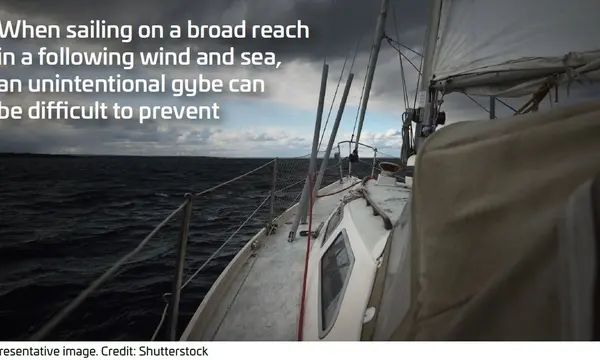
CHIRP reports two dangerous incidents aboard a private sailing yacht: an accidental gybe and a later night-time foredeck near-miss involving the owner.
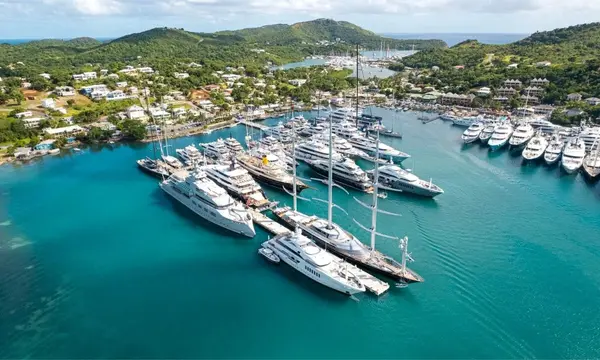
Acquera Yachting confirms a December 2026 Antigua Charter Yacht Show briefing on its nine-destination Caribbean agency network and crew-service integration.
Superyacht Guide
Continue into the wider Superyacht Guide.
Business opportunities · Superyacht Guide
Companies serving the superyacht market can discuss clearly identified advertising, sponsorship and business-profile opportunities. Commercial activity remains separate from independent editorial coverage.