Company
Rolls-Royce Power Systems
Explore the company profile and related Superyacht Guide coverage.
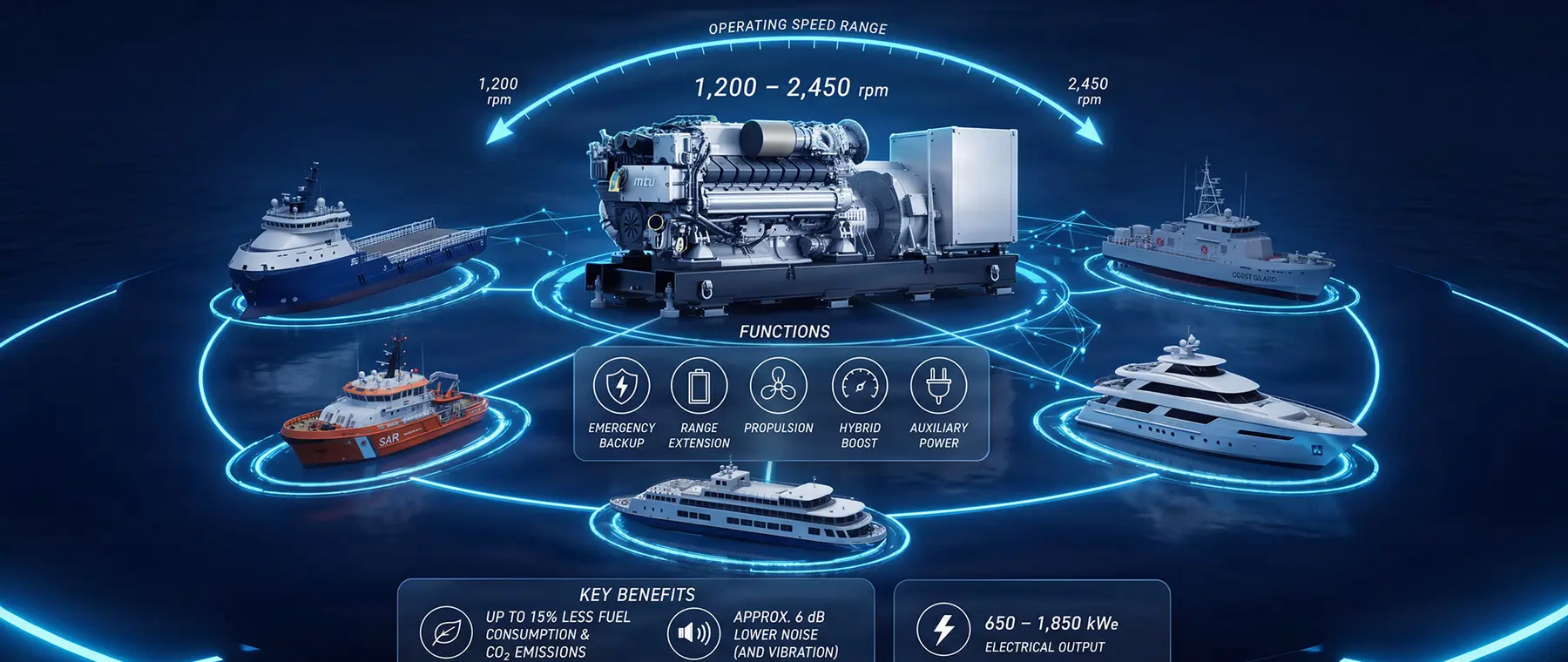
Image: Rolls-Royce Power Systems
Rolls-Royce has expanded its mtu yacht portfolio with variable-speed Series 2000 gensets and a new IMO Tier III SCR system. The company claims up to 15% lower fuel use and CO₂ for the gensets and 75% lower NOx versus IMO II limits for the SCR system.
Rolls-Royce Power Systems has expanded its mtu propulsion portfolio for yachts with standardised variable-speed Series 2000 generator sets and a new SCR exhaust after-treatment system. The company says the additions form part of its wider “From Bridge to Propeller” approach, linking propulsion, onboard power, energy management and automation rather than treating each element as a separate package.
The 8 September 2026 release focuses on two practical areas for yacht builders and owners: reducing fuel use and emissions during electrical generation, and enabling Series 2000 engines to operate in emission-regulated waters under IMO Tier III requirements. Both systems are aimed at newbuild and integration scenarios where efficiency, installation space and onboard comfort are major design considerations.
The new standardised gensets are based on mtu Series 2000 engines and vary their operating speed according to actual electrical demand. Rolls-Royce says this allows fuel consumption and carbon-dioxide emissions during operation to fall by up to 15 per cent compared with a fixed-speed approach, depending on the vessel’s load profile and how the system is used.
Noise is another target of the variable-speed design. The company states that the gensets can operate around 6 dB more quietly, a potentially significant gain on a yacht where machinery-room noise can affect guest areas, crew spaces and the overall acoustic character of the vessel at anchor or under low electrical load.
Electrical output across the new range runs from 650 to 1,850 kWe. Rolls-Royce says the units are designed with high power density and compact dimensions so they can be integrated where machinery-space volume is limited, while also supporting battery-assisted marine systems.
The company specifically identifies range-extender use as one possible application. In that configuration, the gensets can work with onboard energy storage rather than operating as a conventional continuously loaded generator package, giving designers more flexibility in how hotel loads and propulsion-support systems are balanced. Rolls-Royce also notes that the units can support battery-assisted marine applications, allowing the electrical architecture to be tailored around the yacht’s actual operating profile rather than a single fixed generating condition.
Rolls-Royce is positioning the new equipment within a broader integrated yacht package rather than as an isolated engine-room upgrade. Its Bridge-to-Propeller strategy combines propulsion hardware, energy management, automation and bridge systems so that operating efficiency can be considered across the vessel rather than at the level of one component.
The company says the compact propulsion architecture can support a single-deck engine-room concept. On a superyacht, any reduction in machinery-space demand can influence the amount of volume available for guest accommodation, technical stores, beach-club areas or other owner priorities, although the actual benefit will depend on the individual yacht layout.
Rolls-Royce has extensive experience with variable-speed diesel-electric systems, including Series 4000 applications on larger vessels and Series 2000 diesel-electric installations on yachts. The new standardised Series 2000 gensets are intended to make that type of variable-speed operating logic available in a more defined product range.
The company’s stated objective is to give shipyards and owners a more comprehensive and future-oriented package rather than asking them to assemble separate propulsion and electrical-generation technologies independently. That systems approach is increasingly relevant as yachts combine conventional engines with batteries, hybrid power management and more complex hotel loads.
The second major addition is a new selective catalytic reduction exhaust after-treatment system for mtu Series 2000 engines. Rolls-Royce says the equipment is being certified together with exhaust after-treatment specialist Eminox and is designed to meet IMO Tier III requirements in emission-control areas.
According to the release, the SCR system reduces nitrogen-oxide emissions by 75 per cent compared with IMO II limits. That figure concerns NOx reduction rather than carbon dioxide, and it addresses the regulatory challenge of operating diesel propulsion in sea areas where stricter Tier III standards apply.
The system is designed for a service life of up to 16,000 operating hours depending on load profile. Rolls-Royce also says it does not require compressed air for dosing, which can simplify installation by avoiding an additional air-supply requirement within the exhaust-treatment package.
Flexibility of integration is another part of the design brief. The company says the SCR arrangement can be incorporated into different vessel concepts, an important consideration for custom yachts where exhaust routing, machinery height, tank placement and service access are often constrained by the interior and exterior design.
The combination of variable-speed generation and Tier III exhaust treatment addresses two different but increasingly connected design pressures. One is the drive to reduce fuel consumption, noise and unnecessary engine loading; the other is the need to maintain regulatory access to areas where tighter exhaust-emission limits apply.
For owners, the practical attraction is not a single headline technology but the possibility of a more coordinated machinery package. Variable-speed electrical generation can reduce fuel use when demand is low, while the SCR system is intended to keep Series 2000 propulsion compliant in regulated operating zones.
For builders and naval architects, the published output range of 650 to 1,850 kWe provides a defined starting point for electrical-system sizing. The option to pair the gensets with batteries also creates scope for hybrid operating strategies, although Rolls-Royce has not presented one universal yacht configuration because actual system design depends on the vessel’s power profile.
Rolls-Royce says the new products strengthen its existing mtu offer for yachts and reinforce the company’s move toward integrated propulsion and energy-management packages. Dr Lukas Köhler, Senior Vice President Global Marine & Mining at Rolls-Royce Power Systems, said the aim is to optimise how onboard systems interact to improve performance, efficiency and emissions.
The release does not identify a first yacht installation for either new product, so the next important evidence will come from shipyard adoption and operating data. For now, the significance is the formal expansion of the Series 2000 yacht portfolio with variable-speed generation and a dedicated Tier III exhaust-treatment solution under one integrated propulsion strategy.
Explore
Go deeper into the yachts, companies, events and destinations directly connected to this article.
Company
Explore the company profile and related Superyacht Guide coverage.
Continue reading
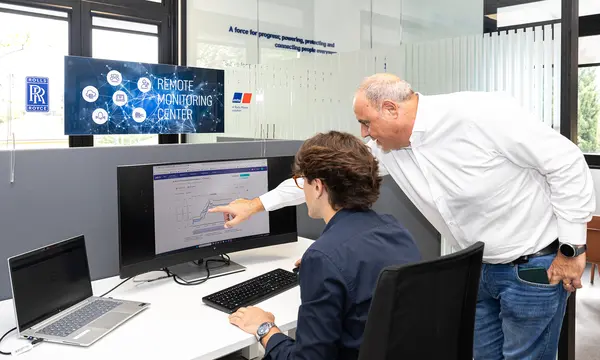
Rolls-Royce has opened a new mtu Remote Monitoring Centre in Arcola, Italy, with yacht and marine propulsion systems among the first applications monitored.
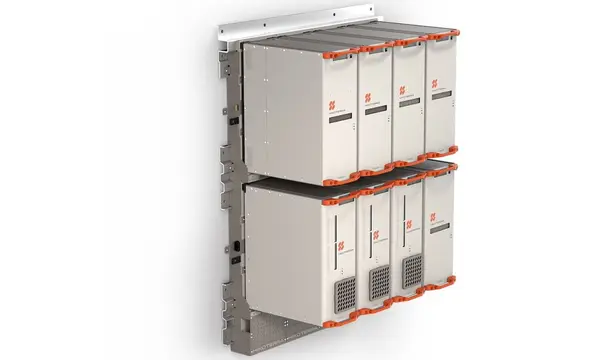
HikoTerra adds distributors and technical partners for the modular H⁴ Hybrid Power System, with configurations allowing up to 30kW of inversion and 96kWh of …
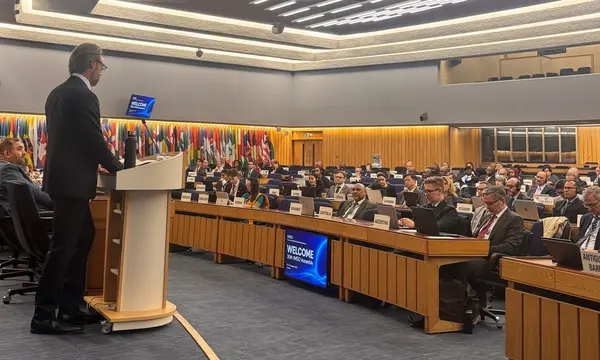
IMSO opens its 30th Assembly in London with delegates from 112 Parties reviewing GMDSS satellite distress service resilience and LRIT performance.
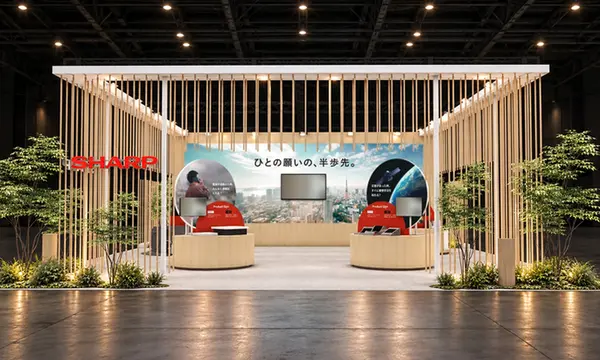
Sharp prepares to demonstrate its MEO/LEO tracking satellite user terminals at CEATEC 2026, with marine vessels among the planned mobile use cases.
Superyacht Guide
Continue into the wider Superyacht Guide.
Business opportunities · Superyacht Guide
Companies serving the superyacht market can discuss clearly identified advertising, sponsorship and business-profile opportunities. Commercial activity remains separate from independent editorial coverage.