

Company
Rolls-Royce Power Systems
Explore the company profile and related Superyacht Guide coverage.
Rolls-Royce Targets Integrated Bridge Systems for 30–40m Yachts — licensed SYG News 26Nov batch04
Rolls-Royce Power Systems is expanding NautIQ bridge and automation products to 30–40m series-production yachts, connecting controls with mtu propulsion.
Rolls-Royce Power Systems is expanding the commercial focus of its yacht automation and integrated bridge offering beyond the largest custom superyachts and toward serial-production vessels measuring roughly 30 to 40 metres. Christian Paolini, who leads the Team Italia Marine business within Rolls-Royce Power Systems, explained the strategy in a Marine Industry News interview published on 25 November. The objective is to make integrated navigation, vessel monitoring and control more accessible to shipyards producing several examples of a model, rather than developing every solution exclusively for a one-off megayacht. For the industry, the development illustrates how yacht electronics, propulsion and after-sales support are increasingly being considered as parts of one system.
Paolini describes a historical focus on megayachts, particularly in bridge and automation technology. The latest approach places increasing attention on production yachts between 30 and 40 metres, where Rolls-Royce already has an established presence through its mtu engine business. The commercial logic is straightforward: equipment can potentially be offered across a series of similar vessels instead of requiring a highly bespoke integration process for every hull.
This does not mean that yachts in this segment are simple or interchangeable. Their owners may request substantial customisation, and a 30-metre vessel still contains numerous safety-critical systems. The opportunity for a supplier lies in establishing a repeatable foundation that can be adapted within known limits. Buyers and builders need to understand those limits before treating the technology as a universal fit.
The company's mtu NautIQ Bridge platform is described as integrating navigation, vessel monitoring and control. This may reduce the need for separate displays and interfaces that are difficult to coordinate. A wheelhouse designed around an integrated platform can make information more consistent, potentially helping operators move between navigation and machinery awareness without changing between unrelated applications.
An integrated interface is not the same as removing every dedicated control or reducing the requirement for redundancy. Safe navigation requires dependable equipment, clear alerts and appropriate fallback arrangements. Captains should request details of the functions included, network architecture, power arrangements and operating procedures. They should also confirm which features are standard and which depend on optional equipment or particular integration partners.
Paolini also refers to mtu NautIQ Master Essential, an automation product intended to handle alarms and the monitoring and control of essential onboard systems. Machinery and electrical conditions affect the safe operation of a yacht, so the quality of alerts and their presentation matters. A crew member should be able to understand what an alarm means, where it originates and which action is appropriate.
The interface must also avoid overwhelming operators with unnecessary messages. A sophisticated dashboard is of little value if it creates confusion during a developing fault. Owners evaluating an automation package can ask about alarm philosophy, system testing, training and the availability of technical support. Those questions matter just as much as the visual appearance of the screens.
Rolls-Royce presents a broader bridge-to-propeller strategy, linking its navigation and automation capabilities with engines and propulsion systems. Providing several major subsystems through one commercial relationship may make coordination easier for shipyards and owners. A project team could potentially discuss compatibility, commissioning and support with fewer independent suppliers.
However, integration does not eliminate the need for independent design review and clear allocation of responsibility. Classification and flag requirements still apply, and subcontractors may participate in installation and maintenance. The relevant question is whether the integrated proposal actually simplifies the owner's chosen specification. A single supplier name is not evidence that every component was engineered or installed by one team.
According to Paolini, serial production offers a different cost structure from a fully custom 60- or 70-metre yacht. A standardised configuration may allow engineering and software work to be reused across a model series, while a one-off installation often needs more individual coordination. This can support greater production volume and potentially lower unit cost for the supplier.
Those savings should not be confused with a guaranteed reduction in the purchase price of the yacht. Pricing depends on the actual package, contract terms and selected options. A yard may still need customised interfaces or hardware to accommodate the owner's preferences. Buyers should compare complete installed solutions rather than individual display prices.
Moving into smaller yachts brings commercial challenges. Owners and yards in a 30–40-metre segment may be more sensitive to the difference between a standard monitoring system and a premium integrated solution. Paolini acknowledges that the value proposition has to be understandable in that context. Technology can be impressive but difficult to sell if its practical benefits are unclear.
For a professional buyer, the decision should consider the total cost of ownership. That includes installation, training, software updates, support and the ease of replacing a component years later. A lower initial price may be less attractive if the system is difficult to maintain, while a higher-cost solution may be justified if it solves a documented operational problem.
The interview describes the possibility of adding or upgrading functions after delivery without extensive alterations to the wheelhouse. A stable digital platform can potentially support new software tools as they become available. For an owner who expects to retain a yacht for many years, this is an appealing idea because technology can develop faster than the vessel's basic structure.
Future-ready should nevertheless be treated as a statement of design intent rather than an unlimited warranty of compatibility. Upgrades may require new sensors, licenses, computing capacity or changes to other equipment. Owners should ask which additions are contractually supported, how long updates will be available and what happens when hardware reaches the end of its service life.
Connecting navigation, machinery and monitoring functions creates useful opportunities for information sharing, but it also makes cybersecurity and access management important. The company interview focuses on integration and market strategy rather than publishing a detailed security assessment for every NautIQ installation. Clients should therefore request system-specific information instead of assuming that integration automatically guarantees resilience.
Good practice includes clear user permissions, controlled software updates, backup procedures and a reliable separation of critical operations where required. The captain and technical team need to understand how faults are recognised and managed. A secure system is the result of engineering choices and ongoing maintenance, not simply the presence of a recognised brand.
Paolini notes that engines are often selected relatively early in a yacht's construction, while detailed discussions about bridge and automation systems can come later. On a large custom yacht, those decisions may involve different stakeholders and departments. This sequence can complicate a supplier's effort to offer a complete package from the outset.
Serial-production projects may allow a more predictable workflow. If the yard develops an approved baseline for a model, technical teams can coordinate major systems before each individual vessel is sold. Yet the process still needs flexibility for owners who request alternative electronics or operating arrangements. Clear configuration management becomes essential to prevent confusion between different hulls in the same series.
The company is positioning itself as a single point of contact for several related systems, supported by its global service network. A well-coordinated service arrangement can be helpful when a yacht operates in different cruising regions. If an owner encounters a fault that appears to involve both machinery and automation, clear support responsibility may help shorten the time spent identifying the right expert.
Actual coverage depends on the location, equipment and service agreement. Owners should ask which tasks are performed directly, which rely on partners and whether critical spare parts are available near intended cruising grounds. An international brand name does not guarantee that every technician in the network can work on every bridge and automation component.
An integrated wheelhouse can present information more conveniently, but officers still need to understand the systems behind the display. Training should include normal operation, alarm handling, loss-of-signal scenarios and emergency fallback procedures. Familiarity with one interface does not automatically qualify a person to operate every connected system safely.
Owners should make training arrangements part of the purchase and commissioning process. A captain may also want clear documentation that can be retained for future crew changes. Effective design reduces unnecessary complexity without hiding information essential to safety. That objective should be tested aboard the actual yacht, not assumed from a demonstration at a trade show.
The 25 November interview connects the expansion to yacht builders in established production markets and to opportunities beyond the firm's traditional megayacht customer base. Italy and Türkiye are important contexts for the discussion, with future interest in other European, Asian and American markets. These are commercial intentions and reported relationships, not a confirmed delivery schedule for every named shipyard.
A credible measure of the strategy's success will be the number of defined vessel models using an approved, maintainable configuration. That would demonstrate more than a series of unrelated demonstrations. Until specific installations and contracts are confirmed, readers should distinguish a market ambition from a completed programme of deliveries.
Shipyards may value the convenience of a coordinated package while still wanting flexibility to choose specialist components. Owners likewise may have established preferences for navigational equipment or control interfaces. The commercial issue is whether the supplier can accommodate those requirements without undermining reliability or introducing excessive costs.
Competition between integrated systems can be beneficial when it encourages better documentation, support and clear interfaces. Buyers should examine how data can be accessed, whether components can be serviced independently and how the yacht will be maintained if product generations change. The best choice is the one suited to the vessel's actual programme.
The verified announcement is that Rolls-Royce Power Systems is actively targeting the 30–40-metre serial-production yacht segment with its mtu NautIQ Bridge and NautIQ Master Essential offering. Paolini identifies the potential benefits of common systems, repeatable designs and lifecycle support, while acknowledging the greater cost sensitivity of smaller vessels. No official quotation or independent test in the article establishes that every future yacht will adopt the system or achieve a particular saving.
For yacht builders, this is a practical example of automation and propulsion suppliers extending technologies developed for large custom yachts into a broader market. For owners and captains, it is a reason to ask more detailed questions about digital architecture, service access, training and upgrade pathways. The most useful development would be reliable integration that simplifies real operations rather than merely making a wheelhouse look modern.
Primary source: Zella Compton, Marine Industry News, firsthand Christian Paolini Rolls-Royce Power Systems interview, 25 November 2026.
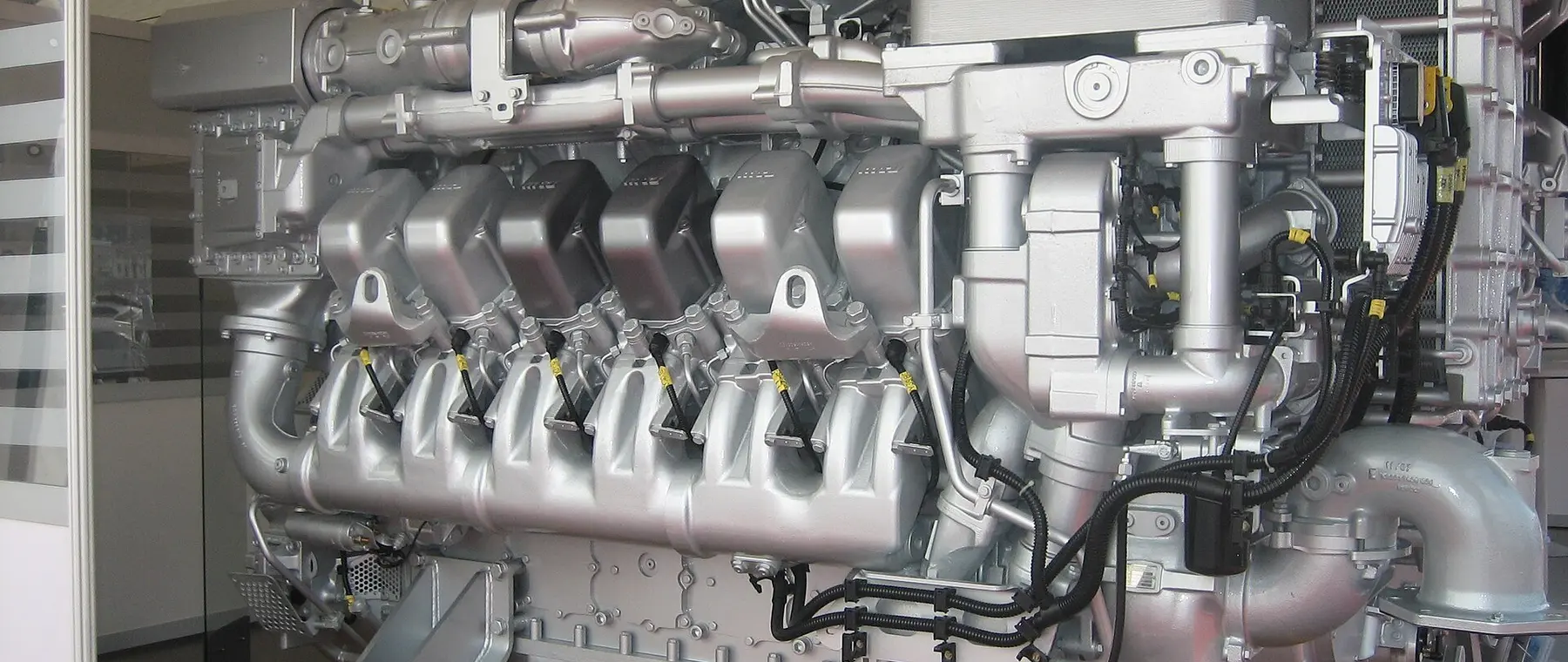
Licensed archival photograph of mtu marine engine technology at a boat show, not the new NautIQ Bridge product on a delivered yacht. Photo: Saxum; CC BY-SA 3.0 via Wikimedia Commons. Official source.
Explore
Go deeper into the yachts, companies, events and destinations directly connected to this article.
Company
Explore the company profile and related Superyacht Guide coverage.
Continue reading

Rolls-Royce has expanded its mtu yacht portfolio with variable-speed Series 2000 gensets and a new IMO Tier III SCR system. The company claims up …
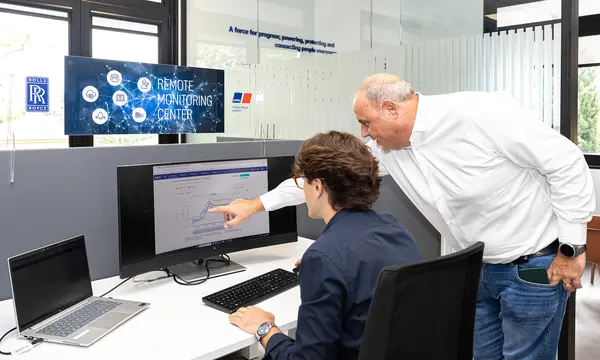
Rolls-Royce has opened a new mtu Remote Monitoring Centre in Arcola, Italy, with yacht and marine propulsion systems among the first applications monitored.
ICOMIA reports the Australian Commercial Marine Conference 2026, with technical presentations on electric propulsion, ventilation, trim systems and marine services.
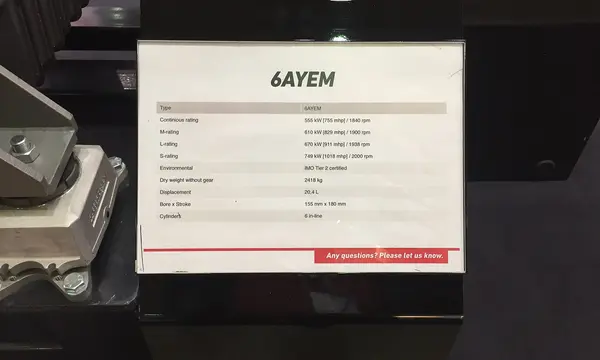
YANMAR has launched the YF12e four-mode hybrid propulsion package for 40–50ft displacement boats, bringing electric operation, diesel power and charging.
Superyacht Guide
Continue into the wider Superyacht Guide.
Business opportunities · Superyacht Guide
Companies serving the superyacht market can discuss clearly identified advertising, sponsorship and business-profile opportunities. Commercial activity remains separate from independent editorial coverage.