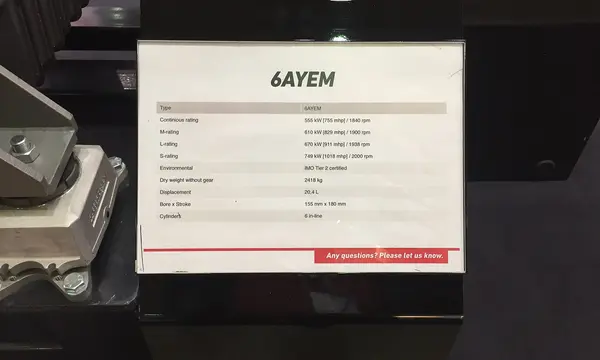
YANMAR Details Four-Mode YF12e Hybrid Propulsion System
YANMAR has launched the YF12e four-mode hybrid propulsion package for 40–50ft displacement boats, bringing electric operation, diesel power and charging.
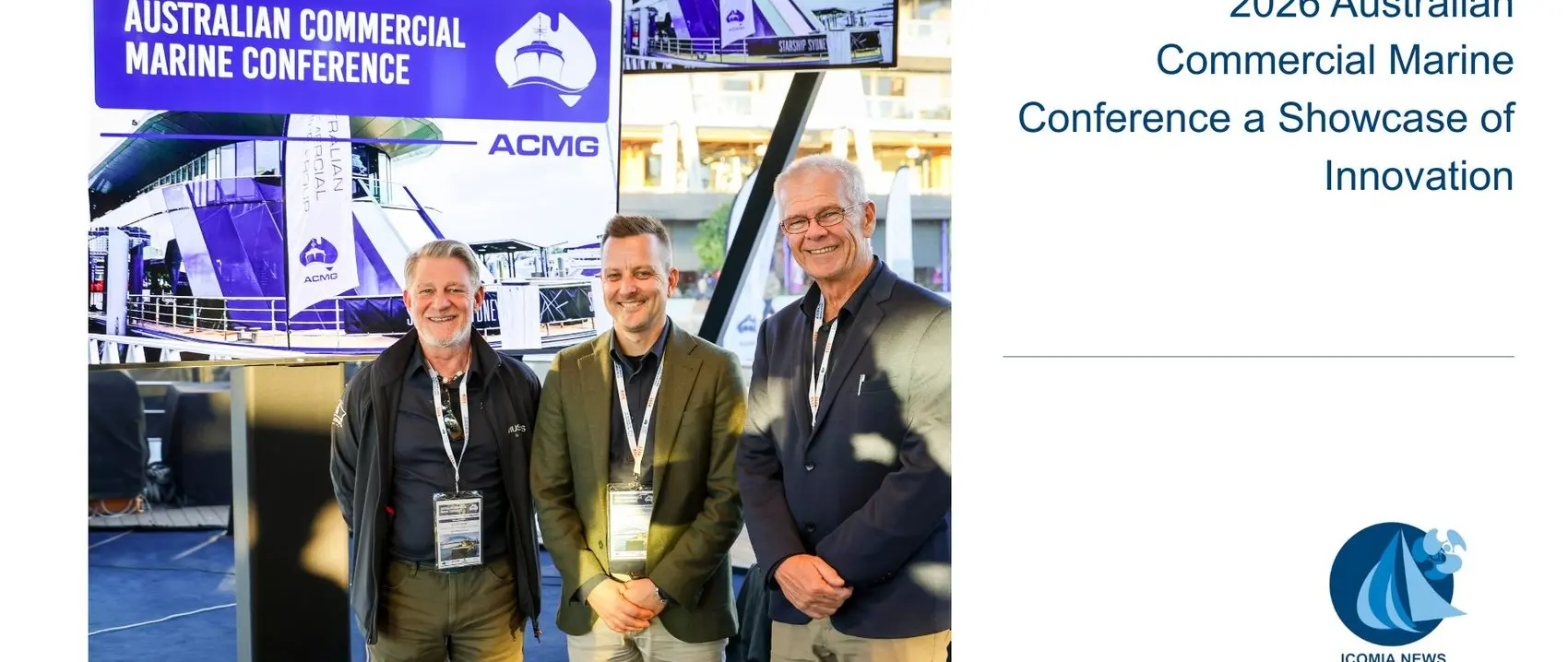
© Salty Dingo / ACMG / ICOMIA. Official Australian Commercial Marine Conference 2026 first-party event news photograph.
ICOMIA reports the Australian Commercial Marine Conference 2026, with technical presentations on electric propulsion, ventilation, trim systems and marine services.
The Australian Commercial Marine Group held its third annual conference on 29 July 2026 aboard SeaLink's Starship Sydney at Darling Harbour. An account published by the International Council of Marine Industry Associations reported a sell-out 143 registrations, with sessions covering propulsion, vessel technology, safety, tourism and industry economics. The event was not exclusively a superyacht gathering, but several of the subjects discussed have direct relevance to large-yacht engineering and refit. Electric machinery, ventilation, stabilisation and fleet services all involve technical questions that yacht builders and managers face, even though systems demonstrated for commercial craft cannot simply be assumed suitable for any superyacht.
Nick Lester of SeaLink Sydney Harbour and the ACMG committee described conference participation growing from 72 in 2024 to 107 in 2025 and more than 140 in 2026. The association reported 143 registrations for this edition. Such growth indicates stronger participation in the event, not necessarily higher revenue for Australian marine businesses. Trade gatherings provide opportunities to compare technology and meet suppliers, but financial performance varies by firm. For an international yacht project team, the significance is the concentration of commercial operators and manufacturers discussing real installations. The meeting offers a view of technology and working practices that can sometimes inform large-yacht decisions.
Control Point Group introduced an Australian-designed marine ventilation system called SUKKAGON, described as a new approach to confined-space safety. Its presenters drew on emergency-response experience and collaboration with Marine Air Flow International, commissioned to manufacture the system following a connection at the previous conference. The report does not supply technical ratings or test evidence, so the system should not be treated as approved for a particular vessel on the strength of the announcement. Nevertheless, confined-space ventilation is a serious engineering concern. Yachts have machinery rooms, tanks and other spaces where atmospheric hazards require disciplined procedures, and specialist equipment deserves rigorous technical review.
Work in enclosed spaces involves hazards that may not be visible, including oxygen deficiency, toxic atmospheres and restricted access. A yacht manager should never use a promotional product description as a substitute for a formal risk assessment or applicable safe-entry procedures. Training, atmospheric testing, rescue planning and equipment selection must match the actual space. The conference's attention to ventilation is useful because it links technical design with practical safety. A new tool may help a trained crew or contractor, but only when its operation, limitations and certification are understood. Technology can support procedures; it should not be used to bypass them.
Scania Australia presented the DI13 inline marine engine, which the official report describes as the manufacturer's most advanced design. The source makes a claim about a seven-percent improvement associated with fuel efficiency, alongside greater durability, easier maintenance and modularity. That figure belongs to the company's presentation and is not an independently verified fuel-saving estimate for a superyacht installation. Engine performance depends on duty cycle, load and integration with the rest of the vessel. Large-yacht engineers should ask for test curves, fuel-consumption data, emissions compliance and service support before determining whether any new engine design suits their own machinery arrangement.
The DI13 presentation included the idea of readiness for alternative fuels. That phrase can mean different things across engine families and fuel types. Owners considering future propulsion decisions should ask exactly which fuels are approved, whether modifications are required and how warranties and maintenance schedules are affected. Fuel availability also matters along an intended cruising route. The association does not establish a universal alternative-fuel capability for every DI13 version. The relevant news is that Scania is making those engineering questions part of its product development. A careful buyer needs specific documentation before treating a future-fuel claim as a reason to change a vessel specification.
Scania also introduced its E-Machine, described as a compact electric propulsion package combining motor, inverter and gearbox into one unit. The presentation framed it as a possible repower route for existing commercial vessels without a complete rebuild. The source reports that the technology is already being used in a fully electric Sydney ferry. A real service installation can provide useful evidence, but it does not make the same package appropriate for yachts with very different power profiles. Battery systems, charging facilities, cooling and operational range still require assessment. The value of a compact package depends on how well it integrates with the vessel's total energy system.
The event also featured Aus Ships Group discussing Australia's first fully electric passenger ferry, including the design and commercial challenges of the project. A ferry operates on routes with defined stops and access to infrastructure, making it different from a superyacht with long passages and variable hotel loads. Yet lessons about energy storage, machinery integration, maintenance and crew training may still transfer. The speaker highlighted relationships with technology partners including Volvo Penta, Ampcontrol and Oceania Power. The report does not provide a comparative cost study, so claims about lower operating expense should be evaluated case by case rather than assumed from the presence of electric propulsion.
Humphree presented work on interceptor technology, trim management and stabilisation. These systems can influence resistance, ride comfort and efficiency by changing a vessel's operating attitude. The association's report suggests that even small percentage improvements may have a meaningful cumulative effect. It does not provide a universal saving figure or a specific yacht's trial results. For superyacht owners, the engineering question is how a chosen system performs over the actual range of speeds and conditions in which the yacht operates. An upgrade may also affect maintenance and integration with existing controls. Technical modelling and trials are more reliable than a generic promise of efficiency.
Stabilisation and trim are not purely fuel-consumption topics. A large yacht's motion and noise can affect guest experience, crew fatigue and the ability to operate comfortably during a passage. The best solution depends on hull form, speed range and intended use. Systems that work well on fast commercial craft may not be appropriate to a displacement yacht, while equipment suitable for one beam or draft may be unsuitable for another. The Humphree discussion gives naval architects and captains a reason to examine current solutions, but it does not eliminate the need for specialist engineering advice and classification review where applicable.
Tourism Australia's representative reported 9.2 million international visitors and A$57.6 billion in visitor trip expenditure, in the context of growing inbound tourism and demand for experiences. Those are broad tourism statistics, not superyacht spending figures. The conference linked them to opportunities for marine operators, including those serving high-end visitors. Owners of large yachts may influence local demand through spending on berths and services, but the event did not measure that impact as a separate share of the total. A responsible interpretation recognises the overall tourism context while leaving superyacht-specific spending estimates to studies designed to measure them.
ACMG chief executive David Good presented findings from a Commercial Economic Impact Study, describing an Australian commercial marine sector exceeding A$50 billion in economic value. The scope is broad and includes businesses far beyond superyachts. It would be misleading to report the full amount as yachtbuilding turnover or marina revenue. The study's importance is to give industry organisations evidence for discussions with public authorities and investors. Reliable economic analysis needs clear definitions and should distinguish direct spending from wider effects. Buyers may find the sector's scale encouraging, but company-specific decisions still require financial and operational due diligence.
The conference introduced a Pitch Platform, allowing members to present products and services to a professional audience. Businesses named in the report include Marine Air Flow International, Sea-Flux, BluSky and Nebo Fleet. An exhibitor zone added further suppliers and service organisations. This creates opportunities for project teams to discover companies not previously on their procurement lists. However, participation in a pitch session does not establish technical compliance or financial stability. Owners and yards should ask for references, detailed specifications and after-sales arrangements before incorporating a new supplier into a high-value project.
Power Equipment discussed its role distributing marine engines and propulsion systems across Australia and New Zealand, including logistics, engineering and training. Those supporting functions can be as important as equipment performance when vessels operate away from the original manufacturer. Superyachts need dependable spare-parts access and technicians familiar with their machinery. A new component may be attractive during procurement but create operational risk if support is limited. The conference report does not list service guarantees for particular products. It does, however, underline why distribution and technical training belong in the same conversation as product innovation.
Peter Munckton of the Bank of Queensland addressed interest rates, inflation, oil prices and geopolitical uncertainty, encouraging productivity and efficiency. These subjects affect both marine businesses and owners, although their effects vary by contract and location. A shipyard may face rising material or financing costs, while an operator considers fuel and maintenance budgets. The presentation is a useful reminder that technology decisions are made within commercial constraints. The source does not provide a detailed financial forecast for the superyacht industry, and none should be inferred. Sound project management needs flexible assumptions and attention to the full cost of ownership.
The conference brought together ferry operators, propulsion manufacturers, specialist equipment suppliers and members of AIMEX and Superyacht Australia. Such a mixture creates opportunities for techniques developed in one segment to be discussed by another. Transfer must be evaluated carefully: large yachts have different expectations for noise, redundancy, fit and finish, and long-range capability. Nevertheless, useful lessons can emerge from commercial vessels with high utilisation and well-documented maintenance. The industry's interest in practical demonstrations and partnerships is a substantive theme, not merely an event slogan. The challenge is determining which ideas are applicable to a particular yacht.
ICOMIA's 31 July report establishes the 143-registration conference, its technical presentations and the new supplier platform. It identifies Scania's DI13 and E-Machine, the Control Point Group ventilation product and Humphree's work on trim and stabilisation, alongside tourism and economic discussions. The report does not certify the equipment or provide independent test results for every claim. For superyacht builders and managers, the useful takeaway is a cross-sector view of engineering developments that merit careful investigation. The event demonstrates that propulsion, safety, efficiency and service support remain central concerns across Australia's marine industries.
Continue reading
YANMAR has launched the YF12e four-mode hybrid propulsion package for 40–50ft displacement boats, bringing electric operation, diesel power and charging.
Videoworks’ Paolo Tagliapietra explains Starlink and OneWeb redundancy, varying maritime service permissions, satellite costs and yacht cybersecurity.
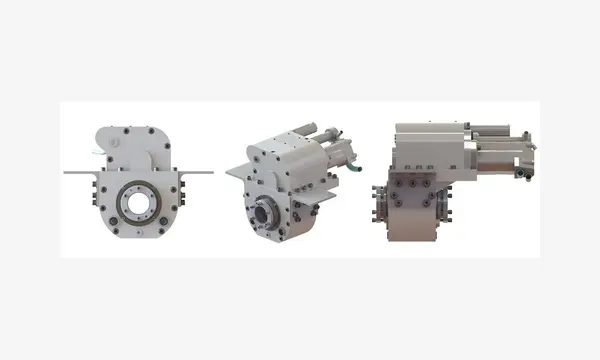
ABT-TRAC's Get Home Drive uses a hydraulic motor and main shaft to provide alternative forward or reverse movement if primary propulsion is disabled.
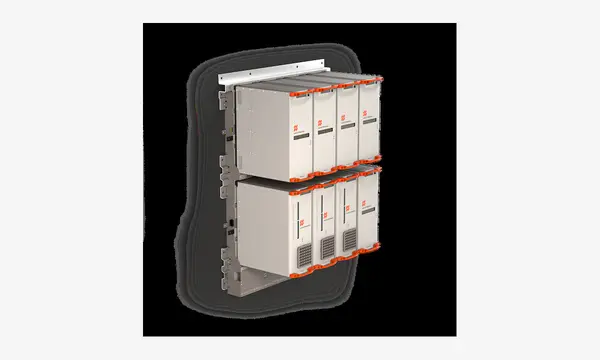
HikoTerra's H4 integrated hybrid power system gains a DAME 2026 special mention, highlighting battery-first energy architecture for superyacht projects.
Superyacht Guide
Continue into the wider Superyacht Guide.
Business opportunities · Superyacht Guide
Companies serving the superyacht market can discuss clearly identified advertising, sponsorship and business-profile opportunities. Commercial activity remains separate from independent editorial coverage.