Videoworks Details Dual-LEO Satellite Strategy for Superyachts
By Superyacht Guide Newsroom · Edited by Superyacht Guide Newsroom
Videoworks Details Dual-LEO Satellite Strategy for Superyachts — SYG newsroom 25 Nov batch05
Videoworks’ Paolo Tagliapietra explains Starlink and OneWeb redundancy, varying maritime service permissions, satellite costs and yacht cybersecurity.
Videoworks executive Paolo Tagliapietra has described how superyacht connectivity is becoming a matter of resilience and cybersecurity rather than simply the pursuit of faster internet connections. The remarks were published in an interview by SuperYacht24 on 24 November 2026 following the METSTRADE exhibition in Amsterdam. Tagliapietra leads the company's Connectivity & Communication Solutions business unit. The new discussion focuses on the practical use of multiple low-Earth-orbit satellite networks, national service restrictions and the need to protect onboard systems. It is distinct from earlier company announcements concerned with general business expansion.
The interview identifies Starlink and Eutelsat OneWeb as two connectivity options that Videoworks can combine on a yacht, while noting the prospect of Amazon Leo becoming a further market participant. No statement establishes that every yacht currently managed by Videoworks has all three services or that a new global availability guarantee has been issued. The importance of the interview is its explanation of the trade-offs encountered by a yacht moving between jurisdictions: service performance, authorisation, redundancy and digital security must all be considered together.
High-speed connectivity has become essential for owners, guests and professional crews. The same connection that carries video calls or entertainment may also be used for authorised support functions, maintenance information and operational data. A yacht travelling internationally must therefore plan for interruptions caused by equipment faults, regional coverage limitations, contractual restrictions or local regulations. A fast connection in one location may not be available under identical terms elsewhere.
Tagliapietra describes a transition from traditional VSAT and cellular services to low-Earth-orbit networks. Low-orbit satellite constellations can offer different performance characteristics from conventional higher-orbit systems, but an individual yacht's experience still depends on terminal installation, network loading, available capacity and service plans. No solution should be assumed to operate everywhere. For a vessel planning remote passages, the most relevant question is often which reliable alternative remains when the preferred link is unavailable.
Videoworks says it installs OneWeb alongside Starlink in some applications. The practical rationale is not that both providers deliver identical service, but that they may have different commercial permissions and operating footprints. A yacht whose primary connection becomes unavailable may be able to use another approved network in that jurisdiction. Whether that is possible depends on current service authorisations and the equipment installed, rather than the simple presence of two antenna domes on deck.
Redundancy also has to be engineered into the onboard network. The vessel needs a controlled way to direct traffic over the available connection, maintain security rules and inform the crew when service quality changes. A pair of independent subscriptions does not automatically constitute a tested failover strategy. Network configuration, monitoring and routine drills are important. The interview highlights the value of diversified connectivity, while leaving the exact architecture of each customer's installation to be established from project documentation.
Eutelsat's OneWeb network is designed primarily around professional and enterprise services, including maritime applications. Tagliapietra describes it as a viable complement to Starlink, especially in circumstances where service permissions differ. The interview quotes a broad performance comparison of around 40–80 Mbps download and 20–25 Mbps upload for OneWeb packages, while citing higher potential bandwidth from newer Starlink equipment. These are reported commercial or technical figures, not independently measured throughput aboard a particular yacht.
Real-world performance can vary with antenna equipment, plan, route, network congestion and policy restrictions. An owner comparing satellite options should examine guaranteed or typical service characteristics and the terms under which each connection can operate, rather than choose on a single maximum-speed headline. For engineering teams, the challenge is to make different links behave as a coherent service from the perspective of users and essential onboard functions.
One point raised in the November interview is the difference between whether a satellite can technically communicate with a terminal and whether the commercial service is authorised in a particular country. A system might have physical network coverage while local regulation or provider policy prevents it from operating. The executive cites journeys involving regions such as Turkey, Saudi Arabia and parts of Asia as examples of why multinational itineraries require careful service planning.
The position can change over time as regulators and providers update licences. It would therefore be misleading to publish an immutable country-by-country service map based solely on an interview. Captains and yacht managers need current written confirmation of the rules and contractual terms for their intended route. A system permitted in one jurisdiction may face different restrictions nearby. Designing a resilient communications plan means accounting for this regulatory element rather than treating it as an unexpected technical failure.
The interview also refers to Amazon's Leo network as an emerging competitor. It discusses anticipated packages for residential and business or maritime users, with reported potential terminal speeds reaching about one gigabit per second under particular configurations. Those are forward-looking service expectations, not evidence that an individual superyacht can order and operate the full future offering in every destination today. A commercial launch schedule and the geographic scope of permitted service would require separate verification.
Additional competition could offer yacht managers more options when balancing capacity, service agreements and regional compatibility. It could also increase the complexity of selecting terminals, contracting support and maintaining cybersecurity across multiple networks. The sensible approach is to evaluate each available provider on actual operational requirements. The November interview helps identify the direction in which the market may develop while preserving the distinction between an emerging service and a proven onboard installation.
Tagliapietra discusses an expected increase of about 50% in certain Starlink maritime tariff lists from 1 December 2026. This is a report of an anticipated price change affecting specified plans, not a verified statement that every Starlink customer worldwide will face the same percentage increase. Contract type, region, data allocation and commercial conditions could influence individual invoices. Owners should obtain a current quotation or direct contractual notice before revising budgets.
Connectivity spending has become a meaningful recurring operational line for yachts whose crews and guests expect reliable high-bandwidth service. Costs can include the monthly subscriptions, antennas, maintenance, integration, cybersecurity and support. A second satellite network increases resilience but may also increase ongoing expenditure. The appropriate budget therefore considers the value of continuity and the full installed system, not merely comparing headline subscription prices between providers.
A modern superyacht may contain guest Wi-Fi, video streaming, bridge electronics, engineering controls, camera systems, access management, lighting and remotely supported devices. These functions do not all require the same network permissions. Separating guest traffic from operational systems can reduce the risk that a compromised entertainment device becomes a path into critical equipment. The interview emphasises protection of the entire digital infrastructure, including connected onboard devices, as yachts adopt more persistent communications.
The security approach must be tailored to the actual installation. Network segmentation, identity management, controlled remote access, monitoring, software updates and appropriate incident procedures are examples of general defensive measures. None of these alone offers an absolute guarantee against cyber incidents. Owners should work with qualified specialists and their technical teams to establish policies and verify they are being followed. A glossy connectivity installation is not, by itself, a mature security programme.
Cybersecurity affects more than the engineer maintaining a router. An incident can expose guest information, interrupt commercial communications, impair access to digital services or create difficulties for crew and management. The potential seriousness depends on which systems are affected and how they are isolated. High-value yachts may have significant privacy expectations and complex contractual relationships with managers, owners' offices and remote vendors. Those considerations are relevant even when no public cyber incident has occurred.
The published Videoworks interview does not identify a particular vessel as having suffered an attack or disclose a confirmed breach at a named company. It discusses preventive planning in an increasingly connected environment. That distinction matters: reporting a technical risk should not be phrased as an allegation that a specific yacht's systems are insecure. The goal is to describe why yacht operators are adding resilience and stronger security practices to the procurement process.
A connectivity upgrade during refit is an opportunity to examine how antennas, cabling, networks and onboard controls work together. Installation decisions can affect access for maintenance, electrical power needs, structural penetration and compatibility with existing systems. Technical staff should understand the vessel's actual itinerary and intended service levels before proposing equipment. A single premium-speed terminal may be appropriate for some owners, while others need a coordinated multicarrier arrangement.
Contractual and operational documentation is as important as the physical hardware. The crew should know whom to contact when a link fails, how to use the backup service and whether remote vendors have access to isolated systems. Tagliapietra's remarks support the case for an integrated approach, but the interview does not disclose the specification of a particular new yacht or issue a universal recommendation that every vessel should have the same mix of providers.
The 24 November 2026 interview adds specific operational detail to the industry's broader discussion of satellite connectivity: Videoworks uses Starlink and OneWeb as complementary options in some installations, anticipates additional competition from Amazon Leo, and stresses the importance of legal availability and protection of onboard networks. It also reports a potential tariff increase for some maritime plans. These are sourced statements and should be checked against provider terms when used for budgeting or voyage planning.
The key conclusion is that bandwidth cannot be assessed in isolation from service continuity or cybersecurity. Owners and managers need arrangements suited to their routes, vessels and operational risks. Superyacht Guide records the technical interview as a new dated industry development while avoiding claims of performance guarantees, confirmed universal coverage or cybersecurity incidents that have not been documented.
Primary source: SuperYacht24 first-person interview with Videoworks executive Paolo Tagliapietra, 24 November 2026.
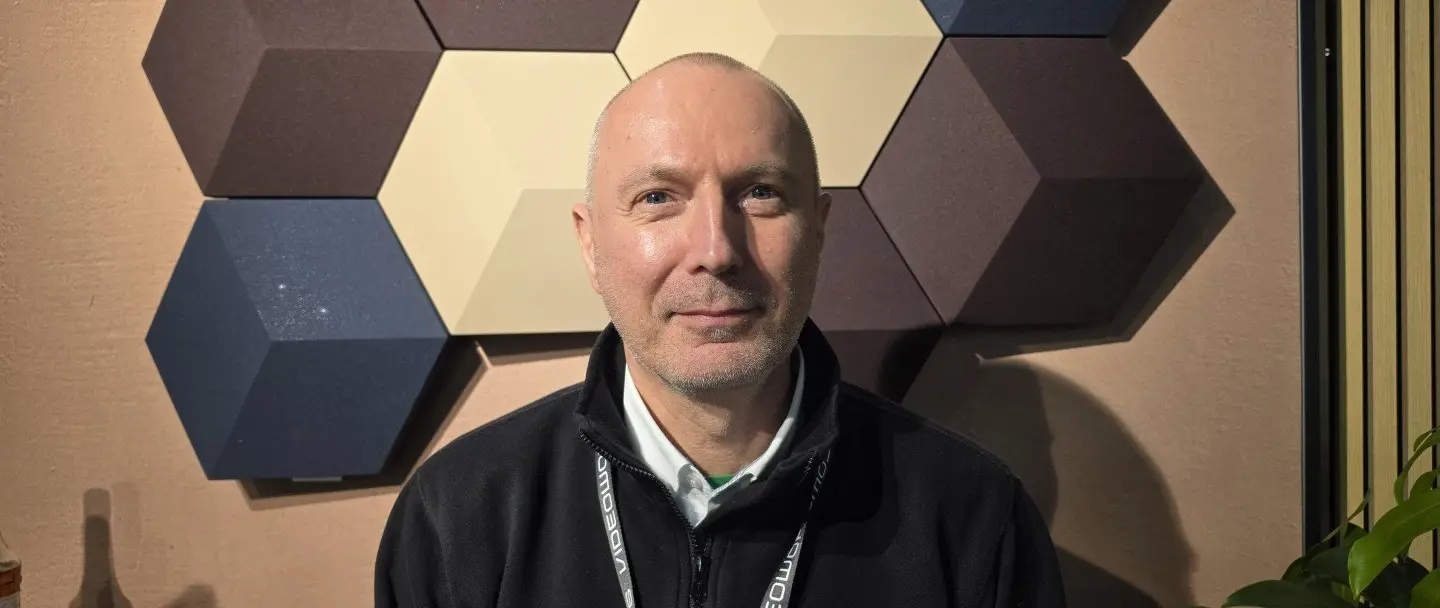
Paolo Tagliapietra pictured in SuperYacht24’s METSTRADE interview about Videoworks yacht connectivity, © SuperYacht24/original photographer. Official source.
Explore
Go deeper into the yachts, companies, events and destinations directly connected to this article.
Continue reading
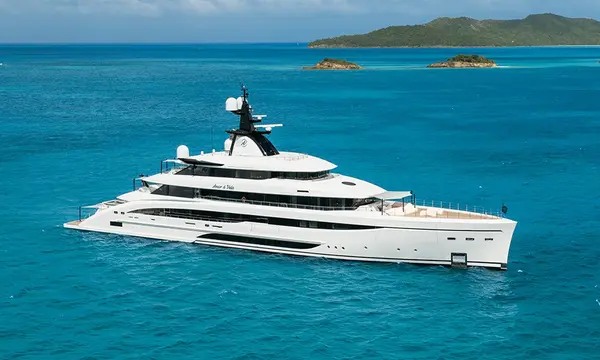
Videoworks has detailed the integrated AV, IT, communications and cybersecurity architecture aboard the 67.55m CRN superyacht Amor à Vida.
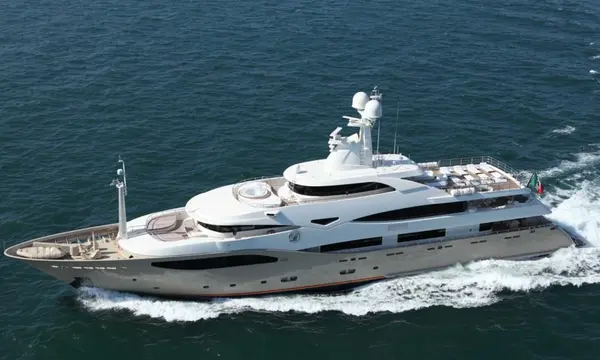
Videoworks has issued technical details of its completed digital refit aboard the 60m CRN charter yacht ELENI, covering multi-zone audio, a 115-inch upper-deck screen …

ABT-TRAC's Get Home Drive uses a hydraulic motor and main shaft to provide alternative forward or reverse movement if primary propulsion is disabled.
HikoTerra's H4 integrated hybrid power system gains a DAME 2026 special mention, highlighting battery-first energy architecture for superyacht projects.
Superyacht Guide
Continue into the wider Superyacht Guide.
Business opportunities · Superyacht Guide
Companies serving the superyacht market can discuss clearly identified advertising, sponsorship and business-profile opportunities. Commercial activity remains separate from independent editorial coverage.
