HikoTerra H4 Hybrid Power System Earns DAME Recognition for Yacht Energy
By Superyacht Guide Newsroom · Edited by Superyacht Guide Newsroom
HikoTerra H4 Hybrid Power System Earns DAME Recognition for Yacht Energy — original supplier image SYG news 23 November 2026 batch07
HikoTerra's H4 integrated hybrid power system gains a DAME 2026 special mention, highlighting battery-first energy architecture for superyacht projects.
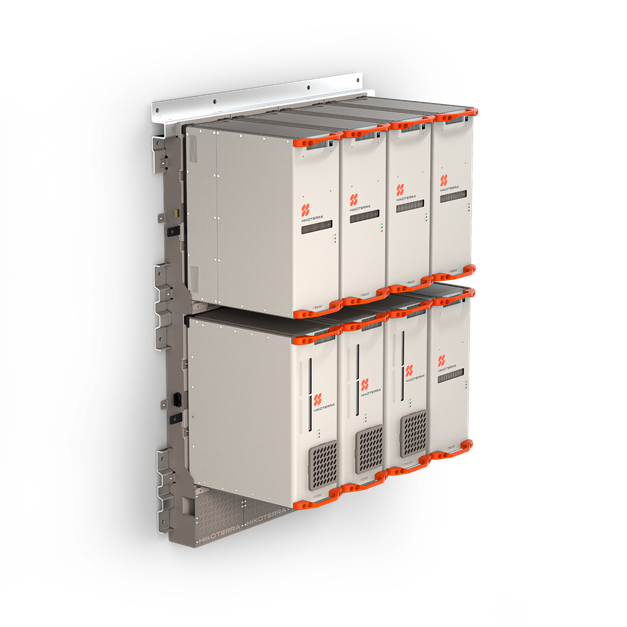
New Zealand marine technology company HikoTerra has gained renewed attention for its H4 Hybrid Power System after the product received a special mention at the 2026 DAME Design Awards during METSTRADE in Amsterdam. The company's official catalogue describes an integrated architecture combining battery storage, inverter, charger and control functions. Its underlying product entry dates to November 2025, so the current news is industry recognition in November 2026, not a claim that the system first arrived on the market this week. For superyacht designers and technical managers, the subject matters because energy systems are becoming harder to specify as vessels add more electric hotel equipment and explore hybrid operation. A coordinated package might reduce the integration effort compared with assembling unrelated devices, but the practical benefit depends on compatibility and how the system is installed. The H4 remains a product to assess through documented data and real operating requirements, not an automatic replacement for every large yacht's conventional electrical architecture.
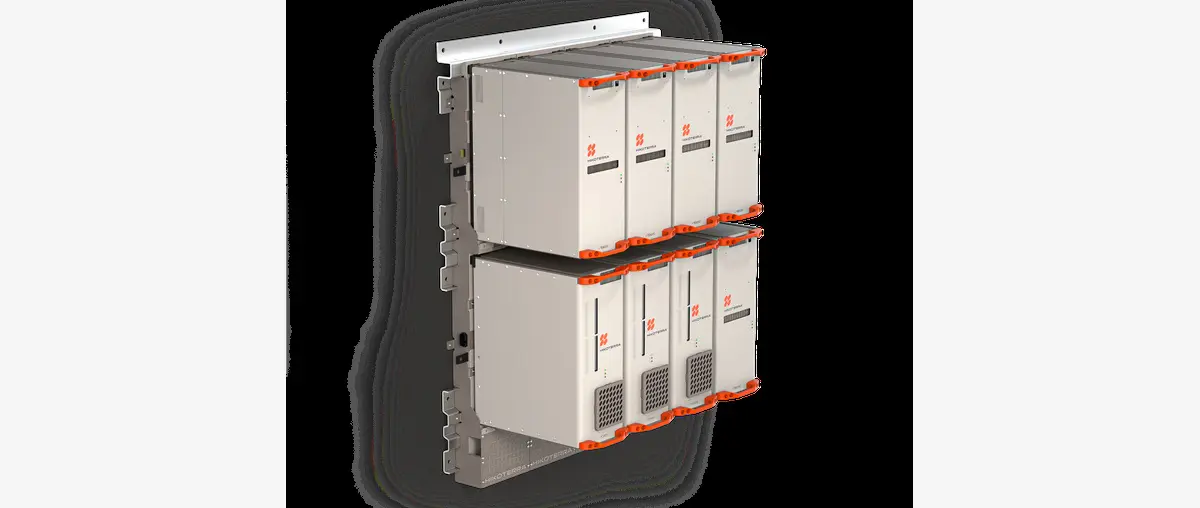
HikoTerra says its H4 system combines energy storage, power conversion, charging and intelligent control into one scalable ecosystem. The manufacturer's description emphasises a battery-first approach, with the aim of reducing reliance on generators and giving builders a more coherent onboard power installation. Those statements provide a clear design philosophy but do not establish the exact power rating, battery chemistry, warranty or endurance of every proposed configuration. The official catalogue summary does not give a complete set of engineering diagrams for a superyacht-sized system. Buyers should therefore request technical specifications for the particular configuration being offered. A design that works well on one vessel may need different equipment or redundancy on another. The most useful comparison is between complete electrical systems performing a defined duty, including their batteries, chargers, conversion equipment, protection and service arrangements.
A typical yacht electrical installation may bring together components from several suppliers. Batteries store energy, inverters produce power at the required form, chargers manage available input sources and protective equipment helps contain faults. Monitoring and control software connect these elements into a usable operating system. Each interface can introduce wiring, configuration and documentation requirements. An integrated approach may reduce the number of design decisions that must be reconciled between independent vendors. It can also make commissioning more repeatable if the package arrives with established settings and tested interactions. But integration is not a universal cure. The yacht still needs to connect the package to generators, shore power, distribution boards and the loads it serves. A builder should check the manufacturer's responsibilities for those boundaries and determine whether the system supports the redundancy and maintenance arrangements expected by the owner.
HikoTerra uses the term battery first to describe an approach in which stored electrical energy has a central role in supplying onboard demand. This can be attractive on yachts because electrical loads fluctuate with guest activity, climate and the equipment in use. A battery bank may support temporary demand without immediately starting a generator, provided the capacity and control settings are suitable. It might also be charged when the generator is already running efficiently or when a shore connection is available. The exact strategy should be evaluated against the yacht's operating profile. A battery-first design does not mean electricity is free or that generator use can always be eliminated. Energy must still be supplied from another source, and charging produces its own operational considerations. Owners should distinguish the possibility of quieter periods at anchor from a measurable reduction in fuel consumption over a full cruising season.
Owners sometimes focus on battery size because it is easy to express in kilowatt-hours. Yet the inverter and charging equipment determine how energy can actually be delivered and replenished. A yacht may have several air-conditioning compressors, galley appliances and technical systems that create short peaks in electrical demand. If the conversion equipment is undersized, an apparently generous energy store may still fail to support the expected loads. Similarly, chargers must be suitable for the available shore and generator supplies and for the battery chemistry. HikoTerra's H4 description treats these components as parts of one system, but the chosen configuration must still be checked against the real electrical schedule. The engineer should ask for continuous and peak conversion ratings, charging limits, protective behaviour and any operating restrictions. A complete design is defined by the way components work together, not the energy capacity of the battery alone.
A superyacht above 24 metres may support guest accommodation, crew facilities, extensive refrigeration and environmental controls, entertainment systems and large communications networks. Some yachts also have substantial auxiliary machinery, stabilisers and water-treatment equipment. The aggregate electrical demand can differ sharply between cruising, anchoring and periods in port. Any integrated hybrid power package should be assessed against these modes rather than against a generic yacht load. The manufacturer presents H4 as scalable, which suggests that multiple configurations are possible, but the short catalogue does not establish a design for every large vessel. Yacht engineers should examine whether the system can connect appropriately to the vessel's distribution architecture, how it shares load with generators and what happens during maintenance or faults. A practical superyacht installation must be both capable and sufficiently resilient for long-distance operation.
A common equipment ecosystem may reduce installation complexity, but it can also concentrate control functions in one vendor's platform. If the supervisory controller or a shared communication bus fails, engineers need to know which functions remain available. A large yacht may require independent emergency supplies and other protections under its applicable rules. The H4 should be evaluated in relation to those requirements, not treated as a substitute for them. The supplier should explain how power can be isolated for service, how individual modules are protected and how a fault affects unrelated loads. It may be possible to build redundancy with multiple power units or separate distribution arrangements, but the manufacturer must confirm the permitted designs. Owners should request an understandable single-line diagram and a list of failure modes. Integration is most successful when it simplifies normal operation without creating an avoidable single point of failure.
A new yacht can incorporate an integrated electrical platform from the earliest design stages. The naval architect and engineering team can reserve space for batteries, ventilation, cables and service access while the structure and general arrangement are being developed. A refit has to work around existing equipment and spaces that may not have been designed for high-capacity energy storage. Replacing a conventional electrical arrangement could require major changes to distribution boards, charging systems and control interfaces. A manufacturer may describe its solution as easy to install, yet the complete job depends on the vessel's current condition. A refit survey should identify which components can remain, what must be replaced and whether the resulting installation can satisfy the applicable class and safety requirements. The correct decision may be to use some new equipment while retaining other systems, rather than forcing a comprehensive conversion.
One of the aims of hybrid and battery-focused systems is to reduce the periods when a generator runs solely to supply relatively modest hotel demand. This may make an anchorage more comfortable for guests and crew by reducing local noise and vibration. The practical result depends on available battery energy and the amount consumed by refrigeration, air conditioning, cooking and other systems. On a warm night, cooling demand may be substantial even when the yacht is otherwise quiet. A responsible equipment proposal should present measured or modelled consumption over a representative period, with allowance for battery reserves. It should also explain how and when the yacht will recharge the storage bank. HikoTerra's public description does not provide a verified overnight endurance figure for a specific superyacht, so the benefit must not be expressed as a guaranteed number of silent hours. The owner should judge it through a realistic energy budget.
The controls of a hybrid power system should make complex machinery behaviour understandable to the captain and engineers. A good interface can show energy availability, charging status, significant loads and conditions requiring attention. However, a display cannot compensate for poor protective equipment or unreliable communication between components. The installation should be tested with the actual equipment onboard, including generators and shore-power supplies. Crew need training on normal operating modes and on what actions are appropriate after an alarm. They should also understand which settings can be adjusted safely and which require the supplier's intervention. Good documentation is particularly important on a large yacht where several engineers may serve over its lifetime. A coherent manufacturer's system may make that documentation easier, but the owner should confirm that service records and operating information remain accessible without depending on a proprietary cloud connection.
The integration of energy storage requires attention to thermal management, fault detection, isolation and the physical installation. The HikoTerra catalogue summary does not provide a comprehensive safety case for every configuration, so the yard needs the correct technical approvals and instructions. Battery chemistry, enclosure construction and the arrangement of multiple modules influence how the system should be protected. On a classed superyacht, the relevant authority may impose requirements concerning location, fire protection and emergency power. Designers must also account for the weight of the installation and any impact on the vessel's stability. Buyers should ask where the responsibility for the final safety assessment lies and how the manufacturer supports that process. A package marketed as integrated still needs careful engineering into the particular hull and machinery layout.
A yacht may spend much of its service life far from the shipyard that installed its equipment. For that reason, an energy system's maintainability and support network are essential parts of the purchasing decision. HikoTerra's broader company information presents an international support strategy, but the owner should verify arrangements for the actual cruising regions. A supplier should be able to explain how faults are diagnosed, how spare parts are supplied and whether authorised technicians can service the installation without extended delays. Software support is also important if the controls are central to several power functions. It should be possible to document configuration changes and maintain the system through future vessel ownership. An attractive initial price or a compact installation may lose its advantage if essential technical support is difficult to obtain. Lifecycle service deserves the same scrutiny as energy performance.
The DAME organisers listed HikoTerra H4 among the special mentions in Electronic and Electrical Systems at METSTRADE 2026. It is important to describe this correctly rather than report it as an overall or category win. Recognition from a marine design jury indicates that the approach attracted professional interest, especially in a year when integrated power and electrical innovations featured prominently. It does not independently establish lower fuel consumption or a successful installation on a named superyacht. The award gives owners and builders an additional reason to investigate the architecture and request detailed evidence. Products that improve the usability of complex electrical installations can have genuine practical value, but only if the promised simplicity survives commissioning and ongoing maintenance. The jury result is a relevant news event, not a final engineering verdict.
Before specifying H4, the yard should request details of available battery and conversion configurations, continuous power limits, input charging capabilities, control protocols and the exact operating modes supported. It should also establish the manufacturer’s permitted installation arrangements, service clearances, warranties and any class or safety documentation. The owner needs a realistic projection of generator running hours and energy use for the yacht's intended programme. A full quotation should cover hardware, integration, commissioning, crew training and ongoing support. Comparing these figures with a conventional system can reveal whether the integrated solution is likely to add value. An appropriate technical trial and clear acceptance criteria are more convincing than a simplified diagram showing batteries and an inverter connected together.
HikoTerra's H4 system brings energy storage, power conversion, charging and control into a manufacturer-defined platform. Its latest DAME special mention gives the marine industry a current reason to examine that architecture, particularly as yachts consider more flexible approaches to onboard electrical supply. The official materials support claims about the system's intended integration and its battery-first philosophy, but they do not establish universal efficiency gains, installed prices or endurance on every superyacht. Those results need engineering data and practical experience. For owners above the 24-metre threshold, the most important question is whether a coordinated power platform will make their yacht easier to operate safely and maintain over time. If it can deliver transparent performance, robust fault handling and reliable global support, its integration philosophy may be valuable. If not, the promise of simplicity will remain an exhibition claim rather than a demonstrated operating benefit.
Primary source: HikoTerra manufacturer-authored official H4 Hybrid Power System METSTRADE entry, originally released 1 November 2025.
Further information: DAME Design Awards official 17 November 2026 product recognition and award list.
© HikoTerra Ltd. Manufacturer-supplied original product image for H4 Hybrid Power System. Official source.
© HikoTerra Ltd. Manufacturer-supplied original product image for H4 Hybrid Power System.
Explore
Go deeper into the yachts, companies, events and destinations directly connected to this article.
Continue reading
HikoTerra adds distributors and technical partners for the modular H⁴ Hybrid Power System, with configurations allowing up to 30kW of inversion and 96kWh of …
Vital Lyfe promotes Access, a portable seawater watermaker; superyacht crews may assess it for tender use or contingency water rather than primary production.
HP Watermakers outlines an integrated freshwater system at METSTRADE 2026, combining water production, purification and distribution for large yachts.
The history and engineering of the 28.27m first hybrid-electric Swan 88 DreamCatcher, with its distinct Nautor hull identity and official 2024 source.
Superyacht Guide
Continue into the wider Superyacht Guide.
Business opportunities · Superyacht Guide
Companies serving the superyacht market can discuss clearly identified advertising, sponsorship and business-profile opportunities. Commercial activity remains separate from independent editorial coverage.