Vital Lyfe Access Portable Watermaker Raises Backup-Water Options for Superyacht Support Craft
By Superyacht Guide Newsroom · Edited by Superyacht Guide Newsroom
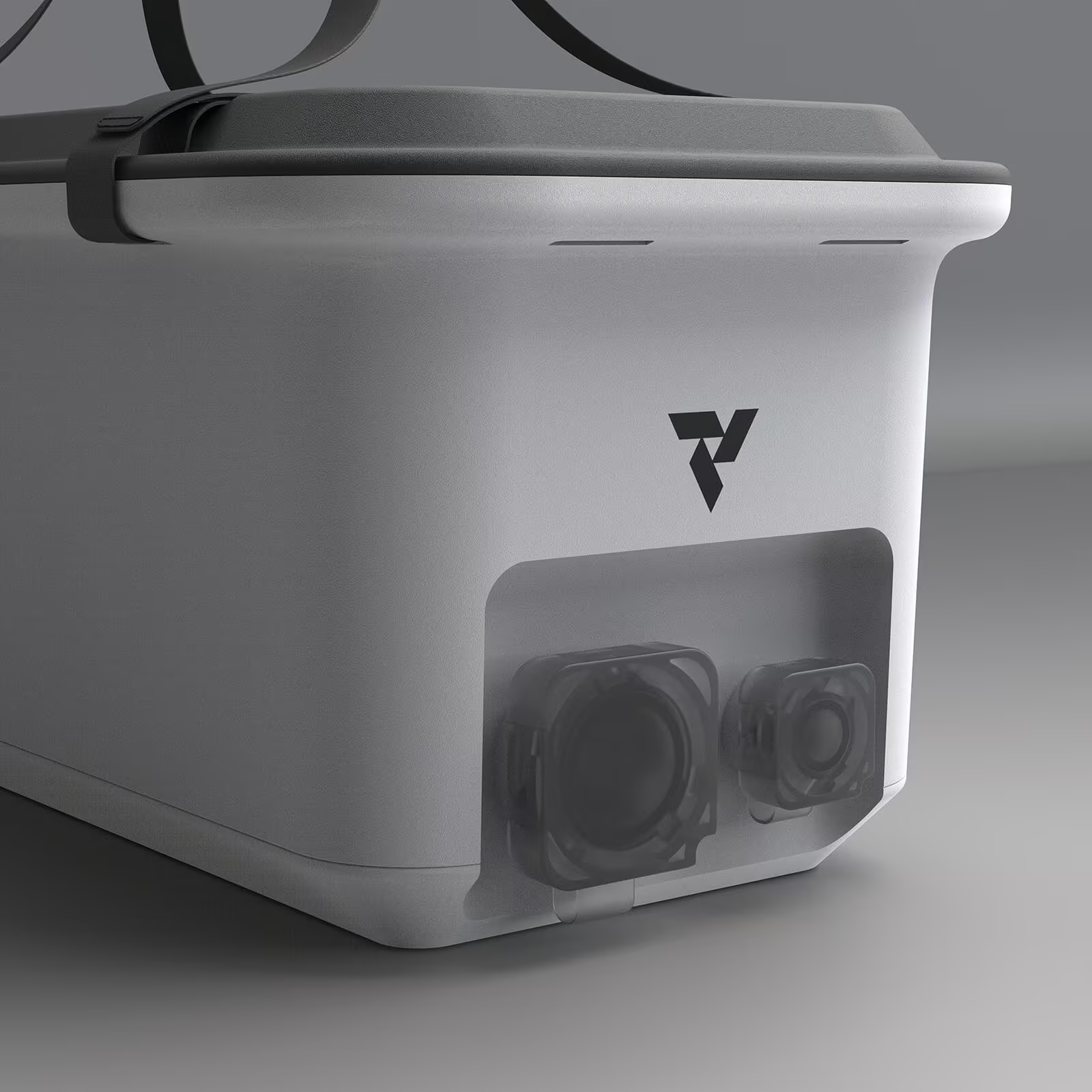
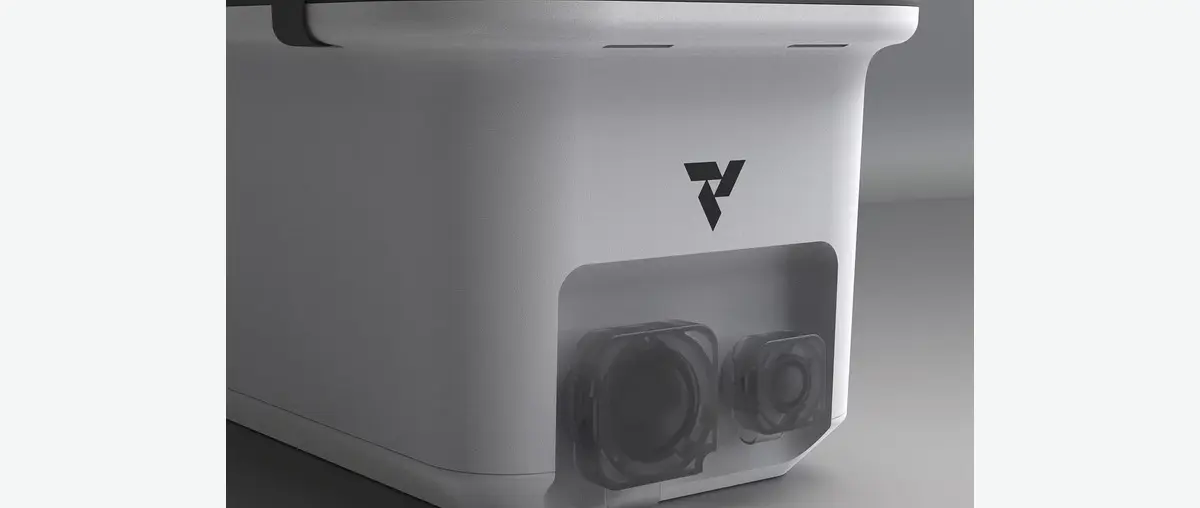
Vital Lyfe Access actual product manufacturer first-party photographic angle watermaker 2026 original
Vital Lyfe promotes Access, a portable seawater watermaker; superyacht crews may assess it for tender use or contingency water rather than primary production.
California-based Vital Lyfe is promoting Access, a compact water-purification device designed to produce freshwater from naturally occurring sources, including seawater. Its appearance in METSTRADE’s 2026 startup coverage highlighted a portable approach that differs from the permanently installed reverse-osmosis systems typically fitted to superyachts. The supplier’s current website describes a simple intake-and-start process and promotes portability for outdoor and emergency uses. For large-yacht crews, the most plausible area of interest is not replacing the yacht’s main watermakers, but evaluating a supplementary device for certain tenders, shore operations or contingency arrangements.
That distinction is critical. A 50-metre superyacht may carry thousands of litres of freshwater and requires reliable production for many people, laundry, galley operations and housekeeping. A handheld or box-sized device designed for personal water access operates at a different scale. Its usefulness depends on a defined mission, verifiable water quality and realistic expectations about how much drinking water it can produce.
METSTRADE’s official company interview identifies Access as a portable watermaker weighing approximately 11.3 kilograms and occupying a box roughly 50 by 23 by 20.5 centimetres. The article quotes the founders on a built-in battery, an external 12-volt power option and reported output approaching 23 litres during an hour of seawater treatment or more than 45 litres for contaminated fresh water, under the conditions described by the supplier. These are manufacturer-reported specifications, not independently measured production results across every source-water temperature or salinity.
The company says the unit processes water through a high-pressure membrane and can be controlled from a smartphone. Its own website presents an accessible sequence of placing the intake hose in the source, starting the unit and collecting treated water. The complete operating manual, treatment limits and current product availability should be reviewed before a crew treats the system as part of an approved emergency plan.
Producing around 23 litres of water per hour would be potentially useful for a small shore team, but it does not match the daily demand of a large superyacht. Even an apparently modest consumption per person multiplies quickly when dozens of crew and guests are aboard. Domestic watermakers installed in a yacht’s engineering system are selected according to the vessel’s full demand, tank storage, operating hours and redundancy requirements.
A portable unit could have a more focused role. A tender might travel to a remote anchorage, a beach setup might need an independent water source or a support boat might need supplies during an extended trip. The suitability of any of these examples would depend on local water conditions, transport and the ability to operate the equipment safely. They are potential applications for evaluation, not confirmed manufacturer endorsements for every use.
Removing dissolved salts from seawater requires more than passing water through an ordinary drinking-water filter. A reverse-osmosis membrane must operate under conditions sufficient to separate water from most dissolved constituents, and the resulting product must be checked against relevant quality targets. The feed-water concentration, temperature, membrane condition and pressure can all affect output. A compact system has to balance these variables with available electrical energy.
That engineering reality explains why a useful capacity figure should specify the test conditions. A rated output in mild, warm feed water may not be reproduced in colder conditions or with fouled prefilters. Yacht engineers should request current technical data and operating envelopes rather than extrapolate from a single marketing figure.
A yacht with two properly sized installed watermakers and adequate freshwater storage has a formal system architecture. Adding a small portable device may provide a separate source for limited needs, but it should not be counted as equivalent redundancy unless the vessel’s safety and operational requirements explicitly support that conclusion.
Emergency water planning should also distinguish potable drinking supply from water needed for sanitation or engineering. A handheld device that produces drinkable water could be valuable for a small group, while remaining unsuitable for an entire yacht. Captains should calculate required quantities, available reserve, crew numbers and credible failure scenarios before deciding how the equipment fits the plan.
Vital Lyfe’s description includes a rechargeable internal battery and compatibility with external low-voltage power. That may allow operation away from a generator or fixed electrical installation. For shore teams or tender crews, the absence of a large permanent machinery setup can be a benefit.
Electrical independence still has limits. Batteries have a finite operating duration, and a device that appears charged in a storeroom may not be ready after months without inspection. The crew needs a defined method to charge and test it, together with a record of remaining battery capacity. If a smartphone is required for certain functions, operators should understand what works when the phone or communications link is unavailable.
The official website says Access can treat a range of naturally occurring water sources, including saltwater. That is a broad capability statement, but no single treatment technology should be assumed to remove every possible contaminant in every situation. Fuel spills, solvents, agricultural chemicals, algal blooms and other pollutants require particular attention.
A sensible operating procedure would define acceptable source-water conditions and situations in which the crew must not attempt treatment. The manufacturer should provide test data and relevant certifications identifying what the unit is designed to remove. Users should not interpret a clear-looking final product as proof of microbiological or chemical safety.
Crew responsible for drinking water need to know how the system's output is validated. Reverse osmosis can reduce many contaminants, but post-treatment, storage vessels and hoses can introduce risks if neglected. A portable product may be more exposed to improvised handling than an installed system maintained by an engineer.
Before use in a professional yacht programme, the chief engineer or medical adviser should review the supplier’s water-quality claims and the applicable standards. A simple conductivity reading may help indicate desalination performance, but it does not by itself establish complete potability. The testing plan must address the relevant microbiological and chemical risks.
A large yacht may carry a guest tender, a sports tender and a dedicated chase boat. Some of these craft travel well beyond the parent vessel for diving, fishing or shoreline logistics. A portable watermaker could be considered for certain operations where carrying every litre from the yacht is inconvenient, provided weight, equipment security and appropriate handling are addressed.
A tender has limited deck and locker space, so the device's actual dimensions and mass matter. Crew should test storage, restraint, hose routing and power connections before assuming that a box-sized unit can be operated safely at speed or in a moving cabin. Water production should occur under conditions consistent with its operating instructions, not while the coxswain is performing demanding manoeuvres.
Remote beach excursions may involve staff, security, tenders and equipment transported ashore for several hours. An independent water source could be useful as a contingency where conventional supplies are difficult to replenish. It would not automatically eliminate the need to transport bottled or tanked drinking water, especially when guests expect uninterrupted hospitality.
An expedition plan should calculate actual demand and allow a margin for equipment failure or difficult source conditions. The team should understand how long production takes and what volume can be obtained before the battery needs charging. A portable watermaker becomes valuable when it has a defined role in a realistic logistics plan.
Membrane-based equipment often requires attention to prefilters, seals, storage procedures and exposure to contamination. A unit designed for intermittent use may need special care when it will remain unused for weeks. The supplier’s maintenance instructions and parts availability should therefore be requested before procurement.
Superyacht crews should test whether replacement components can be obtained along typical cruising routes. A convenient portable product may become less useful if an essential filter cartridge is unavailable outside its home market. The full cost includes consumables, storage, periodic testing and eventual replacement parts.
Marketing language that describes a device as simple should not eliminate the need for training. Operators must know which hose is connected to the intake, how treated water is collected, how to avoid cross-contamination and what indicators show an abnormal condition. Crew should be able to stop the system safely when the feed water is unsuitable or the output appears questionable.
A successful demonstration should include inexperienced users following the written procedure under supervision. If the equipment is intended for emergency use, the relevant drills should also test access, power and water-quality verification. A plan that depends on one technically knowledgeable crew member is vulnerable to that person's absence.
Vital Lyfe’s website currently promotes Access and includes pre-order or forthcoming-product language, so owners should not assume widespread immediate stock availability. The public material also does not establish universal marine equipment approval or a blanket certification for every drinking-water standard worldwide.
A purchasing enquiry should therefore confirm the shipping status of the actual model, warranty terms, supplied accessories and documented performance test conditions. The chief engineer can then compare the proposal with other contingency options, including carrying additional treated-water stores or using a different independent purification system.
Access reflects an industry trend toward making useful water-treatment capability more mobile. The official sources establish an identifiable product concept, a compact form factor, manufacturer-reported production figures and an emphasis on treating both seawater and freshwater. Those facts make it worth evaluating, but they do not turn a portable unit into a replacement for the yacht's certified primary plant.
For superyacht operators, the proper question is specific: could this device help a particular tender, shore expedition or limited contingency, and can its output be demonstrated to meet the relevant safety requirements? A controlled trial and complete documentation would provide a much stronger answer than a headline figure alone.
Primary source: Vital Lyfe Inc. first-party Access portable desalination watermaker product page with specifications and availability.
Vital Lyfe Inc. original Access portable watermaker product photograph from the manufacturer website, centered on plain background. Official source.
Explore
Go deeper into the yachts, companies, events and destinations directly connected to this article.
Continue reading
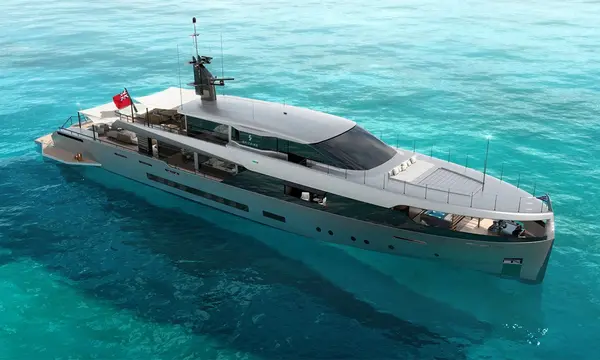
ARES Yachts' 50.55m SPITFIRE project combines a lightweight composite hull, hybrid electric drive and a radically flexible guest layout as the Antalya yard develops …
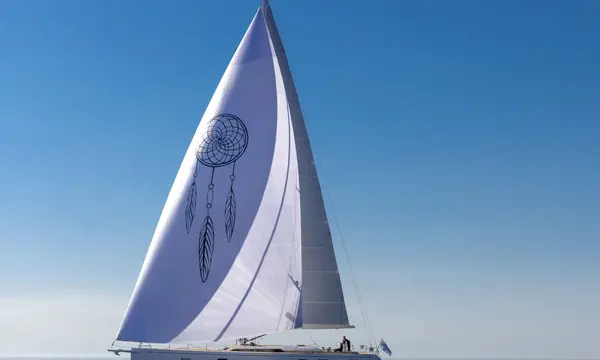
The history and engineering of the 28.27m first hybrid-electric Swan 88 DreamCatcher, with its distinct Nautor hull identity and official 2024 source.
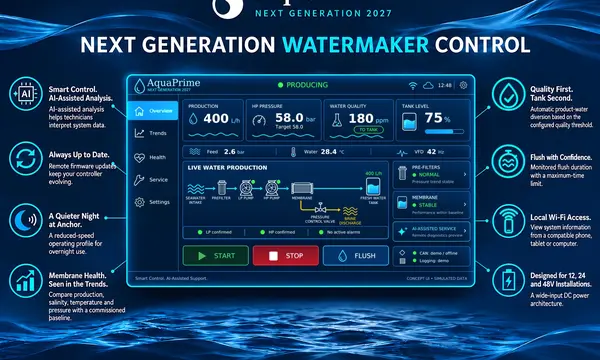
AquaPrime will preview its new watermaker control platform at METSTRADE, with touchscreen monitoring and diagnostic features under development for yacht crews.
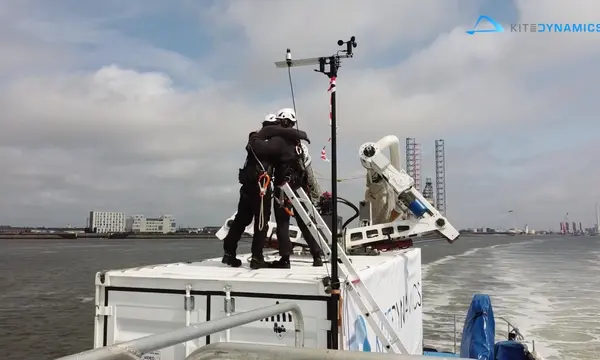
Kite Dynamics is developing four-line kite propulsion following at-sea trials in 2025 and 2026, with yacht applications remaining at the prototype and engineering stage.
Superyacht Guide
Continue into the wider Superyacht Guide.
Business opportunities · Superyacht Guide
Companies serving the superyacht market can discuss clearly identified advertising, sponsorship and business-profile opportunities. Commercial activity remains separate from independent editorial coverage.